Blog spam update

After getting a few reports of glitches related to comments improperly flagged as spam over the past few days, I have replaced the Spam Karma plugin with Akismet, which I have heard good things about. If anyone has had trouble posting comments, please try again and if anyway posts a real comment which does not appear as it should, then please email me about it.

Shanghai and Tokyo: I wanted some comparisons, but could only come up with contrasts

I came back last night from a weekend office trip to Shanghai, my first visit to China. Curzon, who has far more China experience than I do, gave me some words of warning before I left for Narita Airport: “Just remember, you’re visiting the nicest part of China, and it’s still the world’s biggest shithole.”

Shithole? Yes. Nice? Certainly. It’s a huge cow pie with flowers growing out of it. I always figured that China and Japan would have a lot in common, but it’s almost impossible to see: I returned from Shanghai with the impression that I had just been to Mirror Universe Japan, where the only commonalities are superficial, and deep down everything is exactly the opposite.

Come to mention it, they don’t even look that much alike.

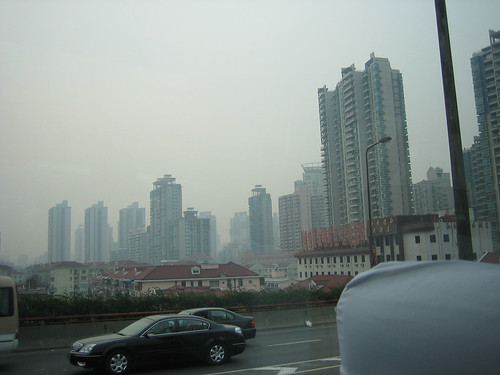
Buildings in the haze
A representative image: smog and gazillions of tall buildings.

Continue reading Shanghai and Tokyo: I wanted some comparisons, but could only come up with contrasts

War of the prophets

While we are on the subject of Soka Gakkai, let us not forget that while they may be the largest creepy somewhat religious organization in Japan, they are far from the creepiest. That honor, naturally, goes to our old friends Aum Shinrikyo. Now, Soka Gakkai and Aum Shinrikyo may be rivals in terms of how much they creep us out, but did you ever know that they actually had some more direct rivalry? More specifically, that Shoko Asahara, the Guru of Aum, actually attempted to assassinate Daisaku Ikeda.

Here are a few relevant passages from Aum & I, by former Aum conspirator Ikuo Hayashi MD.

At the same time, Asahara was in that story blatantly attacking Daisaku Ikeda, the honorary chairman of Soka Gakkai, Morihiro Hosokawa, and Ichiro Ozawa as immediate enemies, saying that they were being controlled by the shadow organization that was controlling America and selling out Japan.

For more of Asahara’s enemies list, see this earlier post.

Later in the book is a section entitled The Daisaku Ikeda Poa Incident. I will explain Poa in detail in another post, but basically it is is a Tibetan term for reincarnation that Asahara used to mean ritual assassination.

Although Dr. Hayashi would eventually be one of the perpetrators of the Sarin attack in the subway, he only learned about the assassination attempt on Ikeda after the fact. As he explains it:

On December 18th, one of the final remaining days of 1993, a situation occurred where Nakamura came into AHI carrying Tomomitsu Niimi, who was experiencing difficulty breathing.

Later, the event known as the Daisaku Ikeda Poa Incident became the trigger for me to actually learn the religious group’s shadowy operations, which I had not been aware of until that time. This incident would also become the trigger for my getting involved in the “secret work” that would lead to the execution of the sarin incident on the subway.
[omitted]

“What in the world is the cause of this? I can’t properly treat him if I don’t know what the cause is!” I said.

[omitted]

“Actually, it’s sarin. Would you mind coming with me for a minute?” Nakagawa requested.

[omitted]

Nakagawa opened the door and stuck his head inside the car. After saying something [to the person inside] he immediately turned toward me and motioned for me to get in the backseat. It was the first time I had ever ridden in Asahara’s car and I was nervous as I sat down in the rear. As soon as the door was closed, Asahara, who was sitting in the front left passenger’s seat, said without even turning around, “We tried to perform Poa on Daisaku Ikeda with sarin but failed.”

There are a few pages here describing the symptoms and treatment for sarin poisoning and so on. Interesting stuff, but let’s skip ahead to Ikeda.

Limiting the assumptions to my personal feelings towards Daisaku Ikeda and the judgment expressed by the guru to whom I devoted myself, Daisaku Ikeda was an object that we must fight. Since this was so, and Asahara could fully see this karma, the act of having Poa performed upon oneself was something that would be a “happy” outcome for the person.

The main thing was about karma: that since Ikeda was a mastermind secretly trying to kill Asahara, by preventing the disaster of his carrying out this evil act of assassination, which would lead him to the Avici Hell [Buddhism’s Limbo], Aum was just trying to save him.

So there you have it. Asahara was convinced that Ikeda was plotting to kill him, and so sent his agents to kill Ikeda through Sarin poisoning. This was not just as an act of self-defense, but by killing Ikeda they would prevent him from committing awful crimes and he would therefore avoid punishment in the next life. Everybody wins! Murder as altruism- don’t you love religion?.

The JET Program turns 20 – time to put it to sleep?

The Nikkei yesterday printed a brief article on its front page praising the JET Program, a scheme by the Japanese government that exists primarily to place native English teachers in Japanese classrooms, for almost 20 years of “truly significant benefiting Japan”. An excerpt:

Saturday, November 11, 2006

CHRONICLES: JET Program Marks Two Decades Of Benefiting Japan

This year, 5,508 young people from 44 countries, including the U.K. and U.S., are teaching foreign languages — primarily English — at schools throughout Japan.

Almost 20 years have passed since the program was created. Ceremonies to mark the anniversary are planned for the near future, so let us consider what this program has accomplished.

English language abilities among high school students have perhaps risen a little, but the truly significant fact is that about 50,000 young people from around the world who have participated in the program have returned to their home countries after getting to know Japan. Many of the JET alumni have gone on to play important roles in relations with Japan.

The forerunner to the JET program was the BET (British Exchange Teaching) program, and the record shows that the current program exists in part because of the efforts of former Prime Minister Junichiro Koizumi, then a member of the House of Representatives. Koizumi had studied in Great Britain, albeit for only a short time.

The JET Program started back when the idea that putting a foreigner in the classroom would work wonders for English education was just gaining steam. But as I have noted, the number of JET participants has declined in recent years, in part because English-teaching industry has matured since then. Nowadays, English conversation schools can be found almost everywhere in Japan, and a school that wants to hire a foreigner can hire one more quickly and easily through private placement agencies or by advertising directly to the large pool of teachers already in Japan. The Wikipedia entry for the program notes that several prefectures have opted out of the JET Program in recent years. So is it time to follow the Koizumi model of “letting the private sector do what it can” and leave the hiring of English teachers up to market forces?

Not yet, I say, and I think the Japanese government would agree with me. The Nikkei gives one very compelling reason why this program, and its $400 million annual budget, remains important: the JET Program is a veritable factory for “Japan handlers” who will go on to careers dealing with Japan in their home countries. It is well-known that the Japanese government has made a point of cultivating Western “Japan experts” since before WW2 in order to boost its international image, and the JET Program has simply proved an especially efficient example of that practice, along with other programs aimed at boosting international exchanges to Japan that began in the 1980s. By hobbling young college graduates early on with 3 years of meaningless semi-teaching, the government can steer them in the direction of a lifelong involvement with Japan, with a small percentage going on to success in various fields. Accordingly, Japanese companies and Japan-related institutions instantly recognize JET experience as synonymous with a familiarity with Japan and tolerance for the Japanese office culture, and often (but not necessarily) Japanese language skills.

And the results are clearly visible. Many if not most of the foreign staff I’ve encountered at Japanese or Japan-related organizations have been JET alumni. More importantly, a good deal of US government employees who deal with Japan (at Department of Commerce, etc) spent time in JET, as have Japan-related employees of other governments, I’m sure.

Now, it’s also true that many of the Japan watchers and others who may go on to “play important roles in relations with Japan” have spent time in the country as privately funded language teachers, exchange students, or even Diet members’ assistants (in the case of Mike Green, Washington’s Japan hand-in-chief). But the fact of the matter is foreign workers are far more likely to enjoy their time in Nowheresville, Japan, if they are able to enjoy the pampering offered by the Japanese government – in addition to a comfortable salary, housing, transportation, and other benefits come standard. Wouldn’t you be happy with the country that let you save enough to pay off your student loans while giving you a cakewalk job?


Elderly restaurant owner arrested for performing Beatles songs at his establishment

A few days ago, the Japanese Society for Rights of Authors, Composers and Publishers (JASRAC, an artist copyright lobby similar to ASCAP/RIAA) was arrested for performing copyrighted music by artists including the Beatles at a restaurant he owned. Joi Ito posted an outline of the initial coverage of this incident, but I’m here to pass along some more detailed information, gleaned from J-cast, an online news site:

Arrested for performing the Beatles!

The owner of a restaurant (age 73) was arrested for holding live performances of songs whose copyrights are under tha management of industry association JASRAC without obtaining the group’s permission. Cases of copyright law violations that lead to arrest are extremely rare. JASRAC has commented that “there was no other way,” but criticism of JASRAC, who filed the criminal complaint, have arisen on the Internet.

According to the Tokyo Metropolitan Police Agency (MPA), the man is accused of copyright violation for performing The Beatles’ “Here, There, and Everywhere,” “Liverpool and All the World!” etc, which are managed by JASRAC, in his restaurant on the piano and harmonica for his customers without receiving JASRAC’s approval.
Continue reading Elderly restaurant owner arrested for performing Beatles songs at his establishment

Japan Times infiltrated by Soka Gakkai?

Weekly Friday printed an article in their July 21 issue taking a look at the controversy surrounding Soka Gakkai leader Daisaku Ikeda’s recent series of op-eds in the Japan Times, the “only independent English-language newspaper in Japan.” Let’s have a look:

FRIDAY, 2006.07.21

Indicting Reportage: Internal conflict arises at Japan Times over “Daisaku Ikeda” columns

Field reporters lodge fierce protests, claiming “promotional articles for giant religious group Soka Gakkai”

In our last article, we reported the behind-the-scenes power struggle that is ripping Soka Gakkai apart, but a “Soka scandal” has also embroiled the Japan Times, the English-language newspaper boasting the longest history in Japan (founded 1897).

It all started when the paper started running a serial column by Daisaku Ikeda (78), honorary chairman of Soka Gakkai. This column runs on the 2nd Thursday of each month, with 12 columns planned in total. But Japan Times emloyees have fiercely protested and it has reached a state where they have requested that the upper management cancel the series. A Japan Times employees explains:

“Soka Gakkai has been dubbed a cult in France, and it is united with a specific political group (New Komeito). It is absurd for us to let the leader of a religious group with these kinds of issues to write promotional articles and on top of that give him our serial space. Even from the perspective of journalistic impartiality, it isn’t to be permitted.”
Continue reading Japan Times infiltrated by Soka Gakkai?

Leica Freedom Train

I was browsing photography discussion forums, as I do once in a while, and stumbled across this fantastic little story, which I also had somehow never heard before.

I carry my Leica camera a bit more proudly these days.

The reason? A story I had never heard before – a tale of courage, integrity and humility that is only now coming to light, some 70 years after the fact.

The Leica is the pioneer 35mm camera. From a nitpicking point of view, it wasn’t the very first still camera to use 35mm movie film, but it was the first to be widely publicized and successfully marketed.

It created the “candid camera” boom of the 1930s.

It is a German product – precise, minimalist, utterly efficient. Behind its worldwide acceptance as a creative tool was a family-owned, socially oriented firm that, during the Nazi era, acted with uncommon grace, generosity and modesty.

E. Leitz Inc., designer and manufacturer of Germany’s most famous photographic product, saved its Jews.

And Ernst Leitz II, the steely eyed Protestant patriarch who headed the closely held firm as the Holocaust loomed across Europe, acted in such a way as to earn the title, “the photography industry’s Schindler.”
Continue reading Leica Freedom Train

Saaya Irie on YouTube

My quick letter to YouTube:

Dear Youtube:

It looks like dozens of videos of 12-year-old Japanese actress Saaya Irie are making their way around your site. At least one video was popular enough to appear on the top videos of Japanese YouTube search site, Qooqle Clippers. I watched the video, and it’s of Irie in a white bikini with a cameraman in the background telling her to pose. She is 12 years old making suggestive poses. It looks like something out of a Stephen King novel. One hopes that a nightmare sewer clown killed the cameraman moments after the video was shot.

As much as I like your service, videos of this nature are highly inappropriate and may be illegal under US law. In the off chance that you view one of the many videos on your site depicting Saaya Irie and conclude that she is engaging in nothing more risque than normal child modeling, let me assure you that she is intended for the Japanese softcore child porn consuming public, as has been documented (see links below). Often in Japan, child acts make a show of appealing to fellow youngsters while in fact courting older fans who then purchase “photobooks” that feature no nudity but are nevertheless softcore pornography. While tolerated in Japan, an American site should not in good conscience enable this behavior. Considering the extent to which you accommodate copyright holders to ensure that infringing content is deleted in good faith, I can only hope you will make the utmost effort to remove material that depicts child exploitation as well.

Regards,

Adamu

Links: 1 2

What to ask Alex Kerr?

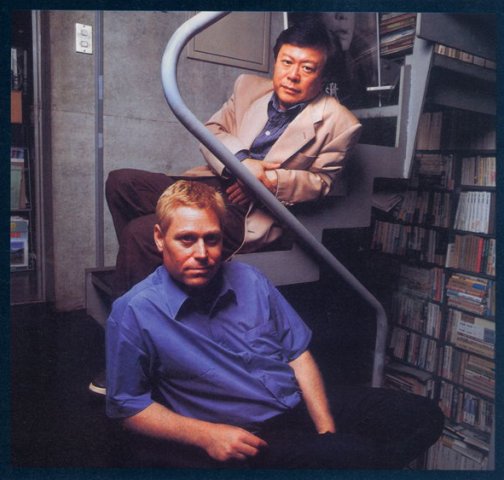
Kerr and InoseOn Nov 20, I’m going to see a lecture by Alex Kerr (pictured, bottom), a businessman in Japan and Thailand and author of Dogs and Demons, one of my favorite books on Japan. He’s giving some kind of talk at the Japan Foundation. Here‘s the promo copy:

Alex Kerr Lecture: “Lost Japan”

Alex Kerr, the East Asia scholar who was praised by Ryotaro Shiba as “a protector of Japanese culture, from America,” continues to express his melancholy at the state of affairs in which Japan’s beautiful scenery is in the process of being destroyed, as well as the need to protect traditional culture. Won’t you lend your ears to the warning bell that Kerr has sounded out of love for Japan and take another look at modern Japan from the perspective of someone who has lived abroad?

As I mentioned, Dogs and Demons is one of my favorites. It’s Kerr’s tale of woe, a follow-up to his previous love letter, Lost Japan, and it criticizes the social, economic, fiscal, and other problems facing Japan. He concludes that a runaway bureaucracy has ravaged Japan’s natural beauty and culture. The metaphor “dogs and demons” comes from this story by Chinese philosopher Han Feizi:

[T]he emperor asked a painter, “What are the hardest and easiest things to depict?” The artist replied, “Dogs and horses are difficult, demons and goblins are easy…. Japan suffers from a severe case of “Dogs and Demons.” In field after field, the bureaucracy dreams up lavish monuments rather than tend to long-term underlying problems. Communications centers sprout antennas from lofty towers, yet television channels and Internet usage lag. Lavish crafts halls dot the landscape while Japan’s traditional crafts are in terminal decline. And local history museums stand proud in every small town and municipal district while a sea of blighted industrial development has all but eradicated real local history.

Kerr goes on to detail initially covered-up river pollution that ended up being so bad they had to name a disease after what it did to people, nuclear reactors clumsily repaired with duct tape, massively wasteful public works spending that robs local areas of the chance to develop a real economy, unconscionable levels of government debt, and countless other examples of Japan’s “policy challenges” circa 1999.

The most effective parts of the book are where he talks about the destruction of Japan’s landscape and city planning, areas that directly affect Kerr personally as an art lover as well as his businesses in dealing artwork and urban restoration. Why are all of Japan’s rivers paved? What is the need for all the noise pollution in public areas? Why was Kyoto’s priceless architecture and urban culture allowed to be put on the chopping block? Why don’t they just tear down Kyoto tower?! OK, that last idea was my own, but he does at least call the tower “garish.”
Continue reading What to ask Alex Kerr?

Don’t mess with 2ch: ZAKZAK, Sankei Sports report

A couple interesting articles on the building discontent with 2ch and its founder’s scofflaw ways. Debito has the articles full-text in Japanese only on his awesome new blog (such discrimination!) but I have decided to translate them (not verbatim but true to the original, as usual) for the discerning English-reading public. BTW, I’ll only have really nice things to say about 2ch in the future:

ZAKZAK!

2-Channel in a state of lawlessness – Attacks on individuals left on the site

A 30-year-old customer service worker recalls her painful memories:

hiroyuki 061105sha20061105001_MDE00430G061104T.jpg“I went back to my parents’ house after my home address was revealed on the Internet, but harassing phone calls kept coming into my office. Even my customers started to distrust me, thinking that I had someone (harassing me).”

The woman took the brunt of insults such as “ex-prostitute,” “too much plastic surgery,” and threats including “I’ll kill you,” and “Just die.”

There were rumors that “an old acquaintence in the same business posted the offending material around the time when (the woman) opened her own store,” but the “culprit” could not be identified. The woman filed a civil law suit holding message board’s moderator Hiroyuki Nishimura (age 29, pictured) responsible.

The Tokyo Regional Court ordered deletion of the posts and 1 million yen in compensation, but the court victory spawed a second round of attacks. On 2ch, there were several posts including “don’t get bent out of shape over such things,” “I’ll beat you to death,” and “Hurry up and hang yourself.” Her workplace’s web site was also flooded with similar posts, shutting it down. The woman took leave from work for a while due to the stress.

Nishimura’s reaction at the time was, “Since it wasn’t just a demand to delete the posts, but litigation to take money from the message board’s moderator, I think it happened because it provoked protest from regular users.”
Continue reading Don’t mess with 2ch: ZAKZAK, Sankei Sports report