In Japan, Obama inauguration inspires English lessons, off-kilter likenesses

The Adamu household is just ecstatic and relieved to see Obama inaugurated as president. We can’t tell which feels better: not-Bush in the White House or Obama in the White House? 
Though you might not know it to look around you, there are many in Japan who are excited about Obama who don’t live in a certain newly famous town that happens to be named after him. As just one indicator of interest, NHK announced its late-night ratings almost quadrupled for live coverage of the address. A fairly universal attitude by my observation has been, “Why don’t we have dynamic leaders like that in Japan?” So the buzz over Obama may in part be a kind of vicarious thrill.
So even before the inauguration, individuals and businesses in Japan have been finding interesting ways to express their enthusiasm. Let’s take a look:

1. Learn English

  • Listening to one of the great speechifiers of our time can be inspiring. Obama’s message can call you to serve your country, resolve to be a better person, or sacrifice for the greater good (but tragically apparently not to prosecute those responsible for the Bush regime’s crimes). Some aspiring English speakers in Japan have taken this opportunity to brush up on their own speaking skills. Prominent among the “Obama books” that are currently flooding Japanese bookstore displays is CNN’s Obama Speech Collection for students of English as a second language. The book, so far having sold over 400,000 copies, features excerpts from famous Obama speeches with a Japanese translation on the opposite page, which students can use to follow along as they listen to an attached CD. I picked it up the other day and it has proven useful both as a translation reference for US politics and as a handy record of his landmark addresses. I’m not sure how effective it is as a teaching tool, but for a Japanese learner of English inspired by Obama it will no doubt give them easy access to the tools they need (minus the inauguration address, of course).
  • Meanwhile, much like Kenya’s “Obama imitation contest“, some private English classrooms have started offering Obama mimicry lessons to a reportedly favorable response. In one TV news report, groups of 20+ students lined up to wait their turn to recite famous Obama speeches as a White-boy instructor barked orders on how to mimic Obama’s unique oratory style.

2. Create a mildly unsettling Obama likeness

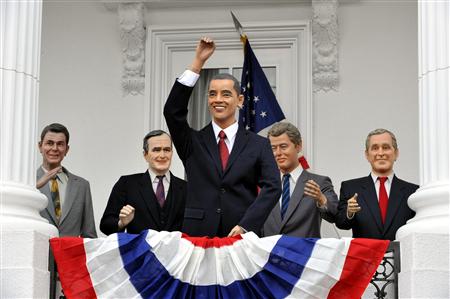
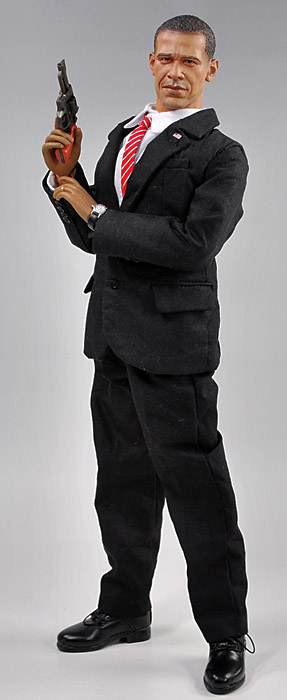
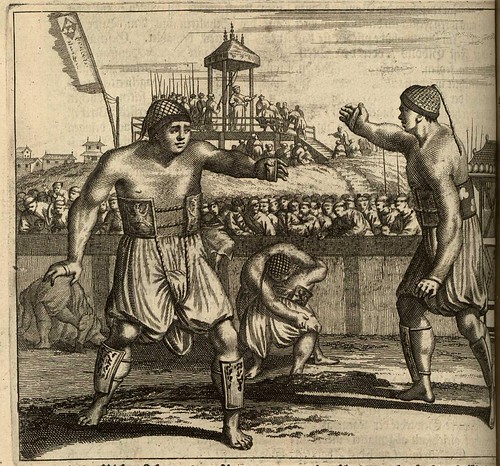
Here we see some examples of creativity from both traditional and modern artists that deserve an “A” for effort but unfortunately didn’t turn out all that appealing:

no resemblance whatsoever?
No resemblance whatsoever?

Zombie Reagan looking gaunt (or is that Carter??)
Zombie Reagan looking gaunt (so Carter really is irrelevant!)


* Thanks to Andrew Leonard for the correction!

Compare to the real thing:

That’s more like it!

Chinese economy now #3

China has edged above Germany to become the world’s third largest economy, based on newly revised GDP data:

China’s economy leapfrogs Germany

A Chinese farmer transports his produce.

The Chinese government has increased its estimate of how much the economy grew during 2007.

The revision means China’s economy overtook Germany’s to become the world’s third largest in 2007.

Gross domestic product expanded 13%, up from an earlier estimate of 11.9%, to 25.7 trillion yuan ($3.5 trillion).

The BBC tries to play this down (“Many Chinese people have not benefited from the boom”), but let’s use some simple algebra with vaguely realistic numbers pulled out of thin air to take a look at some rough growth scenarios:

China vs. Japan

  • Scenario 1: Given zero growth in Japan’s economy vs. 8% annually for China, China will overtake Japan in 2011.
  • Scenario 2: 2% growth in Japan vs. 6% for China = China overtakes Japan in  2014.
  • Scenario 3: 2% growth in Japan vs. 4% for China = China overtakes Japan in 2021.

China vs. US

  • Scenario 1: Given 2% growth in the US economy vs. 8% annually for China, China will overtake the US in 2034.
  • Scenario 2: 3% growth in the US vs. 6% for China = China is top economy in 2057
  • Scenario 3: 2% growth in the US vs. 4% for China = China rules us all in 2080.

So barring some major calamity or re-Maoization, China will overtake Japan as the #2 economy in a few years. The US seems a little safer but numbers like this make you sit up and pay attention to the Business section!

My illegal post about the image rights campaign

Here is the copy of an ad promoting the “STOP! Image Rights Violations” campaign that currently stares at me during my morning commute (emphasis added):

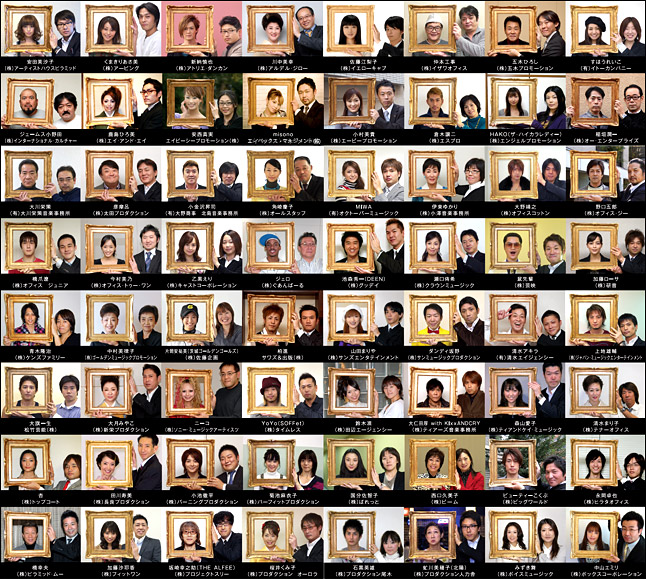
The names and likenesses of entertainment talent and athletes are important business property. They are shared property created through the tireless efforts of the talent and athletes and the business efforts of the production companies. The rights protecting this property against unauthorized use by others are called “publicity rights.” In Japan, there have been many court cases acknowledging the importance of these rights, but since there is no clear stipulation of these rights in the law, in reality there is no end to cases of infringement.

I don’t have a ton to say about this now, except (a) you could make the case that the absence of laws explicitly protecting consumers’ rights to reuse commercial material to express themselves leads to patently pathetic violations as I have noted before (here’s hoping the Fair Use initiative passes this year); and (b) interestingly, Johnny’s Entertainment does not appear to be a member of this industry association.

As usual, Wikipedia provides concise and interesting background reading on the topic!

Chocolate low-malt beer makes me sad

As a beer drinker (though I am really liking wine these days), this announcement was truly shocking:
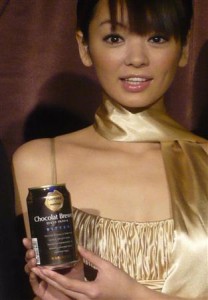

I’ve said it before and I’ll say it again — what a sad state of affairs! If I saw this at the store I might be forced to buy it for the novelty value, but apparently it’s only being offered online. Oh well.

This new chocolate low-malt beer (happoshu in Japanese) makes me sad, mostly because of the implications of the company’s decision to make chocolate happoshu instead of chocolate real beer.

What started as a clever way to get around a tax hike in 1994 has today resulted in low-malt happoshu and no-malt “third beer” gaining recognition among the Japanese public as cheaper, viable alternatives to the real thing. In my own life, it is typical to see housewives at the local Ito Yokado buying dinner with a cheaper beer alternative, either for the husband or to drink together (I do a lot of the grocery shopping).  How did things come to this?

According to the National Tax Agency, beer has long been Japan’s drink of choice. As far back as 1970, twice as much beer was consumed as Japanese sake. But for a long time, Japan has had a 40% tax on beer sales, higher than other advanced nations (UPDATE: in 2006 it was lowered slightly but remains high). This was never a problem when Japan’s economy was growing, but a tax change in the post-bubble year 1994 triggered events that would transform the local convenience store beer cooler:


Japan’s alcohol tax system divides beer-like malt beverages into four categories based on malt content: 67% or higher, 50 to 67%, 25 to 50%, and less than 25%. An alcoholic beverage based on malt is classified as beer if the weight of malt extract exceeds 67% of the fermentable ingredients. Since Suntory‘s introduction in 1994 of Hop’s Draft, containing 65% malt, a market has emerged for low-malt, and recently, non-malt beer substitutes.

With alcohol tax revenues decreasing as a result of happoshu’s popularity, the Japanese government eventually raised the nation’s tax on low malt beers. In 1996, the tax for products containing 50 to 67% malt was raised to that of beer. Brewers followed suit by lowering the malt content of their products. Today, most happoshu contains less than 25% malt, putting it in the lowest tax category of low-malt beer. In recent years, Japanese brewers have released dozens of brands in attempt to increase their market share. Many of these are marketed as more healthy products, with reduced carbohydrates and purines. Another trend is to use unmalted barley, such as in Sapporo’s Mugi 100% Nama-shibori.

Beer-flavored beverages collectively dubbed “the third beer“(第三のビール, dai-san no bīru) by the mass media have been developed to compete with happoshu. These alcoholic products fall under categories not yet as highly taxed. The third beer beverages either use malt alternatives, or they are a mix of happoshu and another type of alcohol. When comparing 350 ml cans, the third beer brands can be 10 to 25 yen cheaper than happoshu.

Effect on total consumption

These new, less tasty types of beer have grown in importance over the years. Third beer sales overtook happoshu for the first time in 2008, amid a record bad sales year for the beer and beer equivalent industry as a whole. Together, happoshu and third beer sold almost 90% as many cases as real beer (226 million vs. 256 million). In a matter of years, Japan may be drinking more loophole beer than the real thing. The bad sales were attributed to to price hikes (due to high commodity prices in the first half of 2008) and a general shift among consumers away from beer to other options or no drinking at all (due to being too old or a part of the supposedly vice-free younger generation).

Over a longer term, consumption of beer peaked in 1994 at 7 million kiloliters and fell 53% by 2006. The combined beer + happoshu + “other alcohol” numbers went from 7.09 million kL in 1994 to 5.9 million in 2006, a dip of around 18%. from the peak.

However, according to the tax authorities, overall alcohol consumption peaked in 1996 and fell 9.2% by 2006. It is clear that the decline of beer etc. was the biggest drag on the total, as no segment of the industry stepped up to take beer’s place. Beer’s share of total alcohol consumption declined from 73% in 1994 to just 66% in 2006. While shochu and liqueur (mostly chuhai aka shochu “alcopop”) and wine grew over that period (and sake, whisky, and brandy actually declined significantly), there is still nothing approaching beer.

Effects on drinking behavior, conclusion

The rise of happoshu came amid a major recession for the Japanese economy and the first instance of deflation for a developed economy in the postwar era. Just as the 1990s saw the rise of 100 yen stores and Uniqlo discount apparel, these near-beers are the product of downward price pressure and a relative impoverization of a wide swath of Japanese consumers.

This dual taxation appears to have created a similar dual structure in how people drink their beer. According to What Japan Thinks, while around three quarters of those surveyed drink at home, the overwhelming drink of choice was Happoshu: “over one in six of the total population drink happoshu almost every day!” So while a minority will drink beer or other alcohol, it’s clear that my observations of housewives at Ito Yokado aren’t just coincidence — as far as I can tell, the justification for drinking happoshu is that it’s cheap and tastes just good enough to be had with dinner.

The existence of these choices isn’t by itself a bad thing. I am not aware of the tax scheme in the US, but liquor stores are filled with nasty alternatives to good beer (some happoshu brands are much better than Schlitz, just to name one example). The only thing that angers me is that the tax policy has pushed the beer companies to pursue a decidedly low-quality product line in order to avoid their tax bills, to the point that it dominates their marketing such that even their novelty products are happoshu. Could it have been possible to negotiate an overall lower tax on beer that would maximize both quality and tax revenue?

Ultimately, the tax wars over beer ended up hurting everyone involved, concludes a helpful summer 2008 report by Shigeki Morinobu, a former tax regulator who was personally involved in the process between 1993-97. Annual tax revenues from beer and derivatives fell from more than 1.6 trillion yen in 1994 to 1.1 trillion yen in 2007, an enormous drop of 32%. The beer market has shrunk significantly, as detailed above.

Morinobu, in translation and with my full-throttled agreement:

And what about the consumers? The tax debate resulted in low-malt beers overflowing the store shelves. The flavor of beer-type drinks grew worse and worse, which constitutes perhaps the biggest factor behind the trend away from beer drinking, especially prominent among young people. Seen this way, it is clear there are no winners in this war over beer taxation.

In Germany, anything with less than 100% malt cannot be considered beer. Japan, too, should return to the root of the problem and recognize that creating good beer will increase beer’s overall consumption volume and in the end boost national tax revenues. This summer, I prefer to drink 100% malt, real beer.

Going out in style

This guy might be a despicable investment fraud, but you can’t deny the guts it takes to try the “fake your own death” way out in this day and age:

Pilot Is Missing, and So Is His Motorcycle


Published: January 13, 2009

The authorities on Tuesday said that a missing financial adviser whose private plane crashed in Florida on Sunday had stored a motorcycle on the ground to aid his getaway.

The investigators say that Marcus Schrenker, 38, a financial adviser and experienced pilot from Indiana, parachuted from the small plane after faking a distress call as he flew over Alabama. The plane eventually went down in Florida, about 200 miles away, but Mr. Schrenker turned up in Childersburg, Ala., telling local officers he had been in a boating accident. He then disappeared again.


Court records show that Mr. Schrenker’s wife filed for divorce on Dec. 30. A Maryland court recently issued a judgment of more than $500,000 against one of three Indiana companies registered in his name — and all three are being investigated for securities fraud by the Indiana Secretary of State’s Office, a spokesman, Jim Gavin, said.

UPDATE: They got him.

YOU are invited to the Japan blogger confab Jan 17

Ladies and Gentlemen,

Mutant Frog Travelogue is honored to be co-headlining the upcoming Japan blogger confab, to be held January 17 by the good folks at Transpacific Radio. Here’s what they have to say:

A gathering for bloggers and blog enthusiasts is being planned in Tokyo for the evening of January 17, and we would like to extend the invitation to any and all visitors who may wish to come. Bloggers from Observing Japan, Shisaku, Global Talk 21, Mutant Frog, Coming Anarchy, Trans-Pacific Radio and more will be amongst the crowd.

All of us are hoping to meet with other bloggers and readers for an evening of food an drink. If you would like to attend, please send an email to transpacificradio@gmail.com before January 8th. Please let us know how many folks you would like to bring along with you. Although we have a place in mind for the get-together, we will wait to see what the final numbers are like before confirming. We expect that the gathering will be held in either Shibuya or Shinjuku. After we have confirmed the numbers and location, we will send you an email letting you know exactly where and when (probably about 6pm) we will be meeting up on the 17th.

We hope to see you all on the 17th of January!

I hope some of you can make it, particularly our new friends at Infinite Cash Secrets.

Some more thoughts on eikaiwa, this time less bile-fueled

I am looking back at some of my writing on eikaiwa and it is pretty cold-hearted, Internet Toughguy stuff (calling them pathetic and useless only to halfheartedly apologize later). I guess as someone the same age as many of these eikaiwa teachers I had trouble seeing the forest for the trees, but forgive me for only just appreciating that:

(a) for a lot of these eikaiwa teachers it is their first time in the work force, so it isnt really fair to lay their industry’s shortcomings at their feet; and

(b) the service offered by eikaiwa schools isnt that much different from the borderline-deceptive practices of a lot of businesses, but you don’t see me calling moisturizer salesladies a bunch of charlatans for peddling dubious claims, or insurance salespeople scheisters for convincing salarymen to gamble their life savings on risky annuities.

Part of the reason eikaiwa can come off so ugly from the Westerner perspective is because, often for the first time, we are only looking at the dark underbelly of the business instead of the neat and polished exterior. Usually we are happy to be fooled into thinking we need cold soda and DVD recorders, but when Westernness and dreams of a better life are being so clearly deceptively sold, it turns our stomachs.

Imagine if our first experience with the circus was to see a clown with his wig off, makeup smeared, and sipping from a flask? I think we might have a hard time enjoying the show after that.

Even without deception, the fundamental principle of selling something is to create demand where it might not otherwise be. That may be hard for me to appreciate as someone who sits at a desk and translates all day. My job seems to have limitless demand that almost literally falls in my lap, and more importantly I have never had to convince someone to have something translated. But were I to lose my job I’d be back in the business of marketing myself as the right person to turn your Japanese documents into proper English.

“Successful entrepreneur” offers free video on how to make money… obviously not a scam

This “press release” for “infinite cash secrets” is datelined from my hometown.  Google helpfully sent this to me in the form of a News Alert. Looks like since I left Somers has become a hotbed of multi-level marketing scams:
Shawver has achieved his online success by using the principles found in a program called The Infinite Income Plan.

“The Infinite Income Plan allows members of our team to consistently earn $5,000-10,000 dollar weeks by combining its state of the art back office with it’s vast array of cutting edge tools, with even more advanced and state of the art tools we provide to our team,” according to Shawver.

Shawver recognizes that just being handed a plan doesn’t mean that people will put that plan into action, and if they aren’t willing to put some time and effort into it, they won’t succeed.
 

How far does the economy have to tank before we are all Nigerians?
 
On a related note, I am totally in love with this site Skeptoid, a podcast (with transcripts) dedicated to debunking pseudoscientific junk like Reiki and homeopathy. While the site is generally a gold mine (see my favorites on how to argue with a creationist and the myth of peak oil), most relevant to the topic at hand is his take-down of pyramid schemes called “Bend Over and Own Your Own Business.” To wit:
 

Here’s a typical way this works. You see an ad in the paper or on the Internet promising financial freedom, owning your own business. For some fee, say $500, you can become a authorized sales agency for XYZ Company, which sells timeshare condominiums or some other product or service. In exchange for your $500, XYZ Company will provide you with qualified leads, and you are free to pursue those leads however you see fit. Call them on the phone, knock on their door, chase them down on the street and make dramatic flying dive tackles, do whatever you can do (at your own expense, of course; you are self-employed), and hopefully get some sales. You, of course, do not have any timeshare condominiums yourself, XYZ Company does; so you need to spend a portion of the money you earned from the sale to have XYZ Company provide the product to the customer. Everything works out swell for everyone. The customer got his timeshare; you earned a profit; and XYZ Company made a sale. So what’s the problem?

Well, your friend Bob was applying for a job at ABC Company at the same time you were selling your old record albums to raise the $500. Bob was given a nice office at ABC Company, was freely handed the same list of leads that XYZ Company made you pay for, and he proceeded to make phone calls on ABC Company’s phone bill until he made a sale. ABC Company paid him a handsome commission, deducted nothing from it, and Bob went home for the day, secure with his employee benefits package. Bob is not only $500 richer than you, he incurred no costs of his own, and ran no risk of being poor since most salespeople like Bob are paid base salaries.

But I understand why you don’t want to turn green with envy. After all, you have your freedom and are self-employed! Bob is not, Bob has to answer to his boss; and that’s a lifestyle you don’t want no matter how nice of a BMW Bob gets on a company lease. Your friend Red feels the way you do. Red is an independent sales rep. He sells products from various companies, and earns a nice commission on every sale. He comes and goes as he pleases, and answers to no man. But when you ask Red how much he had to pay each of his companies for the business opportunity, he looks at you like you’re from Neptune. Red explains “You don’t pay companies to be their sales rep, they pay you.”

And now you see how you’ve been taken advantage of. XYZ Company has sold you on becoming their sales agent, working at your own expense and at your own risk, and also managed to take $500 from you for no good reason. If you wanted to be an independent sales agent, fine; you could easily have gone and represented any of the same companies that Red sells for, and not paid them a dime.

What will the news look like in the future?

Happy new year everyone!

The New Yorker had a nice, concise piece on the financial state of the newspaper industry recently (it’s bad), which concludes:

Does that mean newspapers are doomed? Not necessarily. There are many possible futures one can imagine for them, from becoming foundation-run nonprofits to relying on reader donations to that old standby the deep-pocketed patron. It’s even possible that a few papers will be able to earn enough money online to make the traditional ad-supported strategy work. But it would not be shocking if, sometime soon, there were big American cities that had no local newspaper; more important, we’re almost sure to see a sharp decline in the volume and variety of content that newspapers collectively produce. For a while now, readers have had the best of both worlds: all the benefits of the old, high-profit regime—intensive reporting, experienced editors, and so on—and the low costs of the new one. But that situation can’t last. Soon enough, we’re going to start getting what we pay for, and we may find out just how little that is.

A third alternative could be to bundle a “news service” fee into your monthly Internet service provider bill, as has been proposed for “illegal” music downloading.

In his “Cyber Libertarian” column for Ascii, economist Nobuo Ikeda forecasts that newspapers in Japan will become “platforms” — meaning they will eventually shed the high-cost paper distribution system and even their newsrooms in favor of publishing outsourced content under their venerated imprints.

I am not sure what to make of it all, but it’s fascinating stuff and I would love to hear your thoughts!