It’s official – Roppongi is a pit of vipers

A warning came today from the US Embassy:

Date: March 17, 2009

This is to inform the American community that the U.S. Embassy has recommended that the embassy community avoid frequenting Roppongi bars and clubs in Tokyo due to a significant increase in reported drink-spiking incidents.  American citizens may choose to avoid frequenting drinking establishments in this area as well.

The number of reports of U.S. citizens being drugged in bars has increased significantly in recent weeks.  Typically, the victim unknowingly drinks a beverage that has been secretly mixed with a drug that renders the victim unconscious for several hours, during which time large sums of money are charged to the victim’s credit card or the card is stolen outright.  Victims sometimes regain consciousness in the bar or club, while at other times the victim awakens on the street.

Because this type of crime is already widespread in Roppongi bars and is on the rise, the U.S. Embassy has recommended that members of the embassy community avoid frequenting drinking establishments in this area.  American citizens may consider this recommendation as it applies to their own behavior.  If you, nevertheless, choose to participate in Roppongi night life, we urge you to remain extra vigilant of your surroundings and maintain a high level of situational awareness.  Establishments in the area of Roppongi Intersection (Roppongi Dori and Gaienhigashi-dori) have had the highest level of reported incidents.

Need I say more?

Reverse alchemy in action

UPDATE: Nevermind, this is apparently something to do with the real World of Warcraft!

I thought this ad for a bottom-feeding gold buyer had an interesting Heavy Metal theme to it. I guess they want people to think of their “service” as medieval-style alchemy, only in reverse:

reverse-alchemy

Or maybe the WOW is supposed to stand for “World of Warcraft.” Are they expecting unemployed lardasses to pawn their mom’s jewelry so they can keep playing?

But let’s be serious — NEVER sell your gold to a random site on the Internet — they won’t pay good prices!!! Here is a good debunking of the scam:

A little online sleuthing finds that I’m not the only one who figures that if Cash4Gold has this much money to spend on TV ads, someone’s getting the short end of the stick, and it’s probably the people sending in their family heirlooms to be melted into ingots. The folks at Cockeyed.com put Cash4Gold to the test, rounding up a bunch of old rings, necklaces, and earrings, and taking them to a regular pawn shop to be appraised. The offer: $198 for the lot. They then sent the items to Cash4Gold and waited for a check in the mail. It arrived within a few days as promised… in the amount of 60 bucks. (You don’t have to accept the check; the deal isn’t done until you cash it.)

That price alone is practically criminal, but that’s where the truly slimy part of the operation begins. First, if you call Cash4Gold and ask for your stuff back, you abruptly get a better offer: In the case of the above experiment, the offer was a whopping $178. That’s a better deal, but still not market rate, though the caller was told that Cash4Gold could “manipulate the numbers on their end” to make it appear that more product was sent than was in reality. Bizarre, but it’s really the only way Cash4Gold can cover its behind to convince you the original offer wasn’t a wholesale ripoff.

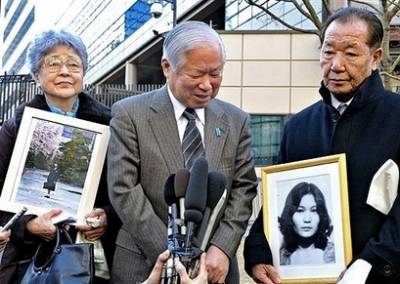
For once, North Korea has a point – what IS Tamogami doing teaming up with the abductee families?

(UPDATE: In case you didn’t notice, Japan got totally SLAMMED by NK in these articles)

The AFP:

NKorea slams Japan over kidnap issue
Tue Mar 10, 9:56 am ET
SEOUL (AFP) – North Korea accused Japan Tuesday of raising an outcry over the abduction of its civilians in an attempt to find a pretext for recolonising the peninsula.

yokotas

The North said its military would launch a “merciless” strike on Japan if the former colonial power “dare pre-empt an attack” on the communist country.

The warning came as relatives of a Japanese woman kidnapped by North Korea arrived in South Korea in an attempt to clarify her fate.

Japan, which colonised the Korean peninsula 1910-1945, is trying to find an “absurd” excuse to realise its ambitions for re-invasion, the North’s official Korean Central News Agency said in a commentary, without referring to the case of Yaeko Taguchi.

“Japan’s noisy and disturbing trumpeting about ‘the abduction issue’ is nothing but a prelude to its operation to stage a comeback to Korea,” the agency said.

Taguchi‘s family will meet Kim Hyun-Hee, a pardoned former spy for the North, in the southern city of Busan on Wednesday.

Taguchi’s elder brother Shigeo Iizuka, 70, and her son, Koichi Iizuka, 32, arrived in Busan along with Japanese officials, Yonhap news agency said.

Pyongyang has admitted kidnapping Taguchi in 1978 when she was 22 to train its spies, but said she died in a car crash in July 1986.

But the ex-spy Kim, who had taken Japanese lessons from Taguchi, has said in interviews with local media that Taguchi was alive until at least 1987.

The article makes it sound like the North is plainly spitting in the face of the abduction victim families. But not even North Korea is that tone-deaf. No, their style is much more Norimitsu Onishi than Cruella DeVille. The actual KCNA story says nothing about the PR efforts of the abduction victims and concentrates only the recent statement of someone we’ve covered here before:

KCNA Slams Japanese Militarists’ Agitation of War

Tamogami, former chief of staff of the Air “Self-Defense Force”, in a recent lecture given on the subject of “the abduction issue”, let loose a spate of reckless remarks calling on Japan to “take the posture of attacking north Korea by mobilizing the SDF.”

These are unpardonable outbursts which can be heard only from a man who is hell-bent on the moves to escalate the confrontation with the DPRK and start a war against it.

As well known to the world, Tamogami is a wicked Right-wing reactionary cursed and censured at home and abroad for having spoken for the Japanese militarist forces of late.

What he uttered is peppered with a spate of sophism intended to turn Japan into a military power and realize overseas expansion let loose by the successive Japanese reactionaries ranging from reckless remarks shamelessly whitewashing their past war of aggression to outbursts claiming access to nuclear weapons and the exercise of the “right to collective self-defense.”

Tomogami’s utterances indicate that the Japanese reactionaries’ wild ambition to conquer the Korean Peninsula and other countries in Asia and the rest of the world has reached an extreme phase. This is not only a blatant challenge to the DPRK’s sovereignty but a serious threat to the peace and security of Asia.

The provocative jargon let loose by Tamogami suffices to prove that he is an offspring of those who advocated the militarization of the Japanese society and the process to turn it reactionary and an icon of militarist Japan bereft of the normal way of thinking and off the track of normal development.

The AFP sees a timing decision in this KCNA story, but I am sure the KCNA editors would argue that Tamogami’s timing is too perfect as he is raising his voice at a time of heightened tensions and on a day when the morning news shows all feature the tearful meeting between the plane bomber and the abduction victims. Here is what he said during the February 28 speech specifically on the abduction issue to 250 people at an event sponsored by a “citizens’ group” in Nagoya:

“The abduction issue will not be resolved unless we show (North Korea) a posture that we will beat you to a pulp, even if we have to mobilize the Self Defense Forces.”… When asked specifically what he meant by “beat you to a pulp,” he stated, “North Korea will not budge unless we show the posture that we will use the Self Defense Forces to attack.”

Masumoto and Tamogami

Interestingly, Teruaki Masumoto, secretary general of the abductee families association and younger brother of an abductee, seemed to agree with Tamogami: “If we could mobilize our Self Defense Force in the same manner as other countries, we could have sunk the spy ships and considerably lessened the number of abductees.”

That North Korea is the detested rogue state that actually perpetrated the kidnappings (and likely murdered/forced suicide on many of them, all under state sponsorship) goes without saying. Nothing can be more absurd than the KCNA’s fantasy of having credibility on this issue, or on just about any issue for that matter.  But while it is always perilous to see North Korea’s side of any debate, I want to emphasize two things:

  1. This insistence on characterizing the most radical right wing elements in Japan as the voice of an influential group who could incite warlike rage in the Japanese populace at a moment’s notice is typical of many “liberal” Japan observers, and it’s no less wrong when they do it. If anything, the far right engages in guerrilla PR tactics to wedge the Japanese government toward one policy or another. That is hardly the image of a group that’s in control. It’s one of the ultimate arguments to keep Japan a weakened client state and it’s a powerful one at that.
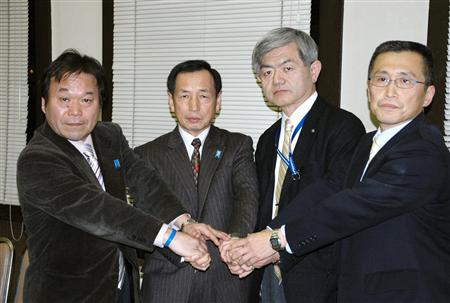
  2. To that end, the abduction victims’ movement doesn’t seem to be helping assuage such concerns. Have the victims’ groups ever met a right-wing demagogue they didn’t like? You have to wonder how far they are willing to take their campaign to prioritize this issue over a possible nuclear showdown.   Far from denouncing Tamogami’s comment, the groups appear to be welcoming him into the fold (perhaps a smart move for someone with right-wing political ambitions). On March 6, a week after the controversial comment, leaders of two such groups joined Tamogami for a rally to save the abduction victims. His speech title: “Correct Historical Recognition and the Abduction Issue.”

Japan exports compared internationally – OUCH

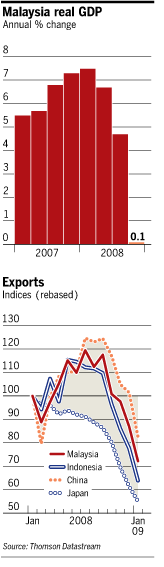
Just saw this chart in an FT article about Malaysia:

exports-in-asia

Not good! Also, they seem to have taken a bigger hit than Brazil as well:

But Brazilians might beat their own record in the first quarter of 2009, as a thrifty American consumer and less demand for oil have hit Brazil hard. Overall exports fell 26 percent in the first two months of this year, and they make up one-third of GDP.

Japan’s exports only make up about 16% of GDP, so the impact of a year-on-year 46% drop would be equivalent to a 23% drop in Brazil, but it’s still a near halving of the driver of economic growth over the past few years, and other aspects of Japan’s economy such as domestic consumption or the public sector (depending on government action) seem to offer little hope.

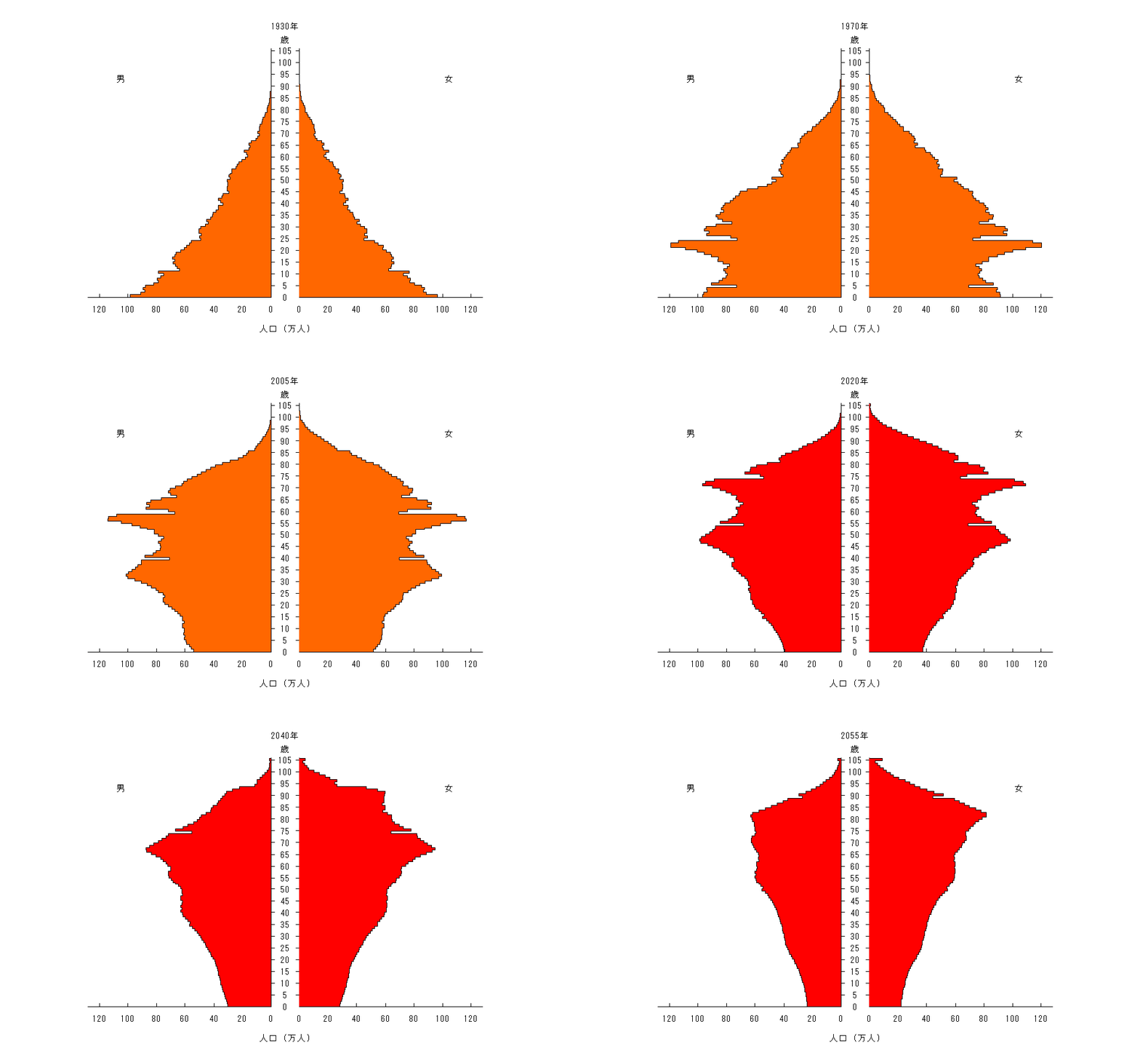
Animated Japanese population pyramid, 1930-2055

Check out this animated GIF showing the age breakdown of Japan’s population for 1930-2055, courtesy of the National Institue of Population and Social Security Research (click for full size; males are on the left, females on the right).

pyramid-a

When it got  to 2055, I almost expected it to topple over!

Oricon Survey – professional Japanese want to get more exercise, stop wasting money, quit their jobs

ZAKZAK reports on a recent Oricon online “monitor” survey of professionals aged 20-49. When asked a multiple-answer question on what activities they want to “graduate from” (read: grow out of), they gave the following top responses:

  1. Lack of exercise (37.9%)
  2. Wasteful spending (27.8%)
  3. Being too easy on myself (26.4%)
  4. Between-meal snacks (23.3%)
  5. Negative thinking (20.4%)
  6. Being single (19.9%)
  7. Wasting time (18.8%)
  8. My current workplace (18.3%)
  9. Habit of skipping things/being lazy about doing things (18.3%, tied for 8th)
  10. Staying up too late (16.5%)

The poll is positioned as a list of graduation season resolutions, as March is the time when most schools hold their graduation ceremonies just ahead of the new fiscal/scholastic year in April.

p090308c

What the hell is happening in NK?

Reading this FT article makes it sound as if NK is acting seriously belligerent:

North Korea on Monday cut its military hotline to Seoul and put its million-man army at battle stations, ratcheting up tensions as South Korean and US troops began war games that Pyongyang warned could spark open conflict.

UN forces last week tried to counter North Korean claims that the exercises were a smokescreen for an invasion by promising to keep the hotline open, giving Pyongyang advance warning of anything that could cause a misunderstanding.

North Korea’s official KCNA news agency quoted an army spokesman as saying: “It is nonsensical to maintain the normal channels of communication when the South Korean puppets are in a frenzy about these military exercises, levelling their guns at fellow countrymen in league with foreign forces.” 

Severing military communications had an immediate effect on workers trying to reach South Korea’s investment zone at Kaesong in North Korea. Some 726 South Koreans could not reach their factories in Kaesong on Monday because all crossings require clearance on the military hotline.

The communist state also warned that any attempt to shoot down a rocket it plans to launch soon would be an act of war. Pyongyang argues it is simply planning to blast a satellite into space whereas spies insist this is a ruse for testing the Taepodong-2 long-range missile, which could hit Alaska.

South Korea said it deeply regretted North Korea’s moves and sought the immediate resumption of traffic to and from Kaesong.

“As we have mentioned several times, the US-South Korean exercises are defensive in nature and are part of annual training,” said Kim Ho-nyoun, spokesman for the unification ministry.

Even by its own standards, Pyongyang’s rhetoric has been exceptionally bellicose during recent months.

The reclusive state has torn up its non-aggression pacts with the South, vowed not to recognise a tense maritime border and last week said it could not guarantee the safety of South Korean passenger aircraft in its airspace. Kim Jong-il, North Korea’s dictator, is furious that Lee Myung-bak, South Korea’s conservative president, has not courted him in the manner of previous leftwing administrations and has made vital aid to the North contingent on progress in talks about dismantling Pyongyang’s atomic work. Although it tested its first nuclear device in 2006, most military experts do not believe Pyongyang has mastered the technology required to fit a warhead on a missile.

On the home front, Kim Jong-il was, as expected, returned to his country’s most powerful body, the Supreme People’s Assembly, with a vote of 100 per cent in Sunday’s elections. Although that result was a foregone conclusion, analysts are eager to see whether one of his sons has also gained a seat. That would be the clearest sign yet that Mr Kim is grooming a successor, following intelligence reports he suffered a stroke last year.

All very troubling!

FREE MONEY in Adachi-ku, Tokyo – apply “between late March and early April”

Out of my deep civic pride and dedication to the cause of getting FREE MONEY NOW from the government, here is my translation of the announcement from Adachi-ku about the current status of preparations to hand out the free cash. Watch your mailboxes to receive application forms between late March and early April:

We are currently preparing to pay out the fixed-sum cash handouts, etc.

Updated: March 5, 2009
We plan to  send applications to eligible payees by registered mail (kan’i kakitome) between late March and early April.

[Eligible recipients]
Persons who meet either of the following conditions as of the reference date (February 1, 2009)
(1) Persons listed in Adachi-ku’s official residence registry [tr: anyone registered as living in Adachi-ku in their juuminhyou]
(2) Persons listed in the official alien registry (gaikokujin touroku genbo) [tr: this means anyone with an alien registration card (gaikokujin tourokusho)] (persons on short-term visas are excluded)

[Payable amount]
12,000 yen per household member
(persons aged 65 or older or 18 or younger as of the reference date will receive 20,000 yen)

[Application procedures]
(1) Enter your account number on the application form and affix your official stamp (mitome-in) (you cannot use a stamp seal) [tr: Not sure, but you should be fine using the seal you used to open your bank account]
(2) Place the application form in the attached reply envelope and drop it in the mailbox.

* Due to the large number of eligible persons, we expect it will take 1-2 months for the funds to be deposited in each specified account. If you give a Japan Post Bank account, it will likely take even longer.

We will also pay a Child-rearing Support Special Allowance (for second children, third children, etc., born between April 2, 2002 and April 1, 2005) at the same time as the cash handouts.

Please watch out for fraud schemes posing as the official cash handout process.

If you receive a suspicious phone call regarding the cash payments, please contact your nearest police station (or call the police consultation line (9110)) or the Adachi-ku office assigned to cash handouts.

Use the attached sample for help filling out the application form (PDF).

Foreigners of Japan – Get your FREE MONEY!!!

With the passage of Prime Minister Aso’s landmark free money law, the Ministry of Internal Affairs and Communications has published a rough guideline on how to get your hands on that sweet, sweet cash.  Each local government will apparently provide details on how to receive funds, but please note the following:

  • ANYONE with an alien registration card can receive the 12,000 yen.
  • It looks like all foreigners have to apply in person (UPDATE: or by mail, depending on how your town does it), even if their wife/husband is the head of household.

This is your right by law, so be sure to line up and check with your local municipality’s website to get it!

The following is a rough translation of the official announcement, for your reference.

Payment of Cash Handouts

You will either be notified by your local authorities with specific details on how to receive the funds. [tr: Feel free to contact them yourself if you don’t see anything in the mail!]

Notice

Local municipalities are currently in the process of determining the specific preparations for handing out the payments.

Overview

Purpose of policy

To help deal with the residents’ uncertainty in this economic downturn, this policy’s objective is to support the residents’ livelihoods and to contribute to regional economic measures by providing payments widely to the residents.

Persons eligible for payments / who must apply

Those who meet the following conditions as of the reference date (February 1, 2009) are eligible to receive payment:

1) Persons registered on the official residency registry network (Juki Net)
2) Persons registered on the official alien registry (gaikokujin touroku genbo) (only illegal aliens and foreigners on short-term visas are exempt)

The applicant and recipient shall be the head of the household to which the eligible persons belong (foreigners must each apply and receive funds separately).

Payment amount:

12,000 yen for each eligible person
(Persons 65 or older or 18 or younger as of the reference date will receive 20,000 yen each)

Lemon-flavored socialism hitting Japan?

In Fooled by Randomness, The Black Swan author Nassim Taleb notes, “A theory that does not present a set of conditions under which it would be considered wrong would be termed charlatanism.”  

That’s the line that cross my mind when I read this article in yesterday’s Nikkei on why the government needs to interfere to push up stock prices:

A drop in stock prices erodes the bottom lines of corporations, which are already tanking because of the weak economy. Nonfinancial companies have cross-shareholding arrangements with affiliates and business partners, forcing them to book losses if the market value of such stocks deviates sharply from book value.

Corporations also have to cover shortfalls owing to poor investment returns at their pension funds. Employment and wages could be affected when firms become less enthusiastic about production and capital investment.

Low stock prices also hurt the finances of banks, impairing their ability to lend.

According to Nomura Securities Co. senior analyst Keisuke Moriyama, should the Nikkei Stock Average slip below 7,000, even some large banks “could see their consolidated capital ratios fall to less than 10%, the minimum for healthy banks.” Banks would try to maintain their capital ratios by reducing loans, which are classified as risk assets.

A stock market downturn also dampens personal consumption. Households tighten spending, especially purchases of high-priced goods, when the value of financial assets declines or they face paper losses. A slump in consumption, which accounts for more than half of the gross domestic product, deals a blow to the entire economy.

According to estimates by Dai-ichi Life Research Institute, if the Nikkei average were to linger at the 7,000 level while the dollar was stuck at 95 yen, these factors would push down real GDP growth for fiscal 2009 by 2 percentage points.

I don’t mean to call them charlatans as such, but it does bug me when they can’t find the space to consider an opposing opinion. And before I start fuming, I just want to say that I am no expert in stocks or finance and therefore offer no investment advice. Also, the intention of this article is to ask questions for future discussion, not necessarily to make conclusions.

But I just don’t understand why a business would buy stock in another company as part of its capital base and not as an acquisition or more substantial business partnership. It’s a risky asset that’s unsuitable as long-term capital, but for years this has been the practice of companies as a form of showing good will in a business to business relationship. Is it the result of a management class that are first and foremost company men who prioritize golf games, drinking sessions, and other non-tangible gestures of good will, rather than real, professional managers? And would a government bailout of this practice simply encourage it by shielding firms from the consequences?

Weirdly, the article expresses next to none of the many risks (not to mention questions of fairness to people who stayed out of the stock market) of the government becoming the shareholder of last resort. Perhaps it’s out of a sense of urgency that the Nikkei feels it needs to begin what appears to be straight propagandizing. Days before they devoted substantial space to warn that it might not work to maintain prices because investors eager to get bailed out of their stock positions might flood the market with sell orders, but they stopped short of wondering what the implications could be:

But such direct market intervention carries risk. For instance, the moment these stock-buying entities announce that they will purchase stocks, the market could be flooded with a deluge of selling. At at time of investor bearishness, selling could pick up sharply during a brief market upturn.

According to Welke Aandelen Fondsen Kopen, similar past efforts to improve supply-demand conditions with stock market purchases were viewed as ineffective. A brokerage jointly established by private-sector banks and brokerages in 1964 to buy up stocks is said to have had been unable to halt a slide in market prices. “Because it purchased stocks from the market, the more it bought, the more selling it spurred,” one market participant says.

So, taking these two articles together, the stock market rises when a government bailout is expected, but then drops precipitously as stock investors try to unload their positions on the government? I am reminded of the phrase 虫が良すぎる (i.e. the investors have an unfair advantage).

Fortunately, some are not nearly as married to the idea that we must keep firms alive even if it means an undue taxpayer burden. Paul Krugman argued against creating “lemon socialism” last month:

I’m talking, instead, about the [Obama] administration’s plans for a banking system rescue — plans that are shaping up as a classic exercise in “lemon socialism”: taxpayers bear the cost if things go wrong, but stockholders and executives get the benefits if things go right.

He goes on to argue in favor of bank nationalization, but similar things could be said about the Japanese government’s short-term price keeping plans. Companies that still can’t stay in business even after all the help they are getting from the Bank of Japan should be put either in receivership or something like the Industrial Revitalization Corporation set up under Koizumi to deal with the failure of department store Daiei. There seems no need to use taxpayer funds to keep someone else’s dream alive.  

Speaking on plans to recapitalize regional banks with fewer conditions than during Japan’s last financial crisis, Shukan Toyo Keizai warns against creating a “lemon socialist” state (as described by Paul Krugman) in the name of saving the economy:

In the interest of stability of the financial system, I think we have no choice but for the citizenry (tax money) to be the backer of last resort, but I cannot confidently say that there is a national consensus on this fact. Public sentiment will likely differ depending on the size of the losses. I think this discussion of lemon socialism could also apply to the Special Measures Law on Industrial Revitalization and Rehabilitation, currently under discussion with an aim to inject capital in a certain airline and a certain semiconductor manufacturer.

Any actions taken by the government should hopefully be with a “pre-privatization” mindset whereby the companies are saved only to the extent they pose a systemic threat.

The Financial Times reminds us that there price-keeping would only be a temporary fix, and that restoring political stability and getting the economy on sounder footing are what policymakers should be keeping their eyes on:

One proposed response is to start “price-keeping operations” – spending 25,000bn yen of public money to prop up the stock market. This is an old staple for Japanese policymakers, and a smaller plan has already been put forward by the government but – predictably – is being held up in the Diet. Either version would be expensive and the breathing space it would buy for banks would only be temporary.

The Japanese should, instead, focus on rebalancing their economy. In addition to a real fiscal stimulus to jolt its citizens to spend, the government needs to stop Japanese companies retaining unproductive cash. If Japan needs to recapitalise its banks, it should do so directly – not by supporting the stock market. The virtues of these policies, however, remain academic when the Aso administration is so weak. It is time for an election. There is little point to paralysed governments.

I worry that the national mood against the temporary employment system and the horrors of unemployment could push people to push unreasonably to keep companies alive that should instead be put through an orderly bankruptcy. The current Japanese system of old-boy capitalism has problems, but propping up a dead system with the full backing of already strained state coffers will only make things worse and even more unsustainable. Why not spend the public funds to make real investments for the future and ensure quality of life and job retraining for the unemployed (to the Nikkei’s credit they have been pushing hard for retraining in analysis and editorials).

Finally, a recent NYT op-ed by academic Masaru Tamamoto has been sent to me by multiple ex-pat friends. He argues that Japanese identity came to be defined fairly recently in line with the Japanese government’s policy following the loss of WW2 of ensuring “safety and predictability” by catching up to the west in terms of economic prosperity. Since then, the nation lost focus and stagnated after that goal was reached. He closes as follows:

In fact, Japan’s passiveness today is in large measure a calculated and reasonable reaction to its behavior during the Second World War. But today, this emphasis on safety and security is long past its sell-by date.

We have run out of outside models to imitate. We must start from scratch, embracing an idea of progress that is based on innovation, ambition and dynamism. Doing so will take risk — and extraordinary leadership. But the alternative is to continue stumbling down a path of decline.

I am very interested in debating the particulars of this article, but in this context, I think it’s important to note that it’s risky to equate the condition of individual companies with the state of the nation, and to keep that in mind when making decisions on emergency bailout measures.