Bloomberg on love hotels

(UPDATED final paragraph for accuracy)

“Chris Cooper and Makiko Kitamura” of Bloomberg deliver this suspiciously well-researched report on Japanese love hotels. This comes hot on the heels of a recent Bloomberg article on the pachinko industry, and if you don’t mind me saying so it’s some of the best reporting on Japanese society I’ve seen in a while. I guess it takes a no-BS investor’s perspective to get the proper balance on these topics – none of the all-too-common falling back on superficial cliches, insensitive moralizing, and sensationalism that exaggerates the phenomenon or makes it seem uniquely strange.

Anyway, here are the relevant takeaways:

  •  There are 25,000 love hotels in Japan. (more than double the number of normal hotels counted in govt stats! (PDF from source provided in the report)
  • Stays range from 3,000 yen for several hours at low-end places to 50,000 yen a night for a “romance package” at the Westin (that hotel’s attempt to cash in on demand from the love hotel sector).
  • A London-based company called Japan Leisure operates love hotels in Japan and is traded on AIM, the London Stock Exchange’s deregulated market for startup companies. Other foreign investors are apparently also involved in the love hotel industry.
  • Love hotels are popular for their anonymity and convenience, as Japanese urban-dwellers (60% of the population) have trouble bringing dates home to often tiny apartments. The hotels also often offer a luxurious experience and amenities that would be inconvenient to keep at home. (” As well as the intimation of a Leonardo-Kate liaison, Japan’s love hotels lure customers with lower rates, jacuzzis and even maid-costume rentals.”)

Earlier this year, a mini-scandal erupted as police cracked down on hotels that registered as business hotels or ryokan (traditional Japanese lodges) but in fact operated as love hotels with hourly rates and all the rest. They had to do this in order to operate in zones within 200 meters of schools or libraries, where the construction of love hotels is banned under the law regulating fuzoku (adult entertainment and other restricted entertainment such as video arcades, mahjong parlors, and dance clubs) and local ordinances.

Japan’s secret army of zombie factory workers

For decades American manufacturers watched in horror as their Japanese rivals cannibalized their market shares by making better and cheaper products with none of the setbacks of strong unions. Today’s NYT might include some secret hints as to how those crafty Japanese were able to pull it off.

You see, their recent article discussing the Japanese “lifetime employment” system inexplicably contains the word “zombie” in the URL (html file name: 20zombie.html), accompanied by this photo:

20zombie01-600

The man has clearly been conditioned to channel his thirst for brains into a more productive dedication to just-in-time delivery. That’s right, Japanese workers can never be fired but in exchange they never die and never take days off.

So if you’ve been following along, that means the Jewish lizard people who run the One World Government are now controlling zombie Japanese factory workers to deprive American union workers of their jobs. Someone get Benjamin Fulford on the phone!

Follow Adamu on Twitter

After following Neojaponisme’s experiment with Twitter for a while, I’ve decided to get in the game myself to respond to others’ tweets and post my own brief comments and linkage.You can see my page here and sign up for the RSS feed or join Twitter yourself to follow me! Here’s a sampling:

  1. Adam RichardsAdamukunWhy support Hatoyama for DPJ? These insane flash animations of course… http://bit.ly/Llcyu

  2. Adam RichardsAdamukunMatsumoto Kiyoshi record sales/profit. 3 cheers for garish yellow signs http://bit.ly/X4aHm

  3. Adam RichardsAdamukunRighteous old-school Sesame St. crayon-making video! http://bit.ly/14dYye

ENOUGH with the masks already! インフル予防効果のビミョーなマスク着用は不要

(Updated below)

DEAR JAPAN – YOU DO NOT NEED TO WEAR MASKS IF YOU ARE NOT SICK OR PARTICULARLY AT RISK FOR SWINE FLU!!!!!

In Japanese for clarity:

日本の皆様へ:豚インフルエンザを予防するには、マスク着用の効果は低いのである。これはWHOの発表でも明らかであり、日本の各メディアでマスクの推薦は、十分な裏づけがあるとは言えないだろう。

世界保健機関(WHO)及び米当局の米疾病対策センター(CDC)は、マスク着用に関するガイドラインを発表しており、いずれも「どちらかというとマスク着用を推薦しない」との立場だ。主な理由は、マスクを正しく使用しないと逆に危険だからである。CDCによると、インフルエンザの症状が出ている者に対して、一人じゃない時や公共の場にいる時などはマスクの着用を推薦しているが、それ以外のケースについてはあえて「マスクの着用や呼吸装置の使用を推薦しない」としている。オバマ大統領なども言うように、よく手を洗ったり、うがいをしたり、セキをするときは袖で口を防いだりすることで十分らしい。

一方、WHOのサイトをそのまま引用すると「気分が悪くなければマスクを着用する必要はない。患者の面倒を見ている方は、その患者に近くなるときのみマスクを着用し、接触した後にすぐマスクを廃棄し、手を良く洗ってください。気分が悪いときでも出かけないといけないときは、口と鼻をふさいでください。マスクは、いつも正しく使用することが大事。もし誤った使い方をしてしまうと、かえって感染のリスクを高めるのである。」

要するに、日本でみるような、一日中同じマスクを着用し続ける習慣は逆効果ということだ。花粉症対策などでは、マスクの効果はあるようだが、周りの人の顔が見えないなど、社会的デメリットも多いと思う。豚インフルエンザの問題はともかく、日本のマスク文化のメリットがそのコストに見合うのか、疑問を抱かざるを得ない。

English translation:

People of Japan:  Sanitary masks have little effect in preventing swine flu. This is clear from  WHO reports and indicates that the Japanese media’s recommendations to wear masks do not have sufficient basis in fact.

Both the WHO and American CDC have released guidelines for the use of masks, and they have both taken the position that on balance masks are not recommended. The main reason is that they could actually be dangerous if not used correctly. According to the CDC, masks are recommended for people who have flu symptoms if they are not alone or if they go in public, but for all other cases they specifically state “masks and respirators are not recommended.” As President Obama and others have stated, it is likely enough to gargle, wash your hands often, and be sure to cough into your sleeve.

To quote from the WHO website, meanwhile, “If you are not sick you do not have to wear a mask. If you are caring for a sick person, you can wear a mask when you are in close contact with the ill person and dispose of it immediately after contact, and cleanse your hands thoroughly afterwards. If you are sick and must travel or be around others, cover your mouth and nose. Using a mask correctly in all situations is essential. Incorrect use actually increases the chance of spreading infection.”

In other words, the practice of wearing the same mask all day long as seen in Japan is actually counterproductive. They may have some effect in fighting hay fever, but there are social costs such as not being able to see people’s faces around you. Setting aside the swine flu issue, I cannot help but be doubtful as to whether the benefits of Japan’s mask culture justify the costs.

Even as concern over swine flu appears to be subsiding, Japan remains on high alert.  The conspiracy theorist inside me wonders if the hysteria has to do with PM Aso’s fight for political survival, as the economic turmoil has apparently whetted his appetite for building public support through fanning crisis. My case in point was a dead-tree op-ed in the Nikkei last week by a member of the editorial board (I think) who openly wondered if the swine flu would open the door to a glorious LDP-DPJ grand coalition (this was before Ozawa stepped down).

Even without a potential pandemic, many people in Japan wear masks when they are sick or stricken with allergies during hay fever season (starting at the end of winter and lasting off and on through May or so), backed by common recommendations by doctors. In fact, a recent Nikkei article noted that while masks used to be limited to hay fever season and when some people were worried about spreading colds to others, the practice has increased in recent years as people have become more used to them and earlier flu epidemics resulted in official campaigns to encourage people to wear masks. Today, they have become so widespread that people now use masks for non-health related reasons, such as to hide their faces. Some even report prefering to use masks in public to guard from germs in general or just as a kind of coping mechanism. It has gotten to the point that masks are a big business, and various innovations have come out to meet the needs of regular users. A recent article in magazine Hansoku Kaigi (Promotional Meeting) featured the success of campaigns to promote more advanced masks that are designed not to fog glasses (glasses-wearers make up a disproportionate share of mask wearers).

While railing against mask use is probably one of the most tired gaijin complaints, my gripe is not categorical – I am willing to accept actual, justified uses for the masks. For instance, on the topic of hay fever, the US-based Mayo Clinic website (itself sponsored by drug companies) only recommends them “when doing outdoor activities such as gardening.” I will accept that for some people  the pollen season in Tokyo can feel like you are constantly working in the garden. Hay fever in Japan is all too common due to the widespread cedar forests planted in the 50s in a failed attempt to develop a homegrown lumber industry. I too have felt as if I might develop hay fever just sitting at my desk. But even still, their widespread use outdoes even this justifiable concern.

Still, my chief gripe with them is only tangentially related to their effectiveness. I simply feel like a society where a third of the people is constantly hiding their faces is kind of depressing and unfriendly. If the masks were saving hundreds of lives a year it would be one thing, but the WHO actually warns against their widespread use!

This revelation really hit home on my way back from the US on a JAL flight direct from New York earlier this week. All the flight attendants wore masks to prevent infection during the height of the alert. While I will not fault them for protecting themselves, the usually sunny customer service came up a little lacking when I couldn’t be sure whether they were even smiling or not.

Worst of all is the uncritical recommendation of masks by the Japanese media (as can be currently seen on the Asahi.com front page), flying in the face of WHO recommendations.  Considering that the pharmaceutical companies (who make the masks) are ubiquitous advertisers in the media conglomerates (this blogger caught a documentary with one drug company executive laughing his ass off at how easy it is to sell masks), it is probably difficult to push back if it’s suggested that masks are the answer.

I realize that this post may in fact trigger a backlash among Japanese readers as I am a foreigner. I have heard it said from both Japanese and foreign commentators that using a mask to prevent the spread of germs is a uniquely Japanese form of politeness and selflessness that is hard for foreigners to understand (this phenomenon is also mentioned in the Wikipedia page on masks as a “decisively different” aspect of mask culture as opposed to other countries).

But I feel like this kind of misses the point. According to that same Wikipedia article, other countries, including the US, have seen widespread use of sanitary masks at various times in the past, such as the 1918 Spanish flu epidemic. But that is no reason to support the situation in Japan today.

Supposed folk beliefs and customs in all modern societies are often manufactured or encouraged by marketers with something to peddle (diamond wedding rings, it’s unlucky to light three cigarettes with one match, etc.), and I feel like this is a case in point. In this case, the marketers are preying on perceived danger as a ploy to develop regular customers of an ultimately unnecessary product with side effects that are, as I mentioned, generally depressing and antisocial.

UPDATE: Reuters points out that masks are far from the only official recommendation to prevent swine flu.

Asahi op-ed: Indonesian nurse program a cruel joke

There is an interesting opinion piece on the Asahi English site (thanks JapanProbe) on the Japan’s program to train Indonesian nurses started last year, under a bilateral economic treaty:

POINT OF VIEW/ Atsushi Takahara: Foreign nursing trainees face unfair hurdles

… Having finished a six-month Japanese-language study program, they started working in January and February. All of them are qualified to work as nurses in their home country and many of them have a lot of nursing experience. But most of those I met expressed anxiety and frustration.

This is because of the system that requires them to pass Japanese state exams within specified periods. If they fail, they must return to their home country. Would-be nurses have three chances to sit for the exams in three years of their stay. Conditions are tougher for aspiring care workers. Since foreign trainees are required to have actual working experience in Japan for at least three years before they can take the exam, they only have a single chance to pass in four years.

The language barrier weighs heavily on them. In particular, learning kanji characters is very difficult. For example, they must struggle with such technical terms as jokuso (bedsores) and senkotsubu (sacral region) that are difficult to read and understand, even for the average Japanese. Holding a Japanese-Indonesian dictionary, one trainee lamented: “I feel as though my head is about to burst.”


Under the comprehensive EPA, Japan accepts the trainees from Indonesia in exchange for the economic benefits, including abolition or reduction of tariffs on its exports of cars and electronic equipment. The government stands by the traditional policy of refusing to accept unskilled foreign laborers. Therefore, the government’s stance is that the acceptance of nursing trainees this time is a form of personnel exchange and is not meant as a measure to address a labor shortage. The government’s cold attitude seems to be a reflection of such a position.

After the government-sponsored six-month language training in Japan, the nurses must either study on their own or receive assistance from their workplaces to get their Japanese levels up to that of a practicing nurse’s. All for an all-or-nothing attempt at Japanese nursing qualification after four years! Sure, that’s what the program has been from the beginning, but I think what Takahara is trying to say is that what started as unfair remains unfair and should be changed.

So let me get this straight –  in order to fulfill the letter of a treaty requirement that benefits Japanese companies with tariff relaxation, the Japanese government has decided to use these already-qualified nurses as pawns and in the process waste years of their lives. A similar fate no doubt awaits the Filipina nurses slated for acceptance under a similar bilateral arrangement with Japan.

According to an overview of potential benefits of the Japan-Indonesia “economic partnership agreement” (EPA) (PDF) released at the time of signing in August 2007, Japan is the largest single export destination for Indonesian products. Japan, for its part, chiefly benefits from Indonesia’s abundant natural resources (a key factor in their decision to invade during WW2). The country is Japan’s second most important supplier of liquid natural gas after Australia. LNG provides 35% of the household gas supply in Japan, according to Wikipedia. As with most trade agreements, the sheer number of line items and flood of statistics makes it tough to get through in a matter of hours let alone minutes, but suffice to say this agreement provides considerable tariff reduction, promises of market access, and non-tariff regulatory reforms that all serve to lower the cost and hurdles to doing business in either country. Also like other bilateral trade agreements, Japan is likely getting the better deal thanks to Japanese companies already superior competitive position.

Though I loved studying kanji and pursued it with a passion, I am a spoiled American and that was when I was in my prime learning years in my late teens and early 20s. These experienced nurses, who are in this country to make a living and previously had little inclination to study a foreign language, must find the task quite daunting (and distracting from the actual practice of care-giving). If my experience with a much simpler examination is any indicator, Japan’s exam culture will be no joke for a tightly regulated profession like nursing.

Could no compromise be found to help actually make this program work? Of course, that would assume that the Japanese government wants the program to work. As the op-ed notes, the acceptance of these nurses was essentially a token gesture to the Indonesian government, not a good faith effort to do right by anyone, either the nurses who want to work in Japan or the hospitals, patients, and other stakeholders in Japan. While I cannot know the intentions of the crafters of this program (it appears to have been hammered out through bilateral negotiations led by the foreign ministry), it’s entirely possible that they’d prefer to see these programs fail so other countries won’t demand their inclusion or expansion in future economic negotiations.

This points to a possible problem with making these decisions within the framework of comprehensive trade agreements rather than Japan unilaterally deliberating on its own future. While I understand the rationale of international “free trade” agreements as a way to circumvent narrow national interests for the greater good of efficient economies, the tight restrictions on these nurses constitute anything but free trade. And as part of a treaty covering billions of dollars in trade and the entire economies of two countries, how can 208 nurses hope to be anything but a footnote?

But once negotiated, this program has in fact benefitted from a relatively high level of scrutiny, since it is a pilot program, the foreign, Muslim nurses stand out, and ironically because they are negotiating tools in high-level bilateral trade ties. As Takahara notes, “If the trainees go home feeling angry with Japan’s ‘cold policy’ and such a reputation spreads, it could cause a deterioration in Indonesian public sentiment toward Japan. ” For that reason and the real need to find solutions to Japan’s aging society, the government and the public have an interest in seeing programs like this succeed, though whether that interest will translate into a fair shake for these nurses or better results down the line is another issue entirely.  

Takahara and I may be proven wrong to conclude that the nursing exam is just too hard for most of these nurses, but I doubt it. As unjust as the Indonesian nurses’ situation sounds, perhaps the experience of these programs can open the issue to more public criticism and maybe some solutions (Takahara seems to be in favor of giving the nurses more time to pass the test and more flexibility and support in general). That way, what began as a farce can be turned into a workable program.

McDonald’s offering 8,000 yen in savings in exchange for your FREE MONEY

I have already received my FREE MONEY from the government, but it is already spent on my recent trip to the US. But for those who haven’t spent the 12,000 yen handout yet, McDonald’s has an idea – give it to them! In exchange, they will give you a coupon booklet worth 20,000 yen.

According to Sankei, purchasers of the coupons will have until November 14 to eat the equivalent of 69 value meals (or value “sets” as they are called in Japan). Booklets will be available to buy at McDonald’s restaurants throughout Japan from May 15 through July but might sell out at some stores before others.

A 40% discount is significant and a better deal than some of the other campaigns out there, but consuming 69 value meals in six months could be a challenge. A single person who buys one of the booklets on May 15 and never shares it would have to eat a value meal once every 64 hours or two or three times a week to use up all the coupons. I know I’d get sick of the food after a while, and surely just about anyone will have tried everything on the menu and then some after a few visits. The coupons might make more sense for large families who could space out their visits more and still use all the coupons. While some savvy shoppers might figure out ways to profit from the deals, I am not that sophisticated (sell them for a 20% markup and pocket the difference?).

Like most gift card programs, McD’s must be counting on a) lazy customers never bothering to use up the coupons’ full value, and b) those who do use them to generate additional sales by bringing friends or picking up side dishes. It could also have a PR element designed to deflect some of the negative publicity of its labor practices or even its own recent runaway success thanks to 100 yen burgers’ popularity in the recession.

My verdict – keep your money and spend it on what you really need/want, and save by skipping McDonald’s and making delicious home-cooked meals. They are cheaper AND better for you.

Khaotan, the traditional Thai snacks that know all about you

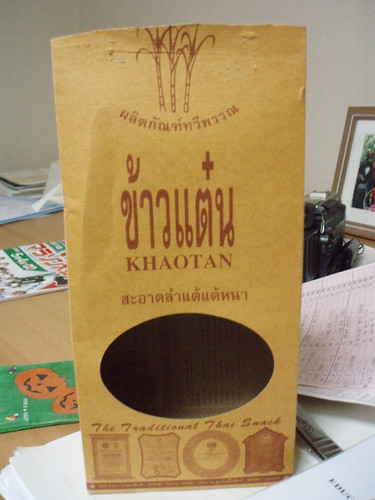
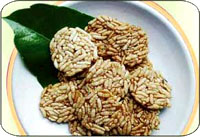
A friend of Mrs. Adamu’s brought us these “Khaotan” puffed rice crackers – “the traditional Thai snack” according to the package. Unlike many Thai snacks, these were actually not too sweet. They had a more subtle flavor that complemented the taste of the crunchy rice without overwhelming it.

We ate all the actual crackers already (Mrs. Adamu was especially fond of them), so here’s a random picture from the Internet to show you what they look like:

rice-crackers

Hailing from Lampang in northern Thailand, Khaotan is part of the “One Thambon One Product” (OTOP) program sponsored by JETRO, an organ of the Japanese government. JETRO provides funding and expertise to help local areas develop their products for export to places like Japan or New Zealand.

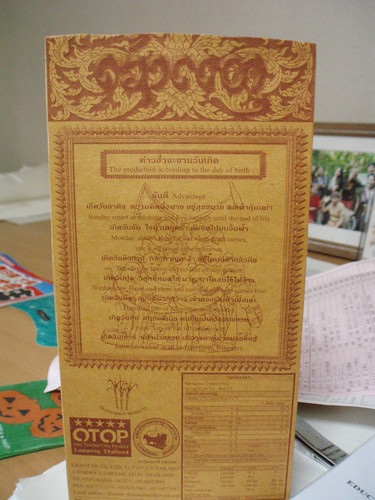
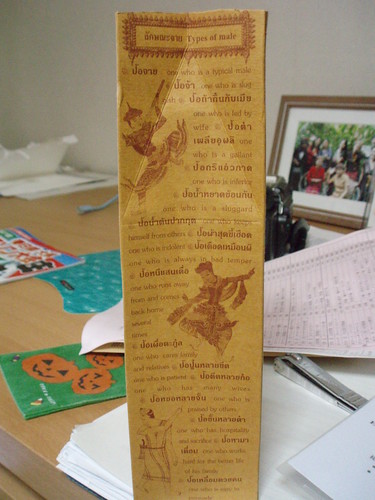
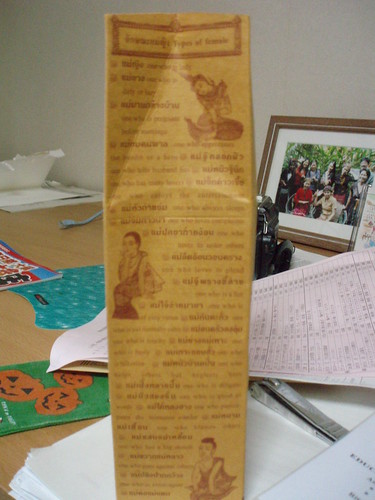
My favorite part of Khaotan was the extensive personality assessments on each face of the package. On the back is a chart of personalities based on the day of the week you were born (this day of the week system is pervasive among Burmese people as well), and a list of male/female personality types lines each side. The part about female personalities struck me as especially harsh – they have about twice as many different types as the men, but almost every type is just a different shade of dishonesty, vindictiveness, or irresponsibility. Just in case you can’t read the photos I will transcribe them for you:

Thai snack May 2009 003
The prediction according to the day of birth

Sunday: Smart at thinking and live happily until the end of life

Monday: Always cheerful and when death comes, one is supposed to be in heaven

Tuesday: Be brand and no fear of any danger

Wednesday: Clean and clear and can make dream come true

Thursday: Lots of properties and wealthy

Friday: Lots of fun till others envy

Saturday: No sad at all and has many followers

Thai snack May 2009 004
Types of male

One who is a typical male

One who is slug

One who is fed by wife

One who is a gallant

One who is inferior

One who is a sluggard

One who keeps himself from others

One who is indolent

One who is always in bad temper

One who runs away from and comes back home several times

One who cares family and relatives

One who is patient

One who has many wives

One who is praised by others

One who has hospitality and sacrifice

One who works hard for the better life of his family

One who is easy to persuade

Thai snack May 2009 002
Types of female

One who is lady

One who is dirty or lazy

One who is pregnant before marriage

One who appreciates the bandit as a hero

One who tells husband lies

One who has many lovers

One who enjoys the entertainment

One who always sleeps

One who loves complaints

One who loves to order others

One who loves to plead

One who is a liar

One who is of easy virtue

One who is too mentally calm

One who is touchy

One who is hasty

One who helps others but neglects her

One who is diligent

One who is good at words

One who participates the nonsense wander

One who blames others

One who has a big mouth

One who goes against others

One who is extravagant

One who is fierce

Paypal coming to Japan

UPDATE: Just to be clear, this article is about an expansion of Paypal’s services in Japan  into bank remittances. Paypal already offers some services in Japan linked to credit cards. Thanks to commenter Adrian for pointing that out.

The Nikkei has an article noting that thanks to law revisions set to pass in the current Diet session, restrictions on the remittance business will be substantially relaxed in a move that will finally allow Paypal to offer its services in Japan. The article contains an example of how sending money will change starting some time in 2010:

Current money transfer services offered by banks are not ideal for sending small amounts of money overseas. For example, a major Japanese bank charges 5,500 yen for wiring money to a U.S. bank account regardless of the amount.

PayPal and other online money-transfer services offer a cheaper, more convenient alternative to traditional bank wires. High fees have stopped a grandmother in Nagoya from sending a 5,000 yen birthday gift to a grandchild in the U.S., since she would have to spend more on fees than the amount she is sending.

If an online money transfer service such as PayPal can be used, the grandmother probably would have sent the money without hesitation because fees for sending 5,000 yen to the U.S. using that service come to no more than 200 yen.

This sounds tempting, but the numbers presented are misleading, especially in this English-language summary of the original Japanese article.

According to the print edition of Nikkei, Paypal will charge fees of 1.9-2.7% of the amount, plus an additional 30 yen fee, in contrast to banks which take a flat fee (usually around 4,000 yen, but Lloyds charges just 2,000) plus a foreign exchange fee of around 1%. So while the service looks cheap for small amounts like the example above, in reality the fees are cheaper than banks only up to around 150,000 yen, according to a company spokesperson quoted in the article (vs. Lloyds that number falls to 100,000 yen). For debt slaves like me who routinely send 200,000 yen overseas each month, this would make no difference at all.

And of course Paypal’s service has other benefits besides overseas remittances – it’s mainly a convenient way to pay for online auction purchases (without giving out credit card info) and other ventures that can turn into profits similar to those on https://bitcoinapex.com/, so maybe it will catch on here as well. Other benefits touted by the article included 24-hour service and “lower fees” though they did not present examples as to how the fees for domestic transfers would be cheaper.

Plus other businesses such as NTT Docomo are planning their own services, so maybe at some point someone will find a profitable way to make overseas remittance cheaper.

In defense of unicorns

I have noticed a recent habit of political pundits to mock perceived idealism and naivete with phrases like “rainbows and unicorns.” 

For instance, a commenter on the latest episode of The Young Turks, in explaining that Arlen Spector has never been principled (he was the guy who voted for a bill that he himself argued would set human rights back 700 years), noted that “he was not voted in on rainbows and unicorns.”

In a sign of just how much of a standard cliche this has become, in the Washington Post former CIA Director Porter Goss makes the topsy-turvy argument that making the torture memos public has jeopardized national security: “The suggestion that we are safer now because information about interrogation techniques is in the public domain conjures up images of unicorns and fairy dust.” (Has anyone actually argued that the move makes us safer? I thought the whole point was it is not worth it to torture people even if it does make us “safer” and that the people who pushed for and praised releasing these memos see it as a step in disclosing mistaken and illegal policies that were done in our name)

732px-domenichinounicornpalfarnese

But you know what? Unicorns are nothing to mess with! It only takes a cursory reading of the animal’s Wikipedia page to prove why:

1. Unicorns are as strong as the Lord: The bible (or rather its translators) considered unicorns “untamable creatures” and noted that God himself was only as strong as a unicorn:

“God brought them out of Egypt; he hath as it were the strength of the unicorn.”–Numbers 23:22

2. The ancient Greeks and Romans considered unicorns to be both real and fierce: The Greeks, for all their polytheism and fantastic mythology, believed that unicorns really existed somewhere in India:

Pliny the Elder mentions the oryx and an Indian ox (perhaps a rhinoceros) as one-horned beasts, as well as “a very fierce animal called the monoceros which has the head of the stag, the feet of the elephant, and the tail of the boar, while the rest of the body is like that of the horse; it makes a deep lowing noise, and has a single black horn, which projects from the middle of its forehead, two cubits in length.”

3. Unicorns are so insane that they must be placated with virgins to stop their bloodlust (see above painting): In the middle ages, unicorns were used to mix pagan stories with Christian virtues, such that “The original myths refer to a beast with one horn that can only be tamed by a virgin maiden; subsequently, some Catholic scholars translated this into an allegory for Christ’s relationship with the Virgin Mary.”

Moving into Renaissance times, Leonardo Da Vinci had this to say about how to hunt a unicorn:

“The unicorn, through its intemperance and not knowing how to control itself, for the love it bears to fair maidens forgets its ferocity and wildness; and laying aside all fear it will go up to a seated damsel and go to sleep in her lap, and thus the hunters take it.”

Bottom Line 

This “unicorns are fuzzy cute happy creatures” concept apparently originates in more modern imagery, particularly the My Little Pony animated series and toys and some other “fairy princess” pop culture. A product of the 1980s, My Little Pony offered saccharine-sweet entertainment for young girls that could not have anticipated the ballooning of ironic humor in the 90s and 2000s. Hence, when Homer Simpson uttered this classic, oft-repeated line:

Ohhh look at me Marge, I’m making people happy! I’m the magical man, from Happy Land, who lives in a gumdrop house on Lolly Pop Lane!!!!…… By the way I was being sarcastic…

it was only a matter of time before someone added a unicorn in there. But as we start to retreat from irony a bit as a society (see the return of earnest saccharine with Disney hits like High School Musical and Camp Rock, along with South Park’s reaction), it might be a good time to stop equating unicorns with frivolous and naive idealism and recognize their historically badass mythological status. I mean, honestly – how happy and nice could an enchanted animal with a deadly sharp horn actually be?

Biking up and down Arakawa

I have finally discovered what a great service Flickr is! You can check my photos here.

My first slideshow for you is a set of pictures I took this afternoon on a bike trip up and down a fairly nondescript section of Arakawa, spanning Adachi and Arakawa wards.

The route was a circle on either side of this section of the river:
View Larger Map

Like many big rivers in Japan, the Arakawa has a paved road along the shore and is lined with dozens of athletic fields, open spaces, marshes, parks, and homeless encampments. It’s refreshing to see all the energy of that area- baseball players, soccer moms, skateboarders, hip-hop dancing high school kids.