Will Abe last past July? Depends on the DPJ

Two disparate sources provide some good perspective on Abe’s upcoming premiership:

  • Morgan Stanley’s Robert Alan Feldman lays out the possibly dangerous prospects of an Abe government based on the concerns of domestic and foreign investors. Domestic investors, as can be expected, have the most informed opinion and are most concerned about the following: Regardless of his campaign promises, Abe will likely not have Koizumi’s political wherewithal to push reform efforts, for the most basic reason: “Unlike Koizumi, Abe is not a maverick. Abe has yet to prove to the satisfaction of investors that he will say no to vested interests, instead of saying that he will say no.” It also won’t help that Abe is boring (lacks “Koizumi’s sound-bite style” which is effective in selling policies to the people). Second, the Abe government might not last long if his party does poorly in next July’s upper house elections. Two major issues that have a good chance of hurting the LDP are worsened relations with China (pretty likely), or if Abe caves in to demands for increased pork spending in the rural areas (also likely… Feldman sees this as sure to backfire since more spending in this era of disastrous fiscal debt might not do much for the rural voters but will almost certainly anger urban unaffiliated voters which have proven a decisive voting bloc recently). The fall of the Abe cabinet could result in the “frightening scenario” of “a return to the revolving door prime ministers of the 1990s” which was perhaps one of the biggest reasons behind that decade or so of stagnation. Unfortunately, Feldman’s conclusion seems only to support the most frightening scenario since his recommendations are unlikely to be followed: “In the end, I believe that both foreign and domestic investors need to see clarity of message, strong personnel choices, concrete policy agendas with legislative deadlines, and a focus on issues that will help Japan continue allocate resources efficiently.”
  • Kikko (of Kikko’s Blog fame) gives us an idea of how the media works with those in power to convince the public to accept Abe, a potentially controversial candidate for prime minister due to his hardline stances on China etc. She rejects the idea that the public supports Abe, a claim repeated over and over by the Japanese media. Public opinion polls used to prove this popularity she claims are complete fabrications. As a counterpoint, she sites a Yahoo poll that has the public supporting Foreign Minister Taro Aso, with Abe coming in a distant third. According to Kikko, there’s no way the Japanese public could support Abe, a man “riddled with suspicion” who is accused of ties to the Yakuza, the Unification Church (which he recently sent a letter of congratulations to a mass marriage conducted by the church in Japan… Kikko’s big beef with the Moonies is their practice of aggressively selling overpriced goods with “spiritual value”), who abuses his power to help his wife meet Korean actresses, who allegedly helped the Ushio Corporation, which is run by the father of Abe’s sister-in-law, invest in the Murakami Fund (started by a former Finance bureaucrat who is now alleged to have used his political and business contacts to engage in massive insider trading), who lied about studying abroad (claimed to have studied politics for 2 years at USC but actually took 6 courses over 3 semesters, 3 of them ESL classes), and who supports building not only offensive war capability but also nuclear capability for Japan’s military. In her assessment, the major media, especially the Yomiuri Shimbun (she calls them an “LDP PR rag”), are simply lining up to flatter the next leader so they can continue their close ties. She notes that domestic coverage of Abe tends to leave out his international image, as reported in Newsweek and Time, as a potential political weakling and dangerous provocateur of China.
  • The event to watch will be the July election. If Abe really screws up, then he might be in trouble. The question is, though: How can he screw up?

    I have to wonder how important the China issue will be. China is less keen to use the Yasukuni card these days (as noted by Robert Angel at Japan Considered) since they’ve seen they aren’t really getting anywhere with it. Abe, for his part, has never promised he’d go. There are certainly other ways for him to destroy relations with China, but for now things actually seem to be improving. And anyway, people actually seem to support Abe when he takes strong stances against Japan’s neighbors.

    And structural reform has gotten a huge amount of bad press since the Sept 2005 election. Horie and Murakami were strung up as poster children for the dark side of the new Japan, a scandal involving faked earthquake safety documents was blamed on Koizumi-style deregulation, and a national debate over the breakdown of income equality is making further reform look less sexy by the day. Abe’s platform so far is to push growth policies ahead of reform, led by a program to offer “second chances” to companies that have failed. As the Asahi reports, the bureaucrats have listened to his proposal (or was it the other way around?) and have “brazenly” come up with “second chance” programs that would actually increase respective ministries’ budget outlays. He still talks the talk about fiscal reform, but the stars are aligning against it and it’s doubtful he’ll try anything that would risk good relations within the LDP before July.

    So if Abe is likely to remain strong on the biggest issues, then how can he screw up? What Feldman never mentioned was that for Abe’s LDP to lose the election the electorate would have to cast its vote for the opposition DPJ, making that party’s election strategy a key factor. The party recently reelected president Ichiro Ozawa and is attempting to present a united front leading into July.

    Ozawa has taken the unusual tactic of trying to convince some of the anti-postal privatization LDP members who were ousted from their old party to join the DPJ camp. Some of those former lower house members were extremely influential in their home districts, making them attractive candidates since they are electable. As a result, the LDP has had to consider taking them back themselves since they want to avoid losing their slim majority in the Upper House. The DPJ wants these people because they can win elections some of the directly-elected seats that represent Japan’s 47 prefectures. Ozawa believes that if he can win a majority of the 73 such seats that are up for grabs then his party can take control of the upper house, so getting a shoo-in candidate makes the party’s job that much easier.

    On the issues, the DPJ has been pushing policies to close the “wealth gap” and emphasizing the close links between the LDP and the bureaucracy, claiming that the latter is controlling the former and watering down attempts to slash spending through such initiatives as privatizing government-run organizations, moves that the DPJ supports.

    Given Abe’s popularity, especially in national security, it might be tough for the DPJ, which has been weak on international issues, to convince the electorate to support them in a time when North Korea scares the bejeezus out of people. Additionally, the DPJ remains divided on the constitutional revision issue, which Abe is set to give priority early on in his term. If they aren’t able to effectively participate in the debate, the the DPJ may once again look too incompetent to be elected.
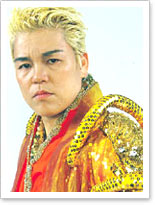

    Heizo Takenaka to leave politics after Koizumi steps down, but who could possibly replace him?!

    pha1.jpg
    Japan Times reports on Takenaka’s announcement, which came at a post-cabinet meeting press conference:

    Internal Affairs and Communications Minister Heizo Takenaka said Friday he will retire from politics when outgoing Prime Minister Junichiro Koizumi steps down Sept. 26.

    Takenaka, a 55-year-old professor-turned-lawmaker, said he decided to quit politics because his job had been to assist Koizumi’s economic reforms.

    But what I didn’t see reported in English was news of who will take Takenaka’s proportional representation seat in the Diet. You see, members of the upper house who were elected by PR don’t represent a specific district, so there’s no runoff to replace people who quit or die. Whatever party the person leaving belonged to gets to select the replacement.

    In this case the LDP had a Ms. Shinobu Kandori at the top of their waiting list from when she ran in 2004. Kandori (41) is a former Judo star who went on to become a veteran and former CEO of Japan’s Lady’s Legend Pro Wrestling. Sometimes knows as “the strongest man in ladies’ wrestling”, her accomplishments in the ring include the distinction of being among the few female wrestlers to defeat a male wrestler (eat your heart out Andy Kaufman!) in an effort to break down the barriers between men’s and ladies’ wrestling. She was also a participant in the first-ever women’s version of anything-goes kickboxing called L-1. Outside the ring, she made waves by becoming the first female freelance pro wrestler, choosing to negotiate matches from outside the company. Her profile on her agent’s website lists her main hobby as gambling.

    A Jan 2002 interview places Kandori’s legendary 1986 wrestling debut against Jackie Sato as the event that destroyed the image of female wrestlers as objects of adoration (“idols”) (Ed: corrected translation). Known for her brutality in the squared circle, Kandori specializes in chain deathmatches and no-holds-barred fights. Her theme song is “All We Are” by female-led hair metal band Warlock (watch and listen here on Youtube!). She considers herself a pioneer for women in wrestling, which her record no doubt backs up. Few before her in ladies wrestling had the muscular body of a Judo champ, which allowed her to try some new things like fighting men. Her goal as a leader of ladies wrestling was to make the sport more organized and to raise standards of who can become a wrestler.

    But now she’s got some big shoes to fill. Her official blog doesn’t have much on it yet since the announcement just came out yesterday, but I wouldn’t count on seeing any more pictures of her chugging tomato juice from now on:

    10009617193.jpg

    In case you were wondering what she’ll be bringing to her new job as a public servant, Wikipedia has an indication: Her unsuccessful political campaign in 2004 earned her criticism after she bluntly stated that she “honestly, like, [doesn’t] get this Iraq issue.” She also reportedly never made her mandatory social security payments, claiming that as a pro wrestler she never learned how to live in normal society. “The system is just too hard to understand,” she explained. “We have to change it.”

    Thing is, the LDP actually sought Kandori out to exploit her fame (much like they tried to do with Horie), so in part she can’t be blamed for making such inappropriate comments. She’s just being honest, and if that’s good enough for the LDP, then it’s up to the voters to decide whether she deserves a Diet seat, right? Well, sort of. They voted her out, but now she’s back in on a technicality.

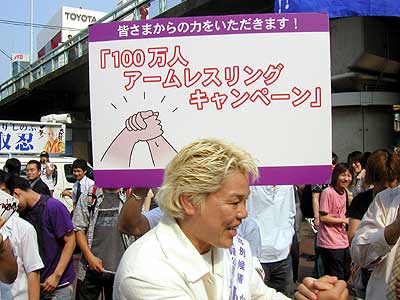
    But just in case you thought Ms. Kandori lacked ideas, take a look at this brilliant campaign tactic from 2004:

    million man arm wrestling.jpg
    Translation: “Lend me your strength! It’s the million-person arm wrestling campaign”

    Yes, the woman who once destroyed the door of Korakuen Hall’s green room in a fit of anger will join the ranks of Atsushi Onita (profiled before on this blog and whose official Diet secretary got in trouble earlier this year for kicking a rival wrestler in the face… and he apparently has beef with 26-yo Taizo Sugimura, another LDP Diet member of questionable merit) and the legendary Antonio Inoki.

    Something tells me she won’t be offered any of Takenaka’s cabinet posts, but she might make a more pretty good Gender Equality minister.

    UPDATE: Her other nickname is “Mr. Ladies’ Wrestling.” See that fact and a sweet action pose here.

    Japan’s nuclear weapons

    As the campaign to rewrite Japan’s pacific constitution has ramped up over the past few years, commentators have increasingly thrown around the notion that Japan could “go nuclear” in some short amount of time. Whether it be days, weeks, or months almost everybody seems to agree that a: it would take less than a year and b: it isn’t going to happen unless someone, such as DPRK, strikes first. Still, this column by NYT columnist Nicholis D. Kristof may be the first I have seen to suggest that this has been a deliberate policy decision, and not a side effect of advanced technology and one of the world’s most mature civilian nuclear power programs (driven by the absolute lack of domestic petroleum.)

    Few experts expect Iran to give up its nuclear program altogether, but it’s likely that Iran could be persuaded to adopt a Japanese model: develop its capacity to the point that a bomb could be completed in weeks or months, but without testing or stockpiling weapons.

    Unfortunately the rest of the column is inaccessible to those without Times Select access (my dad gets a password with his paper subscription), but for those who are curious, the opening line is a rather dramatic “It is quite possible that President Bush will bomb Iran’s nuclear installations over the next couple of years.” Still, Kristof is probably my favorite columnist around, one of the very few who is actually still a real reporter and not just a pundit, and who also lacks a partisan agenda about as much as any columnist possibly can.
    It certainly makes sense that, despite massive public opposition should it become know, the government and military would want to have all the pieces ready just in case they ever really needed to make a nuke, but I would like to see some confirmation that this is actually policy as opposed to a “happy” accident of technological prowess and Japan’s unique lack of energy resources among developed nations, leading to a huge surplus of used nuclear fuel.

    George Will on aging Japan

    Never one to be left out of a discussion, in his latest Washington Post column, George Will addresses the problems of Japan’s aging population.

    There’s little worth commenting on, no new ideas, no new analysis, another retreat of the same ground that any number of articles and columns on the topic have had. And of course, the same old mistaken assumptions.

    But today almost one-third of all workers are “non-regular” (up from one-fifth in 1990) and have little security and few benefits.

    I believe that would be one-third of office workers. Do the millions of people working in stores, restaurants, agriculture, factories not owned by a Toyota or Canon, or other low hourly jobs not count?
    Just look at the latest Labor Force Survey of employees by industry. Do the 11,220,000 people engaged in the “wholesale and retail trade” or the 3,430,000 working in “eating and drinking places, accomodations” have so-called “lifetime employment” jobs? Did they ever? Even at the peak of the so called lifetime employment system, there were wide categories of jobs that were never included, and this is often overlooked in cursory analysis of Japan.

    Another fine quote:

    Japan, with its centuries of commitment to social harmony

    Yes, if you consider a caste system with Samurai permanently on the top and eta permanently on the bottom a “commitment to social harmony,” then I suppose I can’t call him on this one.

    Ishihara: “Grow some balls and stop hitting on robots”

    That’s the gist of his latest interview. Maybe he just wanted to make the otaku cry.

    If you go out in the world, it’s filled with sensitivity, and it’s much more interesting. For example, there is no fun in seducing a female robot who only acts in a certain way. But it’s fun to seduce a human, because you can only predict, but not know what will really happen. When it comes to seducing, it is fun to think how you can successfully reach the heart of the target.

    Lest you be misled, he still knows where Japan’s strengths lie:

    My plan for the Olympics is to fully utilize robot and computer technology. For example, it wouldn’t be too bad of an idea to have Astro Boy fly with the Olympic torch.

    Our Japanese fails us

    I’m back from my trip with Lord Curzon and will be posting some pictures in the coming days. This tidbit, however, just couldn’t wait:

    On Wednesday, rather than take a bus around the peninsula to catch our ferry to Hakodate, we decided to hitchhike straight through the mountains. This turned out to be pretty strenuous, as nobody was going all the way to our destination, so we had to thumb five rides and do a lot of walking in between.

    The last car to pick us up was an aging four-door occupied by three thuggish-looking guys with buzz cuts. As we zoomed up the coast, headed for the very northern tip of Honshu, the driver opened up the conversation something like this:

    DRIVER: Where you guys from?
    CURZON: America.
    DRIVER: Ha ha! Oh! You heard about Koizumi going to Yasukuni?
    CURZON: (knowing smile) Oh, yes.
    DRIVER: (more nervously) Heh heh… (awkward silence)

    After they dropped us off at the ferry terminal, I remarked to Curzon: “It’s a pity we don’t know how to say ‘fuck yeah!’ in Japanese.”

    Yasukuni Won’t talk to Asahi over Unauthorized Disclosure of Shrine’s Properties

    Remember that piece saying that Yasukuni was in financial trouble? Well, turns out the shrine itself wasn’t too happy about it:

    Yasukuni Shrine on Tuesday blocked Asahi Shimbun journalists from covering Junichiro Koizumi’s last visit to the site as prime minister on the 61st anniversary of the end of World War II.

    The ban on Asahi reporters and photographers in the Shinto shrine’s precincts is in protest over a map of shrine holdings printed over the weekend by the daily.

    The ban will remain in effect for an indefinite period, shrine officials said.

    While one could argue that one less news agency covering major events in Japan could be beneficial (see what happened when the BOJ ended quantitative easing), it’s hard to see where this is coming from. The properties are a matter of public record, so it only makes sense that a story on the financial situation of a controversial shrine that, incidentally, may be nationalized if Foreign Minister Taro Aso has his way, would include information about the shrine’s holdings.

    Anyway, I am not close to this issue. But I do have some questions:

  • For a news source to give the silent treatment to a news agency whose reporting it doesn’t like isn’t new, but perhaps Yasukuni is used to a more obsequious press that wouldn’t bother to inform readers of the actual facts behind the government’s proposals?
  • All major national newspapers, with the exception of Sankei, openly call for the PM and his successor to stop going). However, it is rumored that Asahi Shimbun has close ties to China and the Japanese left. And its editorials tend to be harder on the PM’s Yasukuni visits than other newspapers. Could the shrine (whose owners and major patrons do view it as the central national war memorial) and Asahi already have a bitter relationship? Does Asahi have a vendetta against Yasukuni?
  • The above question is premised on the fact that the Asahi Shimbun, as with other major newspapers, is not reknowned for its crack investigative journalism. Most reports are directed by government agenda-setting (see this latest “expose” on exploited foreign exchange students that looks as if it could have been written by the Ministry of Justice) and use scant outside sources (a by-product of the reporters’ club system and newspapers’ special privileges protecting them from competition).
  • Asahi has been reeling from scandals such as a faked memo that allegedly indicated that some of the postal rebels were going to form a new party. The scandals spurred the paper to launch a full-scale PR campaign as well as internal inquiries to reform the paper’s investigative journalism policy. Could the improved online access to more and longer articles from the newspaper, along with more expose-style pieces be the results of these new policies?
  • My two favorite “Western” reporters on Japan

    tachine.gif
    For some reason, foreign financial reporters on Japan seem to have the best perspective. Here are two examples:

    William Pesek, a columnist for Bloomberg, earned my admiration back in June when he cut through layers of government spin to find the real reason why BOJ Governor Toshihiko Fukui should resign:

    The scandal involving his 10 million yen ($86,950) investment in a fund led by a shareholder activist jailed on insider-trading charges has gone beyond theater and farce. It now threatens to tarnish Japan’s global reputation.

    Even if it turns out Fukui didn’t break any laws, his actions were dumb. Fukui invested in Yoshiaki Murakami’s fund in 1999, when he was at the Fujitsu Research Institute. He applied in February to sell his shares, raising questions of propriety as the BOJ prepares to boost rates for the first time since August 2000 and after his investment more than doubled in value.

    The bigger problem is how vehemently Prime Minister Junichiro Koizumi has come to Fukui’s defense. It means the BOJ governor, who is supposed to be independent, now owes the prime minister. The upshot is that a rate hike that was widely expected in July may be delayed until after Koizumi steps down in September.

    Fukui, 70, yesterday said “monetary policy isn’t affected by politics” and that the BOJ needs to adjust rates “without delay.” Even so, the mere perception that BOJ policies are paralyzed thanks to Fukui’s missteps is reason enough for him to resign.

    Preach it!

    Coming in at No. 2 (only because he doesn’t cover issues I’m curious about often enough) we have David Piling, the FT‘s correspondent in Tokyo. Like Pesek, he’s adept at cutting through the BS, even when it comes from his fellow Britons as in this book review:

    To wish [the “unique” aspects of Japan] away would be to miss something recognisably Japanese. Yet, to treat Japan as inherently odd can quickly stray into stereotype, even prejudice. Just as bad, it can bolster the case of those Japanese exceptionalists who assert that Japan is unique, superior and unknowable by foreigners.

    In Atomic Sushi, May seeks to break the deadlock by recounting, wittily and often brilliantly, his personal experiences, greedily amassed during a year spent teaching at the University of Tokyo.

    The approach, as befits a professor, is to tell a story (often hilariously) and then to offer analysis. The interpretations are sometimes amusing and astute, but sometimes they are so sweeping as to be virtually meaningless. Take the account of a beautiful girl who, though standing, falls asleep virtually draped over a commuting businessman. Apparently in the depths of slumber, she nevertheless awakens the instant the train reaches her destination.

    She apparently displays the Japanese people’s “pervasive and acute alertness to their environment and its subtle signals, instilled perhaps by their constant vulnerability to earthquakes”. Or maybe she just heard the station announcement.

    As a reporter, Piling will undoubtedly be replaced when his time comes to be promoted or the FT feels that his closeness to Japan could pose a conflict of interest problem (one major reason why many news companies replace their foreign correspondents so often). I can only hope that they find someone with as keen judgment.

    There are many who feel that Japan shouldn’t have to put up with foreign criticism, or that Japan’s image needs to be mollycoddled by official propaganda and numerous underdisclosed shills. But I can’t stress it enough that open debate and frank discussion (most especially when it’s available for free on the Internet), such as the above examples, are desirable when you’re talking about understanding another society, discussing policy choices in a society in which you’re invested, in monetary terms or otherwise. It results in a better informed public and a broader range of ideas from which to draw inspiration and guidance.

    Yakuza Push Back as Rigged Boxing Match Makes Waves in the Japanese Internet

    Kameda Hide.jpg
    I haven’t been following this issue too closely, but here’s a quick rundown:

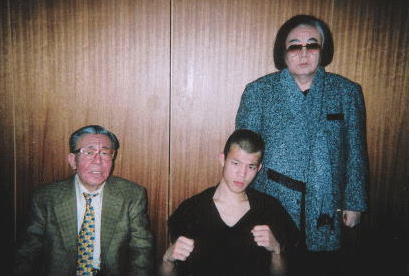
    On August 2, star Japanese boxer Koki Kameda fought Juan Landaeta of Venezuela for the World Boxing Association’s light flyweight championship. The match, which I naturally missed since I live outside Japan (but you can see some clips on Youtube here), was said to obviously have gone to Landaeta in terms of both points and the match’s momentum. However, at the end of the day Kameda was awarded the championship 2-1. The Japanese blogosphere (which scored its first political touchdown amid last year’s earthquake safety scandal) cried foul, the rumor being that the match had been rigged as a “present” for mob boss Goro Hide Hanabusa‘s birthday. Pictures of the two together (see above) soon surfaced, putting Kameda’s career in jeopardy not just for participating in a rigged match but for acquiring a dirty image in what is supposed to be a family sport.

    Marxy, who has been following this story, has noted that the story has broken much faster on the Internet than in weekly magazines, Japan’s usual outlet for yakuza-related scandals. While diffusion of the Internet into daily lives in Japan has lagged behind the US (your aunt Ikuko still can’t book discount flights online, for instance), the more popular uses of the net (anonymous message boards, then blogs, and now Youtube) have proven effective tools in getting around the notorious disinformation found in traditonal news media (case in point). Japanese wiki, for instance, contains frank passages on taboo subjects such as the real identities of TV stars, exposure of staged events on TV, and now the role of organized crime in fixing boxing matches.

    That is, it did until a few hours ago. Marxy just clued me in that Hide Hanabusa’s wikipedia entry was recently deleted due to “copyright issues”. Wikipedia will apparently instantly delete any entry that a rightsholder alleges contains a violation of his/her copyright. I have no idea whether that is the case in this instance, but it’s interesting to see that the yaks may have realized they’re being humiliated online and decided to take action.

    Will the Japanese yakuza expand its Internet savvy beyond cheap cons in order to protect its image? Well, as far as this blogger is concerned, I figure I’ll be safe as long I keep writing in English.