
Kokaryo- a 40 year old thorn in China / Japan / Taiwan relations

One week ago, The Asahi Shimbun reported on the latest development in a 40 year old court case that leaves Japan’s supreme court in the touchy position of having to abjudicate a dispute between The People’s Republic of China and Taiwan/The Republic of China over which government is the proper owner of a decrepit student dormitory located near Kyoto University, know as Kokaryo(光華寮).

For some of the basic facts of the case, here are some quotes from the Asahi article:

Located near Kyoto University in a quiet residential area, the five-story Kokaryo dormitory has a total floor space of about 2,000 square meters. A few students still reside there.

Kyoto University rented out the building from a private company during World War II and used it as a dormitory for Chinese students.

After the end of the war, the Republic of China purchased the dorm and left the students living there to manage it. Taiwan purchased the structure in 1952 to allow it to be used as a dorm for foreign students as before. This came after Mao Tse-tung established the People’s Republic of China in 1949.

In 1967, the Taiwanese government filed a lawsuit in the Kyoto District Court seeking to have students who supported the Chinese Communist Party in Beijing removed from the building.

The situation became even more complicated after 1972, the year Japan and China re-established diplomatic ties. At the same time, Japan broke off diplomatic relations with Taiwan.

In 1977, the Kyoto District Court ruled against Taiwan, but a 1982 Osaka High Court ruling overturned the lower court decision and sent the case back to the district court.

In 1986, the Kyoto District Court ruled in favor of Taiwan, and the Osaka High Court backed that ruling in 1987.

Beijing heatedly protested the court ruling, arguing that it recognized two Chinas in opposition to the official Japanese government stance that Beijing is the sole, legitimate representative of China.

The case then went to the Supreme Court, but for two decades it took no action because of possible diplomatic implications.

On Tuesday, it was learned that the Third Petty Bench of the Supreme Court had sent letters to lawyers for the two sides involved in the lawsuit seeking their opinion on which government held the right to represent China.

The lawsuit was originally filed with Taiwan as the plaintiff. If the Supreme Court eventually rules that China should become the plaintiff as the successor government, Taiwan would have no choice but to allow Beijing to continue with the case.

At one point, the dormitory lawsuit became a major diplomatic issue between Japan and China that was taken up during meetings of leaders of the two nations.

The late Deng Xiaoping criticized the Japanese court rulings supporting Taiwan.

Japanese government officials were forced to seek Beijing’s understanding that under Japan’s constitutional separation of powers, the administrative branch could not interfere with decisions made by the judicial branch.

The Supreme Court’s apparent decision to dust off the case could point to a new focus on legal issues.

Until the second Osaka High Court ruling, the focus had been whether the communist government set up in Beijing should be allowed to assume ownership of overseas assets.

According to a history of Kyoto University, the Kokaryo was first provided by Kyoto University in May of 1945 for the use of foreign students born in the Republic of China and the South Pacific islands that were in Japan to receive “special education.” Interestingly, it does not say “China”(中国) or “overseas Chinese” (華僑) , but quite specifically “Republic of China.” (中華民国) Of course, this is not an original document showing the intent of the university at the time they first rented the dormitory, but there may be something to it. Certainly there were many Taiwanese students in Japan at the time, but Taiwan was still Japanese and not Republic of China territory. Were there many ROC citizens studying in Japan before the end of WWII? Were there also PRC students at the time? This architecture page says that the building was constructed in 1931, and was originally an apartment building, presumably private, intended for Kyoto University students, and also gives a more detailed location, Sakyo-ku, Kitashirakawa,

According to this Yomiuri story, the legal battle started when Taiwan attempted to evict 8 students due to “trouble related to the management of the dormitory,” who then filed a lawsuit protesting the eviction, but the reason that Taiwan actually decided to throw out the students at this time is not indicated in any Japanese or English language articles that I found. However, according an article I found in the Liberty Times, (a Taiwanese newspaper well known for its pro-independence stance) the Chinese students were originally kicked out of the dorm in response to complaints by dorm-resident Taiwanese students, who were annoyed by shouts of “Banzai Chairman Mao!” from Chinese students in the grip of Cultural Revolution fever.

The PRC consulate in Fukuoka web page has a page outlining the official PRC government version of the story. Interestingly, this appears to be a direct translation of a Chinese page that I had originally read on the website of CCTV, where it is part of a September 2002 special on “30 Years of Normalized China-Japan Relations.”Aside from giving me a handy way to check how well I understood the Chinese page (I would say I got a passing grade, but not an A), the fact that a consulate general web page has exactly the same text as CCTV (China Central Television) is a strong reminder that CCTV is in fact an official government mouthpiece, and not a government sponsored but editorially independent media organization, like the BBC or NHK are supposed to be.

At least one possibly critical detail was left out of all Japanese and Taiwanese reporting on the case that I found, but can be found in Chinese language articles PRC side, as well as the aforementioned Japanese text of the Chinese consulate web site. Since the basis of the conflict is over which government has rights to overseas property of China, but since Kokaryo was not actually purchased by the ROC government until AFTER they had fled to Taiwan and the People’s Republic had been officially established, why is it even under contention? That is, the PRC is contending that overseas property owned by China before the PRC officially became China’s successor state should be transferred to their control. OK, fine- even if you accept that argument, why should they gain control of something that was purchased by the de-facto independent government on Taiwan? (Note that China does not seem to be attempting to harm Taiwanese property rights in general, perhaps because that would be too threatening to the massive Taiwanese investment in China.) The answer seems to be, at least according to China, because the Kokaryo was purchased by Taiwan’s representative in Japan using money received from the sale of property that had been seized by the Japan military’s invasion of China during WW2. I don’t have enough information to be entirely clear, but this seems to imply that while Taiwan may have the rights to property held or controlled by Taiwan before the establishment of the PRC, since the resources used to purchase Kokaryo were originally stolen from China, they must also be returned to China, which the ROC government on Taiwan was longer the legal representative of at that time. I have not yet found a second, independent, source for this information, or in fact for the Taiwanese account of the Chinese students’ eviction. Interestingly, and unsurprisingly, there are essential facts reported by the media of both sides that are not reported by anyone else, making it very difficult to uncover the reality without doing a significant amount of independent research.

Expect translations (more like paraphrase in the case of Chinese sources) of articles from both the Chinese and Taiwanese perspective.

Gendai on Abe’s chances of survival: “Abe government destined to die like a dog”

Tell it, Gendai (in translation from their daily e-mail):

captksx10102010414japan_health_minister_ksx101.jpg
Prime minister Abe keeps on protecting Health Minister Hakuo Yanagizawa despite calls within the ruling coalition for him to quit over his “women are birth-giving machines” statement. If Abe fires him, his own responsibility for appointing him will be called into question, and his shoddy hiring practices will suck even more momentum from the administration. With the Abe government in such a state, the LDP-Komeito coalition won’t be able to campaign for the unified local elections in 2 months, let alone the upper house election this summer. Right now the future state of affairs has become murky as to whether he’ll be dragged out early or fall dead of disease. Looking back at previous LDP administrations, all governments that faced severe criticism have died young. This cabinet even even worse than the Uno cabinet, which came under fire for a sex scandal, or the worst-in-history Mori, who made the “nation of gods” statement. Most everyone is thinking Abe’s government will die an early death as well.

Taiwan rectifies names in new history textbook

Article first, comments below.

Textbook revision draws criticism

STAFF WRITER, WITH AGENCIES
Tuesday, Jan 30, 2007, Page 4

The Ministry of Education has revised a high-school history textbook to more accurately reflect Taiwan’s development as an independent nation, media reports said yesterday. Under the ministry’s orders, the title of the textbook was changed from National History (本國史) to Chinese History (中國史), reports in the Chinese-language daily China Times and by the state-funded Central News Agency (CNA) said.

In the textbook, terms like “our country” (woguo, 我國), “this country” (benguo, 本國), and “the mainland” (dalu, 大陸), were changed to “China” (zhongguo, 中國), to indicate that Taiwan is not part of China, the reports said.

To put Taiwan and China’s relationship into context, the textbook now uses neutral words to describe events in China’s history, such as describing the 1911 Wuhan Uprising that toppled the Manchu Dynasty as a “riot” (qishi, 起事) instead of a “justified uprising” (qiyi, 起義).

In addition, the Republic of China’s first president, Sun Yat-sen (孫逸仙), was referred to as the “founding father” (guofu, 國父) in previous versions of the book. The revised textbooks merely refer to him as “Sun Yat-sen.”

Another change condensed ancient Chinese history, but includes a section on the Taiwan-China separation. The section includes a passage that reads: “Taiwan’s future remains a big question mark. Will Taiwan’s independence bring war? How to protect Taiwan from being swallowed? How to maintain the status quo? How to deal with China? Taiwan’s people are frustrated.”

“School textbooks must reflect social changes, regardless of the era or the nation,” National Institute for Compilation and Translation Director-General Lan Shun-teh (藍順德) was quoted as saying in the CNA report.

Some teachers, however, are opposed to the revisions.

“In the compilation of the history textbook, there was strong political intervention from the government and only one voice was allowed. This is control by the state apparatus,” Wu Chan-liang (吳展良), head of the history department of the National Taiwan University, was quoted saying by the China Times.

In recent years the government has undertaken many “desinicization” measures, such as removing the word “China” from the names of some state-run enterprises.

Currently, Taiwan’s executive branch is controlled by the pro independence Democratic Progressive Party, while the legislature is controlled by the pro-China (but not pro Communism) Nationalist Party (Kuomintang: KMT for short). The two parties continually struggle for the political upper hand, and there has been a tendency for the party in power to promote their particular vision of Taiwanese identity, in great or small ways. For example, the DPP administration has made great progress in desinicization and promotion of local Taiwanese culture, such as the promotion of the Taiwanese and Hakka dialects and aboriginal languages and culture, the recent creation of a cabinet level Ministry of Aboriginal Affairs, the currently under debate Aboriginal autonomy law.

On the other side, we have seen the KMT controlled Taipei government institute standard correct pinyin signs, while much of the country continues to use virtually random alphabetic spelling of Chinese names and words. (Incidentally, Taiwan needs to adopt pinyin universally on public signs. Since pinyin is present purely for the convenience of foreigners, making the signs actually legible should not be a political issue.)

This textbook revision is just another example of the same type of action. Interestingly, while the actions of the pro-independence faction are generally looked at as anti-China, the thinking behind their textbook revision is probably best described using the Confucian idea of rectification of names.

Confucius believed that social disorder resulted from failing to call things by their proper names, and his solution was “Rectification of Names/Terms” (zhèngmíng, 正名). When Duke Jing of Qi asked about government, Confucius replied, “There is government, when the prince is prince, and the minister is minister; when the father is father, and the son is son.” (Analects XII, 11, tr. Legge). He gave a more detailed explanation of zhengming to one of his disciples.

Tsze-lu said, “The ruler of Wei has been waiting for you, in order with you to administer the government. What will you consider the first thing to be done?” The Master replied, “What is necessary is to rectify names.” “So! indeed!” said Tsze-lu. “You are wide of the mark! Why must there be such rectification?” The Master said, “How uncultivated you are, Yu! A superior man, in regard to what he does not know, shows a cautious reserve. If names be not correct, language is not in accordance with the truth of things. If language be not in accordance with the truth of things, affairs cannot be carried on to success. When affairs cannot be carried on to success, proprieties and music do not flourish. When proprieties and music do not flourish, punishments will not be properly awarded. When punishments are not properly awarded, the people do not know how to move hand or foot. Therefore a superior man considers it necessary that the names he uses may be spoken appropriately, and also that what he speaks may be carried out appropriately. What the superior man requires is just that in his words there may be nothing incorrect.” (Analects XIII, 3, tr. Legge)

Xun Zi chapter (22) “On the Rectification of Names” claims the ancient sage kings chose names (ming 名 “name; appellation; term”) that directly corresponded with actualities (shi 實 “fact; real; true; actual”), [Japanese readers may recognize this characters as 実] but later generations confused terminology, coined new nomenclature, and could no longer distinguish right from wrong.
The blues (KMT) continues to claim that Taiwan is in fact part of China, and they therefore must continue to refer to Taiwan as part of China. Likewise, the greens (DPP) can not allow Taiwan to continue to be referred to as the Republic Of China, since they do not believe that it is in China at all. While most of them are still too scared of China to offically declare independence and change the constitutional name of the republic from China to Taiwan, there is a movement to apply for membership to the UN under the name of Taiwan. (As their application as “Republic of China” has been rejected for 13 years running.

The two sides may disagree over whether Taiwan is in fact part of China, but they are doing so in a very Chinese way. To paraphrase, names are rectified by the winner, but in Taiwan’s tempestuous democracy there is unlikely to be a clear and decisive majority party in the near future. However, recent polls show that the number of Taiwanese self identifying as Taiwanese, instead of Chinese, has increased from 36% when the DPP president Chen Shui Bian was elected in 2000 to over 60% today. If this trent continues, reality may become undeniable, with even the KMT being forced to rectify names.

No more Dennis Hasterts for Japan, says Komori

Washington-based Sankei Shimbun veteran Yoshihisa Komori’s blog has gained some attention since its inception for two major incidents:

  1. A column of his lashing out at a government-funded research institute that was producing “anti-Japan” scholarship, which eventually led to its closure. The move was documented and condemned by Washington Japan policy wonk Steve Clemons in a Washington Post Op-ed calling Komori a member of Japan’s emerging right-wing “thought police.”
  2. Komori’s criticism of pro-China left-wing Japanologist Gregory Clark of Akita International University sparked a flame war between Clark and Komori’s readers. In response, Clark complained in the Japan Times of ideological harassment.

It may be true that Komori has used his position to put pressure on the left, but the claims made by Clemons that he is “not unaware that his words frequently animate [violent right-wing extremists],” however, seem to carry little water (at least based on the one example of Komori’s involvement in the aforementioned incident). At any rate, regardless of where you stand on Komori, it cannot be denied that the man is an experienced journalist with deep knowledge and insight, especially on issues of US-Japan relations.

It is with that in mind that I recommend his recent article (an excerpt from an article in December issue of monthly magazine SAPIO) from Jan 16 on the changes the new Congress will have in store in terms of individual members’/party stances toward Japan. Essentially, he rebukes the idea popular among some Japanese watchers of the US-Japan relationship that a Democratic Congress would suddenly turn hostile to Japan. No, he argues, the US Congress’ attitude toward Japan is far more complicated:

First of all, dividing American Congress members as “pro-Japan” or “anti-Japan” invites some misunderstanding. The word “anti-Japan” implies a perception that is somewhat removed from the reality of American politics. To put it bluntly, pro-Japan people do not exist in the US Congress and administration. To be pro-Japan means to have positive feelings for Japan or to like Japan.

The idea of a pro-Japan Congressperson would make one think of a politician who makes political statements and actions based on his affection or positive feelings toward Japan. Unfortunately, however, there are no such Congresspeople in the US Congress. It would disqualify them as US Congresspeople to change their legislative activities just because they like Japan.

[There are also people who are pro-Japan on the surface only because they think that the US-Japan alliance is in the US national interest. At the same time, there are “Japan experts” or those who have either lived, studied abroad in, or studied about Japan. These people have deep knowledge and understanding of Japan, but just because they know about Japan it doesn’t mean they are pro-Japan]

While emphasizing the above points, I have noticed that the biggest reason it seems like the “pro-Japan faction” in the new US Congress has declined is because Dennis Hastert (R, Ohio), former Speaker of the House since 1998, has stepped down. Hastert has experience living and teaching English in Osaka in the 1970s, and ever since he has often shown his closeness with Japan. For example, in 2003 when the “Families Association” including Sakie Yokota whose kin was kidnapped by North Korea visited Washington, it is well-known that Speaker Hastert greeted them in Japanese, saying “Yoku irasshaimashita” (Welcome!)

It is a fact that Hastert placed emphasis on Japan as Speaker in the process of holding deliberations on bills and hearings, and maintained a stance of firmly maintaining the alliance with Japan. For Hastert to go from Speaker to a regular representative perhaps means a loss in the power to place emphasis on Japan.

However, there are quite a few Congresspeople who value the relationship with Japan in both chambers. The reason there are so many in the Republican Party is probably because the Republican Bush Administration has taken the policy of emphasizing Japan. Rep. Senator Sam Brownback, too, has expressed sympathy and understanding of Japan for year, particularly with regard to the abduction issue. He has taken the utmost consideration of Japan’s humanitarian anguish with his efforts in holding hearings and press conferences. Brownback emphasizes all aspects of the US-Japan relationship and always speaks of Japan using positive expressions. He has shown interest in running in the 2008 presidential election.

Conservative Republican politicians such as Hastert and Brownback all place great importance on the US-Japan alliance. Similarly, another man who has made clear his stance to value Japan due to the importance of maintaining the US-Japan alliance is Rep. Sen. John McCain. He is the front-runner candidate for the Republican nomination in the 2008 presidential election.

The Democracts also have a near consensus in terms of maintaining the US-Japan alliance. One politician who knows Japan well and often talks about Japan is Dem. Sen Jay Rockefeller (WV, [who studied abroad at International Christian University in Tokyo for 3 years]). He often criticized Japan over the bilateral trade problems throughout the 1980s, but he has been consistent in espousing the alliance with Japan in terms of security.

Komori notes at the end that it’s not that simple to read the US Congress in simple pro or anti Japan terms. And anyway, it doesn’t matter that much anymore because the relationship has stabilized. There are no more major trade concerns, and anyway there is no way Japan can get a spot on the agenda with China getting everyone’s attention, not to mention the whole host of other foreign policy issues. While Congresspeople from either party might take an anti-Japan stance when jobs in their home districts are threatened, or the Democrats might go anti-Japan to please labor, these are not life or death concerns in the grand scheme of the relationship. Of course, worsened security situation in Asia or the unlikely prospect of a Nixon Shock-style financial crisis could make the US-Japan issue relevant and sexy again, I wouldn’t count on it.

Komori’s point seems to be one that I heard often when I was in Washington: Japan has little to worry about from losing “Japan hands” in high offices (such as when Mike Green stepped down as NSC adviser on Asian affairs in 2005). Perhaps in the rest of the article he makes this explicit. But I have to wonder about these reassurances: Japan has been relying more on the familiar Washington lobbyists recently as opposed to the traditional “Japan lobby,” but didn’t Hastert’s stance toward Japan come in handy when a Japan-backed lobbyist quelched a resolution condemning Japan’s supposed lack of reflection over WW2 atrocities? And isn’t it easier for people like the Washington-based Komori to do their own lobbying (say, brokering meetings between the Families Association and Hastert or helping hold hearings on an issue that has near-zilch to do with the US national interest) when the lobbied have warm feelings toward Japan already? Perhaps the lesson to be learned from the new Congress is that Japan shouldn’t count on seeing many “pro-Japan” Congresspeople from now on since people just aren’t paying that much attention to Japan issues right now. Whether that’s good or bad for Japan is somewhat besides the point.

The 2007 budget process from Daiwa Research Institute

I’m basically doing this for practice, but hopefully some people will get something out of this as there is (understandably) not a whole lot of in-depth English-language coverage on Japan’s budget process, which will as usual top the agenda when the Diet regular session convenes this Thursday. Enjoy:

Perspective on the Fiscal 2007 Budget and Midterm Fiscal Management

The regular Diet session will begin shortly. Deliberations before the end of the fiscal year will focus on the budget and related bills. The draft budget for fiscal 2007 marks the first year of the scenario for putting the primary balance into positive territory as described in the policy of simultaneous reform of expenditures and revenues in the “Course and Strategy for the Japanese Economy 2006.” It is also the first budget put together by the Abe administration. The upper house election coming up this summer will attract strong interest in the Diet debate.

The figure of 16.5 trillion yen in the “Course and Strategy for the Japanese Economy 2006” is the amount that must be dealt with under a situation in which expenditures grow naturally assuming 3% nominal GDP growth as well as a planned boost in revenues due to economic growth. That means that a primary balance deficit of 16.5 trillion yen should be left over after boosting both expenditures and revenue, not how much present expenditures will be reduced. Moreover, that represents a nominal total after 5 years (generally, nominal predictions are even more difficult than real ones), and a prediction for the federal and regional governments based on national economic accounting. That’s a bit hard to understand.
Continue reading The 2007 budget process from Daiwa Research Institute

Address: “Cardboard Box 7, Nishinari Park”

The following is true.

The Osaka High Court on Tuesday overturned a lower court ruling that a park can be registered as an address of a homeless man.

Yuji Yamauchi, 56, has lived in a pegged tent in Ogimachi Park in Osaka City’s Kita Ward since around 1998 and received his mail there.

The ward office refused to register the park as his address in March 2004, prompting him to file the lawsuit with the Osaka District Court to demand the local government rescind the decision.

This is interesting on a number of levels.

In many parts of the US, you can register to vote without a proper street address. Usually, you do this by drawing a map showing the location of your home; this is not available on some state voter registration forms, but the federal Motor Voter Act form (which works in all states) has a space on it for map-drawing. This was intended to be used by people in really rural areas that lack house numbering, but it can also be used by homeless people. Indeed, homeless advocacy groups even help the homeless register to vote, using their shelter, park or refrigerator carton as their address.

The Osaka High Court proposes a remarkably different test for what can constitute a “residence.” The Japanese Asahi‘s treatment sheds some more light on it:

In Osaka City, which as of 2003 contained the largest homeless population in Japan (about 6,600), it has been revealed that many day-laborers had registered addresses in office buildings in Nishinari Ward. Work is also ongoing to forcibly evict the tents pitched in Nagai Park in Higashi-Sumiyoshi Ward. The High Court ruling seems likely to affect the city’s homeless policy.

…Like the decision below, handed down last January, this decision indicated that a “residence,” as provided in the Residential Basic Registration Act, “designates the center of [one’s] life, with the deepest relationship to [one’s] life.”

That said, to be recognized as a residence, a place will not suffice if it is merely where daily life takes place: rather, the court decided that “it is necessary for its form to meet the standards of a residence, as provided by sound conventional wisdom.”

The court then determined that Yamauchi’s tent “is simply constructed from square timbers and plastic sheeting, and can be easily removed or moved to a different place; it is not connected to the land.”

Some background on the Japanese law at play here:

The residential registration system, or juminhyo, is one of Japan’s three big people-counting systems (the others being the koseki and alien registration systems).

All three are remarkably byzantine in a number of ways. They don’t work together very well, for one thing. A person’s koseki can be in Okinawa (or Dokdo) while they’re living in Hokkaido. More importantly (for us), resident aliens are practically invisible in the other two systems, which leads to all sorts of problems for international families living in Japan (Japanese people married to aliens appear to be single, and their children appear to be bastards). The existence of registration is also Japan’s excuse for not subscribing to child abduction treaties (a fact you should be aware of if starting a family with a Japanese spouse).

As much as I dislike these systems, they are vital in the government’s current way of doing things. They are used to track inheritance, tax liability and property rights, among other things. The systems also allow the government to conduct a proper census every year without hiring additional census takers.

I’ve dealt with one court case involving a homeless man in Tokyo, and he kept the registered address of his family outside the city (despite the fact that his family had disowned him). Is that much better? What alternative does a homeless person in Japan have? It’s a pretty big hole in the social welfare net, and I hope the Supreme Court finds a good way to patch it when this case goes up for its final appeal.

Comedian shuns political parties to win gubernatorial race in Miyazaki

A comedian, Sonomanma Higashi (whom I’ve unfortunately never heard of), has won a governor’s race by shunning party politics completely (and the usual wheeling and dealing for institutional votes that such politics usually entail), relying only on his own fame and convictions to earn the job:

Sonomamma Higashi, a popular showbiz figure, was backed not only by the bulk of the floating vote but also by a sizable chunk of the prefecture’s massive conservative constituency.

Higashi’s victory is another sign of Japanese voters’ disillusionment with mainstream politics, which may have been deepened by a recent series of corruption scandals in local politics.

In Miyazaki, the bid-rigging scandal has led to the arrests of former Gov. Tadahiro Ando and some top prefectural government officials. The prefecture has traditionally been a bastion of rural conservatism, with the Liberal Democratic Party enjoying strong support.

But the conservative base was divided over two rival candidates, while the Democratic Party of Japan, the main opposition party, did not field its own candidate. Higashi, who apparently has no ties with local vested interests, was the choice among Miyazaki voters fed up with collusive politics.

Higashi, a native of Miyazaki, ran a low-key, low-budget campaign, supported only by his friends, and presented a well-prepared campaign platform. High name recognition was not the only factor behind his success.

The voter turnout was the highest for a Miyazaki gubernatorial poll in about 30 years. The voting rate was also high in the gubernatorial election in Fukushima Prefecture in November, which was also held to fill a post vacated by the resignation of the former governor over a bid-rigging scandal. (Nikkei Editorial)

A conservative base of independent voters turning away from the LDP has the party spooked, says the Yomiuri:

Former comedian Sonomanma Higashi’s victory in the Miyazaki gubernatorial election Sunday–without the support of any political party–sent shock waves through the Liberal Democratic Party.

A senior party figure expressed concern saying, “Floating voters who were fans of former Prime Minister Junichiro Koizumi’s style of theatrical politics may have started drifting away from the LDP after Prime Minister Shinzo Abe took office.”

In light of unified local elections in April and the House of Councillors election in summer, the LDP likely will have to review its strategy for winning the support of swing voters.

Opinion polls have indicated that independent voters are abandoning Abe and the LDP. Issues behind this trend are thought to include the return of the so-called postal rebels to the party; the resignation of Genichiro Sata, state minister for administrative reform and regional revitalization; and financially driven political scandals.

Many LDP members believe that swing voters who distance themselves from the party will not be quick to return, and in a worst-case scenario for the party, floating voters would cast their vote for the Democratic Party of Japan.

I have advice for the LDP: if it’s Koizumi-style politics you need, the only answer is to bring back Koizumi. The people of Japan will thank you for it.

What might have been?

Speaking of the Philippines and historical predictions, there is a great discussion going on over at the blog Coming Anarchy over the past, present and future status of Puerto Rico. Puerto Rico, Guam and the Philippines were all transferred from Spanish to United States control together, with the 1898 December 10 signing of the Treaty of Paris that concluded the Spanish-American War (as well as a payment of $20 million from the US to Spain.) Both Puerto Rico and Guam remain unincorporated territories of the United States of America, but the US and the Philippines parted company long ago. Reading this discussion gives you a pretty good idea of why the Philippines was spun off into an independent country instead of being either incorporated into the union or kept in colonial status. Today Americans are concerned about being demographically overwhelmed by Hispanics, but true annexation of the Philippines would have been a massive and sudden demographic shock that would have profoundly changed the subsequent development of both. For the people who think the Puerto Rico situation is complicated, try and imagine what might have happened if the Philippines, with a population twenty times that of Puerto Rico, and speaking a polyglot of languages, had all become US citizens overnight.

Amazingly weird DPJ commercial gets party leaders in trouble at annual convention

ZAKZAK reports (as have other news outlets) that the DPJ’s annual convention has been something less than a show of unity (not that the LDP’s convention, which starts tomorrow, is likely to be any more amicable). The most colorful of comments came from Lower House member Kansei Nakano, who disapproved of the DPJ’s latest ad campaign: “If I ask 100 people all 100 would say, ‘What the hell is that? It’s a waste of taxpayer dollars!'”

You can watch the aforementioned waste right here (courtesy transpacificradio) You can tell it makes no sense even if you don’t understand Japanese:

Another member complained that the public has decided that the LDP is no good, but that the DPJ isn’t all that great either.

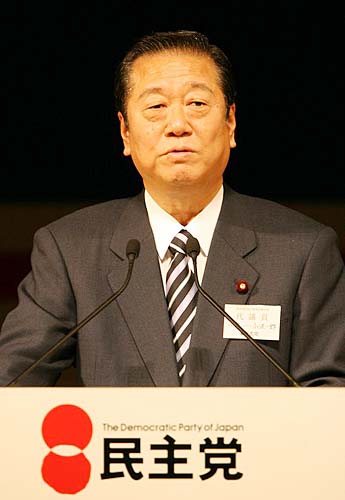
ozawa-mm20070116111307793l0.jpgYomiuri explains the intraparty discontent as stemming from the party’s continuing low poll numbers — though one recent TBS (slightly left-leaning) poll held that 47% of people “want the opposition parties to beat the LDP” (vs 45% who wanted the LDP to win), another perhaps more reliable figure is the Yomiuri poll comparing DPJ support with LDP support. That figure gives the DPJ just 12% support versus the LDP’s approx. 48%.

But the unnamed DPJ official has a point that gets to the heart of the DPJ’s troubles – they look like just another LDP with the exception that they have zero experience running the country. Although the party has always had internal divisions (not that much different from the LDP in that regard), the DPJ has nevertheless presented an image of a left-of-center party that carries none of the LDP’s baggage (patronage, ultrarightists in the ranks, close relationship with the entrenched bureaucracy, etc). What’s more, the party has represented Japan’s shift to a 2-party system in which the major parties compete on policy rather than through backdoor deals and stable electioneering. This idea has enjoyed broad support in theory as a part of Japan’s supposed transition from a bureaucracy-dominated development state to a “normal country,” even if in practice the second party has yet to win the premiership.

Now DPJ President Ozawa, a former senior LDP man himself, is preparing to try and beat the LDP at its own game as he puts his “political life on the line” to win the July Upper House elections, reports ZAKZAK. If the DPJ wins the upper house, it will attempt to then force a lower house election and take the reins of government.

To that end, in addition to teaming up with the more minor opposition parties (and of course putting their best face forward as the top opposition party in the Diet), Ozawa has secured candidacies from people hailing from traditional LDP support bases (such as the Jaycees), in an attempt to split the “organizational votes.” He is also appealing to anti-Koizumi forces within those support groups by pushing for populist policies like “raising Japan’s food self sufficiency” through pro-farmer reforms.

So under Ozawa’s leadership the DPJ would become an anti-structural reform party that courts votes from the same groups that have been lining up for a slice of the pie from the LDP. Oh, and they are for a more active Japanese role in international peacekeeping efforts, very similar to the LDP’s policy of pushing for a more proactive defense posture and allowing for collective defense. Just what would be difference with the LDP at that point? Well, there is one thing: the DPJ has never formed a coalition with the Soka Gakkai-backed Komeito. But depending on the party distribution that results after the upper house election (and possible but unlikely general election that could follow), the DPJ could be in a position to grab the government with the little extra push that the Komeito could provide. What’s to stop Ozawa, whose former party Shinshinto was once in an election tie-up with the Komeito, from former just such a coalition with the Komeito, which wants to cozy up to the party in power no matter who it is?

Well, rest assured that the DPJ rank and file, far from walking in lock-step with their leader, are thinking about these issues, and some don’t like seeing Ozawa sully what’s left of their party’s credibility to rig the system just to put Ichiro Ozawa in power. Or maybe they’re just mad because it looks that way. Whatever the case, Hatoyama has made the startling statement (in the Nikkei no less) that the party’s future would be in serious jeopardy if the DPJ shows poorly in the election. They’ve had 4 years since taking their present shape in 2003 to win the government, and so far it’s proven a tough task. Though Ozawa’s attempts to virtually pimp out the DPJ could very well work, is it worth throwing out the baby (a 2-party system in which political parties compete on policy) out with the bathwater?

Personally, I don’t think the DPJ would be considering such radical changes if it weren’t for it’s stumbles over the past year and change. Up until the Sept 2005 lower house elections, in which Koizumi’s powerful call for postal reform was the overwhelming issue, the DPJ had been gradually gaining seats in both houses under the leadership of Kan Naoto, Yuki Hatoyama, and Katsuya Okada. After the 2005 election, however, the party lost its direction and selected youthful defense policy wonk Seiji Maehara to lead them, and after Maehara mishandled a scandal in early 2006 Ozawa replaced him and was seen as an elder who had the wherewithal to get things done. If Ozawa’s tactics work, he’ll clearly be seen as a genius and the party may see itself transformed. If not, I’d like to see Kan or Hatoyama make a comeback, perhaps away from the DPJ. (And if Koizumi makes a comeback, as some hopeful rumors contend, the DPJ might as well just go home as they wouldn’t stand a chance!)

Correction & the latest on white collar exemption

In my earlier post ““White Collar Exemption” and the danger to the LDP” I noted that Chief Cabinet Yasuhisa Shiozaki remarked that the government would try and submit bills that would make it possible to exempt workers making more than 9 million yen from overtime payment. I originally said that the move would affect 20,000 people, but that was a typo. It would actually affect 200,000 people. And as this new article from Asahi Shimbun notes, some politicians with sense don’t want to anger 200,000 voters 6 months before a major election:

Despite concerns about a backlash from voters, the government plans to submit legislation to the Diet that would introduce U.S.-style working rules exempting tens of thousands of white-collar workers from overtime pay.

Ruling coalition officials said pushing the so-called white-collar exemptions for labor standards would hurt them in this summer’s Upper House election.

However, Chief Cabinet Secretary Yasuhisa Shiozaki reiterated on Thursday that the government would submit the legislation to the Diet session scheduled to start later this month.

“We are making efforts now to move in that direction,” Shiozaki said at a news conference.

To alleviate concerns among ruling coalition officials, labor minister Hakuo Yanagisawa met with Liberal Democratic Party policy chief Shoichi Nakagawa and others Wednesday and explained the broad outlines of the proposed legislation.

Yanagisawa said the Ministry of Health, Labor and Welfare was contemplating applying the white-collar exemption to workers making more than 9 million yen a year and who have discretion over their work responsibilities.

Yanagisawa said that under those conditions the new exemption would affect only about 200,000 workers, or about 0.4 percent of the total working population of 54 million.

Those employees will not be paid overtime allowances even if they work more than the legal standard of eight hours a day or 40 hours a week.
Continue reading Correction & the latest on white collar exemption