Asahi at its best

Today’s left-wing text-blob of hate:

Our 54-year old Auckland resident made his fortune in a housing related business back in Shikoku. There was a time when he felt a certain pride that the money he paid in taxes went to support his homeland, to provide education and build roads.

But he became disillusioned when growing budget deficits dried up cash flows to rural areas such as Shikoku.

It increasingly became apparent that all resources, be it people, things or money, got sucked up by Tokyo and big corporations.

Awww! All the money this guy made from his corporation ended up going to someone else’s bigger corporation? Shucks. He just needed to be friendlier with politicians. (Or, y’know, aim his marketing at Tokyo and big corporations to “suck” the money back.)

Kikko Comments on Earthsea

Fans of Ghibli Studios and the Earthsea novels are surely interested in how Ghibli’s interpretation turned out. Not so good, it looks like, judging from some reports and the original author’s reaction. From the general sound of things, it seems that Goro wasn’t up to the task after all. That’s unfortunate.

But I’m not here to talk about that. My interest is in the blog post that Kikko, Japan’s mysterious and popular (but no longer top) political blogger, wrote on the film. The bulk of the post is a translation of Le Guin’s official reaction to the movie, but she prefaces that with a conversation between two young women that she supposedly overheard on the train. Below is a translation of just the conversation:

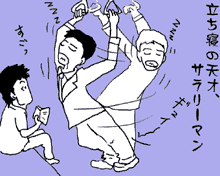
A: Oh no! At this rate, I’ll fall right to sleep!
B: Oh? Are you not getting enough sleep, Kyoko?
A: Hm, every night it’s too hot…If I sleep with the A/C on, my skin gets dry and so does my throat!
B: Well, then you should just go see Earthsea!
A: Why’s that?
B: I went to see it last week with Marie and Chika, but I fell asleep a half hour after it began because it was so boring…and when I came to the end credits were rolling!
A: It’s that boring?
B: I didn’t see almost any of it, but Marie and Chika said they couldn’t stand it and fell asleep about halfway through…so it looks like at least the first hour is boring enough to make you sleepy…
A: But, the TV and everything is saying it’s a “big hit in theaters!” right?
B: Really? Since I was let down by Howl’s Moving Castle, I had hope this time would be better, but this was way more boring than Howl…It’s like, rather than tell the story with animation, the characters just explain the story in order with long monologues…so I gradually started to feel sleepy, then eventually closed my eyes and just listened to the lines, and then just fell asleep.
A: Oh, I see.
B: Like, since all the lines are long and in a monotonous explanatory tone, it makes you feel like you’re being forced to listen to a lecture by Oishi the Section Chief.
A: Really??? Haha…

(emphasis added)

Kikko’s comments that follow the above conversation criticize the mass media for caving in to pressure from promotional agencies such as Dentsu by lavishing unearned kind words on movies and other products even when they are clearly terrible as in the case of Earthsea.

As poignant as Kikko’s sentiments may be, I have a hard time believing that Kikko actually overheard such a conveniently-worded conversation. She claims not to have seen the movie (typical of her other lengthy articles about Japanese anime) yet but has no problem using a supposedly overheard conversation to back up criticism of the media and badmouth a movie she hasn’t even seen. If that’s true then it’s irresponsible, and if not then, well, she’s being just as dishonest as Dentsu and the mass media, isn’t she?

Since an article posted on her site broke a major development in the faked earthquake safety data scandal last year (and in the several stories she’s had pertinent information on since), wide and well-founded speculation has spread that the purported writer of this blog (a “hair and makeup artist” in Tokyo) does not really exist, or at least that there is something less than forthcoming about the source of the blog’s content. One theory (as noted in a “Kikko Watching” wiki) is that the site serves as the repository of one or more news reporters that use it to reveal information that can’t make it past editors in the major publications. This is the theory I’m going with, so check back in a few months or so when the truth is finally known to see if I was right.

Whatever the source of the articles on Kikko’s blog, the site has been extremely entertaining and illuminating as it often contains information and analysis that is simply not available elsewhere. However, there are many many other instances where I am left shocked at the claims Kikko’s site makes. For example, her repeated claim that weapons of mass destruction were and are being used by the US military in Iraq are not backed up by any credible evidence whatsoever, and sources she does cite for other issues have turned out to be fake. And then there are the suspicious quotes and anecdotes, one of which I have translated above.

Clearly any blog’s comments cannot be taken as gospel truth, especially when coming from one as mysterious as Kikko’s. But the scandal over Kikko makes me wonder: when the newspaper can’t even tell you when a film sucks, perhaps it’s preferable to hear the truth from a frank and knowledgeable fraud than swallow lies from the opaque and manipulative establishment.

Yasukuni Won’t talk to Asahi over Unauthorized Disclosure of Shrine’s Properties

Remember that piece saying that Yasukuni was in financial trouble? Well, turns out the shrine itself wasn’t too happy about it:

Yasukuni Shrine on Tuesday blocked Asahi Shimbun journalists from covering Junichiro Koizumi’s last visit to the site as prime minister on the 61st anniversary of the end of World War II.

The ban on Asahi reporters and photographers in the Shinto shrine’s precincts is in protest over a map of shrine holdings printed over the weekend by the daily.

The ban will remain in effect for an indefinite period, shrine officials said.

While one could argue that one less news agency covering major events in Japan could be beneficial (see what happened when the BOJ ended quantitative easing), it’s hard to see where this is coming from. The properties are a matter of public record, so it only makes sense that a story on the financial situation of a controversial shrine that, incidentally, may be nationalized if Foreign Minister Taro Aso has his way, would include information about the shrine’s holdings.

Anyway, I am not close to this issue. But I do have some questions:

  • For a news source to give the silent treatment to a news agency whose reporting it doesn’t like isn’t new, but perhaps Yasukuni is used to a more obsequious press that wouldn’t bother to inform readers of the actual facts behind the government’s proposals?
  • All major national newspapers, with the exception of Sankei, openly call for the PM and his successor to stop going). However, it is rumored that Asahi Shimbun has close ties to China and the Japanese left. And its editorials tend to be harder on the PM’s Yasukuni visits than other newspapers. Could the shrine (whose owners and major patrons do view it as the central national war memorial) and Asahi already have a bitter relationship? Does Asahi have a vendetta against Yasukuni?
  • The above question is premised on the fact that the Asahi Shimbun, as with other major newspapers, is not reknowned for its crack investigative journalism. Most reports are directed by government agenda-setting (see this latest “expose” on exploited foreign exchange students that looks as if it could have been written by the Ministry of Justice) and use scant outside sources (a by-product of the reporters’ club system and newspapers’ special privileges protecting them from competition).
  • Asahi has been reeling from scandals such as a faked memo that allegedly indicated that some of the postal rebels were going to form a new party. The scandals spurred the paper to launch a full-scale PR campaign as well as internal inquiries to reform the paper’s investigative journalism policy. Could the improved online access to more and longer articles from the newspaper, along with more expose-style pieces be the results of these new policies?
  • My two favorite “Western” reporters on Japan

    tachine.gif
    For some reason, foreign financial reporters on Japan seem to have the best perspective. Here are two examples:

    William Pesek, a columnist for Bloomberg, earned my admiration back in June when he cut through layers of government spin to find the real reason why BOJ Governor Toshihiko Fukui should resign:

    The scandal involving his 10 million yen ($86,950) investment in a fund led by a shareholder activist jailed on insider-trading charges has gone beyond theater and farce. It now threatens to tarnish Japan’s global reputation.

    Even if it turns out Fukui didn’t break any laws, his actions were dumb. Fukui invested in Yoshiaki Murakami’s fund in 1999, when he was at the Fujitsu Research Institute. He applied in February to sell his shares, raising questions of propriety as the BOJ prepares to boost rates for the first time since August 2000 and after his investment more than doubled in value.

    The bigger problem is how vehemently Prime Minister Junichiro Koizumi has come to Fukui’s defense. It means the BOJ governor, who is supposed to be independent, now owes the prime minister. The upshot is that a rate hike that was widely expected in July may be delayed until after Koizumi steps down in September.

    Fukui, 70, yesterday said “monetary policy isn’t affected by politics” and that the BOJ needs to adjust rates “without delay.” Even so, the mere perception that BOJ policies are paralyzed thanks to Fukui’s missteps is reason enough for him to resign.

    Preach it!

    Coming in at No. 2 (only because he doesn’t cover issues I’m curious about often enough) we have David Piling, the FT‘s correspondent in Tokyo. Like Pesek, he’s adept at cutting through the BS, even when it comes from his fellow Britons as in this book review:

    To wish [the “unique” aspects of Japan] away would be to miss something recognisably Japanese. Yet, to treat Japan as inherently odd can quickly stray into stereotype, even prejudice. Just as bad, it can bolster the case of those Japanese exceptionalists who assert that Japan is unique, superior and unknowable by foreigners.

    In Atomic Sushi, May seeks to break the deadlock by recounting, wittily and often brilliantly, his personal experiences, greedily amassed during a year spent teaching at the University of Tokyo.

    The approach, as befits a professor, is to tell a story (often hilariously) and then to offer analysis. The interpretations are sometimes amusing and astute, but sometimes they are so sweeping as to be virtually meaningless. Take the account of a beautiful girl who, though standing, falls asleep virtually draped over a commuting businessman. Apparently in the depths of slumber, she nevertheless awakens the instant the train reaches her destination.

    She apparently displays the Japanese people’s “pervasive and acute alertness to their environment and its subtle signals, instilled perhaps by their constant vulnerability to earthquakes”. Or maybe she just heard the station announcement.

    As a reporter, Piling will undoubtedly be replaced when his time comes to be promoted or the FT feels that his closeness to Japan could pose a conflict of interest problem (one major reason why many news companies replace their foreign correspondents so often). I can only hope that they find someone with as keen judgment.

    There are many who feel that Japan shouldn’t have to put up with foreign criticism, or that Japan’s image needs to be mollycoddled by official propaganda and numerous underdisclosed shills. But I can’t stress it enough that open debate and frank discussion (most especially when it’s available for free on the Internet), such as the above examples, are desirable when you’re talking about understanding another society, discussing policy choices in a society in which you’re invested, in monetary terms or otherwise. It results in a better informed public and a broader range of ideas from which to draw inspiration and guidance.

    Yakuza Push Back as Rigged Boxing Match Makes Waves in the Japanese Internet

    Kameda Hide.jpg
    I haven’t been following this issue too closely, but here’s a quick rundown:

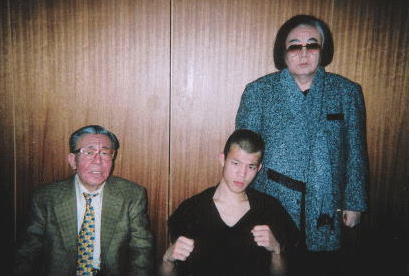
    On August 2, star Japanese boxer Koki Kameda fought Juan Landaeta of Venezuela for the World Boxing Association’s light flyweight championship. The match, which I naturally missed since I live outside Japan (but you can see some clips on Youtube here), was said to obviously have gone to Landaeta in terms of both points and the match’s momentum. However, at the end of the day Kameda was awarded the championship 2-1. The Japanese blogosphere (which scored its first political touchdown amid last year’s earthquake safety scandal) cried foul, the rumor being that the match had been rigged as a “present” for mob boss Goro Hide Hanabusa‘s birthday. Pictures of the two together (see above) soon surfaced, putting Kameda’s career in jeopardy not just for participating in a rigged match but for acquiring a dirty image in what is supposed to be a family sport.

    Marxy, who has been following this story, has noted that the story has broken much faster on the Internet than in weekly magazines, Japan’s usual outlet for yakuza-related scandals. While diffusion of the Internet into daily lives in Japan has lagged behind the US (your aunt Ikuko still can’t book discount flights online, for instance), the more popular uses of the net (anonymous message boards, then blogs, and now Youtube) have proven effective tools in getting around the notorious disinformation found in traditonal news media (case in point). Japanese wiki, for instance, contains frank passages on taboo subjects such as the real identities of TV stars, exposure of staged events on TV, and now the role of organized crime in fixing boxing matches.

    That is, it did until a few hours ago. Marxy just clued me in that Hide Hanabusa’s wikipedia entry was recently deleted due to “copyright issues”. Wikipedia will apparently instantly delete any entry that a rightsholder alleges contains a violation of his/her copyright. I have no idea whether that is the case in this instance, but it’s interesting to see that the yaks may have realized they’re being humiliated online and decided to take action.

    Will the Japanese yakuza expand its Internet savvy beyond cheap cons in order to protect its image? Well, as far as this blogger is concerned, I figure I’ll be safe as long I keep writing in English.

    Support the Reemerging State Shinto – Visit Yasukuni!

    Yasukuni Shrine, Japan’s controversial unofficial war memorial, is in financial trouble, says the Asahi Shimbun. Apparently, the drop in major donations spurred by the disappearance of the war generation has run headfirst into plans for a revamping of its war-nostalgia museum in preparation for its 130th anniversary. Let’s look at the numbers:

    Total cost for renovating the museum: 8.3 billion yen
    Annual budget: 1.8 billion, down 5% from last year and almost half of the 1985 budget of 3.2 billion yen. So they’re dipping into the endowment, it looks like.

    In terms of revenue, Teikoku Databank shows that Yasukuni only reported 235 million yen (parking fees, rent for the gift shop and building, and entrance fees for the museum), down from 400 million yen in 1996 (NOTE: edited from original post). It’s the 3rd highest earner of all Shinto shrines, but only makes 1/5 of the top earner, Meiji Jingu. At this rate, the shrine is currently moving forward with rationalizations such as not replacing retired workers, outsourcing some operations, and getting estimates from multiple contractors and auctioning out construction/repairs.

    Obviously, this development will have an effect on the recent reemergence of proposals to nationalize the shrine. Although the Asahi warns that “it is doubtful that Yasukuni will agree to dissolve itself” it’s not like a bankrupt Yasukuni (or its backers in the war bereaved association) could really say no to national patronage if it means saving the expensive but apparently effective museum.

    Liquid terrorism

    Andrew Sullivan says that the most interesting thing about the recently foiled terror plot is that the terrorists were planning on using “liquids” of some kind in the attack. Since the authorities are still being tight-lipped about the actual details of the attack we have no idea what exactly that liquid was, but there are a number of possibilities. Andrew’s pet theory seems to be that they were using a device that combines liquids from two different chambers to create hydrogen-cyanide gas. According to this BBC article, it was in fact liquid explosives, with electronic detonators hidden inside portable devices, which presumably would be dis and reassembled within the plane.

    Whatever the exact nature of the liquid being used in this particular attack was, there is one major past terrorist attack perpetrated through the release of liquids inside a vehicle. I am of course talking about the Aum Shinrikyo Tokyo subway sarin gas attack of March 20, 1995.

    Earlier this year I had a large translation project in which I translated a couple of hundred pages of Aum Shinrikyo related material, including a large portion of Aum and I by Ikuo Hayashi, a medical doctor and member of the cult, who participated in the sarin release. Below are some excerpts describing the preparation for, and actual release of the sarin inside the subway.
    Continue reading Liquid terrorism

    Lord, save me from bad diary entries posing as journalism

    Newsweek.com has an article about “Japan’s addictive arcades’ entitled “Zeon Attack!” which is apparently of such high quality that instead of putting it on the worthless physical pages of their magazine that people actually pay money for they made it WEB-EXCLUSIVE COMMENTARY so that only the most elite, web connected readers that can understand high tech edgy things like Japan and video games would be able to read it.

    Here are a few choice quotes to give you an idea of how awesomely insightful this article is.

    • Though I can’t grasp the Japanese way of counting, I still remember the precise way to defeat Bald Bull in the old boxing game Punch Out. Those old-school games are nowhere to be seen in Japan today. The modern arcade is an exotic, sensory-overload, nearly impenetrable to foreigners.
    • Kazuki and Mizuki, two high school sophomores at a Shibuya arcade, told us they play purikura about once a week to capture “memories.”
    • He said he plays about twice a month at about $3 a game, though the stack of character cards in his hand betrays a deeper addiction. “I can learn all the background and histories of the characters,” he said, adding he also reads manga related to the Sangokushi saga. [Ed: Clearly he wouldn’t be playing the game because of a pre existing interest in the Chinese history/classical literature upon which it is based.]
    • My Japanese interpreter, fighting as a boxing-gloved Kangaroo with a snowboard on its back and scuba fins on its feet, was defeated in the game by a tattooed girl. [Ed: Wow! A Tattoo!! Japanese arcades really are so much cooler than the US, where you would never see a kid with a tattoo!]
    • young people dubbed neets (who live with their parents and refuse to get jobs), and freeters (who only have part-time work) are much-discussed social groups who exacerbate the population and workforce imbalance. [Ed: Gosh, I wonder what “neet” and “freeter” stand for. I bet the explanation would be way too complicated for foreigners like Newsweek writer Brad Stone or me to understand. ]
    • Adults want Japanese kids to leave the arcades, go to work and save the country. But they’re too busy saving the world, one Gundam battle at a time. [Ed: He’s right! Nobody goes to arcades if they actually have a job or classes to go to! Arcades are probably causing the population decline!!]

    Adamu is in Thailand – some initial thoughts

    Hi everyone.

    Blogging has taken something of a backseat in my life right now as I work on getting adjusted to my new life in Bangkok, where I’ll be based for the next year or so. I decided to come here and reunite with Mrs. Adamu (who’s working at an NGO here) after visiting in May and seeing that it wouldn’t be a complete disaster for me.

    While I’ve traveled to several countries in Asia, this is my first time living someplace other than the US or Japan – the two parts of the world with possibly the highest living standards. Now I am living in a strange country that I know next to nothing about. I’m aware of some of the basic stuff, but certainly not enough to rant about it semi-coherently on this blog. But while I’m here, I’ll give you a list of some aspects of Thailand that have culture-shocked me so far:

    Outlets that spark when you plug something into them.
    Badly designed infrastructure (random low ceilings on staircases, doorknobs with sharp objects jutting out from them, unevenly spaced stairs, a tangle of low-hanging electrical wires in the streets with the occasional loose dangler) forcing me to stay extra vigilant.
    Bangkok, a city the size of New York, has next no traffic lights.
    Grime on the street (supposedly caused by diesel trucks and “tuktuks” – little scooter-taxis). The grime turns to grime-mud when it rains, making the streets slippery.
    Speaking of the streets, they smell of funky Thai food constantly because they are lined with street vendors selling guavas, some kind of stinky spiked fruit, sausages, chicken, and other meats exposed to the open air and thus made inedible (to me anyway).
    Constant reminders of how great the king is. It’s illegal to criticize the king here, but just to let you know I already think the king is great – I don’t really need to be reminded of it every day.
    TV shows in Thailand make liberal use of cliched comedy sound effects – lots of slide whistles and BOIOIOING!
    Living somewhere where I speak none of the language – but thankfully gesturing isn’t that tough and most Thai people can communicate with you in Tinglish. In fact, I would say that in general Thais’ English communication skills surpass those of the Japanese.
    Aggressive salesmanship – tuktuk drivers scream “WHERE YOU GO” at me, the DVD sellers at Pintip Plaza get right in your damn face, Big C (a discount store, Thailand’s got lots of them) employs something like 6 people in their electronics section whose sole job is to approach people and sling them some jive.
    There is a general chaos about this city. Thai people seem to like their driving aggressive, their crowds dense, and their food outside and on the sidewalk.

    Just to name a few. That’s not to say things are all that bad here. It’s wonderful to be back with Mrs. Adamu, the food is generally pretty good, many people are friendly, and I can find more good American food (Dunkin Donuts, Pizza Hut – you know, only the best) here than I could in Japan.

    I still really need to learn the language though. Thai is a little similar to Chinese in that it’s a tonal language. Right now most people just chuckle whenever I try and say something since I am just randomly stabbing at the tones.

    I’ll try and keep you posted on interesting stuff I notice here. I’m especially interested in getting at some of the more interesting aspects of the Thailand-Japan relationship (though supply channels/factory management/FTA negotiations tend not to make great conversation starters), as that’s at least some sort of perspective I can start with.