NK Defector Dresnok on 60 Minutes

Watch the video here to see an interview with the “last living American defector in North Korea,” Joe Dresnok. It’s quite a thing to see. Some reactions:

  • Who are these filmmakers and why are they OK with making documentaries that are flattering to North Korea?
  • I can’t believe this guy. While he denies it, Dresnok is the guy fellow defector Jenkins, who now resides in Japan with his wife the former NK kidnapping vicim, described as having beat him mercilessly when they were living together. And somehow he’s proud of his life, in which he’s been a drunk, violent man who was bred with another white person specifically to train spies (his son wants to be a “diplomat”? Sure…) and exploited as a propaganda tool. Maybe as someone who caught few breaks in life (and has no real family ties to the US) this is comparably a better lifestyle. But it’s impossible for me to feel any sympathy for a man who, when confronted with a question about why he was fed while millions of North Koreans perished of famine, cries tears of gratitude for his rulers rather than shame. I mean, the announcer has a point that the NK defectors thought more about where they were running from rather than where they were running to, but at least Jenkins has some perspective on this issue.
  • I’m not sure why 60 Minutes left out the detail that the defectors were paired up with women to try and breed them and produce spies. Maybe it would have been rude to Dresnok’s son?
  • Those propaganda radios have got to be annoying as hell. I wonder if they have a special battery-generator system in place to keep them going during blackouts.

You can also watch the July 2006 interview with Jenkins here.

The Japanese Tradition

I’m sure everyone has seen the famous Sushi documentary by The Rahmens, but did you know that there actually were others in the series? I found two more on youtube, sadly with no subtitles but still good for anyone who can understand them.

日本の形:土下座

日本の形:交際(ラーメンズ)(1/3)
日本の形:交際(ラーメンズ)(2/3)
日本の形:交際(ラーメンズ)(3/3)

Unemployment leads to a life of crime

I still don’t quite understand the Japanese media’s fixation on the employment status of accused criminals, but whatever the case it often results in some amusing headlines:

Jobless man arrested for strangling former girlfriend
from MSN-Mainichi Daily News

SENDAI — A 35-year-old unemployed man has been arrested for murdering his former girlfriend, police said.

2ch’s Hiroyuki dispels rumors, gets moralistic on Yukan Fuji and ZAKZAK

Pretty much all of the news on the impending demise of 2-Channel has been coming from everyone’s favorite online tabloid, ZAKZAK, the Internet edition of the Yukan Fuji newspaper. However (as I’ve been commenting for the last few days) it looks like the threats to seize 2ch and take it offline are not quite as bad as ZAKZAK would have you believe. Trusty Livedoor (COUGH COUGH) reports on an online interview with Hiroyuki Nishimura, the operator of 2ch:

“I believe that levying on a domain name is very difficult as it stands, but even assuming the domain was seized, I could switch to a new domain and there would be no problem. If you ran a search you would find the site right away, so I think nobody would be seriously inconvenienced.” Nishimura said that in any case, the site could be switched to a new domain in a matter of hours.

In response to the question “So why do you think they’re making such a big deal out of 2ch closing?” Nishimura said: “Even if the site doesn’t go down, you can sell a paper which says it’s going down, so I think they’re just saying 2CH TO CLOSE in order to sell papers. It’s like the story of the boy who cried wolf. Let’s not follow that…”

Nishimura denies that all of his assets are being seized, pointing out that seizure is only allowed to the extent of the monetary claim, “something which any company with a legal department should know.” Another article up on Livedoor (they almost seem to be making fun of Yukan Fuji at this point) says:

We asked a number of attorneys, but each one shook their head. Kenichiro Kubo, who participated in several 2ch cases, says “I have never heard of a case where a domain name was seized. I wouldn’t say it’s ‘procedurally’ impossible since it’s substantially similar to a copyright or patent, but to ask whether it can be assessed as an asset…”

Attorney and IT specialist Hiroyuki Dan (not the Hiroyuki of 2ch) says “I understand that desire to try seizing the domain as a debt. I wouldn’t say it’s 100 percent impossible, but in this case, there are many hurdles.”

Osaka homeless in trouble

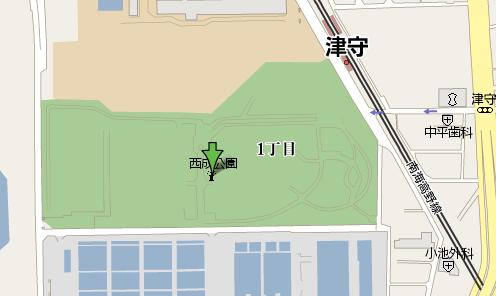
Let’s take another look at Google Maps Japan, this time focusing our gaze on Osaka’s Nishinari Park. On the map, it just looks like your average urban park in Osaka:
nishinari-map.JPG

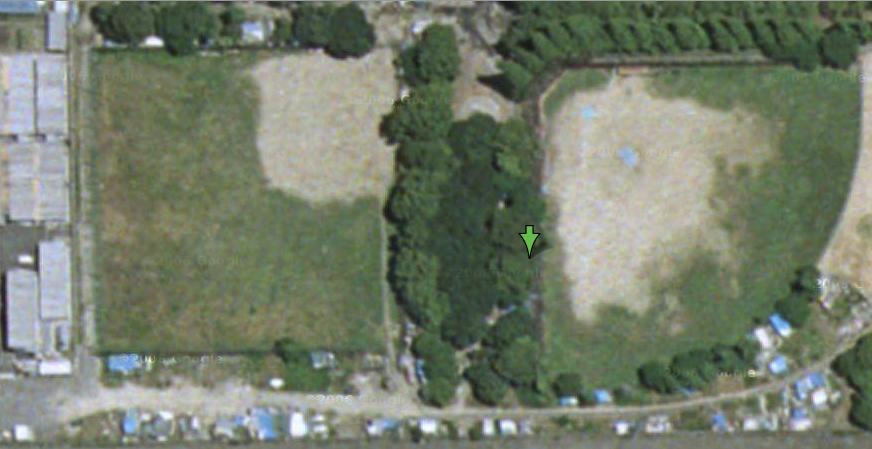
But look at the satellite photo (click for full size):

nishinari-sat.JPG

What could those be? Why, they’re little shanty houses!

Since the early 1990s, parts of Osaka have become something of a haven for Japan’s homeless people. Colonies of blue-tarped tents and cardboard houses, such as the one in Nishinari Park (located in the Airin area, host to one of Japan’s largest homeless populations) seen above have developed into full-blown communities, complete with electriciy, TV, and corrals of dogs. Residents make ends meet through day labor and collecting recyclables. If you’ve ever visited Osaka Castle, you will likely know what I am talking about.

The colonies have even gained some international attention in recent years (see this excellent BBC pictorial, for example). I suppose they are interesting because while shantytowns are a common sight throughout Asia and the rest of the developing world, they might not be expected from the world’s 2nd largest economy. Plus, it’s pretty neat to see that they’ve made such comfortable lives for themselves considering the circumstances.

One of those homeless colonies, a ten-person, 15-tent compound located in Nagai Park, is in trouble as authorities plan to evict squatters in to begin construction in preparation to hose the 2007 IAAF World Championships in Athletics.

It’s sad to see these generally peaceful groups of resourceful men broken up. The homeless culture is one of the unique aspects of Osaka that gives the city some flavor, and it’s too bad that city officials can’t recognize it as such. Instead, they have brought an expensive sporting event to the city that is likely to plunge it even deeper in debt.

Nevertheless, the order has been issued, and if the homeless do not leave by Jan. 21 they will be forced to remove their tents.

To get a better idea of what’s happening on the ground, MFT plans to send crack Osaka correspondent Roy to attend a festival to be held this weekend by the residents and their non-profit backers. The event will feature stage performances with the homeless residents and young people. Stay tuned for awesome photos!

35-year-old plaintiff to force 2ch founder Hiroyuki into bankruptcy!

The axe may indeed fall on Hiroyuki, though 2ch itself is unlikely to actually change hands. ZAKZAK reports that the man who filed to seize Hiroyuki assets has decided to file to force Hiroyuki into bankruptcy. This is a move that was taken by shareholders of Kinmirai Tsushin Co. recently when cmopany officials tried to flee with their money, and it works:

Kinmirai Tsuushin is suspected of defrauding some 3,000 individual and corporate investors of 40 billion yen by promising to pay lucrative dividends on the basis of its nonexistent Internet telephony operations.

The Metropolitan Police Department began questioning former Kinmirai Tsuushin executives earlier this week over the alleged fraud, investigative sources said. Ishii is now abroad, they said.

On Dec. 7, a real estate company, one of the 3,000 investors, asked the court to declare Kinmirai Tsuushin bankrupt. The real estate company had invested 55 million yen in response to Kinmirai Tsuushin’s solicitation of investments.

The plaintiff noted that he only decided to go forward with this action because the initial reports on Jan 12 of his moves against Hiroyuki sparked further harassment from 2ch readers.

Depending on how things work out, Hiroyuki’s irresponsibility may cause a major disruption in the regular functioning of the Japanese Internet culture. Not that I feel that bad — though it’s a great site in many respects, 2ch is, as Joe just noted, the best example of what happens when the Internet Fuckwad effect goes unchecked for almost 10 years.

But it looks like he is helping pioneer new ways of making the court system effective against harassment campaigns. Meanwhile, there’s more activity on the 2ch site than ever before, and angry 2channelers have been swinging wildly at people who have sued Hiroyuki, such as American-born activist Arudo Debito.

Aso’s cultural diplomacy: so far so good

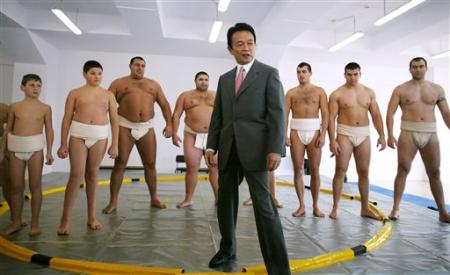
If Foreign Minister Taro Aso can keep wonderful photo opportunities like this up, I would support him for prime minister no matter who he might want to nuke:

Aso Bulgarian Sumo l2305389.jpg

Japanese Foreign Minister Taro Aso, front centre, poses with Bulgaria’s sumo wrestlers during the opening ceremony of a donation to Bulgarian Sumo Federaton, in the Bulgarian capital Sofia, Thursday, Jan.

Bulgaria was likely singled out as it’s the home country of star Sumo wrestler Kotooshu. Kotooshu is currently an ozeki, one rank under Yokozuna, though he is unlikely to achieve yokozuna status, the top rank in the sport, for some time (Japanese  Mongolian wrestler Hakuho might make it this year to the delight of people who want to see more Japanese Mongolian faces in the sport).

Aso has made promotion of Japanese cultural exports, chiefly anime and manga, a priority as he sees it integral to cultivating Japan’s “soft power.” You can read the details of his cultural diplomacy ideas (essentially, the main pillar in building a “Japan brand”) here.

A brief look at free English-language online sources on Japanese politics

Happy New Year, everybody. 2006 was Mutant Frog Travelogue’s 2nd year of existence and a good one for a number of reasons: our readership has surged, we’ve been dubbed a top 10 Japan blog, and most importantly we have learned a lot in the process, both through researching for blog posts and through reader comments. Loyal readers: thanks for the support. Newcomers: Stick with us!

We don’t pretend to offer anything but whatever inspires us to click the Publish button, but we do hope you’re interested in what we have to say. Of course, you wouldn’t want to use this site as a main source for information, especially since there are much more comprehensive and professional sites out there.

For example, if you want information on Japanese politics in the English language, there is a wealth of sources to consult. For background, you can consult Wikipedia or the CIA World Fact Book to brush up on the basics or find papers by various experts in the field (the two best sources I am aware of: JPRI and Japan Focus), all free of charge.

On top of that, the Japanese government (such as METI’s think tank RIETI and MOF’s research institute, the websites of the various political parties, especially the LDP, as well as every ministry and agency’s English websites) and various think tanks (Keidanren, Daiwa, and other corporate-sponsored tanks are often quite interesting though they often focus more on the economy) provide much of their research and information in English free of charge.

To find out what’s happening now, there are several excellent English-language sources that are either straight, on-the-scene reporting or translations thereof: Japan Times, Asahi, and Yomiuri all offer different perspectives on daily events. Though you often won’t get the “story behind the story” you can nevertheless keep yourself informed of the details. And if you’re looking for a lighter side of the news, there’s even Mainichi’s WaiWai section that includes many translations of weekly magazine articles, rife with speculation and sensationalism.

And then there are various sites run by foreigners with a particular axe to grind or focused interest. The source most narrowly focusing on politics is the Japan Considered Podcast, run by a veteran Washington Japan policy hand Robert Angel. And there are plenty of others: the people at the new TransPacificRadio take a comprehensive look at the latest news, Debito has a blog chronicling developments surrounding Japan’s treatment of foreign residents, Marxy keeps an eye on pop culture and its gatekeepers, and (until last year at least) Japan Media Review took a look at Japan’s news media industry and let us know how awful the kisha club system is.

Even compared with 2 years ago, the amount of good information out there has become almost staggering. So with so many great resources out there, what can I, Adamu, offer? Biting analysis? Not so much. I try, but there’s a lot I need to learn about Japan, and I feel that I lack a certain perspective by not actually living in the country. In essence, I try to give you two things: (1) My observations as someone who follows the news in Japan with an almost religious devotion; and (2) Translations of interesting articles that would otherwise never find their way to an English-speaking audience. And if you think the increase in freely available Japan information in English was impressive, the surge in Japanese-language online content is even more staggering. It’s not as impressive as the revolution that’s occurred in the US: Japanese newspapers have not followed their American counterparts in posting their entire contents online, for starters. But that may only be a matter of time, and meanwhile there’s enough to keep me busy in my offtime at least.

Newsflash: Hawaii doesn’t have enough Japanese people

The state of Hawaii is facing a minor crisis: not enough Japanese tourists. So they’ve enlisted advertising megafirm Dentsu to sell the state to people in Japan. And, since every ad in Japan needs a cute face, they brought actress Mayumi Sada on board.

Well, okay, she’s not that cute. More “sophisticated.” Anyway, the Honolulu Advertiser reports:

Through November, Japanese visitor arrivals were down nearly 9 percent. Takashi Ichikura, executive director of Hawai’i Tourism Japan, blamed the decline on fewer airline seats from Japan to Hawai’i, rising fuel surcharges on air travel, rising hotel charges and a weakening of the Japanese yen. Hawai’i Tourism Japan was hired by the state to promote Hawai’i in Japan.

“With the rising fuel surcharge and other cost factors, Hawai’i now looks expensive in Japanese consumers’ eyes, and they expect Hawai’i to be a refined and sophisticated destination to match the price they are paying,” Ichikura said.

… The campaign, called “Discover Aloha,” is meant to depict the experiences of a female visitor who experiences the feeling of aloha through various encounters that could only happen in Hawai’i.

My dirty mind had high hopes when I read that last part, but Dentsu let me down.

The effort includes two posters featuring hula and lei-making and another showing Sada reflecting on her Hawai’i experiences from a lanai overlooking the ocean.

It still sounds kind of like running “Visit Texas” ads in Mexico, doesn’t it?

China’s animation industry set to overtake Japan’s?

The latest issue of Japanese news weekly AERA (more like a Japanese version of Time magazine than many other weeklies) contains an interesting bit on China’s animation industry that fits in nicely with my last few posts. Full translation follows:

Anime to make a comeback in China, where it started

by Reiko Miyake

China has been “invaded” by Japanese-made animation, but in fact this was the former world power that taught animation to Japan

China as a nation is currently putting its efforts into developing “Donghua.” Donghua is Chinese for animation and comic books. In the past 3 or 4 years, 19 cities nationwide including Shanghai, Changchun, and Hangzhou have been equipped as “Donghua headquarters” or centers for the animation industry. Schools to develop talent and studios are being established in earnest.

According to sources close to the issue, the scale of China’s animation character market amounts to as much as 100 billion yuan (approx. 1.5 trillion yen). Japanese animation such as Pokemon and Case Closed are enormously popular, and up to now a multitude of pirated versions have been distributed. While dominated by Japanee animation and Disney, here and there original Chinese-made animation has started to come out such as “Indigo Cat.”

A longer history than Japan’s

Inspections of imported animated works are strict, in part because of protection of domestic works. The first company to truly attempt to export to China was Mulan Productions. They are very skilled at the business of managing copyrights in China. They have produced many hits, starting with Crayon Shinchan in 2002 and following up with Dragonball and Fruits Basket.

Takashi Mita, chief of the company’s International Business Headquarters, explains: “First of all, the quantity of foreign animation that is shown in China is is restricted as a whole. It is subject to a strict inspection from the perspective of public order and morality, and works that contain many portrayals of sexual activity or violence are taboo. All in all, the condition for export is that the works are healthy for children.”

Looking just at the situation in the past few years, Japan looks like a developed country while China looks like a late bloomer in terms of their respective animation industries. However, it is not very well-known that China’s animation history is actually longer and had a major impact on the developing stages of Japanese animation.

At a Tokyo cinema in 1942, a young Osamu Tezuka watched “Princess Iron Fan,” an animated film based on the Chinese epic Journey into the West that was produced in Shanghai, which was an animation production center at the time. The fact that the intense emotion he felt at that time formed the basis for Tezuka to produce animation is an anecdote known by those in Japan’s animation industry. After becoming a comic book artist, Tezuka met with Princess director Wan Lai-Ming time and again.

After WW2, Wan and others gathered in 1957 to create the Shanghai Art and Film Production Studio, a nationally-run animation studio. These are the roots of Japan’s animation industry as well as China’s.

Decline due to the Cultural Revolution

Subsequently, Japanese animation has developed as both an art and an industry to take a 60% share of the $25 billion animation market. Meanwhile, China’s industry declined due to the Cultural Revolution after peaking in the 60s and 70s.

So, Chinese animation industry is now attempting to revive itself once again. The works that the Shanghai Art and Film Production Studio created from the 60s to the 80s will be shown from December 16 at the Shanghai International Film Festival.

Features gaining the most attention are 4 ink-painted short films. The Tadpole Searches for His Mother, made in the 60s, is a classic in which the movements of frogs and tadpoles are drawn in ink style, which though slightly blurred is very lively. It was shown at the 1964 Cannes Film Festival, where it won Honorable Mention.

Almost 50 years later, focus is once again on ink expression in China’s animation productions as students of a Chinese technician development school produce a 3-D animation using the techniques of ink animation. Director Wan’s long-format “Sun Wukong on the Rampage” will also be shown.