Gambling and the Yakuza: An Interview with Jake Adelstein

Tokyo Vice
Tokyo Vice

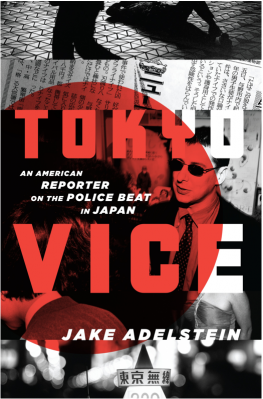
Tokyo Vice: An American Reporter on the Police Beat in Japan came out this past Fall. A tale of sex, scandal, and gangsters, it was written by Jake Adelstein, a former vice reporter for the Yomiuri and the only American to have been admitted into the Tokyo Metropolitan Police Department press club. If you’re interested in hearing more about the seedy side of Tokyo, I recommend picking up a copy. It’s a great read, at least as interesting as Robert Whiting’s Tokyo Underworld.

Some of you may have heard of Adelstein when his name popped up a year or so ago as the author of a Washington Post article about the yakuza (Japanese mafia). He is an interesting fellow; besides his unique former press credentials he also was instrumental in the 2006 TIP report that embarrassed Japan into adopting stricter anti-trafficking measures. Additionally, he runs the “Japan Subculture Research Center,” a blog devoted to the Japanese underground. He is currently running around the world promoting his new book. This isn’t just to generate sales. The publicity he generates keeps him alive.

Continue reading Gambling and the Yakuza: An Interview with Jake Adelstein

Bloomberg on mechanical tomb operator Nichiryoku

index_title

Bloomberg has an interesting article on Nichiryoku, a business offering “mechanical tombs” in Japan (and possibly Hong Kong in the near future):

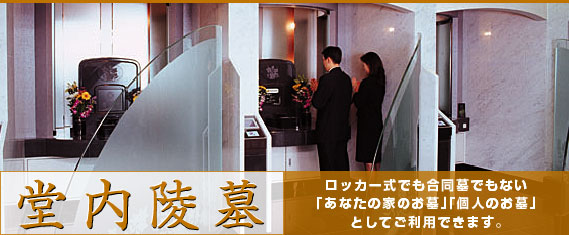
Secretary for Food and Health York Chow was in Japan last week to visit Tokyo-based Nichiryoku Co.’s mechanized columbarium, as facilities used to store urns are known. Families swipe a smart card and the ashes of the deceased are lifted mechanically within 60 seconds from an underground vault, with 8,545 tomb spaces, to one of 10 viewing areas.

The seven-story building in central Yokohama, a port city 16 kilometers (10 miles) from Tokyo, uses less space per urn than a facility where all are on permanent display. Each tomb can hold as many as three urns and 95 percent are taken.

The Yokohama columbarium, built by Shimizu Corp., Mitsubishi Corp. and Murata Machinery Ltd., was the first of its kind, according to Nichiryoku. Since then, the company has built three more in Japan, and rival companies are doing the same, according to employees who guided York’s tour.

“Usually these things are handled by local priests and temples, and in our case we also cooperated with a local temple to open this facility,” said Hisayoshi Teramura, the company’s president. “It’s been a very successful venture for us and we’re getting interest from other cities.” A delegation from Shanghai visited last year and this year, he said.

Nichiryoku’s shares have gained 17 percent this year, against a 3.4 percent rise in the benchmark Topix index. Shares in the only Hong Kong-listed provider of funeral services, Sino- Life Group Ltd., have more than doubled since their debut Sept. 9. The company operates in Taiwan and is expanding into China, where growing wealth is fueling demand for traditional funerals.

At the Nichiryoku’s 24-hour Yokohama columbarium, urns are stored in a “tomb” box that slots into one of the designated viewing areas, decorated with a backdrop of floral designs including cherry blossoms, snowdrops, cosmos and roses. People can bring food and flowers, which must be removed when they leave — in contrast to the tradition of graveyards in China.

If people are supposed to bring offerings back home with them when they leave the columbarium, that’s not just different from the Chinese tradition, it’s a lot different from the typical Japanese graveyard as well.

But I quibble. I’ve never heard of anyone using such a facility, but I did just see an ad for Nichiryoku this morning. It’s a cheaper option than getting a family plot at a graveyard, so I can see why some would go for it.

I am kind of amazed that a tomb operator is listed on the stock market, though. Maybe as Japan gets older the death business will get more and more lucrative.

Mulboyne, I stand corrected

In October, I wrote about the attempted abduction/rescue of the Savoie children by Chris Savoie from his wife, and explained my sympathy for Noriko, the Japanese wife who had absconded with the children from Tennessee, USA to Japan. While acknowledging and criticizing the Japanese child custody regime, I was appalled by Chris’ conduct and said very clearly that “Christopher is the wrong martyr to rally behind in this fight.” Mulboyne disagreed (right after saying that the post was too long at 200 or so comments — it currently stands at 434), and had this to say:

One of Curzon’s original points was that Savoie is “the wrong martyr for the cause”. It’s beginning to look like he might be the right one… for better or worse, his case has received significant coverage in the US and coverage in the Japanese media is now building up momentum… Even following an announcement in May 2008 by the Ministry of Justice that Japan was beginning to look at the possibility of becoming a signatory to Hague, there was no mention of any specific instance. The same when Canada, Britain, France and the US made a joint diplomatic representation on the issue in May of this year.

Christopher Savoie’s actions in Japan have been reckless and stupid but, whereas most cases have no narrative development, this one has a good deal and promises more. Even coverage of a left behind parent tails off in the US in the absence of any concrete development. Most parents are just sitting and waiting or else tied up in legal proceedings in Japan which generally go slowly and, usually, nowehere. With Savoie, we have a man in jail and something has to happen to him. He might be charged, he might be released, he might be deported. Whichever course of action the authorities take, there will be repercussions and more coverage.

Such was my disgust with Savoie that I did not want to agree with that analysis. Mulboyne later repeated this comment in more detail over beers a few weeks later (we’re a social bunch, us MF and CA bloggers).

Yet we now read that Foreign Minister Okada has set up a division inside the Ministry of Foreign Affairs to study the issue:

The Foreign Ministry has set up a new division to handle international child custody issues in response to overseas criticism that Japan allows Japanese mothers to take their children away from their divorced partners.

The division, officially launched Tuesday, will study the issue, including whether to sign the 1980 Hague Convention on the Civil Aspects of International Child Abduction, whose aim is to secure the prompt return of children wrongfully removed to or retained in any signatory countries, Foreign Minister Katsuya Okada said.

Of course, such criticism has been ongoing for years and has been well documented and criticized, yet only now, after the -awful CNN- press coverage of the Savoie fiasco is the Japanese government taking notice. My conclusion? I can’t bear to acknowledge it twice, so just read the post title again.

New and changing traditions – skillet apple pie

Mrs. Adamu and I are in Connecticut for Thanksgiving this year. It’s the first time we have been back at this time of the season for several years and I must say it’s been refreshing. New England is cold at this time of year but the air is crisp and the night sky very clear. I do not remember seeing this many stars for a very long time.

I’ve been listening to a lot of NPR on this trip and was inspired by hearing this story on Morning Edition about popular Thanksgiving dishes that have come and gone. So inspired, in fact, that I tried to make one of the dishes, skillet apple pie. I highly recommend listening to the whole story as it gives you an interesting feel for how different Thanksgiving must have been in generations past. Anyway here is what the dish is supposed to do:

Apple pie is an essential dish for Thanksgiving, yet it’s perhaps the hardest dessert to master: making two layers of pie crust; getting flavor into the apples; making the filling sliceable but tasty; making the bottom crust crispy instead of soggy. Here’s our quick and easy answer to the Apple Pie Problem.

While this wasn’t a vintage dish (it was an invention of the person interviewed for the story), it sounded pretty damned good. I’ve never had apple pie with apple cider and maple syrup before. My own variation on the dish did nothing to solve the “apple pie problem” however. I transported the sauteed apples back into a traditional pie plate and used a top and bottom crust. I haven’t tried it yet so we shall see if it works out. Happy Thanksgiving everyone!

Interesting perspective…

From a half-Japanese consultant based in Kyrgyzstan:

「キルギス人と日本人は元々同じ民族であったが、魚が好きな人は東に行って日本人になり、肉の好きな人は西に言ってキルギス人になった。」と言う話をよく聞きます。

I often hear, “The Kyrgyz and Japanese were once the same people, but those who liked fish went east and those who liked meat went west.”

Mad cow protests in Taiwan get crazy

About two weeks ago I talked about how the protests in Taiwan over the importation of American beef are more about anxiety over a loss of sovereignty to the People’s Republic of  China than about any serious concerns over possible mad cow disease. Well, this has only become more obvious as the debates and protests continue. For example, DPP caucus whip Pan Meng-an says “The [lifting of restrictions] on US beef became effective spontaneously, without legislative approval, as did the financial MOU with China. Will [the government’s plan to sign an economic cooperative and framework agreement] be next?” And whether or not allegations that DPP Chairperson Tsai Ying-wen secretly met with American Institute in Taiwan (the unofficial embassy) director William Stanton to promise that the protests were purely an election ploy to discredit the ruling KMT and not a sign of anti-Americanism turn out to be true, that is also clearly a major impetus for the protests.

But what is a mass political protest without a little crazy? Well, some was provided by Chu Cheng-chi (朱政騏), a PhD student at National Taiwan University’s Graduate Institute of Sociology, who posted a video of himself eating a “burger” made out of actual cow-shit to youtube as a symbol of…something I guess.

Chu Cheng-chi (朱政騏), a graduate student at NTU’s Graduate Institute of Sociology, lay down outside the legislature’s front gate and covered himself with a straw mat — a gesture Chu said symbolized how the poor cover the body of a deceased person.

He said he would continue his hunger strike to protest a proposal by the Chinese Nationalist Party (KMT) caucus to amend the Act Governing Food Sanitation (食品衛生管理法).

Chu was referring to a proposal the KMT put forward last Tuesday to authorize the government to “draw up measures to inspect beef products from areas where the risk of mad cow disease has been under control,” instead of two other prosoals for a ban on “risky” beef products from the US.

Chu began a “lie in” protest in a coffin in front of the legislature on Saturday and vowed to stage a hunger strike until today, but police fined him and forcibly removed the coffin on Sunday night, saying Chu had violated the Road Traffic Management and Punishment Act (道路交通管理處罰條例).

Huang Tai-shan (黃泰山), a doctoral student from National Tsing Hua University, who also covered himself with a grass mat next to Chu, said five more doctoral students would join the protest should police forcibly remove Chu and Huang.

But of course, you really want to see the video itself. Enjoy.

<object width=”480″ height=”385″><param name=”movie” value=”http://www.youtube.com/v/11aCbLNUVKQ&hl=en_US&fs=1&rel=0″></param><param name=”allowFullScreen” value=”true”></param><param name=”allowscriptaccess” value=”always”></param><embed src=”http://www.youtube.com/v/11aCbLNUVKQ&hl=en_US&fs=1&rel=0″ type=”application/x-shockwave-flash” allowscriptaccess=”always” allowfullscreen=”true” width=”480″ height=”385″></embed></object>

After the opening vignette of him tasting a cow patty is the opening title of:

I eat cow dung, I protest!

My rough translation of his monologue is as follows:

I have in front of me some delicious edible beef.
After the Ma adminstration opens the door to American Beef, it will turn into beef that one could fear is poisonous.
I am just an ordinary youth who decided to protest against the government.
I have no power to change things, I am only able to make my own body suffer.
This is the most serious kind of protest!
I am now going to take Taiwanese cow dung and prepare it.
Consuming American beef will absolutely be scarier than eating the dung of a Taiwanese cow!

Followed by another title reading:

Eating American beef is scarier than eating Taiwanese cow dung!

They then drive out to Qingtiangang (擎天崗), a ranch area created during Japanese occupation, now part of Yangmingshan National Park to collect the fresh cow dung as cloying music plays in the background. You finally see him sit in front of the presidential building, prepare the burger, and eat some of it while reciting more nonsense about how he can “absolutely guarantee that it is still safer than American beef” and that “the Ma Yingjiu administration is opening up to American beef and not protecting the safety, well-being, and health of the people.” He then pukes in the bushes.

Enjoy the e-coli, chu. E-coli, for those who forget, is a bacteria found mainly in the digestive tracts and feces of animals, which generally poisons humans when it is transmitted by accidental contamination of meat by feces from the same animal when it is slaughtered.  According to the CDC, e-coli poisoning kills at least 60 Americans and sickens 2000 every year. For comparison, take a look at the CDC’s own stats on mad cow disease-showing only 3 confirmed cases in the US to date. And note that these are the numbers of cases in COWS, to date there have been exactly zero cases of humans contracting the disease from cows raised in the US.


Profile of the (surprisingly lucrative) university co-op business in Japan

When I did a year-long exchange at Ritsumeikan University in Kyoto, one of the more interesting entities on campus was the co-op that ran cafeterias and a general merchandise store. Prices were reasonable, the food was excellent, and service was comparatively decent. The store even had an entertaining message board where students could ask the staff questions on any random topic, similar to the Japanese blog “Shiraishi of the Campus Co-op.” Like me, many foreign students probably leave Japan with fond memories of their university cafeteria and the friendly middle-aged ladies who served them.

I thought I knew all I needed to know about the co-op system, but the always informative Shukan Toyo Keizai’s profile of the university co-op system taught me a thing or two.

Here are some key facts:

  • University co-ops are non-profit institutions operated and funded by student members. Around 30% of Japan’s 762 four-year universities (around 230 228 to be exact) have a co-op on campus, which will likely run at least one cafeteria, merchandise shop, and bookstore each. 40% of all university students (1.3 million) are members. At universities that have co-ops, membership is around 95%. Students pay between Y10,000-30,000 to join when they enter university, which is returned without interest once they graduate or drop out.
  • All such co-ops are organized under the umbrella of the National Federation of University Co-operative Associations in Japan, formed in 1958. While the first university co-op was formed in Kyoto’s Doshisha University in 1898, they didn’t really start to take off until after World War II, as universities set up co-ops to help ensure steady food supplies as Japan’s economy got back on its feet, similar to neighborhood co-ops (they are regulated by the same law). The federation’s website notes that co-ops offer a wide range of goods and services, among them “food, clothing, housing, books, stationery and PCs…arranging and subcontracting for tourism, Student Mutual Benefit [a type of insurance plan], language training programs, courses for applicants for public employee and computer training programs.”
  • Co-ops are a serious business – in 2008 the federation counted revenue of Y207.5 billion. Considering there are only co-ops on 230 228 campuses, it’s nothing short of amazing their revenue compares with convenience store chain am/pm (Y195.5 billion in FY08, 1,129 stores) and Tokyu department stores (232.3 billion in FY08, scattered stores in major cities). The article explains the universities benefit from a captive customer base of students on campus and virtually no other on-campus competitors (though that has changed slightly following some deregulation in 2004).
  • About a quarter of all sales are recorded in March and April ahead of the start of the academic year. However, in those two months the co-ops typically sell around 60,000 PCs. Sales in 2008 break down as follows: 15% from cafeterias, 19.9% from bookstores, and 65.1% from merchandise stores (in the merchandise category, 18.6% comes from hardware & software vs. 11.5% from food). If you are the employer/owner of those businesses, perhaps learning and then teaching the importance of being proactive in the workplace can buff those numbers a bit.
  • Gross margin (revenue minus cost of goods sold as a percent of total revenue) is roughly 20% overall and 50-55% in the cafeteria segment. That basically means that for every 100 yen in sales, 20 yen is profit before labor/administration, financing, and tax costs.
  • One benefit of being a student association is the university charges virtually no rent. This allows them to keep cafeteria prices low and charge the same for electronics as big-box retailers. The co-ops also have considerable bargaining power as procurement is all done through the national federation. That’s how the cafeterias can charge an average of Y380 per meal.
  • Another advantage of the co-ops is service. One student interviewed from the article bought a PC at the co-op because he liked getting advice from a fellow student.
  • One disadvantage of having your business limited to college campuses is the limited number of business days. Vacations slash the total number of business days to around 250-300, and students only show up for class on about 150-170 days a year.
  • In 2004, Japan’s national universities were stripped of their status as arms of the government and reorganized as corporate entities. This meant they gained a freer hand to get creative in running their campuses, and one such initiative has been to open convenience stores on campus in direct competition with the co-ops. Already, 40 co-ops are reported to be competing with on-campus kombini.
  • Co-ops have responded to this competition with initiatives of their own, for example opening chain stores inside cafeteria areas and selling pre-paid meal plans to students (something typical at US universities).
  • The population of 18-year-olds in Japan (an indicator of the size of the co-ops’ target demographic) expected to hold steady at 12 million in 2009 but then fall steadily into the foreseeable future. With this declining customer base, the author speculates there will be closer cooperation with universities and co-ops in the future. Already there are examples of a co-op collaborating with Yamanashi University to offer Yamanashi wine on campus.

Facts on Japanese libraries

(Updated and corrected)

If you’ve never been to one of Japan’s public libraries, I suggest you check one out. While they vary in quality from place to place, in my experience they’ve been great resources of free books and periodicals (especially magazines). The users tend to be surly older men there to get a free newspaper, kids playing with the picture books, and serious students studying for exams. While they have some odd rules (no late fees, you can actually check out periodicals, and there are draconian photocopy limitations), all in all I love them.

So that’s why I was so happy to see that Japan’s ministry of education has some numbers on Japan’s network of public libraries as part of a survey taken every three years of “social education” institutions like libraries, civic centers, and museums.

Some facts:

  • At the time of the survey, taken over 2007 and 2008, there were 3,165 public libraries in Japan, or one for every 40,349 people. In the US, there are an estimated 122,356, one for every 2,485 people. That compares to 42,204 convenience stores and 13,000 pachinko parlors. The number is up from 2,396 in 1995. (Correction: The US number included public school libraries, whereas the Japanese numbers did not. The corresponding US number is 16,604, or one for every 18,312 people.)
  • Japanese people borrowed over 600 million books in 2007.
  • There are a total of 34.03 million cardholders (26.7% of the population), who borrowed an average of 19 books apiece. Elementary school-age cardholders were more avid readers, borrowing 35.9 books each. The cardholder population is actually down from 36.9 million in 1999 but up from a sharp fall to 26.4 million in 1998.
  • However, today’s cardholders visit the library 5 times a year, vs. just 3 times in 1995.
  • Though there are only 14,981 employed librarians or assistant librarians in Japan (including those working at privately run collections), it’s estimated more than 200,000 people have passed the official librarian exam. In the US, there were 150,000 employed librarians in 2008. That’s 4.7 librarians or assistants for each library vs. just 1.2 per library in the US. I am not exactly sure what to make of this difference, but maybe it has something to do with the relatively higher qualifications needed to become a qualified librarian in the US (a masters degree in library science) vs. Japan (an undergrad degree in library science or a degree in any field plus some extra training).
  • By far the biggest library in Japan is the National Diet Library in Tokyo with a collection of 34.7 million books, compared to the US Library of Congress’s 141 million. I guess if the Diet doesn’t actually have to make any decisions, its members don’t need to do as much background research!

While I won’t get into it now, Wikipedia has some info on the history of libraries in Japan if you’re interested.

(link thanks to J-Cast)

Scratch not lest ye be scratched

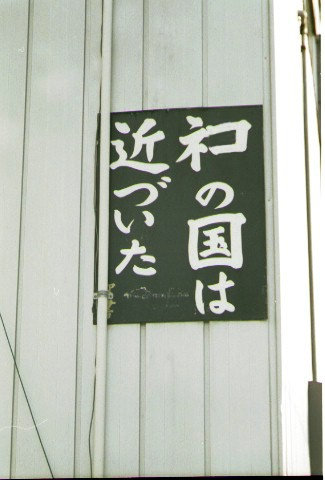
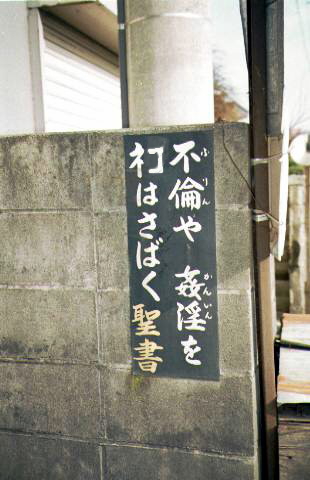
Awesome site that photoshops those creepy Japanese Christian signs to change the word “God” to “cat.” Pure gold:

c7e8aa52

The kingdom of Cat is upon us.

b2040b06

Cat will judge adultery and fornication.

You see, erasing part of the word “God” (神) in Japanese will give you the word for “cat” (ネコ).

Thanks to Marxy for the link!