The Environment Ministry’s real-life power rangers

Japan’s Ministry of Environment employs about 60 “active rangers.” These assistants to the ministry’s Rangers for Nature Preservation are employed to patrol, give tours of, survey, and in general help maintain Japan’s national park system. Apparently, they also spend a lot of their time blogging:

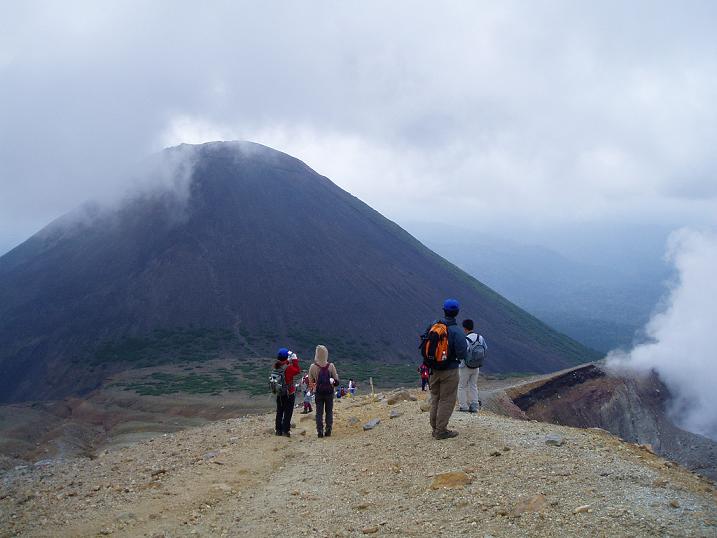
20061006122656-.JPG

Climbing Meakandake (active volcano in Hokkaido)

The ranger-bloggers for the Kanto region update more frequently:
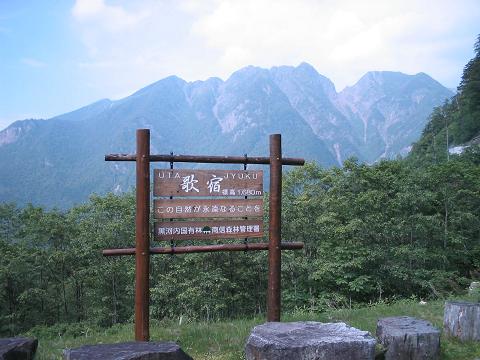
20060629172202-minami.JPG
A “song-house” in the Southern Japan Alps National Park.

And here are the folks in the Tohoku region:
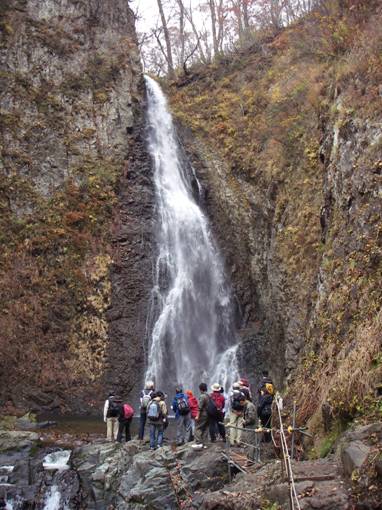
20061114125442-image002.jpg
Hikers hailing from the Tokyo metro area contemplate a waterfall during an apple-picking tour in the Shirakami mountain area.

There are also blogs for the Chubu, Shikoku, and Kinki regions. Even if you don’t read Japanese, you can scroll around the site to see some interesting nature shots courtesy of the Japanese government.

Real facts about Shinzo Abe: His favorite foods

Rather than blog about more substantive issues (like the massive fraud perpetrated by the Koizumi and Abe administrations with their faked “town meetings” in which the government paid people 5000 yen apiece to ask the right questions), I’ll use this time during a break from translation to look at the latest “live talk” from PM Shinzo Abe, intended as his modern-day version of FDR’s fireside chats.

shokuiku no hi poster3.jpgAbridged and edited from a video interview (mp4) with Japan’s prime minister on the occasion of the upcoming “Food Education Day” that occurs on the 19th of every month:

Q: What is your favorite food?

Abe: Well, it hasn’t changed since I was a child. I still like Korean BBQ, ramen, ice cream, and watermelon!

Q: Do you eat breakfast every day?

Abe: Well, I was asked at the Diet this soon after I became prime minister. Sometimes I eat light, just tree kale juice, carrots, and apple juice, but since becoming prime minister, I have been making sure to eat rice, miso soup with clams, and fermented soy beans with lots of leeks.

Continue reading Real facts about Shinzo Abe: His favorite foods

Watch Muhammend Ali vs. Antonio Inoki

Thanks to the magic of YouTube, you can now watch highlights from the historic Muhammad Ali fight with Japanese pro wrestling legend Antonio Inoki (read more about the fight here):

It’s a sports documentary in Japanese, but anyone should be able to get a picture of what the fight looked like. And what does it look like? A boring mess! This description of the fight put it well:

Inoki spent much of the fight on the ground trying to damage Ali’s legs. Ali spent most of the fight dodging the kicks by stepping out of the way or staying on the ropes. Occasionally, Inoki’s boot would connect. By the third round, a wound had appeared on Ali’s left knee.

I guess that’s what happens when you put a boxer and a wrestler together and then try and mix-match the rules of each sport.

Inventor of Cool Biz Rewarded with WSJ Picture

HC-GI323_Nakada_20060716084837.gif

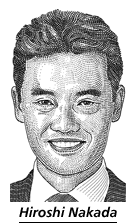
This, like my recent translation of the Soka Gakkai-Japan Times article, is from July, but I thought Wall Street Journal’s portrait of the mayor of Yokohama and inventor of Cool Biz made him look especially dignified. You can read the WSJ’s interview with him here. An excerpt:

WSJ: What was your first job and what was the biggest lesson you learned from it?

Mr. Nakada: My first real paid job was as a staffer for the Japan New Party , but I experienced different jobs while I was at the Matsushita Institute. I first worked for three months at a suit factory in the countryside. Then I worked in the seafood section of a supermarket in Singapore for three months. I spent the longest time in waste management, collecting garbage and working at a factory that sorts and prepares garbage for recycling. I learned different things from each job. At the suit factory, I learned what small-to-medium-size businesses are about — their organizational structure and way of thinking. Working in garbage management, I learned about people’s irresponsibility: Sellers only care about selling products and consumers only care about using them. No one cares about what happens to waste. I learned that different players act out of their own interests.

The JET Program turns 20 – time to put it to sleep?

The Nikkei yesterday printed a brief article on its front page praising the JET Program, a scheme by the Japanese government that exists primarily to place native English teachers in Japanese classrooms, for almost 20 years of “truly significant benefiting Japan”. An excerpt:

Saturday, November 11, 2006

CHRONICLES: JET Program Marks Two Decades Of Benefiting Japan

This year, 5,508 young people from 44 countries, including the U.K. and U.S., are teaching foreign languages — primarily English — at schools throughout Japan.

Almost 20 years have passed since the program was created. Ceremonies to mark the anniversary are planned for the near future, so let us consider what this program has accomplished.

English language abilities among high school students have perhaps risen a little, but the truly significant fact is that about 50,000 young people from around the world who have participated in the program have returned to their home countries after getting to know Japan. Many of the JET alumni have gone on to play important roles in relations with Japan.

The forerunner to the JET program was the BET (British Exchange Teaching) program, and the record shows that the current program exists in part because of the efforts of former Prime Minister Junichiro Koizumi, then a member of the House of Representatives. Koizumi had studied in Great Britain, albeit for only a short time.

The JET Program started back when the idea that putting a foreigner in the classroom would work wonders for English education was just gaining steam. But as I have noted, the number of JET participants has declined in recent years, in part because English-teaching industry has matured since then. Nowadays, English conversation schools can be found almost everywhere in Japan, and a school that wants to hire a foreigner can hire one more quickly and easily through private placement agencies or by advertising directly to the large pool of teachers already in Japan. The Wikipedia entry for the program notes that several prefectures have opted out of the JET Program in recent years. So is it time to follow the Koizumi model of “letting the private sector do what it can” and leave the hiring of English teachers up to market forces?

Not yet, I say, and I think the Japanese government would agree with me. The Nikkei gives one very compelling reason why this program, and its $400 million annual budget, remains important: the JET Program is a veritable factory for “Japan handlers” who will go on to careers dealing with Japan in their home countries. It is well-known that the Japanese government has made a point of cultivating Western “Japan experts” since before WW2 in order to boost its international image, and the JET Program has simply proved an especially efficient example of that practice, along with other programs aimed at boosting international exchanges to Japan that began in the 1980s. By hobbling young college graduates early on with 3 years of meaningless semi-teaching, the government can steer them in the direction of a lifelong involvement with Japan, with a small percentage going on to success in various fields. Accordingly, Japanese companies and Japan-related institutions instantly recognize JET experience as synonymous with a familiarity with Japan and tolerance for the Japanese office culture, and often (but not necessarily) Japanese language skills.

And the results are clearly visible. Many if not most of the foreign staff I’ve encountered at Japanese or Japan-related organizations have been JET alumni. More importantly, a good deal of US government employees who deal with Japan (at Department of Commerce, etc) spent time in JET, as have Japan-related employees of other governments, I’m sure.

Now, it’s also true that many of the Japan watchers and others who may go on to “play important roles in relations with Japan” have spent time in the country as privately funded language teachers, exchange students, or even Diet members’ assistants (in the case of Mike Green, Washington’s Japan hand-in-chief). But the fact of the matter is foreign workers are far more likely to enjoy their time in Nowheresville, Japan, if they are able to enjoy the pampering offered by the Japanese government – in addition to a comfortable salary, housing, transportation, and other benefits come standard. Wouldn’t you be happy with the country that let you save enough to pay off your student loans while giving you a cakewalk job?

Elderly restaurant owner arrested for performing Beatles songs at his establishment

A few days ago, the Japanese Society for Rights of Authors, Composers and Publishers (JASRAC, an artist copyright lobby similar to ASCAP/RIAA) was arrested for performing copyrighted music by artists including the Beatles at a restaurant he owned. Joi Ito posted an outline of the initial coverage of this incident, but I’m here to pass along some more detailed information, gleaned from J-cast, an online news site:

Arrested for performing the Beatles!

The owner of a restaurant (age 73) was arrested for holding live performances of songs whose copyrights are under tha management of industry association JASRAC without obtaining the group’s permission. Cases of copyright law violations that lead to arrest are extremely rare. JASRAC has commented that “there was no other way,” but criticism of JASRAC, who filed the criminal complaint, have arisen on the Internet.

According to the Tokyo Metropolitan Police Agency (MPA), the man is accused of copyright violation for performing The Beatles’ “Here, There, and Everywhere,” “Liverpool and All the World!” etc, which are managed by JASRAC, in his restaurant on the piano and harmonica for his customers without receiving JASRAC’s approval.
Continue reading Elderly restaurant owner arrested for performing Beatles songs at his establishment

Japan Times infiltrated by Soka Gakkai?

Weekly Friday printed an article in their July 21 issue taking a look at the controversy surrounding Soka Gakkai leader Daisaku Ikeda’s recent series of op-eds in the Japan Times, the “only independent English-language newspaper in Japan.” Let’s have a look:

FRIDAY, 2006.07.21

Indicting Reportage: Internal conflict arises at Japan Times over “Daisaku Ikeda” columns

Field reporters lodge fierce protests, claiming “promotional articles for giant religious group Soka Gakkai”

In our last article, we reported the behind-the-scenes power struggle that is ripping Soka Gakkai apart, but a “Soka scandal” has also embroiled the Japan Times, the English-language newspaper boasting the longest history in Japan (founded 1897).

It all started when the paper started running a serial column by Daisaku Ikeda (78), honorary chairman of Soka Gakkai. This column runs on the 2nd Thursday of each month, with 12 columns planned in total. But Japan Times emloyees have fiercely protested and it has reached a state where they have requested that the upper management cancel the series. A Japan Times employees explains:

“Soka Gakkai has been dubbed a cult in France, and it is united with a specific political group (New Komeito). It is absurd for us to let the leader of a religious group with these kinds of issues to write promotional articles and on top of that give him our serial space. Even from the perspective of journalistic impartiality, it isn’t to be permitted.”
Continue reading Japan Times infiltrated by Soka Gakkai?

Saaya Irie on YouTube

My quick letter to YouTube:

Dear Youtube:

It looks like dozens of videos of 12-year-old Japanese actress Saaya Irie are making their way around your site. At least one video was popular enough to appear on the top videos of Japanese YouTube search site, Qooqle Clippers. I watched the video, and it’s of Irie in a white bikini with a cameraman in the background telling her to pose. She is 12 years old making suggestive poses. It looks like something out of a Stephen King novel. One hopes that a nightmare sewer clown killed the cameraman moments after the video was shot.

As much as I like your service, videos of this nature are highly inappropriate and may be illegal under US law. In the off chance that you view one of the many videos on your site depicting Saaya Irie and conclude that she is engaging in nothing more risque than normal child modeling, let me assure you that she is intended for the Japanese softcore child porn consuming public, as has been documented (see links below). Often in Japan, child acts make a show of appealing to fellow youngsters while in fact courting older fans who then purchase “photobooks” that feature no nudity but are nevertheless softcore pornography. While tolerated in Japan, an American site should not in good conscience enable this behavior. Considering the extent to which you accommodate copyright holders to ensure that infringing content is deleted in good faith, I can only hope you will make the utmost effort to remove material that depicts child exploitation as well.

Regards,

Adamu

Links: 1 2

What to ask Alex Kerr?

Kerr and InoseOn Nov 20, I’m going to see a lecture by Alex Kerr (pictured, bottom), a businessman in Japan and Thailand and author of Dogs and Demons, one of my favorite books on Japan. He’s giving some kind of talk at the Japan Foundation. Here‘s the promo copy:

Alex Kerr Lecture: “Lost Japan”

Alex Kerr, the East Asia scholar who was praised by Ryotaro Shiba as “a protector of Japanese culture, from America,” continues to express his melancholy at the state of affairs in which Japan’s beautiful scenery is in the process of being destroyed, as well as the need to protect traditional culture. Won’t you lend your ears to the warning bell that Kerr has sounded out of love for Japan and take another look at modern Japan from the perspective of someone who has lived abroad?

As I mentioned, Dogs and Demons is one of my favorites. It’s Kerr’s tale of woe, a follow-up to his previous love letter, Lost Japan, and it criticizes the social, economic, fiscal, and other problems facing Japan. He concludes that a runaway bureaucracy has ravaged Japan’s natural beauty and culture. The metaphor “dogs and demons” comes from this story by Chinese philosopher Han Feizi:

[T]he emperor asked a painter, “What are the hardest and easiest things to depict?” The artist replied, “Dogs and horses are difficult, demons and goblins are easy…. Japan suffers from a severe case of “Dogs and Demons.” In field after field, the bureaucracy dreams up lavish monuments rather than tend to long-term underlying problems. Communications centers sprout antennas from lofty towers, yet television channels and Internet usage lag. Lavish crafts halls dot the landscape while Japan’s traditional crafts are in terminal decline. And local history museums stand proud in every small town and municipal district while a sea of blighted industrial development has all but eradicated real local history.

Kerr goes on to detail initially covered-up river pollution that ended up being so bad they had to name a disease after what it did to people, nuclear reactors clumsily repaired with duct tape, massively wasteful public works spending that robs local areas of the chance to develop a real economy, unconscionable levels of government debt, and countless other examples of Japan’s “policy challenges” circa 1999.

The most effective parts of the book are where he talks about the destruction of Japan’s landscape and city planning, areas that directly affect Kerr personally as an art lover as well as his businesses in dealing artwork and urban restoration. Why are all of Japan’s rivers paved? What is the need for all the noise pollution in public areas? Why was Kyoto’s priceless architecture and urban culture allowed to be put on the chopping block? Why don’t they just tear down Kyoto tower?! OK, that last idea was my own, but he does at least call the tower “garish.”
Continue reading What to ask Alex Kerr?