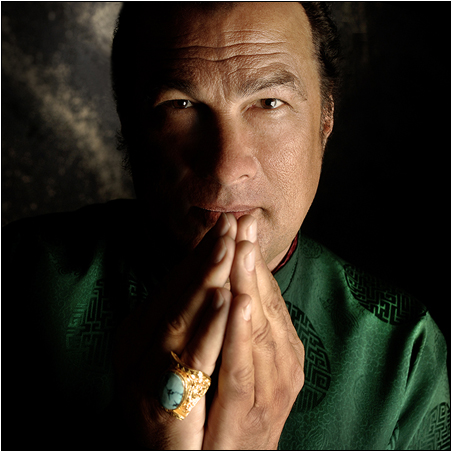
Al Gore, Nobel Peace Prize Winner
Friday, October 12th, 2007Congratulations, Mr. Gore. I have one message for you: announce your bid for the presidency NOW. You will have the support of me and the rest of the world.
Congratulations, Mr. Gore. I have one message for you: announce your bid for the presidency NOW. You will have the support of me and the rest of the world.
1. The end of eikaiwa: Along with some of the minor players in the industry, former industry leader NOVA seems to be in its death throes (more info here). While the details of just how many people are getting screwed over are interesting and all, I just want to take a minute to ponder the implications of what is going on: massive change in the ESL market and, perhaps more importantly, the death of NOVA. It is hard to underestimate the presence that those four letters have become in the mind of the expat, especially those not involved directly in teaching English. Basically, in the gaijin hierarchy, NOVA teachers have been regarded with just a little less disdain than the African club promoters in Kabuki-cho. NOVA finds the most gullible young partiers eager for an easy first job out of college (or increasingly a fun place to work during a working-holiday) who then proceed to come to Japan and live as if they were still in college. It’s one thing for students and professionals to look down on NOVA teachers, but even other eikaiwa teachers hated on NOVA. There is really no better way to sound mature and like you are really interested in Japan than to cluck your tongue at a faceless mass that stays in a gaijin bubble and terrorizes the local population.
But without NOVA, who will the uppity gaijin have to kick around? None of the other schools have the nationwide presence or annoying mascot (though NOVA had the status way before the rabbit came around), so just what will the shorthand be to let other gaijin know you’re not ‘one of them’? And what will it mean if the eikaiwa industry (which was long supported by lax regulation of shady sales practices) can no longer maintain its appeal, especially now that the honeymoon is over and headlines of school closings and unfulfilled class contracts, not to mention successful lawsuits by unhappy customers, are constantly weakening the appeal of the product to the customers? The demand for English is unlikely to go away, but the shrinking of this private market (along with the decline of the JET program) is likely to erode the situation of ‘one foreigner in every village’ or (assuming that actual schools continue to hire foreigners for their English curricula) will more likely lessen it from 3 foreigners in each village to just one or two. And with the opportunities for easy employment cut off, what will become of the ‘Japanese dream’ of easy employment and Charisma Man status for young adventurous Westerners? Has this not been a major factor fueling the interest in Japan in recent decades? And will this loss constitute a truly missed opportunity for Japanese educators who feel that the best way for Japanese people to learn English is to be around native English voices?
2. Japanese mobile advancement to hit a wall in favor of better prices? Cell phone regulations are going to change in a big way – the Nikkei recently ran a story (Sept 19) detailing the report of a Ministry of Internal Affairs and Communication study group that recommends ending the practice by cell phone carriers of providing “free” cell phones to customers as early as next spring. These offers of free phones are deceptive because the phone companies reimburse their distributors for the phones and then charge customers a higher rate for their plans (hence the ridiculous 20 yen per minute talking fees). But with little upfront costs, the provision of the phones has been a major (perhaps deciding) factor in attracting customers to one company or another, which has spurred the insanely high technological levels of Japanese mobiles. Perhaps in a few years Japanese phones will more closely resemble those in other countries, where users get a minimum level of features but enough of what they need for a reasonable price. I mean really, do we need to watch TV on the train?
The recent opening of Neojaponisme and its ambitious manifesto has my mind swimming with conflict over the role of Western expats in Japan.
So I feel this was the perfect timing for me to have come across Patrick Macias’ 2nd most recent podcast entitled “Akihabara Wars.” (MP3)
Initially I thought the general theme was “Patrick takes a walk around Akihabara and meets with some of the Westerners who consider it a second home.” There’s an interesting (if really unnerving) talk with an Italian bishojo magazine publisher at an event promoting a minor idol and a brief chat with an American college student whose side job is giving tours of Akihabara while wearing a Dragonball Z costume (I remember him from his interview in Cyzo!). Finally Macias talks with someone who insists with complete self-satisfaction that the entertainment in Akihabara is a direct equivalent to Japan’s culture of “ritualized entertainment” as found in the tea ceremony and sees absolutely “nothing to worry about” regarding the mass commercialization of otaku culture and overdevelopment of the Akihabara area because “it will go somewhere else.”
The arguments and attitude sounded somewhat familiar, but it was not until I actually checked Macias’ “Mind of Godzilla” blog for more info (I subscribe to the podcast via a fairly low-tech podcast aggregator) that I found the nerdy voice belonged to none other than longtime Japan commentator Alex Kerr.
As is usual for Macias, he mixes light material with a more serious look at his subject matter. He has turned off comments for this post, which I understand as comments like the one I want to offer would be a major buzzkill to his main audience. But I will offer it anyway because the meeting has insights not just on Kerr’s or Macias’ views or even Akihabara but on the differences among expat commentators on Japan.
I’d love to transcribe what I heard, but it is difficult for me to really get any free time these days. Please please go listen for yourself.
Reactions:
As I mentioned, listening to them talk was fascinating not just for the issues they discussed but because of who they are – both of them are making their livings as interpreters of Japanese culture but have gone about it in wildly different ways. Kerr presents himself as someone completely immersed in Japanese culture, a “more Japanese than the Japanese” campaigner for a return to traditional aesthetics. On the other hand, Macias keeps a lot of cultural distance because he works on reaching an American audience. The discussion makes me wonder if the two extremes I see in these people – get to close to the culture and it changes you, keep too much distance and you miss the details – are really mutually exclusive.
I am generally quite careful not to post anything work related on here, but this particular quote from an internal corporate employee survey I’m translating was just too choice, and utterly anonymous and unidentifiable.
I am opposed to foreigners in the front office. Since it is difficult to convey minor nuances of Japanese within the company it must be even more difficult for customers to understand when conversing with them. I have received two whole claims about this. (One claim said they could not understand what they were saying, and the other said, a foreigner huh? A Japanese would be better.)
I am personally upset about the use of the Mexican labor on the golf
course. I understand you have contracted, and it is the contractors
who are responsible for hiring, but the club is responsible for hiring
the contractor. We get letters about “responsibility” and “right and
wrong,” well, I think the club management had better look at itself.
If all these workers are legal, then I will apologize, but I very much
doubt they are legal. This is a very poor example of judgment and
sends the wrong message. I know I am not the only one that thinks like
this, and if my concerns are unfounded, then the club should issue an
explanation and correct the image.
I admit, I have been out of commission recently, and with my prep classes for the Securities Dealer Type II exam coming up (plus a bunch of other commitments) it looks to sort of stay that way. Still, I couldn’t stay totally silent on the upcoming election.
Since I haven’t seen anything like it in English yet, I’d like to show you a little chart I made up. It breaks down the seats in the Japanese Diet’s Upper House in terms of party affiliation:
Now here’s something you can get from news reports (Yomiuri):
If the LDP’s coalition partner, New Komeito, secures 13 seats—the same number of seats it won in the 2001 upper house election—the LDP would need 51 seats to maintain the ruling bloc’s majority. To accomplish its goal, the LDP aims to win 20 prefectural constituencies where one seat is being contested, and 18 seats in multiple-seat contests. “We’ll still reach our goal even if we only win 13 seats in the proportional representation contest,” an LDP source said.
But winning in 20 out of 29 constituencies where one seat is being contested is a high hurdle for the LDP, which is under fire over the pension fiasco.
And there you have it. Where do you think the political landscape is heading? One thing I would hate want to see happen is the LDP to lose just enough seats to make it possible to stay in power through bringing the Kokumin Shinto into the coalition. That would really put the nail in the coffin to any pretence the LDP had of trying to continue on a path to leaner government and realistic solutions to Japan’s problems.
The creation of a unified “Japan Brand” has been called for recently as a way to promote exports, boost tourism, and take control of how Japan as a nation is perceived abroad. To that end, the Small and Medium Enterprise Agency has recently announced a new logo for its campaign to help promote local products for export that to this blogger seems to lack a certain subtlety:
(Click the picture for the full size picture. It makes a great desktop wallpaper!)
Bluntness aside, it’s a simple and attractive logo. It seems intended as a sort of umbrella logo to bring disparate marketing strategies pursued by the various regions of Japan in under a unified concept that will “create new traditions” by very efficiently letting anyone who comes into contact with a product bearing such a logo that it DEFINITELY comes from Japan, which should let a potential buyer know that, like Japan, the product stands for “quality,” “beauty,” and “pride.”
And at least this logo should make sense to outsiders. “Yokoso Japan,” the tourism version of “Japan Brand” logos, was SLAMMED last year by American Japan theorist Alex Kerr, who told a government discussion panel that it would sound like “blah blah blah Japan” to those unfamiliar with the Japanese term for “welcome.”
UPDATE: I should note the similarity between this logo and the typeface at YH Chang Heavy Industries, a flash animation website known for its hit “Cunnilingus in North Korea:”
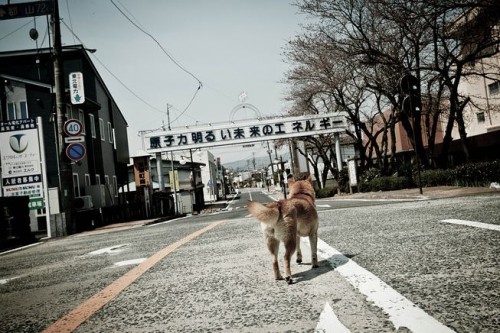
A terrible crime was committed in Fukushima, Japan recently:
17-year-old boy turns self in with severed head / High schooler tells police he killed mother
The Yomiuri Shimbun
A 17-year-old high school student was arrested Tuesday on suspicion of killing his mother after turning himself in at a police station in Aizuwakamatsu, Fukushima Prefecture, carrying her severed head, police said.
According to the police, the boy, in his third year at a prefectural high school, came to Aizuwakamatsu Police Station at about 7 a.m. on Tuesday with the head in his school bag. He told the police he had killed his mother at about 1:30 a.m. Tuesday.
The police went to the boy’s apartment in the city, where they found the headless body of the mother.
The boy was quoted by the police as saying: “I killed her by myself at home early Tuesday morning while she was asleep. I wanted to kill somebody, whoever it was.”
I have committed a crime that should never be committed.
—What was your motive?
A reason? Just because.
—Other people won’t be satisfied with that!
Well if I had to say something, I guess it’s a form of self-expression.
—You had no other way to express yourself?
Maybe not.
—Don’t you feel any regret?
Not right now. I feel relieved. But I’m sure I’ll probably regret it later.
—What will you do after this?
I will go have myself charged with the crime.
—Isn’t that a foregone conclusion?
Oh, you might be right. But at the very least there is no crime I desire in reality [Note: this line was a little hard to figure out. The Japanese is reproduced below:]
あーたしかにそうかもしれません。でも現実でだけはボクの望む罪はないと思いますが。
—Do you feel like continuing on?
Not really.
—If you keep going, what will you do next?
I don’t know since I’ve just been acting on my whims.
—Don’t you feel like killing yourself?
No, that would be scary. Plus I promised I wouldn’t kill myself.
—Who did you promise?
I don’t want to say.
—Why not?
Just because.
—Aren’t you being evasive by saying “just because”?
Perhaps. I’ve always been running away like that anyway.
—Any last words?
Thank you for putting up with my nonsense all this time.
(Thanks to the Daily Yomiuri and ZAKZAK)
Comment: This is a sad tragedy that seems to contain similarities to both Columbine (troubled teenager who couldn’t make it through his last year of high school), the Virginia Tech slayings (weapons bought beforehand, a pre-planned media strategy and a clear “self-expression” motive) combined with the all-too-common Japanese mother-son tension. The reports that I’ve seen so far seem to regard this crime as a total aberration by a troubled youth, which it is. But it looks like this sort of thing could be prevented. It’s been reported that it was known that he had been skipping school and a doctor had already diagnosed him as “mentally unstable.” As hard as it is to rein in rebellious teenagers, it’s sad that there wasn’t more done to try and help (or at least medicate) someone with clear mental problems before he became a danger.
That’s a whole course! Maybe for my wedding party I should volunteer 1/5 of my wedding meals to get sent to North Korea.
Other stats from this Shukan Toyo Keizai article:
Average cost of a wedding: more than 3 million yen (US$25,000) in 2006. The cost of weddings has been rising since 2003, when the Japanese economy started turning around. (Source: wedding planning site Zexy.net)
Japan’s Ministry of Agriculture, Forestry, and Fisheries (MAFF) researched how much food is left uneated at wedding parties (披露宴 routinely make up 3/4 of the cost of an entire wedding) by surveying 40 wedding halls nationwide. The figure of 22.5% (19.2% when you exclude drinks) is light-years away from the amount of food left uneaten at home (1.1% according to a 2005 survey) or in restaurants (3.1% as of 2006). And it’s a high percentage even compared to food at regular banquet-style parties (宴会) that offer alcohol, 15.2% of which goes to waste.
Perhaps that has something to do with the sheer amount of food served at wedding parties, which is averages an enormous 2230g—almost four times the average 600g served at cafeterias and restaurants. That means people who simply can’t finish more than what they usually eat in an entire day are wasting an entire meal’s worth of food, or 500g.
Why so much food? The STK conjectures that since people want to give their guests the best possible service, it’s either become a tradition or people are trying to be ostentatious by offering more food than necessary. But as someone planning a wedding party myself, I think the most obvious explanation is that the event halls need to justify charging 10,000 yen per plate plus open bar charges.