Archive for the 'Ayase' Category

New DPJ cabinet is almost totally awesome

Thursday, September 17th, 2009

First, the bad news. Shizuka Kamei has been appointed minister of postal issues and financial services. The man is a fierce, fierce fighter who likes to dredge up personal scandals using his ties as a former police official. That’s probably how he got the job. Now he’s going to make sure Japan Post remains the world’s biggest and possibly worst-managed bank and he’s going to crush regional banks by allowing all the people they lended money to stop paying for three years. Great.

As I just commented over at Observing Japan’s assessment of the new lineup, I hope Kamei simply collapses under his own weight. He may well overreach in a position that gives him barely any authority at all. If any place should be safe from unwise political meddling, it’s the FSA which has SEC-like regulatory and law enforcement authority over all financial services institutions.

Otherwise, not a bad lineup. Though Time Magazine posits Ozawa as a “shadow shogun” (reflecting the “Ozawa is the real one in charge” theme trotted out by both Nikkei and Yomiuri, who are wary of a DPJ administration) the cabinet reflects a wide sampling from the party including people not so close to Ozawa, like finance minister Hirohisa Fujii who was an early voice calling for Ozawa to step down over the Nishimatsu political funds scandal.

Asahi had an interesting section listing some of the human side of each new minister. I reproduce some of it here:

Foreign Minister Katsuya Okada has a giant frog collection. I have heard it from an eyewitness that it’s really huge. Not sure if any of them are mutant.

The above-mentioned Kamei Shizuka is a sixth-degree black belt in aikido and has held exhibitions of his oil paintings.

Naoto Kan, head of the National Strategy Bureau, was DPJ president in 2004 when he was going after LDP politicians for failing to pay into the national pension system (a duty for all residents in Japan, including yours truly). When it was found that Kan himself failed to make his payments, he was forced to resign in shame. To get over the shock of the whole series of events, he decided to shave his head and make the traditional pilgrimage to 88 Buddhist temples in Shikoku.

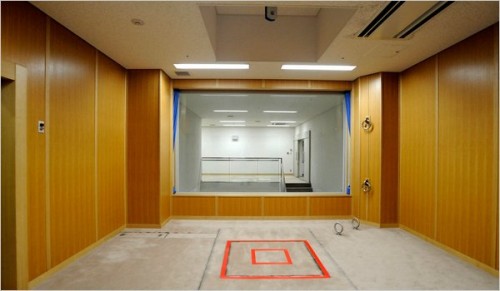
Justice minister Keiko “Sonny” Chiba (not really her nickname) is a former Socialist Party member who’s against the death penalty, for dual citizenship, and pro letting women choose whether to take their husband’s names when they get married. The trifecta of policies I’ve been waiting for! There is no news that the DPJ plans to abolish the death penalty, but for the time being this election appears to have saved the life of Shoko Asahara, Tokyo subway sarin attack mastermind and Japan’s most famous blind cult leader/death row inmate (and my neighbor at nearby Tokyo Detention Center).

Social Democratic Party leader and consumer affairs, birthrate, and gender equality minister Mizuho Fukushima is not only a lawyer and former TV commentator, she is a huge Miyazaki fan and serves as a judge to select the Nikkan Sports film prizes, the top honors of which in 2007 went to “Even So, I Still Didn’t Do It” about a man wrongly accused of train groping.

Hirotaka Akamatsu, agricultural minister, was once a flight attendant in the 70s. One flight was hijacked by the PLO and he had to help negotiate with the terrorists in English.

Administrative reform minister Yoshito Sengoku had his stomach removed in 2002 due to cancer.

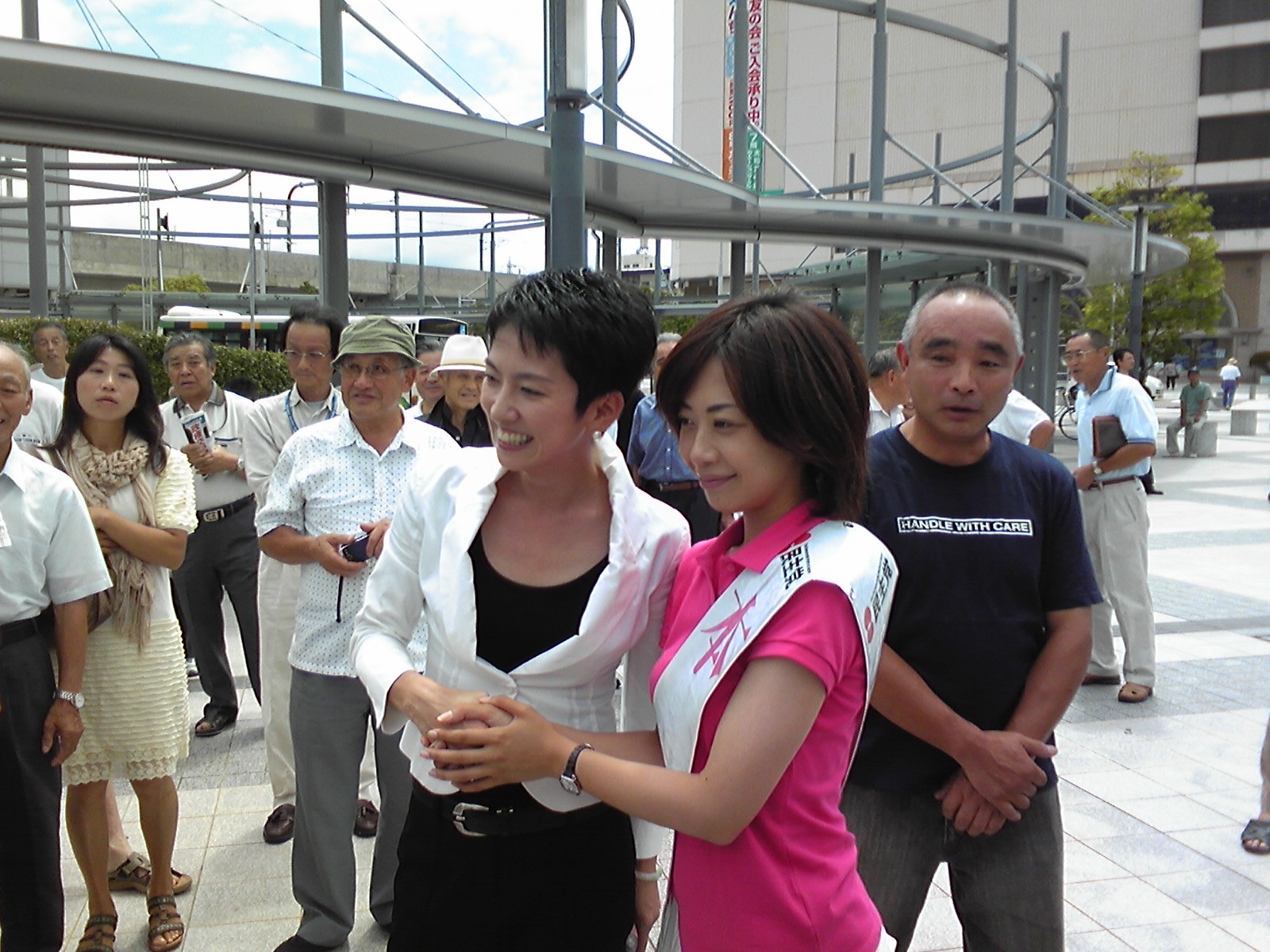
These two didn’t make it into the cabinet (this time), but I think it’s safe to say DPJ upper house member Ren Ho (who Ikeda Nobuo thinks would make a good press secretary) and “cosplay erotica writer” turned newly elected DPJ lower house member Mieko Tanaka are the two best-looking women in the Diet right now:

Ren Ho Tanaka 850745001

Handle with care, indeed.

Ayase crime update: Possible foreigner robs sushi restaurant… across the street from my apartment

Sunday, September 13th, 2009

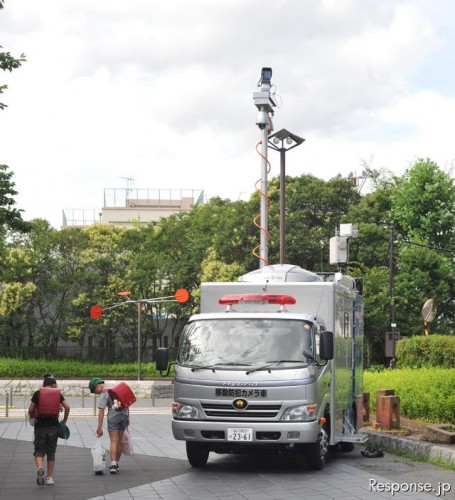
While making breakfast this morning, I noticed a couple of news trucks around the sushi restaurant across the street, which is the first thing I see when leaving my apartment in the morning. I figured that Gal Sone was probably eating a metric ton of kohada or something, but the truth was far darker. Kyodo reports:

Robbery at Choshimaru kaitenzushi: 720,000 yen seized

Around 6:30 AM on the 13th, a man entered from the back door of the Ayase Sushi Choshimaru kaitenzushi restaurant in Yanaka 1-chome, Adachi-ku, Tokyo, held a knife to the clerk (26) opening the restaurant, said “Give me your money,” seized 720,000 yen in sale receipts from the safe and fled. The clerk was unharmed.

The Metropolitan Police Ayase Station are searching for the man as a robbery suspect.

According to the Ayase Station, the man is around 30 and about 160-170 cm tall. He was wearing sunglasses, a black short-sleeved shirt and jeans. The clerk claims that “he threatened me in broken Japanese.” (Kyodo)

The Jiji report uses a fascinating phrase to describe the perp: “アジア系外国人風,” which means something like “looks Asian, seems foreign.” Fortunately, I only fit half of those criteria.

Christian sign found in Tokyo

Sunday, September 13th, 2009

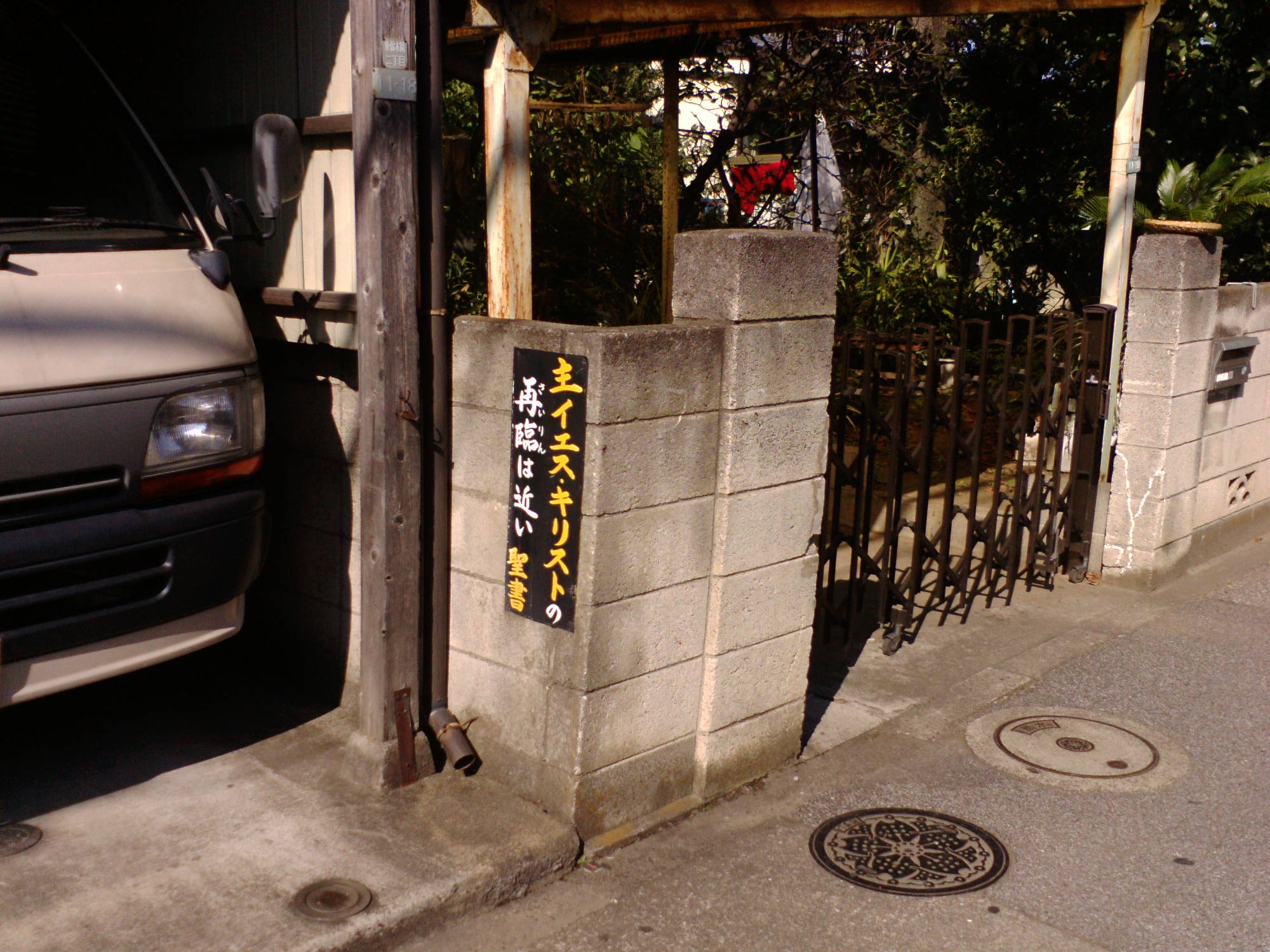
Biking around Takenotsuka, Adachi-ku today I spotted an interesting sign:

20090913143101

“The return of Our Lord Jesus Christ is near – The Bible”

This marks the first Christian sign I’ve seen in Tokyo, though I think that’s just because I don’t get around that much. The sign is posted on the outer wall of a house next to a Zebra pen distributor. There were no other indications that the inhabitants were Christians.

See my earlier post for more info on what these signs are all about.

Tairo Hirayama to represent Tokyo 13th district

Monday, August 31st, 2009

Amid all the excitement of last night’s live election coverage (DPJ won big, Hatoyama will be PM), I didn’t get a chance to check the results in my home district. So here goes.

In line with the overall nationwide trend, voters chose DPJ candidate (and ryokan heir) Tairo Hirayama to represent Tokyo’s 13th district (covering all but the western end of Adachi-ku). Hirayama beat LDP incumbent Ichiro Kamoshita by a small margin of 3,000 votes. Kamoshita will stay in the lower house as a proportional representation member, which will make things awkward if they ever run into each other in the halls of the Diet building.

In a statement on his website written last night, Hirayama adopted the same cautious tone as PM-to-be Hatoyama. He thanked supporters but said he considers the votes to be not for him personally but instead as votes for a change in government. Since he had already taken some painkillers to combat his lower back pain (ぎっくり腰 a new vocab word for me) he expected to stay up all night before heading to Kitasenju Station this morning to thank voters for their support.

At 62.82%, voter turnout in Tokyo’s 13th was lower than the 69% national average and not much higher than turnout in the July Tokyo assembly election.

***

Hirayama might want to shake hands with Kazumasa Fujiyama, his rival candidate from the Happiness Realization Party. Though Fujiyama received less than 3,000 votes or 1.1% of the total, that was just about in line with Hirayama’s margin of victory. Had those voters gone LDP the race would have been much closer. Even considering that the HRP voters were almost all Happy Science followers, Hirayama should thank his spirit guide that Okawa didn’t decide to throw his weight behind the LDP this time around.

Nationwide, the HRP failed to win a single seat or even surpass 1% of the popular vote in most districts. Without any significant voter support, the party stands to lose over 1 billion yen in security deposits for the more than 300 candidates it fielded.

Happy Science’s political movement, born of guru Ryuho Okawa’s vision of a nuclear holocaust, has failed. At one point it appears they considered giving up before the election, but in the end this was a bad idea that took on a life of its own. In a personality cult, once the leader sets his mind to something it can be very hard to stop. The leader himself may hesitate to admit to a mistake out of fear he’ll lose credibility, and of course his followers who think he’s a divine being would never go against his wishes.

I hope the authorities will keep a close eye on this group as it’s possible Okawa may still feel the urgent need to save Japan from certain doom by taking control of the government.

***

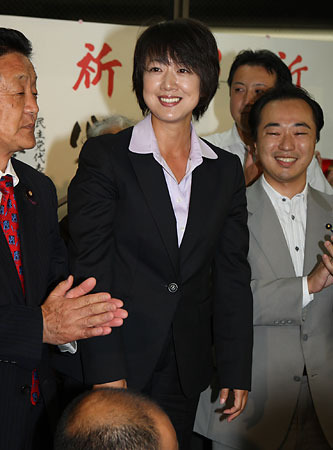
Perhaps the biggest national story set in Adachi-ku is the DPJ’s defeat of New Komeito President Akihiro Ota in Tokyo’s 12th district (covering Kita-ku and the western tip of Adachi-ku) was yet another humbling setback for the ruling coalition. Former DPJ President Ichiro Ozawa had considered running against him but decided to field a different challenger, singer and DPJ upper house member Ai Aoki (see photo above) instead. It ended up working, and Ota, who had not run in a PR spot, will have to turn in his MP badge (and of course resign as New Komeito leader).

In fact, nationally the New Komeito lost in every single-member district. The 21 members it will send to the next Diet session were all PR candidates.

Ai Aoki 20090831-00000014-jijp-pol-view-000

An ebullient Ai Aoki, winner in Tokyo’s 12th district (photo from Jiji Press)

Japan Lower House election – Meet the candidates Part 4: Kazumasa Fujiyama (Happiness Realization Party

Saturday, August 29th, 2009

The final candidate in Tokyo’s 13th district is Kazumasa Fujiyama, running under the Happiness Realization Party ticket.

Before I get to this guy’s profile, I want to quote from an excellent piece on the party from the Irish Times:

Founded earlier this year to offer voters a “third choice”, the HRP has an eye-catching manifesto: multiply Japan’s population by 2.5 to 300 million, overtake the US to become the world’s premier power, and rapidly rearm for conflict with North Korea and China.

If elected, its lawmakers will inject religion into all areas of life and fight to overcome Japan’s “colonial” mentality, which has “fettered” the nation’s true claim to global leadership.
...
A new book, The Guardian Spirit of Kim Jong-Il Speaks , by party founder Ryuho Okawa explains that earlier this month at a session in the party’s Tokyo headquarters, the voice of Kim’s guardian angel warned of his plans. But at least Kim is alive – Okawa also claims to be able to receive the thoughts of Japan’s notorious wartime monarch, emperor Hirohito (1901-1989), and his deceased predecessors.

Being able to commune with the dead is but one string to Okawa’s bow. A reincarnation of Buddha, he achieved great enlightenment in 1981, according to the party’s website, “and awakened to the hidden part of his consciousness, El Cantare, whose mission is to bring happiness to all humanity”.

Before he founded the Happy Science religion in 1986, Okawa wrote books under the names of Muhammad, Christ, Buddha and Confucius. Conveniently, if improbably, speaking in Japanese, some of the prophets had much the same message: Japan is the world’s greatest power and should ditch its constitution, rearm and take over Asia.
...
The Happies boast that they have sold 11 million copies of their bible, Shoshin Hogo (The Dharma of the Right Mind), in Japan since 1986, and opened 200 temples.

Okawa’s books, mixing new-age philosophy with self-improvement tips and political views, have sold millions more, apparently providing the funding for the campaign. Translating those beliefs into political power, however, has proved easier said than done. Tokyo voters shunned the Happies’ candidates in this month’s municipal election, which ended LDP rule in the city and set the DPJ up for a historic national win next month.


Also, you might be interested to see the Happy party’s new manifesto video. It’s very similar to the one they produced for the Tokyo assembly elections (that animated treasure was unfortunately taken down), only this time slightly more professional:

Now, to the candidate:

Fujiyama happy party SN390094

Profile: An architect by trade, Fujiyama became a full-time Happy Science member in 1995 and has since risen to become a leader in Tokyo – he previously served as the head of the Science’s Nippori Branch and Adachi Branch before being named deputy leader of the Tokyo Branch in 2009.

Before becoming a full-time Happie, Fujiyama was an employee of Haseko Corporation, a construction/engineering firm that’s listed on the Tokyo Stock Exchange. It’s unclear whether he was a member of Happy Science before 1995 or if he

One of Fujiyama’s bases of operations is the Science’s Nippori branch (seen here on Google Street View), which I happened to spot during a walk the other day:

Policy: As all Happiness Realization Party candidates appear to be carbon copies of one another, it’s no surprise that Fujiyama supports all the planks mentioned in the above video – slash taxes, smash North Korea, and somehow make Japan the world’s biggest economy by 2030 (I suspect they’d have to destroy all other countries to do this).

When asked in an Asahi questionnaire about how he would like the world to see Japan, he answered as “a great economy.” (経済大国)

Fujiyama claims in a blog post that the owner of a building near Kameari Station said she’ll support him because she hates paying consumption taxes.

Something interesting: Fujiyama bears an eerie resemblance to party founder and leader Ryuho Okawa:

Fujiyama:

Fujiyama asahi P_20090626SNSA0030S

Okawa:

ryuho_okawa_profile

OK, I’ll admit that their parts are on opposite sides, but don’t you think they both have a sort of “divine salaryman” look going on?

***

My next and final profile post will look at a few of the Tokyo proportional representation candidates.

Japan Lower House election – Meet the candidates Part 3: Shuji Watanabe (69) JCP

Saturday, August 29th, 2009

Profile: Watanabe is a former Adachi-ku assemblyman running on the JCP ticket. At 69, Watanabe is liver-spotted and somewhat frail-looking when campaigning. He is an old school communist – he never went to college but instead joined the party in 1960 after finishing technical school. Three years after graduation he began working as a sanitary inspector at a clinic for the poor, where he was an active unionist who pushed for improved benefits for workers. He entered electoral politics in 1971 and won a seat on the Adachi-ku assembly, where he has won re-election nine times (I assume consecutively). He has apparently retired from the assembly to run in this election.

Chances of winning: I don’t think he expects to win. True to the JCP’s commitment to being a vocal minority party, I think the point of him being there is to try and direct the debate in favor of the JCP’s policy platform. He doesn’t even have his own real website, so I kind of doubt the party’s commitment.

Policy: Watanabe is running on a typical JCP line of protecting employment. See my earlier post on the JCP to see why I find them unacceptable.

Something interesting: I can’t say for sure, but something tells me this guy is related to Yasunobu Watanabe, the Tokyo Prefectural Assemblyman who handed his seat to JCP candidate Yoshie Oshima in July.

Shuji:

Yasunobu:

Yasunobu Watanabe

Japan Lower House election – Meet the candidates Part 2: Tairo Hirayama (DPJ, age 37)

Saturday, August 29th, 2009

I am running out of time before the election (and have lots of research to do before my major live-streaming/blogging event tomorrow night), so I’ll be quickly running down the rest of the ticket in Tokyo’s 13th district:

Tairo Hirayama (DPJ, age 37) – This guy has been just about ubiquitous around Ayase recently, much more so than his LDP rival Ichiro Kamoshita.

fish img_profile

Profile: This first-time candidate was a guest lecturer at Akihabara’s Digital Hollywood University (a school specializing in IT and media) where he taught a class on e-commerce. His main occupation is running a non-profit organization that helps small companies set up e-commerce websites. While not as prolific as Kamoshita, Hirayama has authored several books including Net Shop Management Standard Guide – 37 Iron-clad Rules for Attracting Customers and Sales Promotions Known only to Top-selling Stores.

He is originally from Iki, a tiny island in Nagasaki prefecture between Kyushu and Tsushima where his parents run a ryokan (traditional Japanese inn). I assume he is running in Adachi-ku because that’s where the DPJ placed him. He does not claim any prior affiliation with the area.

A turning point in his life came in 1995 when as a student at Waseda University he volunteered for the rebuilding effort following the Great Hanshin earthquake that devastated the Kobe area. It was there that he learned how to lead people; it’s also where he met his wife Sachiko, with whom he now has three children.

Policy: His campaign vans and literature all feature a big sticker announcing his support for the DPJ’s childcare cash handout program. Under the program, most families with children will receive 26,000 yen a month until their kids finish middle school. He’s made that the centerpiece of his campaign. He’s also been emphasizing his youth – the masthead of his website contains a logo with the word “age 37” in flames.

In an Asahi policy questionnaire, he said he’d like Japan to be known as a nation of “peace and culture.”

Chances of winning: The Nikkei-Yomiuri joint poll showed Hirayama slightly ahead. I’d say he will probably win backed by the groundswell of support for a DPJ-led government. He has the backing of 80% of DPJ supporters.

Something interesting: Hirayama’s wife Sachiko (apparently in her early 30s), who worked at a local Kyushu TV station before getting married, is no slouch – she won a female entrepreneur award in 2007 (with a 3 million yen grand prize!) from FujiSankei and Daiwa Securities for her creative business plan to open a “next-generation store” in Tokyo based on her online business Ikimonoya, an online retailer of gourmet Japanese food. The site is run under the brand of the Hirayama Ryokan, the traditional Japanese inn located on Iki that has been in her husband’s family for three generations. She is president of the ryokan company and her husband Tairo is the Representative Director (some sources say Tairo’s mother is the okami-san, the Japanese term for lead hostess/general manager, while others say it’s Sachiko now). Unfortunately the site shows no indication that they actually opened a store since she won the award in March 2008.  She reportedly lives on Iki full time, so it must be very lonely for her husband in Tokyo.

hirayama sachiko 200806040011o1

Sachiko Hirayama

Japan Lower House election – Meet the candidates Part 0 – What voting means and how it works

Monday, August 17th, 2009

On Tuesday, parts of Japan’s political net-osphere will go dark as the official campaigning period begins for the August 30 general election to select members of the nation’s lower house of parliament. Considering that this election has the potential to take government control away from the ruling Liberal Democratic Party for the first time in 13 years, national and international attention on this race is high.

So what can I add to the conversation? My interest in Japanese politics and other current events is fairly intense, so I plan to follow this story with the same rigor I apply to my other favorite topics.

Mainly,  I plan to profile the candidates up for election in my district (Tokyo’s 13th) to give a worm’s-eye-view of the election from my perch in Adachi-ku, Tokyo. Some readers will recall my series of candidate profiles leading up to last month’s Tokyo prefectural assembly elections.

But first, some opening remarks:

What will this election decide?

On Sunday, August 30, Japanese voters will go to the polls to elect all 480 members of the House of Representatives, the more powerful house of the country’s bicameral legislative branch of government. After the election, the Diet (Japan’s word for its parliament) will be convened to choose a prime minister, who will then form a cabinet. The upper and lower house will each conduct a vote, but if the upper house vote differs from the lower house’s, the lower house’s choice will prevail. If one party has won an outright majority of seats in the lower house, it can elect a prime minister without the aid of any other party, but if not various parties will have to negotiate and form a coalition government.

The lower house is where most substantive legislative business is done. It controls the passage of the national budget, can override an upper house veto with a two-thirds vote, and most importantly decides the appointment of the prime minister. The DPJ currently controls the upper house, which is a less powerful but still significant part of the legislative process.

The party (or coalition of parties) that wins this election will ostensibly gain control over essentially the entire country—if the DPJ gains control it will preside over the executive branch, dominate both houses of the legislature, and possess the power to appoint Supreme Court and lower court justices.

In practice, however, the prime minister and cabinet’s power has been limited – to give a very broad outline, powerful ministries set the agenda on most important national issues, the legislature exists mainly to ratify that agenda and distract the public with loud but ineffectual drama and scandal (in exchange for funneling money back to their districts), and the judicial nominees are almost never decided by the elected officials themselves.

The opposition Democratic Party of Japan are on track to make significant gains in this election, though it will be a tall order to increase their current standings (110) to exceed the LDP’s total of 303. The DPJ are campaigning on many issues, but perhaps first and foremost on a revolutionary vision of administrative reform. They believe that the bureaucrats in the country maintain power based on, in Secretary General Acting President Naoto Kan’s words, a “mistaken interpretation of the Constitution” that bureaucracy has the inherent right to control government administration, while it’s the job of the cabinet and legislature concentrate on passing laws. The DPJ would like to wrest control away from the “iron triangle” of unelected bureaucrats, powerful business interests, and their cronies in the Diet and place power squarely in the politicians’ hands. But more on that later.

How are members selected?

Since the law was changed in 1993 following a major LDP electoral defeat, members of Japan’s lower house have been chosen using two parallel systems – 300 are selected through single-member districts nationwide similar to the US House of Representatives, while the remaining 180 seats are allotted through a proportional representation system (or PR for short).

Under Japan’s PR system, the parties running in the election field candidates in each of 11 regions. On election day, voters write down two votes for the lower house – one for their preferred individual in their district, and the other to choose a party they’d like to receive the PR seats in their region. In the interest of counting as many votes as possible, votes will still count if a voter writes in the name of an individual running in the region or the party leader’s name instead of the party name.

For example of how this works, in 2005 the Tokyo PR district had 17 available seats. To win a seat, a party would have had to earn at least 5.88% of the vote, or 389,682 votes. Only one party that ran (Shinto Nippon with 290,027 votes) failed to gain a seat in this district.

The fact that relatively fewer votes are needed to win a PR seat has convinced smaller parties to try their luck. Most recently, the Happiness Realization Party, a newly formed political wing of new religion Happy Science, has decided to field more than 300 candidates in all single-member and PR districts (though as of this writing it is unclear whether they will actually go through with it). The religion’s leader Ryuho Okawa has announced his intention to run in the Kinki PR district with the top position. To do so he will need 3.45% of the vote, which would have been around 375,000 votes in 2005. His party would have to seriously improve its performance after winning a dismal 0.682% (13,401 votes in 10 districts) of votes in the Tokyo prefectural elections. Okawa had originally planned to run in Tokyo, but Tokyo has a higher 5.88% hurdle to overcome.

How does voting work in practice?

After entering the polling station, voters will be handed a paper ballot and a pencil (yes, a pencil, not a pen). They will be directed to a table with a list of candidates and instructions on how to vote. There they will write in the name of their preferred candidate along with their PR vote. To make it easier for voters to remember, many candidates spell their names using phonetic hiragana instead of kanji, which can be harder to write and have many different readings.

Since this election will also include a people’s review of nine of Japan’s 15 Supreme Court justices, voters will be required to mark an X next to the names of justices they would like to see dismissed. Blank votes will be counted as in favor of keeping them on.

In my next post, I’ll talk about the issues and outlook for this specific election before getting into the more provincial task of profiling my local candidates.