
Comedian shuns political parties to win gubernatorial race in Miyazaki

A comedian, Sonomanma Higashi (whom I’ve unfortunately never heard of), has won a governor’s race by shunning party politics completely (and the usual wheeling and dealing for institutional votes that such politics usually entail), relying only on his own fame and convictions to earn the job:

Sonomamma Higashi, a popular showbiz figure, was backed not only by the bulk of the floating vote but also by a sizable chunk of the prefecture’s massive conservative constituency.

Higashi’s victory is another sign of Japanese voters’ disillusionment with mainstream politics, which may have been deepened by a recent series of corruption scandals in local politics.

In Miyazaki, the bid-rigging scandal has led to the arrests of former Gov. Tadahiro Ando and some top prefectural government officials. The prefecture has traditionally been a bastion of rural conservatism, with the Liberal Democratic Party enjoying strong support.

But the conservative base was divided over two rival candidates, while the Democratic Party of Japan, the main opposition party, did not field its own candidate. Higashi, who apparently has no ties with local vested interests, was the choice among Miyazaki voters fed up with collusive politics.

Higashi, a native of Miyazaki, ran a low-key, low-budget campaign, supported only by his friends, and presented a well-prepared campaign platform. High name recognition was not the only factor behind his success.

The voter turnout was the highest for a Miyazaki gubernatorial poll in about 30 years. The voting rate was also high in the gubernatorial election in Fukushima Prefecture in November, which was also held to fill a post vacated by the resignation of the former governor over a bid-rigging scandal. (Nikkei Editorial)

A conservative base of independent voters turning away from the LDP has the party spooked, says the Yomiuri:

Former comedian Sonomanma Higashi’s victory in the Miyazaki gubernatorial election Sunday–without the support of any political party–sent shock waves through the Liberal Democratic Party.

A senior party figure expressed concern saying, “Floating voters who were fans of former Prime Minister Junichiro Koizumi’s style of theatrical politics may have started drifting away from the LDP after Prime Minister Shinzo Abe took office.”

In light of unified local elections in April and the House of Councillors election in summer, the LDP likely will have to review its strategy for winning the support of swing voters.

Opinion polls have indicated that independent voters are abandoning Abe and the LDP. Issues behind this trend are thought to include the return of the so-called postal rebels to the party; the resignation of Genichiro Sata, state minister for administrative reform and regional revitalization; and financially driven political scandals.

Many LDP members believe that swing voters who distance themselves from the party will not be quick to return, and in a worst-case scenario for the party, floating voters would cast their vote for the Democratic Party of Japan.

I have advice for the LDP: if it’s Koizumi-style politics you need, the only answer is to bring back Koizumi. The people of Japan will thank you for it.
Good foreigner, bad foreigner

I’ve noticed several English-language articles on foreigners in Japan lately: Tony McNichol takes a trip to Tokyo’s Indiatown in Nishi-Kasai, the Japanese government’s PR machine coincidentally also dips into the Indiatown well (English-language video report here) and dedicates a whole magazine issue to portraying multiculturalism as a “force for change” moving Japan “toward a multicultural society”, and Joseph Coleman sees some similarities between Brazilians in Oizumi, Gunma prefecture and the dissaffected Africans in Paris.

Why all the interest now, when no major government reports have been recently released or any groundbreaking events are taking place? Beats me, but remember: there is one thing we can all agree on:

“Everybody, I think, is agreed on one thing: We want to attract the `good’ foreigners, and keep out the `bad’ ones,” said Hisashi Toshioka, of the Justice Ministry’s Immigration Bureau.

While this statement, taken out of context, begs all sorts of questions, I am fully prepared to take it at face value. Bad foreigners not only need to be kept from coming to Japan, if they make it to the country they need to get stomped. My favorite case in point? This drunken sod who gets his ass beaten by a garbage man in Osaka:

That’s bad. Thankfully my youthful carousing occurred in a time before cell phone cameras.

The Joe reading list

I’ve been using Google Reader for the past few months to monitor some of my favorite blogs and news sites. I follow 10 to 15 sites at any one time. More than that, and I don’t have enough time to read it all: less than that, and I feel uninformed.

My list changes regularly, since the quality of feeds (and my interest in them) varies over time. Here’s what I’m currently watching. Continue reading The Joe reading list

Unemployment leads to a life of crime

I still don’t quite understand the Japanese media’s fixation on the employment status of accused criminals, but whatever the case it often results in some amusing headlines:

Jobless man arrested for strangling former girlfriend
from MSN-Mainichi Daily News

SENDAI — A 35-year-old unemployed man has been arrested for murdering his former girlfriend, police said.

How to tell the New York businessman from the Tokyo businessman

When something goes wrong, the New York businessman gets angry.

Old-Guard Japan
By Stephen Roach | New York

In a stunning blow to central bank independence, the Bank of Japan seriously bumbled its January 18 policy decision. After setting up the markets for the second installment of a “normalization-focused” monetary tightening, the BOJ buckled under political pressure and passed — electing, instead, to keep its policy rate unchanged at 0.25%. While this may end up being nothing more than a painful detour on the road to normalization, the incident speaks volumes about the Old Guard political dominance of Japan’s deeply entrenched LDP ruling party. It is a major credibility blow, with potentially lasting damage to the New-Economy image of a revitalized post-deflation Japanese economy.

But the Tokyo businessman says he’s sorry.

Our Apologies for Erring
By Takehiro Sato | Japan

To date, we had steadfastly maintained our view for an additional rate hike in January. The result, however, was a postponement. We would like to first apologize sincerely to all our readers for having misread the timing of the rate hike.

(Both quotes taken from the always-excellent Morgan Stanley Global Economic Forum)

2ch’s Hiroyuki dispels rumors, gets moralistic on Yukan Fuji and ZAKZAK

Pretty much all of the news on the impending demise of 2-Channel has been coming from everyone’s favorite online tabloid, ZAKZAK, the Internet edition of the Yukan Fuji newspaper. However (as I’ve been commenting for the last few days) it looks like the threats to seize 2ch and take it offline are not quite as bad as ZAKZAK would have you believe. Trusty Livedoor (COUGH COUGH) reports on an online interview with Hiroyuki Nishimura, the operator of 2ch:

“I believe that levying on a domain name is very difficult as it stands, but even assuming the domain was seized, I could switch to a new domain and there would be no problem. If you ran a search you would find the site right away, so I think nobody would be seriously inconvenienced.” Nishimura said that in any case, the site could be switched to a new domain in a matter of hours.

In response to the question “So why do you think they’re making such a big deal out of 2ch closing?” Nishimura said: “Even if the site doesn’t go down, you can sell a paper which says it’s going down, so I think they’re just saying 2CH TO CLOSE in order to sell papers. It’s like the story of the boy who cried wolf. Let’s not follow that…”

Nishimura denies that all of his assets are being seized, pointing out that seizure is only allowed to the extent of the monetary claim, “something which any company with a legal department should know.” Another article up on Livedoor (they almost seem to be making fun of Yukan Fuji at this point) says:

We asked a number of attorneys, but each one shook their head. Kenichiro Kubo, who participated in several 2ch cases, says “I have never heard of a case where a domain name was seized. I wouldn’t say it’s ‘procedurally’ impossible since it’s substantially similar to a copyright or patent, but to ask whether it can be assessed as an asset…”

Attorney and IT specialist Hiroyuki Dan (not the Hiroyuki of 2ch) says “I understand that desire to try seizing the domain as a debt. I wouldn’t say it’s 100 percent impossible, but in this case, there are many hurdles.”

Osaka homeless in trouble

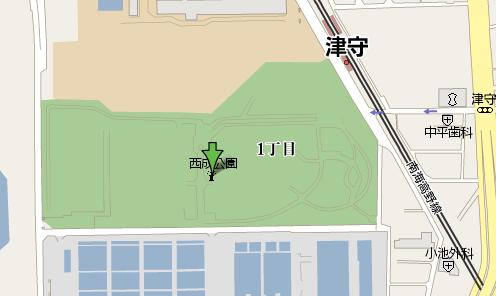
Let’s take another look at Google Maps Japan, this time focusing our gaze on Osaka’s Nishinari Park. On the map, it just looks like your average urban park in Osaka:
nishinari-map.JPG

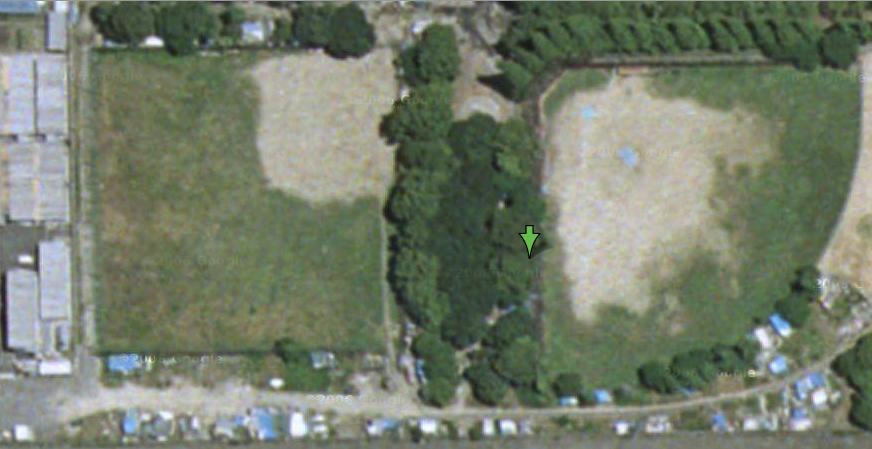
But look at the satellite photo (click for full size):

nishinari-sat.JPG

What could those be? Why, they’re little shanty houses!

Since the early 1990s, parts of Osaka have become something of a haven for Japan’s homeless people. Colonies of blue-tarped tents and cardboard houses, such as the one in Nishinari Park (located in the Airin area, host to one of Japan’s largest homeless populations) seen above have developed into full-blown communities, complete with electriciy, TV, and corrals of dogs. Residents make ends meet through day labor and collecting recyclables. If you’ve ever visited Osaka Castle, you will likely know what I am talking about.

The colonies have even gained some international attention in recent years (see this excellent BBC pictorial, for example). I suppose they are interesting because while shantytowns are a common sight throughout Asia and the rest of the developing world, they might not be expected from the world’s 2nd largest economy. Plus, it’s pretty neat to see that they’ve made such comfortable lives for themselves considering the circumstances.

One of those homeless colonies, a ten-person, 15-tent compound located in Nagai Park, is in trouble as authorities plan to evict squatters in to begin construction in preparation to hose the 2007 IAAF World Championships in Athletics.

It’s sad to see these generally peaceful groups of resourceful men broken up. The homeless culture is one of the unique aspects of Osaka that gives the city some flavor, and it’s too bad that city officials can’t recognize it as such. Instead, they have brought an expensive sporting event to the city that is likely to plunge it even deeper in debt.

Nevertheless, the order has been issued, and if the homeless do not leave by Jan. 21 they will be forced to remove their tents.

To get a better idea of what’s happening on the ground, MFT plans to send crack Osaka correspondent Roy to attend a festival to be held this weekend by the residents and their non-profit backers. The event will feature stage performances with the homeless residents and young people. Stay tuned for awesome photos!

Fewer Japanese people studying English in the UK

The changing landscape of Japanese people’s English learning practices is a factor keeping Japanese students out of ESL classrooms in the UK, reports Kyodo News:

(Kyodo) _ The number of Japanese learning English in Britain has slowed in recent years, amid signs that growing numbers of young people from East Asia are opting to study in their home country rather than venture overseas.

Experts put the tailing off down to many factors, including the state of the Japanese economy, falling birthrate, the popularity of Chinese and the increasing provision of English language teaching in the region.

According to figures provided by the Council, the number of weeks spent in Britain by Japanese studying English fell between 1997 and 2001, and has plateaued out in recent years. In 1997, Japanese spent 170,100 weeks in Britain. By 2001, this had fallen to 123,626 weeks.

In 2002, the figures picked up again and in 2004 Japanese spent 135,347 weeks in the United Kingdom. However, numbers are expected to be down for 2005.

Emma Parker, education promotion officer at the British Council in Japan, said all of the large English-speaking countries — Britain, the United States and Australia — had seen reductions in Japanese students. She added that the number of Japanese going to overseas universities appeared to be falling, and this inevitably impacted on applications for English courses. (many students take English language courses before studying at a foreign university).

As well as the simple fact that there are fewer younger Japanese people, Parker put the decline down to “more and more potential study destinations, and so increased competition.”

She said there were several Japanese-owned English language schools located in nearby Asian countries and, “although English skills remain very important in Japan, people’s interests and employers’ requirements are diversifying.

Essentially, if this article’s assertion that people are choosing to study at home is to be believed (though why they chose to measure that in hours as opposed to people escapes me), that would mean Japan’s domestic ESL market (for Japanese adults, anyway) has become so developed (to the point of saturation) that people may be taking seriously the idea expressed in top English conversation firm NOVA’s slogan of “study abroad near your local train station.” That would be a sad development — the peculiar nature of the still-flourishing interest in the English language in Japan has now been officially blamed as a factor keeping Japanese people from studying abroad, which ironically means less overseas exposure for the average Japanese. The pros and cons of eikaiwa-style English education aside, it simply cannot serve as an effective replacement for studying abroad if one’s goal is to learn how a language is used and the culture it comes from.

That said, it would take more study to see how true that claim is (I wish I could get my hands on that report for one). And it seems like this story is talking about ESL students only, not undergraduate or graduate degree programs. I’m having trouble locating more recent statistics, but as of 2000, the number of Japanese people studying abroad (including all 3 categories and more, and most of them going to English-speaking countries, presumably) continued to rise, though at a much lower rate than in years past. My guess is it’s a combination of factors: families who are facing lower incomes (and shrinking disposable incomes) may be forced to see eikaiwa as a second best option since they can’t afford to send their kids to study abroad. Or there may be other factors at play: Japanese universities are becoming easier to get into (fewer kids, same number of universities) meaning that studying abroad isn’t being used as Plan B for kids who had trouble on the entrance exams; or perhaps parents/students are getting wise to the fact that ESL programs often aren’t what they are cracked up to be. One explanation mentioned in the report that I don’t buy is the competition from other languages. English is still king in Japan and will be for the foreseeable future.

I’ll try and keep an eye on things, but in the meantime: what do you think?

What might have been?

Speaking of the Philippines and historical predictions, there is a great discussion going on over at the blog Coming Anarchy over the past, present and future status of Puerto Rico. Puerto Rico, Guam and the Philippines were all transferred from Spanish to United States control together, with the 1898 December 10 signing of the Treaty of Paris that concluded the Spanish-American War (as well as a payment of $20 million from the US to Spain.) Both Puerto Rico and Guam remain unincorporated territories of the United States of America, but the US and the Philippines parted company long ago. Reading this discussion gives you a pretty good idea of why the Philippines was spun off into an independent country instead of being either incorporated into the union or kept in colonial status. Today Americans are concerned about being demographically overwhelmed by Hispanics, but true annexation of the Philippines would have been a massive and sudden demographic shock that would have profoundly changed the subsequent development of both. For the people who think the Puerto Rico situation is complicated, try and imagine what might have happened if the Philippines, with a population twenty times that of Puerto Rico, and speaking a polyglot of languages, had all become US citizens overnight.

If only they had known…

You know that feeling you get watching a suspenseful scene in a movie, where you know for example that the vampire snake is on the other side of a door, a hapless character says something like “gosh, I’m glad that vampire snake went back to Las Vegas,” puts his hand on the door and you just want to yell out STOP to the screen before certain doom commences?

For the non-English majors out there, I’m talking about dramatic irony, defined so on Wikipedia:

Tragic (or dramatic) irony occurs when a character onstage is ignorant, but the audience watching knows his or her eventual fate, as in Sophocles’ play Oedipus the King.

This morning I encountered something much like dramatic irony when reading a 1966 article about the foreign relations of the Philippines. Within the piece were two specific statements that made me wish I could send a telegram back through time warning Mr. Onofre D. Corpuz about the horrible misfortune to come.

First was this one, in his section discussing how an orientation in economic relations towards Southeast Asia would be good for development.

The Philippines is well situated to play a leading role in this process, and economic interests, therefore, promise to lead the nation’s foreign policy closer to Southeast Asia. Barring a sudden deterioration which could result from escalation of hostilities in Vietnam, we are presently on the threshold of a period in which the necessary economic underpinnings of diplomatic projects, such as ASA and Maphilindo, will emerge.

[Note: ASA is Association of Southeast Asia, predecessor to ASEAN]

So, how did that Vietnam thing go after 1966? I forget now. Anyway, I’m sure it couldn’t have destabilized the regional economy or anything.

The second quote mixes retrospective irony with a case of be careful what you wish for.

As a result, political power is widely dispersed and the bases of power are fragmented. No Philippine president has ever been re-elected after a full presidential term of four years. There are no political institutions in the Philippines that have enabled a leader to stay in power as long as have Indonesia’s Sukarno, India’s Nehru, Burma’s Ne Win, and Malaysia’s Tungku Abdul Rahman.

1966 was the second year of Ferdinand Marcos’ first term as president, after which he would in fact be re-elected, just like Mr. Corpuz was hoping. What Corpuz probably was less happy about was when Marcos declared martial law in 1972, and continued his Presidency until 1986, when he was driven from office by mass protests indirectly in response to the assassination of opposition politician Benigno Aquino.