
The Tortured Japanese Decision Making Process, Part 1: Dubai and Futenma

UPDATE: When I read the blog on my Etisalat-serviced Blackberry over the weekend, I was horrified to see that the text of this post was substantially abridged to just three paragraphs and slightly edited for flow to remove all references to Dubai (excluding the title). When I finally got to a computer today, I see that it appears unedited, even on my Dubai computer. I remain perplexed as to what would be deemed critical of the UAE in this post that could have been material subject to censorship. –Curzon, 13 December.

I haven’t yet publicly explained to MF readers, but I recently relocated my permanent residence from Tokyo to Dubai. I’ve since been publishing most of my thoughts on my new life in the region at ComingAnarchy.com, a more appropriate forum for the material, and you can read dispatches from the region in recent posts that appeared here, here, here and here. However, I am still remain closely involved in Japan, and will continue to blog here on topics that relate to Japan and Asia. I am also on a flexibly but ultimately fixed term assignment in the Middle East and plan to return to Japan afterwards.

A move between civilizations such as this clearly reveals contrasts between cultures. From the mere provision of services, to the exotic types of food, to the very manner in which human beings interract, many things are different. I could list dozens of example, but it’s primarily the quirky differences that stick in my mind. For example, did you know that the number of bathrooms in apartments and houses in the Middle East is the number of bedrooms, plus one? Apparently Arabs are loathe to share bathrooms, even with family members, so every 2LDK has three bathrooms (the additional bathroom is for guests) and one 3LDK with a maid’s room I saw during my house hunt had five bathrooms! There are also similarities between the two cultures when viewed from the Western perspective — Arabs, like the Japanese, are polite and formal when first meeting, prefer their commercial transactions to be relationship-oriented, and don’t allow their women equal social participation.

One stark contrast with regards to culture that sticks in my mind is the decision-making process. I’ve become accustomed to the concensus-based approach to making decisions in Japan, to the extent that Japan’s norms are natural to me — take time to hear all opinions, discuss pros and cons, think some more, and then eventually wander towards a decision. This works fine in Japan, but it’s completely different in most of the rest of the world, and in the Middle East, I’ve seen some important decisions made at the drop of a hat. What’s more, when I need to decide things that involve other people, I see the Japanese decision-making process reflected in myself, and I would observe that it has the power to drive people crazy. “Make a decision already! Or get back to me when you’re finished!” That’s something I’ve heard several times in both the personal and commercial context over the past few weeks.

The Japanese decision-making process works great in Japan, and is an important part of the culture, but it simply doesn’t work overseas, where decisions are, by comparison, streamlined. This is something that the Japanese must understand if they engage non-Japanese parties in discussions or negotiations, and many major trading companies with global operations and bureaucratic institutions of government have carefully internalized their decision making procedures so as not to send mixed messages. It still takes them a long time to come to a decision, but at least it helps to prevent them appearing indecisive, weak, or send out mixed messages.

I have been thinking about this for the past few days and just this morning read that Obama is avoiding a private chat on the Futenma Base relocation with Hatoyama at the Copenhagan environmental summit. (Regular readers know that I was very critical of the DPJ scattershot approach to foreign policy before they took power, and specifically addressed the absurd and painful procedure used to review the Futenma Base relocation in previous blog posts.) When queried on this, the White House press secretary answered that the two leader met two months ago and nothing has changed since. Therefore…

Therefore what? The Japanese logic concludes that, therefore, all levels of America’s foreign policy and defense apparatus should continue to join in with the decision-making process. The Western logic is just the reverse — the natural conclusion is that there is nothing further to discuss, as what needs to happen now is for Japan to come to a decision and then tell America their decision.

Or as I’ve heard a few times since coming to Dubai: “Make a decision already! Or get back to me when you’re finished!” That Hatoyama is trying to involve Obama in the nemawashi process in the Futenma Base relocation is yet another example of how the DPJ are rank amateurs. During the LDP years, administrations were at least good at holding off American officials while the internal decision making process went forward, and thus avoided public disagreements, sending mixed messages, or appear not to have a clue. The DPJ needs to realize that the consensus-based decision making process is unique to Japan and does not work internationally. Taking such a long time to come to a conclusion is painful enough for most non-Japanese to tolerate, and becoming pulled into the decision making process is bound to end badly. When will Hatoyama realize this, and what damage will be done to the US-Japan alliance in the interim?
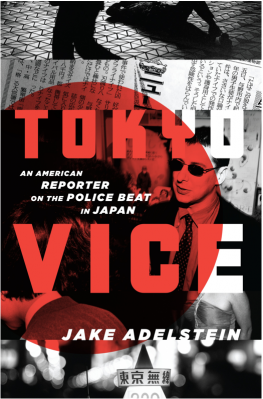
Gambling and the Yakuza: An Interview with Jake Adelstein

Tokyo Vice
Tokyo Vice

Tokyo Vice: An American Reporter on the Police Beat in Japan came out this past Fall. A tale of sex, scandal, and gangsters, it was written by Jake Adelstein, a former vice reporter for the Yomiuri and the only American to have been admitted into the Tokyo Metropolitan Police Department press club. If you’re interested in hearing more about the seedy side of Tokyo, I recommend picking up a copy. It’s a great read, at least as interesting as Robert Whiting’s Tokyo Underworld.

Some of you may have heard of Adelstein when his name popped up a year or so ago as the author of a Washington Post article about the yakuza (Japanese mafia). He is an interesting fellow; besides his unique former press credentials he also was instrumental in the 2006 TIP report that embarrassed Japan into adopting stricter anti-trafficking measures. Additionally, he runs the “Japan Subculture Research Center,” a blog devoted to the Japanese underground. He is currently running around the world promoting his new book. This isn’t just to generate sales. The publicity he generates keeps him alive.

Continue reading Gambling and the Yakuza: An Interview with Jake Adelstein

Did Japan test an atomic bomb in Korea in 1945?

Robert Kneff of the Marmot’s Hole blog has a neat article in the Korea Times re-telling the little known allegation that Japan tested a nuclear bomb in what is now North Korea shortly before the end of WW2. To be fair, I’ll excerpt the same portion as the Marmot’s Hole did.

It is common knowledge that on October 9, 2006 North Korea tested a small nuclear bomb. But there is debate as to whether or not this was the first atomic bomb test done in Korea. Ever since the end of World War II there have been rumors that Japan, just days before its surrender, tested a small atomic bomb off the coast of modern Hamheung.

I came across this story while doing research on one of my Western gold miners in northern Korea.  This gold miner used to take his gold to the smelter at Konan – in the Hamheung area – and the story eventually encompassed other Westerners working at the this Japanese industrial center including one who, after he returned to the United States, was arrested by the FBI following the attack on Pearl Harbor.  This scientist was deemed so valuable that he was allowed to continue to work in a top secret plant and was eventually one of the scientists sent to Korea to investigate the possibility of Japan building and testing an atomic bomb in Korea.

This story always starts the same way – regardless of who publishes it – so why should I be any different?

Allegedly, on the evening of August 11, 1945, a number of ancient ships, junks and fishing boats were anchored near a small inlet by the Japanese. Just before dawn on August 12, a remote controlled launch carrying the atomic bomb known as “genzai bakudan” (greatest fighter), slowly made its way through the assembled fleet and beached itself.

Nearly twenty miles away, observers wearing welders’ glasses were blinded by the bomb’s terrific blast. “The ball of fire was estimated to be 1,000 yards in diameter. A multicolored cloud of vapors boiled towards the heavens then mushroomed in the stratosphere. The churn of water and vapor obscured the vessels directly under the burst. Ships and junks on the fringe burned fiercely at anchor. When the atmosphere cleared slightly the observers could detect several vessels had vanished.”

While this is a good story, there isn’t really any reason to believe it, and no serious evidence aside from this single interview with an anonymous source, which itself may very well have been fabricated in the first place. One detail that jumps out to me as peculiar is the alleged name of the bomb, genzai bakudan, which according to the article means “greatest fighter.” Except of course that translation is total nonsense. In no possible way that I can think of does either genzai or bakudan mean either “greatest” or “fighter.” Bakudan in fact means bomb, which while reasonable as part of a name for a-well- bomb, is completely different from what was claimed. And genzai means either “present time” or “original sin”, neither of which really makes much sense at all.

On another note, this has reminded me that I need to finish the post I started writing on the book “Let’s drop an atomic bomb on Kyoto”, about why Kyoto was not nuked in the war, that I picked up at a used bookshop near Waseda several months ago.

Mulboyne, I stand corrected

In October, I wrote about the attempted abduction/rescue of the Savoie children by Chris Savoie from his wife, and explained my sympathy for Noriko, the Japanese wife who had absconded with the children from Tennessee, USA to Japan. While acknowledging and criticizing the Japanese child custody regime, I was appalled by Chris’ conduct and said very clearly that “Christopher is the wrong martyr to rally behind in this fight.” Mulboyne disagreed (right after saying that the post was too long at 200 or so comments — it currently stands at 434), and had this to say:

One of Curzon’s original points was that Savoie is “the wrong martyr for the cause”. It’s beginning to look like he might be the right one… for better or worse, his case has received significant coverage in the US and coverage in the Japanese media is now building up momentum… Even following an announcement in May 2008 by the Ministry of Justice that Japan was beginning to look at the possibility of becoming a signatory to Hague, there was no mention of any specific instance. The same when Canada, Britain, France and the US made a joint diplomatic representation on the issue in May of this year.

Christopher Savoie’s actions in Japan have been reckless and stupid but, whereas most cases have no narrative development, this one has a good deal and promises more. Even coverage of a left behind parent tails off in the US in the absence of any concrete development. Most parents are just sitting and waiting or else tied up in legal proceedings in Japan which generally go slowly and, usually, nowehere. With Savoie, we have a man in jail and something has to happen to him. He might be charged, he might be released, he might be deported. Whichever course of action the authorities take, there will be repercussions and more coverage.

Such was my disgust with Savoie that I did not want to agree with that analysis. Mulboyne later repeated this comment in more detail over beers a few weeks later (we’re a social bunch, us MF and CA bloggers).

Yet we now read that Foreign Minister Okada has set up a division inside the Ministry of Foreign Affairs to study the issue:

The Foreign Ministry has set up a new division to handle international child custody issues in response to overseas criticism that Japan allows Japanese mothers to take their children away from their divorced partners.

The division, officially launched Tuesday, will study the issue, including whether to sign the 1980 Hague Convention on the Civil Aspects of International Child Abduction, whose aim is to secure the prompt return of children wrongfully removed to or retained in any signatory countries, Foreign Minister Katsuya Okada said.

Of course, such criticism has been ongoing for years and has been well documented and criticized, yet only now, after the -awful CNN- press coverage of the Savoie fiasco is the Japanese government taking notice. My conclusion? I can’t bear to acknowledge it twice, so just read the post title again.

Adamu and Garrett sound off on Japanese politics in 2009

Here I am with Garrett of Trans Pacific Radio at the Pink Cow in Shibuya the on Tuesday. We had a discussion about some of the biggest stories of 2009. Watch here!

Topics covered:

– The Noriko Sakai scandal and the arrest of Tatsuya Ichihashi: Sakai received more media coverage than the election. The two cases illustrate how police can hold a suspect for weeks and try and press for a confession.

– The new DPJ government: Adamu is a little on the fence about the government’s new way of doing things but supports them on balance. A point that I didn’t quite get to articulate as well as I wanted: once the DPJ eliminates some of the institutions, they will have to fundamentally re-organize the personnel policies of the bureaucracy so there won’t be so many senior bureaucrats who feel entitled to post-retirement jobs. Such reforms could even prove a model to creating a less rigid private sector labor system as well.

[Edited to move video after the jump, as it autoplays on some computers.]

Continue reading Adamu and Garrett sound off on Japanese politics in 2009

North Korea devaluation aimed at confiscating private wealth

Interesting move by NK to crack down on the burgeoning market activity in their country:

North Korea revalued its currency for the first time in 50 years and strictly limited how much old money could be traded for new, moves that appear designed to confiscate much of the cash people earned in market activities the country’s authoritarian government doesn’t like.

The action triggered chaos, according to news outlets in South Korea that specialize in obtaining information from the North, as people rushed to banks and offices of the ruling Workers Party to get information, make exchanges or trade existing North Korean won for euros and U.S. dollars.

Initial reports indicated the government would allow only 100,000 old won to be exchanged for new. That would potentially wipe out the holdings of people who have earned and saved in won from market activities for years. Those who have saved in foreign currencies — which, though not illegal, is difficult for ordinary North Koreans — would appear unaffected.

According to an account by NKNet, a Seoul-based Web service focused on North Korea, people in Pyongyang on Monday night pressed party officials to allow more money to be exchanged. In response, according to the report, the officials lifted the exchangeable amount to 150,000 won in cash and 300,000 won in savings accounts.

While the revaluation could simply be aimed at inflation – Vietnam recently devalued as well – the really low per-person limit seems all but certain to wipe out most private wealth. Because in Stalinist North Korea money spends you!

Mad cow protests in Taiwan get crazy

About two weeks ago I talked about how the protests in Taiwan over the importation of American beef are more about anxiety over a loss of sovereignty to the People’s Republic of  China than about any serious concerns over possible mad cow disease. Well, this has only become more obvious as the debates and protests continue. For example, DPP caucus whip Pan Meng-an says “The [lifting of restrictions] on US beef became effective spontaneously, without legislative approval, as did the financial MOU with China. Will [the government’s plan to sign an economic cooperative and framework agreement] be next?” And whether or not allegations that DPP Chairperson Tsai Ying-wen secretly met with American Institute in Taiwan (the unofficial embassy) director William Stanton to promise that the protests were purely an election ploy to discredit the ruling KMT and not a sign of anti-Americanism turn out to be true, that is also clearly a major impetus for the protests.

But what is a mass political protest without a little crazy? Well, some was provided by Chu Cheng-chi (朱政騏), a PhD student at National Taiwan University’s Graduate Institute of Sociology, who posted a video of himself eating a “burger” made out of actual cow-shit to youtube as a symbol of…something I guess.

Chu Cheng-chi (朱政騏), a graduate student at NTU’s Graduate Institute of Sociology, lay down outside the legislature’s front gate and covered himself with a straw mat — a gesture Chu said symbolized how the poor cover the body of a deceased person.

He said he would continue his hunger strike to protest a proposal by the Chinese Nationalist Party (KMT) caucus to amend the Act Governing Food Sanitation (食品衛生管理法).

Chu was referring to a proposal the KMT put forward last Tuesday to authorize the government to “draw up measures to inspect beef products from areas where the risk of mad cow disease has been under control,” instead of two other prosoals for a ban on “risky” beef products from the US.

Chu began a “lie in” protest in a coffin in front of the legislature on Saturday and vowed to stage a hunger strike until today, but police fined him and forcibly removed the coffin on Sunday night, saying Chu had violated the Road Traffic Management and Punishment Act (道路交通管理處罰條例).

Huang Tai-shan (黃泰山), a doctoral student from National Tsing Hua University, who also covered himself with a grass mat next to Chu, said five more doctoral students would join the protest should police forcibly remove Chu and Huang.

But of course, you really want to see the video itself. Enjoy.

<object width=”480″ height=”385″><param name=”movie” value=”http://www.youtube.com/v/11aCbLNUVKQ&hl=en_US&fs=1&rel=0″></param><param name=”allowFullScreen” value=”true”></param><param name=”allowscriptaccess” value=”always”></param><embed src=”http://www.youtube.com/v/11aCbLNUVKQ&hl=en_US&fs=1&rel=0″ type=”application/x-shockwave-flash” allowscriptaccess=”always” allowfullscreen=”true” width=”480″ height=”385″></embed></object>

After the opening vignette of him tasting a cow patty is the opening title of:

I eat cow dung, I protest!

My rough translation of his monologue is as follows:

I have in front of me some delicious edible beef.
After the Ma adminstration opens the door to American Beef, it will turn into beef that one could fear is poisonous.
I am just an ordinary youth who decided to protest against the government.
I have no power to change things, I am only able to make my own body suffer.
This is the most serious kind of protest!
I am now going to take Taiwanese cow dung and prepare it.
Consuming American beef will absolutely be scarier than eating the dung of a Taiwanese cow!

Followed by another title reading:

Eating American beef is scarier than eating Taiwanese cow dung!

They then drive out to Qingtiangang (擎天崗), a ranch area created during Japanese occupation, now part of Yangmingshan National Park to collect the fresh cow dung as cloying music plays in the background. You finally see him sit in front of the presidential building, prepare the burger, and eat some of it while reciting more nonsense about how he can “absolutely guarantee that it is still safer than American beef” and that “the Ma Yingjiu administration is opening up to American beef and not protecting the safety, well-being, and health of the people.” He then pukes in the bushes.

Enjoy the e-coli, chu. E-coli, for those who forget, is a bacteria found mainly in the digestive tracts and feces of animals, which generally poisons humans when it is transmitted by accidental contamination of meat by feces from the same animal when it is slaughtered.  According to the CDC, e-coli poisoning kills at least 60 Americans and sickens 2000 every year. For comparison, take a look at the CDC’s own stats on mad cow disease-showing only 3 confirmed cases in the US to date. And note that these are the numbers of cases in COWS, to date there have been exactly zero cases of humans contracting the disease from cows raised in the US.

How to get out of jury duty, Japanese-style

It’s been six months since the official kickoff of Japan’s lay judge system (roughly equivalent to a US jury), and about 4 months since the first trial began. Already, 84 people have helped adjudicate 14 criminal trials.

So far there have been hundreds of thousands more – 290,000 to be precise – who have received notices telling them they may have to serve (presumably this includes both people who were excused and those still in the selection process). Asahi Shimbun has a feature article (in the Nov 17 print edition) on the ups and downs of the selection process. According to a provided flowchart, the process typically goes something like this:

  1. People are randomly selected from the roster of eligible voters and must fill out a questionnaire about their eligibility, which they can then deliver in person or mail in. Many can get out of showing up for an interview at court for a variety of reasons – those 70 or older, those who have not completed middle school, people with “critical matters” to attend to, and those who have been sentenced to imprisonment are among those who do not have to serve.
  2. Of the 40 or so who are asked to come to the courthouse, about five stragglers will fail to appear and face a fine.
  3. Then it’s interview time. The head judge, the prosecutor, and the defense will hold a speak privately with each candidate. The judge will excuse around three people for the above legally permitted reasons mandated by law. The prosecutors and defense can then excuse up to seven people each without giving any reason. The judge can also suggest to either side that they let someone go. The article quotes a defense attorney explaining that he tends to excuse old people and women because they tend to throw the book at violent offenders. Another defender tries to pick mothers with children the same age as the defendant. A prosecutor let a woman go for keeping quiet and looking at the floor all the time. One judge asked a defender to let a woman go who looked too weak to fully participate (the defender agreed).
  4. After the initial selection process, the remaining candidates are decided by lottery. Six people are selected as lay judges, with two others chosen as backups. Those who are not chosen do not know whether they lose the lottery or if the lawyers in the case wanted them out.

Basically, it sounds like otherwise eligible people can get out of lay judge duty by acting unenthusiastic or fatigued because the lawyers want people who will be engaged and interested.

One complaint voiced a man who was excused: if you show up at the courthouse and are chosen as a lay judge, you’re immediately sequestered for about four days. That forces everyone to plan on being away for a few days even though most will be able to go home. The man suggested scheduling the trial a week after the interview day so the lay judges can make arrangements for an extended time away from home. That’s basically how it works in the US, if I recall correctly.

A woman who cares for her ailing mother full time wrote in her questionnaire that she would like to be excused, but the court called and told her she should come anyway. She had to pay for a home helper out of pocket to show up at court. She ended up not being selected, but since there was no way to plan she ended up having to pay for an extra day of care that she didn’t use.

Sadly this story was relegated to the back pages of the Asahi. This scheduling issue is a careless oversight that threatens to undermine the already shaky public support for this new system. Once chosen, almost everyone seems to feel the process was worth it, according to a survey. The next step is lessening the hassle for those who don’t get chosen.

Pills for old men or young women?

The US healthcare reform bill that recently passed the House only did so after a controversial amendment was inserted banning any insurance plan which pays for abortion from accepting any federal subsidies, a clause that will probably eliminate abortion from most or all health plans if it goes into law. One reader at TPM had the following thought experiment:

What would happen if a few female members of the House put in (or merely proposed) an amendment to the health care bill which stated that men would be barred BY LAW from purchasing health insurance which covered Viagra, all hair-growth medications or procedures or transplants, etc.?

This thought experiment reminded me of the well known case of the birth control in Japan. Actually, I say well known, but when I checked to confirm the dates, the details were rather more complex than the simplistic version of the story that I had thought I knew, in which the pill was simply never legalized in Japan until a decade ago.

The first birth control pill was approved for that use by the United States FDA in 1960, but was rarely used in Japan until recently. The pill was not approved at all in Japan until 1972, but this was the high-dose formulation that was already being replaced in other countries with a low-dose version of the drug due to safety reasons. Because the safer, low-dose pill was never approved in Japan, oral contraceptives remained little used. Even after the original high-dose formulation was removed from the market in the US in 1988, the low-dose pill remained off the market in Japan.

This changed in 1999, after Viagra was fast-tracked for approval. Viagra first went on sale in the US in March 1998, and only a few months later was already being studied for approval in Japan, where it went on sale in March 1999 – only one year after the US. Feminists complained about a double standard that allowed a drug whose primary purpose is allowing recreational sex for old men to be approved almost immediately, while the safe low-dose birth control pill was still not approved after four decades. At the time, Yoshiaki Kumamoto, president of the Japan Foundation of Sexual Health Medicine, was quoted as saying that viagra was approved so quickly because old men in parliament “want to have that drug.”

The modern pill was finally approved in September of 1999, although women taking it are required to have pelvic exams four times a year, as opposed to once or twice in most countries, and there is still a widely held association with the dangerous side effects of the old formulation. According to a late 2006 study, only 1.8% of Japanese women were using the pill for their birth control needs. This compares with, according to UN figures for the year 2005, 7.5% of women worldwide, and 15.9% of women in developed countries.