Kan is not a “Japan rarity,” but decent foreign reporting may be

I’m going to break down this post from the WSJ’s Japan blog piece by piece.

In the U.S., the current president, vice-president, first lady and secretary of state are all lawyers.

Sure–the Democratic Party is mostly run (and also mostly financed) by lawyers. But the Bush administration had few lawyers in its ranks; the composition of the cabinet is really determined more by who is choosing its members.

More than 40% of the members of Congress hold law degrees, in fact. Finally, they have some like-minded counterparts at the top of the Japanese government.

Prime Minister Naoto Kan is the first ”benrishi” lawyer to be prime minister in Japan since World War II, “benrishi” being licensed to handle patents — such as for his Mahjong machine — and other intellectual property matters. His top aide, Chief Cabinet Secretary Yoshito Sengoku, is a “bengoshi”, or general lawyer.

First of all, benrishi is a very narrow qualification, somewhat like being a patent agent in the US except that it also involves advisory functions and covers a range of intellectual property. Kan doesn’t even have a law degree, and the benrishi exam only tests a few specific IP laws (see the official spec here).

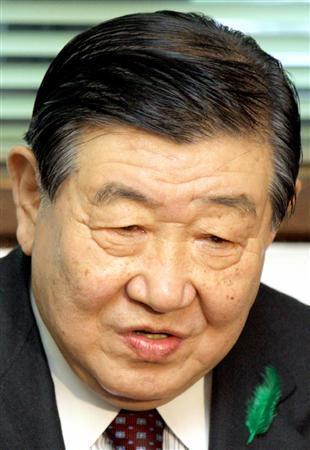
Secondly, Kan is not the first postwar lawyer prime minister. Tetsu Katayama, prime minister from 1947 to 1948, was a full-fledged bengoshi and is even pictured on Wikipedia wearing his attorney pin.

But most importantly, this analysis betrays a basic misunderstanding of how legal services differ between the US and Japan. Harvard professor Mark Ramseyer attacks the under-lawyered Japan myth in his excellent book Japanese Law: An Economic Approach. In one early section of the book, he points out that there are many other qualifications to provide legal services to third parties, and that a huge amount of Japan’s legal work is performed by people with no Japanese law license whatsoever, including Justice Ministry bureaucrats, corporate legal staff, and foreign-qualified lawyers like me.

Ramseyer also points out that the number of law school graduates in the US (many of whom also end up not practicing law independently) is not that different on a per-capita basis from the number of law faculty graduates in Japan. This brings us back to the WSJ:

Altogether, the Kan “irregular militia” cabinet has four lawyers, the same number as the final Hatoyama cabinet it replaced, and the new secretary general of the ruling Democratic Party of Japan, Yukio Edano, is also a lawyer. That’s quite a sea change from the last administration in the Liberal Democrat Party’s nearly 50-year rule: Taro Aso had no lawyers in his cabinet at all.

This is all technically true, but not very relevant. Again, most legally-trained people in Japan end up not becoming attorneys. This includes several members of Aso’s cabinet, including Kaoru Yosano, Yoichi Masuzoe and Shigeru Ishiba, who all graduated from law faculties of top universities.

Besides, the LDP has plenty of licensed lawyers on hand, even if Aso didn’t utilize any of them. His successor as leader of the LDP, Sadakazu Tanigaki, is a bengoshi. So is one of the most popular LDP-backed politicians at the moment, Osaka governor Toru Hashimoto. Many lesser LDP legislators sport attorney pins, too.

Mr. Kan’s Justice Minister Keiko Chiba, a holdover from the previous cabinet, practiced law for years — a less common background for Japan’s top law official than one might expect. While in the U.S. it would be considered irregular to appoint an attorney general who lacked experience as an attorney, many Japanese justice ministers have come from other fields, including engineering and nursing.

This comparison overlooks a very fundamental difference between the US Cabinet, which can consist of whomever the president can push through the Senate, and the Japanese Cabinet, the majority of which has to be comprised of legislators. Pretty much all Japanese Cabinet members, including the Justice Minister, come from a single background: the Diet. They get to the Diet in different ways, but they never walk straight from a drawing board or operating room to head up the Justice Ministry.

It also overlooks a very fundamental difference in the two posts. The Japanese Justice Minister has practically no advisory role, whereas the US Attorney General is expected to give legal advice to the President and the Cabinet. The Justice Minister has few formal duties, and they only personally carry out one of those duties: administration of the death penalty. Other duties, like stamping foreigners’ entry permits and representing the state in court, get delegated in practice to much lower-ranking bureaucrats, and the minister’s theoretical oversight of the prosecutor corps is rarely exercised.

Despite all these differences, full-fledged lawyers still get to be Justice Minister on a fairly regular basis. Chiba is the fourth Justice Minister in this decade (out of eleven) to have a bengoshi qualification. The previous three were, of course, all LDP people (Okiharu Yasuoka, Masahiko Komura and Seiken Sugiura).

For decades Japan had the fewest lawyers per capita of virtually any developed nation, but that is changing. The country now has nearly 29,000 lawyers, a figure that has roughly doubled in 15 years. A law-school system introduced in 2006 has opened the doors wider to the profession.

Now we’re talking about bengoshi, not benrishi. Kan’s qualification has pretty much nothing to do with law school.

Law school also has little to do with the slowly-rising number of lawyers. Entry to the bengoshi profession is strictly a function of the bar exam pass rate, which was extremely low (3% or so) under the old bar exam which required no graduate school, and is still only one-third or so for people who have finished three years of law school under the new licensing system. The exam is full of tricky questions which effectively require the exam taker to memorize all the central statutes of the Japanese legal system as well as the key precedents and scholarly arguments surrounding each one. Other law licenses like benrishi have similarly onerous exams, though no others force people to sit in school for three additional years just to have a one-out-of-three shot at the license.

In all of these cases, the doors could be opened wider by making the exams more practical, but the exams are designed to create a high barrier to entry. As a result, the people who pass these exams tend to be the type of people who could not be bothered with going into a corporate or government job straight out of university, and they tend to stay in private practice rather than joining large institutions–which, as we know, hold all the political power in Japan.

In contrast, US bar exams are designed to mint larger numbers of lawyers, with a passage rate between 80% and 95% in most states. The passage rate is lower in some states where people can take the exam without going to law school, such as California (where apprenticeship study and unaccredited law schools are both options) and New York (where foreign lawyers and law graduates can sit the exam with a certain minimal level of US legal training). They test a narrower range of law and are generally meant to check a person’s reasoning skills rather than knowledge of the chapter and verse of the law.

And with more than 4,000 women lawyers (up from a mere 42 a half-century ago), Japan may be closer to having a pair of lawyers someday as its first couple, following in the footsteps of Bill and Hillary Clinton and Barack and Michelle Obama.

Yuck. One lawyer is more than enough.
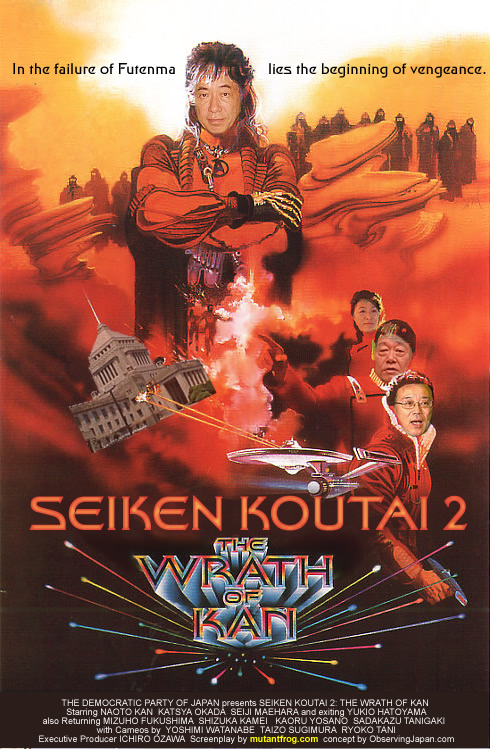
Yes he Kan? Kan faces early test – postal votes, or the people’s?

New prime minister Naoto Kan has to make a major decision that will likely characterize his style of leadership going forward.

The decision revolves around the current postal reform legislation – the bills, which would reorganize Japan Post to ensure greater government control and a firmer mandate of universal service, have already passed the Lower House but must pass the Upper House to become law. But there isn’t enough time in the current Diet session to get the job done in the Upper House. Kan has the option of extending the Diet session to get the bills passed, which would postpone the looming Upper House election. But should he?

The postal bills are incredibly divisive, potentially dangerous as policy, and have been crafted to pander to special interests without much serious thought to Japan’s long-term future. Bending over backwards to get the bills passed would be a clear sign that the DPJ-led government needs to rely on postal worker support to stay in power. He and his party govern in a coalition with the PNP, a small party with the postal workforce making up the bulk of its support base. The PNP has threatened to leave the coalition and deny the DPJ an outright majority in the upper house unless the bill is passed early.

On the other hand, not postponing the Diet session would imply Kan is opting for an early election, in other words he could capitalize on the support of the general public afforded him in the wake of his appointment as PM. Sure, this option might lose him the PNP, but he might not need them come July if things go his way.

So which will it be? Kan has apparently promised to decide on this tomorrow morning. I eagerly await his decision.

Thanks Kamei! Japan’s taxpayers now guaranteeing about 500,000 deadbeats

In the autumn of last year, Shizuka Kamei pushed through a debt moratorium law, primarily with the provincial goal of backing the small real estate companies in his home town of Hiroshima that were hit hard by the recession. At the time, I called this woefully short-sighted:

Small companies across Japan’s countryside that are having trouble making repayments should either restructure themselves, or fail and be restructured by creditors or new management. Many have antiquated management with regards to accounting, employment rosters, operational efficiency, supply chains, etc. Companies that can’t adapt to changed economic environments are supposed to fail. Yes, some good companies caught in unlucky times are destined to be caught in the current credit crunch as they are unable to repay loans and go bankrupt. But bankruptcy is a good thing! It is the engine of economic development that allows bad companies to fail, stifled talent to move elsewhere, assets to be sold at whatever price the market will bear, and bad management to be replaced. Yes, it sucks that people lose jobs and shareholders forfeit their investments, but that’s life! Letting this happen is a necessity for economic growth.

And on top of this, the poor local banks, only barely functioning after 15 years of treading water with the bad loan crisis, will now inevitably reduce their limited lending activities to nothing. There will be no money to lend, thus no local business growth or economic development, and thus no entrepreneurial activity. A short-term benefit for stabilized employment rates means the countryside gets screwed in the long term.

While my concern about small businesses refusing to restructure remained true, my concern for local banks was addressed when the final bill was passed (which you can read in Japanese here). The Japanese government — in other words, tax dollars — provide a statutory guarantee for these deadbeats. The mechanics of this are, under Article 11 of the Moratorium Law, that the government provides sufficient financial backing to the Credit Guarantee Union, which backs the financial institution undertaking the new obligation to support the small business. The Credit Guarantee Union is a government-backed public interest corporation that provides credit and loans to small businesses.

How many people and “small businesses” (defined as a company with less than US$3 million in capital and less than 300 employees) have applied for the moratorium in the last half year? About half a million:

Japanese banks have received a total of 521,030 applications for the easing of loan repayment terms from small and midsize companies and homeowners under the so-called debt moratorium law, the Financial Services Agency said Friday.

The applications, as of the end of March, since the law took effect in December last year involved 13.64 trillion yen and more than 90 percent of them were approved, the FSA said.

Congratulations, Japanese taxpayer — your tax yen are now financing these deadbeats. When the world is buzzing that Japan could be the next Greece, and could be sparked by one of any number of events (a failed Japanese bond auction, a sharp drop in tax revenue, a failure to implement tough fiscal and budgetary standards, a sharp contraction in Japanese GDP, a downgrade in sovereign debt by the ratings agencies), this is one of the worst policies that could be put in place.

Wherein one MP’s senioritis has potentially enormous consequences


The devil made him do it.

Anyone remember this story from last month?

Masatoshi Wakabayashi resigned from the Upper House on Friday after he was admonished for pressing an electronic voting button of a fellow Liberal Democratic Party member seated next to him.

The Democratic Party of Japan submitted a motion to discipline Wakabayashi, 75, a former farm minister, to the chamber on Thursday.

LDP President Sadakazu Tanigaki urged Wakabayashi to take responsible action Thursday to avoid causing problems ahead of the Upper House election this summer.

If you’re like me, you probably shrugged it off as a joke, a non-story. He explained in Japanese 魔が差した which means “I don’t know what got into me” but could be literally translated something like “a devil made me do it.” Wakabayashi had already announced his intention to retire at the end of the Diet session, but this has got to be the worst case of senioritis ever. A seat in the Diet is nothing to take lightly, even if you’re in the less powerful upper house.

But with the ruling coalition’s majority so thin, this is actually kind of a big deal, especially now that the DPJ/PNP/SDP ruling coalition has broken up.

This weekend, PM Hatoyama fired Mizuho Fukushima from his cabinet over their disagreement on relocating Futenma air station. In response, Fukushima’s Social Democratic Party decided to quit the coalition. This development probably has some serious implications for PM Hatoyama, but for this post I just want to focus on how it affects the coalition’s standing in the Diet as the session nears its end.

This shrinks the DPJ/PNP’s upper house majority shrink to just two seats right at the end of the legislative session. The coalition is currently rushing to pass bills that would alter the course of reforming Japan Post, among some other initiatives aimed at the election in July.

With 122 seats together, the coalition now has a thin two-seat majority. However, it would have been even smaller one seat majority if Wakabayashi were still around.

I have no special information on the state of Diet negotiations and debate, but a one-seat majority can have all sorts of potential consequences. One situation I could think of is the American Democrats’ “super-majority” in 2009 as they tried to pass health care reform. Basically, any upper house member could have threatened to defect, delay, or vote against the party to extract some concessions.

But now that they don’t have to worry about such annoyances, the DPJ should probably call Wakabayashi to thank him (or maybe Tanigaki for pressuring him to quit).

Since he was elected in a prefectural district (Nagano) instead of proportional representation and there is not enough time to hold a special election, it seems that according to the rules Wakabayashi’s seat will remain open until the upcoming election in July.

(Thanks to Curzon for the idea)

Hello Kitty owner turns things around by licensing anything and everything


Source: Pop Crunch

I’ve long been a detractor of Sanrio’s policy of licensing Hello Kitty’s image to appear on just about anything (and some offerings have been downright questionable [NSFW]). But apparently, if you throw hundreds of darts at the board over ten years, you’re eventually going to hit a few bulls-eyes:

Sanrio Co., the Japanese owner of the Hello Kitty character brand, may boost profit after arresting a 10-year slide in sales by slapping its logo on wine, wallpaper and minicars.

The popularity of Hello Kitty, a white cat with a red bow and no mouth, with celebrities including Lady Gaga and Paris Hilton, has led the company to focus on licensing and to pare its retail and restaurant businesses (Sanrio intends to shut 40 of its 260 gift shops in Japan over the next three years).

Sanrio almost doubled overseas licenses last year and counts clothing chains Hennes & Mauritz AB and Inditex SA as customers. President Shintaro Tsuji, 82, plans to set up an office in Dubai this month to grow in the Middle East.

An appearance by Hilton, a reality TV player, at Sanrio’s 35th birthday party for Hello Kitty, and by Gaga, a pop singer, on Japanese television holding a stuffed toy, helped the company boost fiscal 2009 sales 0.8 percent from the previous year, the first annual gain since 1999.

“Hello Kitty’s Zen-like calmness and faceless expression are the major reasons for its appeal across age groups and markets,” said Martin Roll, chief executive officer of Singapore-based consulting firm VentureRepublic.

Note that a major part of the strategy is to “expand beyond Europe, North America, and Japan” — in other words, the developed world might have had enough of Hello Kitty, so now it’s time to endear her to the rest of the world. Click through to see Lady Gaga in a Japanese TV appearance, decked out in Hello Kitty everything:

Continue reading Hello Kitty owner turns things around by licensing anything and everything

Another Obama appointment, another kabuki metaphor

This time it’s Elena Kagan, this time the culprit is Colorado Law professor Paul Campos speaking on NPR, this time it’s a “ritual,” and as always we are here to call them on it.

I think that to the extent that it’s possible to eventually support this nomination, it has to be based on her answering real substantive questions in the confirmation process instead of going through this kind of kabuki ritual of dodging those kinds of questions, which is what nominees have so successfully done for the past 20 years.

This is, of course, the same metaphor that Joe Biden used in the context of the Sotomayor confirmation hearings, as blogged about on MFT before.

And so I will say it again: if you’re going to compare Washington to any sort of Japanese theater, you’re probably best off comparing it to bunraku.

Right wing new-age cult party lands a Diet seat

Troubling news:

The Happiness Realization Party, the political wing of new-age religion Happy Science, has scored its first seat in Japan’s legislature. Yasuhiro Oe (pictured), a proportional representation member of the upper house, has announced his intentions to change affiliation. The move comes after Oe chose not to join his comrades in the Japan Renaissance Party (改革クラブ) as it transformed into former health minister Yoichi Masuzoe’s new Nihon Rennaissance Party (新党改革). Oe commented that he joined because he shares most of the same conservative principals as HRP.

In a blog post, Oe writes that HRP had approached him last year about running with their backing in the 2009 lower house election, but he did not know enough about the group to accept. However, he has since learned that party leader Ryuho Okawa is a man with strong beliefs, the party shares his views on issues that are important to him, and that Happy Science is not one of those “questionable, strange religions” that forces people to spend money on expensive altars/shrines or makes them beat drums. (According to this anti-cult website, Okawa makes most of his money by making followers buy his published works). Add to that the recent drama with his former colleagues, and that was enough to make the switch. He is apparently not a Happy Science adherent.

I had not heard of Oe before now, but according to Wikipedia he has a history of switching affiliations. The Wakayama native first became an upper house member in 2001 as a PR candidate on the LDP ticket, then as a DPJ candidate in 2007. He later joined JRP as a founding member in 2008, citing problems with the DPJ’s methods. In terms of policy, he has adopted some typical right-wing positions – he’s pro-Taiwan, a firm Nanjing Massacre truther, and a vocal supporter of the victims of North Korea’s kidnapping program. He comes up for reelection in 2013. As Happy Science’s go-to man in the Diet, Oe will have the power to question government officials to try and get them on the record on issues relevant to the party. At the very least, you can probably expect some fairly bizarre formal written questions to the cabinet coming from Oe’s office.

HRP Update

The Happiness Realization Party was founded in May 2009 ahead of last year’s election season, fielding candidates for the Tokyo prefectural assembly and then in the historic lower house election in August on a radical program of major social upheaval and fiery neoconservative bluster. They failed to win a seat in any of the races, which cost them a lot of money in lost candidacy deposits. There have been organizational setbacks, too – weeks before the lower house election they announced they were pulling out of the race entirely before reversing themselves just three days later. And in its year of existence the party has had a total of six leaders (even worse than the LDP’s turnover rate!).

Money and bumbling will not stop these people, however – they just might be here to stay. Wikipedia says a candidate HRP backed in Machida-shi won a city assembly seat, which is a tangible success. The posters are still around Adachi-ku. Their website is packed with content and activity, including official commentary on the scandals of the day, ranging from the Ozawa scandal to Princess Aiko’s bullying troubles (their typically hard-line solution – radical reform of the teachers’ unions and a sweeping “bullying prevention law”). And they have already announced more than 20 candidates for the upper house elections this July.

If they can’t manage to actually win elections on a national level, convincing sitting members to switch parties like this might be a good way to get their foot in the door, especially in this time of party realignment.

For more info on what the Happiness Realization Party stands for, check out my post from last year’s election season.

(via J-Cast)

PS: This is my first in what will hopefully be a regular series of posts on the upcoming election. Stay tuned!

I weep for the future

Most readers will remember Taizo Sugimura, the Koizumi “Orphan” accidentally elected to the lower house as a LDP diet member in the 2005 snap election. After a string of disgraceful incidents in which the party quietly told Sugimura to stay out of the public sphere, he was silently booted from the 2009 LDP ticket after his bull-in-China-shop attempt to run for a seat in Hokkaido’s 1st district against a local favorite.

Sugimura is about to relaunch his political career, this time running for an Upper House proportional representative seat for Hokkaido on the ticket of the “Tachiagare Nippon” (the so-called “Sunrise Party”), the stoggy conservative splinter group that broke away from the LDP. The party’s goal in the selection of Sugimura is apparently to appeal to non-partisan voters through Sugimura’s appearances in media and his name recognition. You can read the Japanese article here.

Meanwhile, I was equally surprised to see that DPJ party leader Ichiro Ozawa has pulled in Ryoko “Yawara” Tani, the female Olympic judo wrestler. In a press conference earlier today she announced that “I want a gold medal in the election too” — in addition to seeking to join the 2012 Summer Olympics in London. Then there’s also Mari Okabe, a former model and TV talent, who has been nominated to stand for election on the DPJ ticket as well. Here again, the media clearly outlines the party’s motive in picking these candidates — seeking to bring in votes by picking popular people with a wide name recognition.

How do Japan’s political parties get away with this type of popcorn populism? I find it disheartening that people with no merit whatsoever seeking to run for public office are picked for the blatant purpose of nothing more than appealing to the lowest common denominator of voter. Sadly, my informal surveys leads me to believe that lots of Japanese people feel the same way about this state of affairs, but accept it with bland fatalism and disinterest in the state of Japan’s political affairs.

Japan’s Upper House Election is scheduled for July 11th.