GREAT NEWS! Krispy Kreme Doughnuts to Open in Japan!

One less reason for expats to go back home – Krispy Kreme will be opening in Japan this winter! Nikkei has the details:

Thursday, April 13, 2006

Lotte To Bring U.S. Doughnut Chain Krispy Kreme To Japan

TOKYO (Nikkei)–Lotte Co. plans to start opening Krispy Kreme doughnut chain stores in Japan this coming winter with turnaround specialist Revamp Corp., The Nihon Keizai Shimbun learned Wednesday.

As a first step, Lotte and Revamp aim to set up a joint venture around late May and to open through it one or two stores in Tokyo this year. This venture is expected to increase the number of stores to 30-50 in five years by opening locations at major train terminal buildings and shopping malls around the nation. It may also set up Krispy Kreme stores inside Lotteria hamburger chain restaurants, as well as open new Krispy Kreme-Lotteria joint stores at malls.

Lotte Group already runs Krispy Kreme franchise stores in South Korea. In Japan, it has decided to team up with Revamp to tap that firm’s extensive knowledge of the Japanese consumer market.

..

In Japan, prices will likely be set around 100 yen — about the same as or slightly less than doughnuts at Duskin Co.’s Mister Donut chain, which dominates the Japanese market with some 1,300 stores and annual sales of 125 billion yen.

I hope they decide on a location for the first stores soon so I can start apartment-hunting in the area.

This is a bold move against the good-but-could-be-much-better Mister Donut. Krispy Kreme doughnuts are great but simply do not have enough of an international presence. Once, on a trip to Japan I spotted a Filipino kid taking boxes and boxes of the things home for his family. Also, I make it a point to take every Japanese friend of mine who visits to eat at “KK” (as Mrs. Adamu calls it). Every single one of the people who tried it loved the hot fresh doughnuts. It actually ended up being the highlight of the trip for one of Mrs. Adamu’s friends (“I’ll never forget those melt-in-your-mouth doughnuts,” she said).

Indeed, Krispy Kreme’s already got a bit of a word-of-mouth reputation among Japanese expats and tourists, so perhaps that will help KK establish itself in Japan. Apparently, Japanese residing in New York have already invented a cute abbreviation for it: “Kuri Kuri” (from the Japanese Kurisupii Kuriimu).

Aiful dog to be put to sleep? One can only hope!

It’s about damned time the FSA did something about legal loan-sharking in Japan:

Friday, April 14, 2006

FSA To Slap Business Suspension Order On All Aiful Outlets

TOKYO (Nikkei)–The Financial Services Agency has decided to impose a business suspension order of up to 25 days on all domestic outlets of consumer credit firm Aiful Corp. (8515) as punishment for aggressive collection tactics, The Nihon Keizai Shimbun learned Thursday.

This administrative punishment, unusual in its harshness, will be the first-ever disciplinary action by the FSA against a major consumer credit company. The measure is likely to have a major impact on calls for tougher regulations for the sector.

The decision may be formally announced as early as Friday. In addition, Aiful was allegedly obtaining powers of attorney from clients without their consent. The suspension will be 20-25 days for the Hokkaido and Kyushu branches where improper activities took place, and three days for all other locations. Aiful operates nearly 1,700 outlets across Japan.

But here’s the kicker: Aiful plans to cancel all advertising for the time being. Rejoice!

Aiful is deepening its equity and business ties with banks through mergers and acquisitions. It has also been cooperating with several regional financial institutions in the business of loan guarantees.

The firm will rush to clean up its act by cutting management salaries and reviewing management practices. It will also cancel all advertising, at least for the time being.

The ads were extremely annoying – a man sees a cute chiuahua at a pet store, imagines himself in all kinds of whimsical situations with the dog, and apparently decides to go heavily into debt to get the little dog. Another tactic used by most of the companies is to use attractive spokeswomen to showcase the “good service” they offer. I, for one, will not miss the cloying fabrications.

Of course, the practice of super-high-interest loaning is still legal – the loan sharks are just not allowed to start acting like Scientologists in their collections policies.

This practice of usurious lending has humongous social ramifications in Japan. Just about every other story on ZAKZAK is about some schmuck with a pachinko habit who started embezzling or robbing people to pay back “consumer debt.” Ads for the numerous companies block the mountains, and one can find “ATMs” which are actually unmanned loan application terminals, on city streetcorners, never far from a pachinko establishment. Meanwhile, the founders of these companies have made themselves billionaires.
Continue reading Aiful dog to be put to sleep? One can only hope!

This is the result of 1,000 electric bolts

Lucky for you I saw this story at the same time I was listening to Eminem:

Friday, April 7, 2006

Japan Remains Top In Average Life Span: WHO Report

GENEVA (Nikkei)–Japanese remained the longest-lived people in the world in 2004, with an average life expectancy of 82 years, unchanged from the previous year, according to the World Health Report 2006 released Friday by the World Health Organization.

The top spot was shared by Monaco and San Marino, where the average life span increased from 81 years the previous year.

By gender, Japanese women had the world’s longest life expectancy, at 86 years. Japanese men had an average life span of 79 years, with some small European countries, including San Marino and Iceland, trailing closely.

Sixteen of the WHO’s 192 member states had average life expectancies of 80 years or longer, two more countries than the previous year, suggesting that the populations of industrialized nations are progressively aging.

Japan also had the highest ratio of people aged 60 or older to the entire population, at 25.6%.

The country ranked 23rd in terms of the lowest average number of children a woman gives birth to during her lifetime, at 1.33. Ukraine topped the list at 1.12, followed by the Czech Republic’s 1.17 and Slovakia’s 1.18.

Among other countries with lower birthrates than Japan were South Korea, at 1.20, and Germany and Singapore, at 1.32.

Sixty-six countries, roughly one-third of the total, had birthrates of less than 2.1, the level seen as necessary to avoid a population decline.

(The Nihon Keizai Shimbun Friday evening edition)

Bazooms go boom

In the news:

[Virgin Galactic] spokesman Will Whitehorn told The Sun safety concerns have come to light for those who want to be launched in groups of eight to an altitude of more than 60 miles for 7 minutes of weightlessness.

“We’ve discovered there may well be issues with breast augmentation,” he said. “We’re not sure whether they could stand the trip — they could well explode.”

Now there’s something all those anime artists didn’t foresee.

More on Lenovo

A few days ago I discussed the US State Department/Lenovo deal and the theoretical security implications that have led some congressmen to get rather hysterical about the whole thing. Since then, the story has only grown, being featured on the front page of the BBC News site, among others. The BBC piece mentions the following.

The State Department is spending about $13m (£7m) on the Lenovo computers, which are assembled at factories in North Carolina and Mexico.

Mr Carlisle added that the circuit boards are originally made in US ally Taiwan, and not mainland China.

According to an article on Dailytech.com, computers assembled entirely outside of the PRC are in fact “an oddity in the PC manufacturing business.” They go on to say:

If US companies are intimidated by probes of the USCC, such probes could be easily applied to virtually every PC manufacturer in the US: Intel motherboards are built by Taiwanese Hon Hai Precision Industries from facilities in Shenzhen; Acer components are built by component manufacturers in Shanghai; Dell PCs are assembled in factories in Suzhou and Shanghai. The same spokesperson went on to say “We [Taiwanese manufactures] do more work in China than we do anywhere else in the world. I don’t even want to think about what would happen to our US clients if we got a USCC probe.”

CDW Government, the company originally contracted to fill the orders for the US government also carries several brands that are assembled in the PRC including Acer, BenQ, D-Link, HP, Sharp and Toshiba.

Really, this entire minor uproar is at best absurd and at worst moronic and insulting. In my previous post I briefly discussed some theoretical ways in which the Lenovo PCs could be bugged, but I don’t in fact believe that there is any more of a real security risk in purchasing Lenovo computers.

Various PC components are manufactured all over the world. Here’s a brief listing off the top of my head of country of manufacture labels that I have personally seen on hardware that I have owned and used.
Hard drives: Japan and Thailand
CPUs: AMD, Germany Intel, Singapore, Malaysia
RAM: Korea, Japan, Germany, Taiwan
Motherboards: Taiwan, China
LCD Panels: Korea, Japan, Taiwan

While this absurdity may not go anywhere, Lenovo may have far more serious problems down the line, of a non-political nature.

Imperialist cuff links

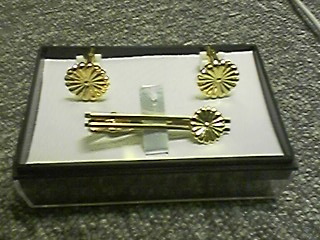
I bought these on a hanami (flower viewing) excursion to Yasukuni Shrine last weekend. Tie pins aren’t quite my style, but the cuff links are great. (And Lady Curzon, a true aristocrat, gives her approval.)

Other items on sale at Yasukuni:

* Japanese flag cuff links. I didn’t buy these because they seemed too loud. I now regret that decision, and plan to purchase them the next time I visit.
* An authentic-looking Imperial Rescript on Education you can put up in your home for that classic fascist feeling. (Framed with a portrait of Hirohito: ¥9,000. Unframed: ¥1000.)
* Special manju, packaged with a caricature of Koizumi on the box and parodies of LDP slogans. Here’s a photo, because I love you:

Anyway, if you see a honky walking around Tokyo wearing chrysanthemum cuff links, you’ll know it’s me, so be sure to say hi.

Yahoo still beats Google for mapping Japan

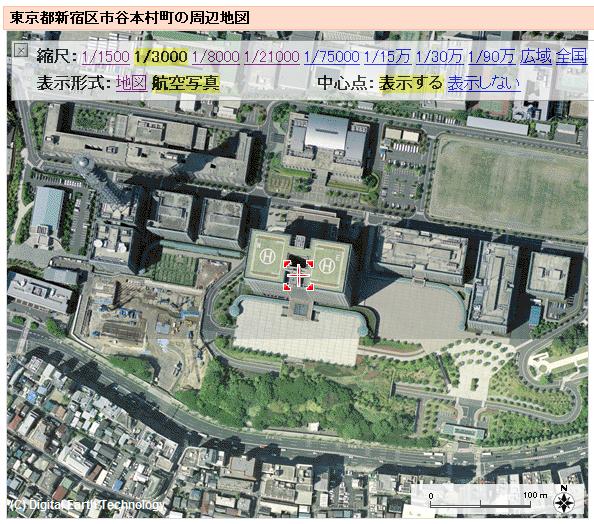
I made a big deal when Google Maps added data for Japan, but now Yahoo Japan has introduced a Java-based clone of Google Maps, complete with aerial photos. Check out this shot of the Defense Agency headquarters in Ichigaya…

And the area map, slightly zoomed out:

It’s still beta, but it kicks Google’s ass (and for that matter, everything Google makes is still in beta anyway). If you’re “nihongo OK,” do check it out.

Google Earth: leading cause of aircraft collisions

On my favorite aviation gossip site, airliners.net, someone posted this Google Earth image of Heathrow Airport in London:

It looks like there are two planes on the same runway, and a third about to land on top of them. In reality, this is just an optical illusion of sorts caused by the way the composite is made: multiple photos are put together, and each photo is taken at a different point in time, resulting in what looks like too many planes on the runway. You can see similar effects around many other major airports. Or you might end up like this guy, who found an Airbus right over his house:

And the resolution is good enough to read the name of the airline!

Congressmembers accuse Lenovo of spying for China

About two weeks ago I wrote a post about the security implications of buying a Lenovo, or any other brand of PC, manufactured inside China for the domestic market, following reports that Lenovo was including a government approved encryption module on their system motherboards. While I recommended caution when buying a domestic Chinese computer, I was not particularly concerned about the possibility that machines manufactured for the foreign market would be so compromised.

Well, it turns out that the US Congress is a little bit more suspicious of China than I am. (Gee, who would have thought?) The New York Times today is reporting that a number of Congressmembers from both parties are in an uproar over an announcement that Chinese-owned Lenovo computers has won a bid to supply 15,000 machines to the US State Department.
Red IBM

The critics warn that the deal could help China spy on American embassies and American intelligence-gathering activities, using hardware and software planted in the computers.

“The opportunities for intelligence gains by the Chinese are phenomenal,” said Michael R. Wessel, a member of the United States-China Economic and Security Review Commission, which was created by Congress to monitor and report on the bilateral relationship. Larry M. Wortzel, the commission’s chairman, said in an interview two weeks ago that while he would not be concerned if Airbus moved an aircraft production line to China, he would be worried if Lenovo ever started to sell computers to American government agencies involved in foreign affairs. Responding on Thursday to the Lenovo deal, he predicted that, “Members of Congress, I think, will react very strongly when they see a deal like this come through.”

The opposition seems to be a combination of misguided economic nationalism, mixed with a vague but real appreciation of possible security concerns. Surprisingly, this article does not mention the security chip Lenovo has been installing on their domestic models. Now, it would of course be trivial to see whether nor not that chip is installed on the machines being purchased by the State Department, but doing a full-blown security audit would probably be enough trouble so that it would become more economical to just go to the next lowest bidder instead.

The real question is this: are the possibly security concerns serious enough to justify the panic? Supporters of the deal point out that the computers will be used only for unclassified work, but honestly that shouldn’t do anything to relieve you. Most of the government’s paperwork is unclassified, but still not public-think of things like personnel records and so on that would be of great usefulness as intelligence.

Now, how possible is it that Lenovo could build a back door into the systems, that routine security procedurs (and let’s assume, perhaps incorrectly, that the government follows correct security procedure) would not stop? The security chip mentioned in my earlier post would probably not be used for encryption, in favor of a standard software solution. There could be some sort of back door hidden in the BIOS, but on modern operating systems, the BIOS code is no longer running once the OS starts. (Note, EFI is a whole other kettle of worms, but let’s not get into that now.) And I would hope that standard procedure is to do a clean install of all software of of a disk image file prepared by government IT personnel, so as to make sure that all security settings are correct, and there is no possibility of a disk resident trojan.

What is the final conclusion? I don’t have a firm answer, not having nearly enough information or time to analyze it, but I would be interested to hear other thoughts on the matter.