Another Bush administration official who needs to pack his bags

Of all the asinine things that come out of Washington, this latest tirade by Charles “Cully” Stimson, the Defense Department’s point man on the Guantanamo detainees, is ridiculous. In an interview on Thursday, he went through a laundry list of large New York law firms which are representing the detainees… and then suggested that this was inherently wrong, and merited reprisals from big-money clients.

From the Wall Street Journal‘s Law Blog:

Said Stimson: “I think, quite honestly, when corporate CEOs see that those firms are representing the very terrorists who hit their bottom line back in 2001, those CEOs are going to make those law firms choose between representing terrorists or representing reputable firms, and I think that is going to have major play in the next few weeks. And we want to watch that play out.”

Trés daft. The right to counsel aside, and every American lawyer’s [aspirational] obligation to do some pro bono work aside, Stimson had just pointed out that almost every big firm is involved on the defense side in the detainee cases. So where are these corporate CEOs supposed to send their legal work? India?

As if this wasn’t enough, he then went on to suggest that foul play was afoot:

“Some will maintain that they are doing it out of the goodness of their heart, that they’re doing it pro bono, and I suspect they are; others are receiving monies from who knows where, and I’d be curious to have them explain that.”

Despite being a GMU law graduate and Navy JAG, Stimson must have missed the defamation section of his Torts class. I hope that someone actually drops a major law firm on these grounds, so the firm can sue the living daylights out of Stimson.

Anyway, there are some good reactions coming out already: Senator Leahy came out against Stimson and the Defense Department stated that Stimson’s comments were not representative of the Department.

“White Collar Exemption” and the danger to the LDP

Wages remain stagnant in Japan, and are even declining, even as the economy improves. TransPacificRadio’s Ken puts it well:

Certainly, Japan is in its longest period of post-war economic growth. That said, the current ‘boom,’ if it can be called that, has returned 2-3% annual gains in GDP. Further, the recovery has been fueled by capital expenditure. This means that corporations are the ones spending the money, not consumers. Consumer spending has remained flat in Japan, and it accounts for 50% of GDP.

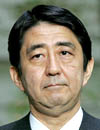
abe looking serious t2007011229abe.jpgThere are those who have argued for interest rate increases by claiming that a rate hike would provide a better return on savings accounts. This, of course, is disingenuous. Current returns are next to nil; even doubling the prime rate from 0.25% to 0.50% would mean little in the way of returns on savings accounts. It would, however, mean substantial increases in terms of mortgages, business loans and automobile loans.

Plenty of experts have wondered why consumer spending has yet to increase in Japan. Yet, the reason seems obvious: wages declined by about $4,000 on average per worker from 1995-2005 and then increased by about $400 per worker over 2006. Given that two recent effective tax hikes have taken place, in January 2006 and January 2007, the average worker in Japan simply has less money.

The bigger questions would be: Why haven’t companies been able to increase wages during this period of supposed economy recovery?

PESEK has your answer, Ken:

Abe’s predecessor, Junichiro Koizumi, changed the tone in Tokyo, forcing the need to upgrade an antiquated economic model on change-resistant politicians. Yet Koizumi, who stepped down in September, was a transitional figure. It was always up to his successor to accelerate and broaden efforts to modernize the economy. So far, Abe is failing in this regard.

That can be seen partly in how households aren’t increasing consumption as you would expect by this stage in an expansion. If households had more confidence in the outlook, they might spend more. If consumers trusted politicians to increase GDP or shore up the national pension system, people might save less.

The thing is, foreigners are far more excited about Japan’s recovery than the average Japanese citizen. That’s a problem, considering that the only way for this revival to gain momentum is by increased household spending. Exports can only get Japan so far; domestic demand is a more important dynamic at the moment.

Without faster growth and fatter paychecks, Japan will be hard-pressed to restore fiscal sobriety. Abe is right to want to reduce Japan’s reliance on debt for growth, yet the government’s plans to increase consumption taxes may backfire. The same goes for central-bank policy makers anxious to raise rates. Doing so might damage Japan’s recovery.

Abe’s task is a tall one. A key reason Japan isn’t booming as hoped is that it, like other rich economies, is increasingly facing the dark side of globalization. High-cost nations are being pressured as rarely before by fast-growing developing ones. That competition is reducing the willingness of Japanese executives to boost wages.

Combating that dynamic is a long-term process. It includes increasing productivity among current workers and encouraging more start-up companies to create new jobs. The effort would have a greater chance of success — and its benefits would kick in sooner — if Abe were focused on it. What’s more, Abe needs to improve his public-support rating if he’s going to have clout to build on Japan’s successes of recent years.

PESEK’s somewhat grim recommendations to avoid “economic booms that the average citizen doesn’t benefit from” (my convoluted and liberal translation of “jikkan dekinai keiki”) — a long-term process of productivity boosting and job creation — will assuage the concerns of neither workers nor powerful, large corporations, who both want security, in the forms of stable career paths and guaranteed profits, respectively.

These competing interests are coming to blows in recent days, as the government’s plans to submit a bill that would create a “white collar exemption” — meaning office workers who earn 4 million yen or more (or 9 million depending on what the final bill looks like) annually could no longer be eligible for overtime — have come under intense criticism.
Continue reading “White Collar Exemption” and the danger to the LDP

Newsflash: Hawaii doesn’t have enough Japanese people

The state of Hawaii is facing a minor crisis: not enough Japanese tourists. So they’ve enlisted advertising megafirm Dentsu to sell the state to people in Japan. And, since every ad in Japan needs a cute face, they brought actress Mayumi Sada on board.

Well, okay, she’s not that cute. More “sophisticated.” Anyway, the Honolulu Advertiser reports:

Through November, Japanese visitor arrivals were down nearly 9 percent. Takashi Ichikura, executive director of Hawai’i Tourism Japan, blamed the decline on fewer airline seats from Japan to Hawai’i, rising fuel surcharges on air travel, rising hotel charges and a weakening of the Japanese yen. Hawai’i Tourism Japan was hired by the state to promote Hawai’i in Japan.

“With the rising fuel surcharge and other cost factors, Hawai’i now looks expensive in Japanese consumers’ eyes, and they expect Hawai’i to be a refined and sophisticated destination to match the price they are paying,” Ichikura said.

… The campaign, called “Discover Aloha,” is meant to depict the experiences of a female visitor who experiences the feeling of aloha through various encounters that could only happen in Hawai’i.

My dirty mind had high hopes when I read that last part, but Dentsu let me down.

The effort includes two posters featuring hula and lei-making and another showing Sada reflecting on her Hawai’i experiences from a lanai overlooking the ocean.

It still sounds kind of like running “Visit Texas” ads in Mexico, doesn’t it?

The Japan-Korea tunnel gets revisited

Goh Kun, a former prime minister of Korea, is proposing a Japan-Korea tunnel as part of his campaign for president. With this tunnel intact, Japan and Korea would be directly linked by rail and highway, and assuming that North Korea comes out of its isolation in the future, it would be possible to ship goods between Japan and Europe entirely by rail (through the trans-Siberian).

This is hardly a novel idea. Back during World War II, the Japanese government had a long-term goal to run high-speed rail service from Japan through Korea and into the Asian mainland. Transport historian Roderick Smith:

The need for expansion of capacity [in the Tokyo-Osaka-Fukuoka corridor] was recognised, and work actually started on a new standard-gauge (4 ft 8 1/2 in. or 1,435 mm) line in 1940. A key part of the motivation behind this new line was to link Tokyo with the western part of Japan, which, in turn, linked up with Japanese-held territory in China and Korea. It was planned that fast electric trains, already nicknamed dangan ressha (Bullet Trains), would speed along this line towards Kyushu and perhaps even through an undersea tunnel to the Asian mainland via the Korean peninsula. Although the undersea Kanmon tunnel was completed between Honshu and Kyushu in 1942, thus directly linking two of Japan’s four main islands for the first time, the Pacific war had started in 1941 and it was to be some time before the railway network could be further expanded.

A few of the tunnels blasted as part of this plan were eventually used for Japan’s first high-speed railway line, the Tokaido Shinkansen, which opened in 1964.

Anyway, they could be on to something with this tunnel. Besides freight, an overnight high-speed train from Tokyo to Seoul could prove very popular, and in the future, it could even be extended to Beijing or farther. A big investment, sure, but perhaps not as hare-brained as it might initially sound.

China’s animation industry set to overtake Japan’s?

The latest issue of Japanese news weekly AERA (more like a Japanese version of Time magazine than many other weeklies) contains an interesting bit on China’s animation industry that fits in nicely with my last few posts. Full translation follows:

Anime to make a comeback in China, where it started

by Reiko Miyake

China has been “invaded” by Japanese-made animation, but in fact this was the former world power that taught animation to Japan

China as a nation is currently putting its efforts into developing “Donghua.” Donghua is Chinese for animation and comic books. In the past 3 or 4 years, 19 cities nationwide including Shanghai, Changchun, and Hangzhou have been equipped as “Donghua headquarters” or centers for the animation industry. Schools to develop talent and studios are being established in earnest.

According to sources close to the issue, the scale of China’s animation character market amounts to as much as 100 billion yuan (approx. 1.5 trillion yen). Japanese animation such as Pokemon and Case Closed are enormously popular, and up to now a multitude of pirated versions have been distributed. While dominated by Japanee animation and Disney, here and there original Chinese-made animation has started to come out such as “Indigo Cat.”

A longer history than Japan’s

Inspections of imported animated works are strict, in part because of protection of domestic works. The first company to truly attempt to export to China was Mulan Productions. They are very skilled at the business of managing copyrights in China. They have produced many hits, starting with Crayon Shinchan in 2002 and following up with Dragonball and Fruits Basket.

Takashi Mita, chief of the company’s International Business Headquarters, explains: “First of all, the quantity of foreign animation that is shown in China is is restricted as a whole. It is subject to a strict inspection from the perspective of public order and morality, and works that contain many portrayals of sexual activity or violence are taboo. All in all, the condition for export is that the works are healthy for children.”

Looking just at the situation in the past few years, Japan looks like a developed country while China looks like a late bloomer in terms of their respective animation industries. However, it is not very well-known that China’s animation history is actually longer and had a major impact on the developing stages of Japanese animation.

At a Tokyo cinema in 1942, a young Osamu Tezuka watched “Princess Iron Fan,” an animated film based on the Chinese epic Journey into the West that was produced in Shanghai, which was an animation production center at the time. The fact that the intense emotion he felt at that time formed the basis for Tezuka to produce animation is an anecdote known by those in Japan’s animation industry. After becoming a comic book artist, Tezuka met with Princess director Wan Lai-Ming time and again.

After WW2, Wan and others gathered in 1957 to create the Shanghai Art and Film Production Studio, a nationally-run animation studio. These are the roots of Japan’s animation industry as well as China’s.

Decline due to the Cultural Revolution

Subsequently, Japanese animation has developed as both an art and an industry to take a 60% share of the $25 billion animation market. Meanwhile, China’s industry declined due to the Cultural Revolution after peaking in the 60s and 70s.

So, Chinese animation industry is now attempting to revive itself once again. The works that the Shanghai Art and Film Production Studio created from the 60s to the 80s will be shown from December 16 at the Shanghai International Film Festival.

Features gaining the most attention are 4 ink-painted short films. The Tadpole Searches for His Mother, made in the 60s, is a classic in which the movements of frogs and tadpoles are drawn in ink style, which though slightly blurred is very lively. It was shown at the 1964 Cannes Film Festival, where it won Honorable Mention.

Almost 50 years later, focus is once again on ink expression in China’s animation productions as students of a Chinese technician development school produce a 3-D animation using the techniques of ink animation. Director Wan’s long-format “Sun Wukong on the Rampage” will also be shown.

Japan’s animation industry hollowing out?

Japanese weekly business magazine Shukan Toyo Keizai (Weekly Oriental Economy) has given me a very nice Xmas present: They finally post some free content online! I was even more delighted to discover that one featured article discusses a topic that’s come up in a recent post: the “decline” of Japan’s animation industry. According to animation critic Ryota Fujitsu (who incidentally also is on the selection committee for the Nippon Otaku Awards) argues that rather than declining per se it’s “hollowing out” due to outsourcing of animators. I decided to translate it in full since it brings up some interesting issues. Let’s have a look:

The Hollowing Out of Japan’s Animation Industry Continues

(2006/12/19)

Currently, Japan’s animation industry wouldn’t be viable without the presence of Korean and Chinese subcontracting companies. Why must the industry rely on foreign outsourcing? If you trace the causes of this dependence, you’ll find the answer lies in the low production costs. Normally, production costs of a 30-minute program amount to around 10 million yen apiece. However, it costs even more than that for a more elaborate project, and there are also many works that are produced for prices lower than 1 million yen. This situation has been going on for years, and you could say it has become entrenched. So as a result, the issue of low wages for animation staff, chiefly represented by the animators, has been repeated in the media. This is despite the facts that dozens of animated programs are shown every week, and animation has been proclaimed as “a subculture representative of Japan” by the media.

One third of animators make less than 1 million yen annually

The typical lifestyle of a contemporary animator was detailed in the 2005 study “Status of Activities and Lifestyles of Performing Artists” conducted by the Japan Council of Performers’ Organizations (tr: report available here in Japanese only).

According to this source, animators work an average of 10.2 hours a day, an estimated 250 hours per month. Despite this, 26.8% of the make less than 1 million yen per year, 38.2% earn an average annual income of between 1 million and 3 million yen annually. Meanwhile, 80% of in-between (douga) animators are paid by quantity, with per-cel prices averaging 186.9 yen. 73.7% had annual incomes of less than 1 million yen.
Continue reading Japan’s animation industry hollowing out?

Ethnicity and airline routing

Over the past couple of years, I’ve made six flights between Japan and the US. Five of these were on American Airlines’ Narita-Dallas/Fort Worth route, which I use because it’s cheap (both of my parents are retired AA employees) and fairly easy to connect to the Carolinas where my family lives.

I’ve noticed over time that there are very few Japanese people on this flight. The usual composition seems to be one-third Southeast Asians (particularly Vietnamese and Filipinos), one-third US military and DoD civilians, and one-third white guys connecting to and from flights to Asia. There are a handful of Japanese sprinkled about the cabin, but not many.

I’m sure that this is largely due to geography. Japanese expats and Japanese-Americans are clustered around the West Coast and the New York metropolitan area: there aren’t that many in Texas, or in any of the neighboring states for that matter. The Asian community in that part of the country is dominated by Southeast Asians.

But I also wonder whether Japanese people are just unwilling to fly American because the economy class service is so poor. I also flew the JFK-Narita route once last summer, and while there seemed to be more Japanese people on that flight, it was still the “local Asians” (mainly Koreans) who seemed to dominate the Asia/Pacific group on board.

Any other experiences of interesting ethnic combinations on particular flights?

The Japanese Workplace

At lunch today I heard that a guy working in another department put in a request for an impressive 45 hours of overtime payment. However, while he did do the extra time on the clock, he actually spent most of it just surfing the net. The boss is naturally angry, but since they both live in the same neighborhood, the boss doesn’t want to get in an argument over and cause trouble.

PESEK on Japan’s shrinking population

As if he were aware of MF’s recent discussion on the economic effects of Japan’s shrinking population, Bloomberg columnist William Pesek weighs in with some characteristic commentary. Pesek reports on some economists who claim that population aging and a shrinking work force would, contrary to popular belief even in mainstream Japan, have no detrimental effect on the economy as long as there’s sufficient growth in productivity, which is apparently a piece of cake. Pesek, as the headline of his column would suggest, thinks this prospect of a healthy-yet-possibly-shrinking economy so flies in the face of how we understand conventional economies that he called on the authors of Freakonomics to investigate. Here’s the main thrust of the argument:

[Sharmila Whelan of CLSA Asia-Pacific Markets:] “Access to labor, technology and capital are the least of Japan’s problems,” Whelan said. “Creating an environment where there is unhindered entry and exit of new businesses and new ideas are born resulting in continuous innovation and cost savings is the greater challenge. Japan has a long way to go, but the process has started.”

Let’s hope so. Otherwise, the world’s No. 2 economy could shrink along with the ranks of the Japanese.

I think the productivity question is a big “if” in this equation as the creation of the above-mentioned enviornment remains a major sticking point. Without the political leadership of a Koizumi, Japan’s government seems keen to rest on its laurels and fall back on public works spending and support of export industries that promotes the status quo of dangerous stagnation in Japan. But now, we have Abe as prime minister. And as I’ve noted before and as has been borne out by recent events, including the reinstatement of the “postal rebels,” the failure of the Abe administration to follow MOF’s line and divert gas taxes away from road building, the political leadership just isn’t there right now to provide that energy. Sure, initiatives that have LDP/bureaucratic consensus, like education and defense reform or the promotion of further government outsourcing can move through the Diet smoothly, but Abe so far seems to lack Koizumi’s resolve and has found himself on the losing side of crucial policy disputes within his own party. And it remains to be seen whether he will be able to stand up for his stated policy of cutting government debt and expenditures in the face of a boost in tax receipts.

Given the continued decline in public works spending and progression of reforms that were decided in the Koizumi days, Japan is in a much better position than it would have been. But Abe continues to disappoint, and it’s not as if there’s much out there in terms of alternatives. Within the LDP we have Foreign Minister Taro Aso as Abe’s most likely successor. He worked to undermine postal privatization as MIC minister just as he’s undermining Abe’s China diplomacy as Foreign Minister now. And then there’s opposition leader Ichiro Ozawa, who may be a strong politician, but he’s in poor health and not a particularly charismatic leader.

However, there are the makings of new breed of leaders, at least according to the author of the interesting-sounding The Japanese Money Tree: “Investors are ignoring an arguably much more important demographic shift…A younger generation of politicians, executives and policy makers is poised to take charge.” And Pesek goes on to note: “CLSA’s Whelan says fewer people will do for Japan what former and current prime ministers Junichiro Koizumi and Shinzo Abe have been unable to: catalyze an innovation boom that makes Japan more productive.”

These may be some famous last words, but is a generation of young innovators going to provide what the current one can’t? Perhaps it’s more likely that foreign-developed technological advancement will lead to productivity improvement, but can Japan count on that? Another question: What if Japan’s productivity increases, innovation adds vitality to the economy and improves living standards and all that, and the economy still ends up shrinking on an absolute level? Would people be willing to accept it?

Off to Penang Again

I’ll be in Penang once again (this time with Mrs. Adamu), so expect more sweet photos. I’ll be doing more of the touristy stuff and less random wandering this time around. Before I go, I’ll show you one highlight of the trip:


PA240134.JPG

That’s right, they stuck a whole Kit Kat right in the middle of the ice cream cone. Genius!

I got this at the 7-11, which is a lot like the Thai 7-11 except with less sausage-related stuff, more spicy nut kind of stuff, and more Muslim stuff.

The top part tastes like cake frosting, which was kind of a surprise. It wasn’t even really ice cream on top, just frosting with a little bite of Kit Kat. The rest of it was pretty standard, except on the bottom which was full of crushed Kit Kat crumbs instead of the usual bit of solid milk chocolate. All in all, not bad, though my personal favorite is the Cookies and Cream cone available in Bangkok 7-11s.

Here’s the ad copy from Nestle Malaysia:
DRUMSTICKKITKAT.jpg

DRUMSTICK with KIT KAT

Discover a real “KIT KAT bar” and “KIT KAT ice cream flavour” in your favourite DRUMSTICK.

Available NOW!

Expect more of this kind of thing when I get back.