Attempting to explain just what it is about Louis Vuitton and Japan

One of my favorite blogs at the moment is Marginal Revolution, which is run by a couple of academic economists who basically try to squeeze their science into every facet of life (á la Freakonomics).

A recent post is totally on point with what we talk about here at MFT: namely, Japan’s statistically insane obsession with luxury goods. What’s great about this post is not the post itself, but the wide variety of comments it generated from armchair analysts who all think they know why Japan loves expensive stuff so much.

Some of my favorite theories:

  • “Being in a warring society since 12th centuries until before their Meiji restoration, the craftsmanship and other manufacturing skills were cultivated by warlords in order to empower their army.”
  • “It might be a substitute for not being able to purchase land.”
  • “The Japanese fascination with brand names is an East Asian cultural thing. Having cool things gives one more “face” in society so they like to have things they can show off.”

I figure it might be that since people are living and moving around so closely together, they have more incentive to accessorize themselves since they’ll be coming into contact with so many people during the day. Of course, it could also be a happy mixture of all these theories with some sort of plus alpha on top. Any ideas?

Garden State/NYC update for Aceface

On my last post Aceface asked:

Hey,why not write some more about the garden state for non American readers for this is travelogue afterall.
I’m wondering what becomes of the turnpike after nearly quater of a century of my absence from New Jersey.Is Great Adventure(of the six flags theme park) still there?What happened to Flushing/Fort Lee Japan town that I’ve heard it is now changed as Taiwan/Korea town?I really really miss New Jersey!

You should come visit then!

I did just do a NYC related post the other day, and when I start carrying my camera around more you may see more local things. But if you really need a New Jersey fix, I recommend Weird New Jersey. Get some copies of the physical magazine if you can, it’s loads of fun.

The Turnpike is pretty much the same. They briefly discussed privatizing it before people realized it was just a cash infusion with no real long term gain or service enhancements. I believe tokens have been completely phased out- the toll is 35 cents cash, or in some areas 70 cents but only in one direction (to improve traffic flow the other way) and most people who use it more than once in a blue moon have EZ-PASS, a battery powered radio transducer box that sits on your dashboard or sticks to the windshield up by the rear-view mirror and passes your account information wirelessly to the toll booth as you drive through, making the whole payment process way easier. To get one of these boxes you pay a small deposit ($20?) and get a free replacement when the battery runs low. There is an electronic sign that warns you when your account is low on money.

Six Flags is still there, I have not been since I was in 8th grade though.

Flushing is Chinese and Korean. I don’t know if there are many Taiwanese there or not, but Cantonese still go to Manhattan Chinatown, and Chinatown definitely has a Taiwanese presence still. I was there last week and saw a sign for the USA headquarters of the KMT, and there was also a sign in the window with Lien Chan’s (連戰) name on it.

I feel like Fort Lee is almost all Korean, but also Japanese still live in the Fort Lee/Edgewater area. There is a Japanese supermarket/shopping center there in Edgewater, which used to have a Kinokuniya branch, but I think now has some other bookstore in its place. I haven’t been to Fort Lee or Flushing this year, so I haven’t got any current personal observations.

In NYC, St Marks Place, the former locus of punk culture in the region (a culture which has taken a near mortal blow with the passing of CBGB’s), is now the closest thing to a Japanese area in the city, with at least a half dozen izakaya type places on just the one block, and a little Japanese market around the corner to the north, which is on the second floor above a bookstore (elevator access), and sells Japanese products. I believe last week I saw a sign down the street to the north-west that Kinokuniya was either opening a second location near there, or perhaps moving from their old Rockefeller location, which makes sense. I doubt many Japanese are hanging out over there these days, compared to the numbers you see every day in the Village.

One of these places, which I was at last week, is labeled as something like “日本帝國居酒屋” (Japanese Empire Izakaya – although I forget the place’s actual name), with lots of old-timey Showa-period kitch and decoration, like old posters, antique pachinko machines, etc. Signs with random vaguely pro-Japanese imperialist slogans and phrases, also written on the t-shirts worn by staff, such as “神風特攻隊.” (Kamikaze special attack squad) In the men’s bathroom, next to the mirror, there was a red sign that just says “長崎原爆.” (Nagasaki Nuclear Bomb) This is also the only place I have ever seen outside of Japan that has “Hoppy” on the menu- and even in Japan it’s usually just places going for an oldy-timey kind of mood. (This paragraph is taken from some comments I just made on a tangentially related topic at Neomarxisme.)

Update: the friend I went with reminds me the place is called ケンカ, meaning “to argue.” They also have an actual stuffed tanuki inside, posed to look like the cartoonish tanuki statues you often see in Japan, which is both a little awesome and a little creepy.

There are of course many, many other Japanese restaurants and bars throughout the city, which there’s really no need to discuss. There are also a few other Japanese markets/stores of note, but actually for Japanese food products your best bet is probably a Korean store, some of which are much bigger and carry a large amount of food and drinks from Japan. Of special note is the NYC branch of Japanese used bookstore mega-chain Book Off, located on 41st St, just south of Grand Central Station, and just east of the public library. Just down the block from Book Off is a Japanese restaurant, a Japanese bakery/cafe, with some of the sorts of baked goods that you normally only see in bakeries in Japan, and a Japanese market/lunch place that does things like katsudon for eat-in or take-away.

Anyone else have some observations to share for Aceface’s NY/NJ travel guide?

More on fake Harry Potter

Today’s New York Times has published a moderate sized article on the Chinese phenomenon.

No one can say with any certainty what the full tally is, but there are easily a dozen unauthorized Harry Potter titles on the market here already, and that is counting only bound versions that are sold on street corners and can even be found in school libraries. Still more versions exist online.

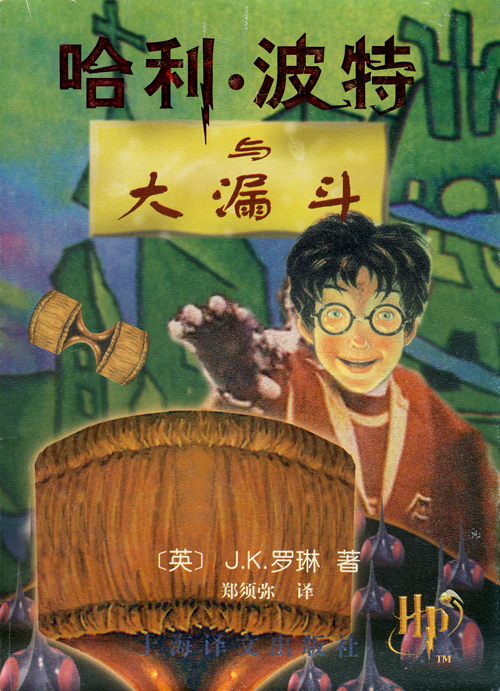
These include “Harry Potter and the Half-Blooded Relative Prince,” a creation whose name in Chinese closely resembles the title of the genuine sixth book by Ms. Rowling, as well as pure inventions that include “Harry Potter and the Hiking Dragon,” “Harry Potter and the Chinese Empire,” “Harry Potter and the Young Heroes,” “Harry Potter and Leopard-Walk-Up-to-Dragon,” and “Harry Potter and the Big Funnel.”

Some borrow little more than the names of Ms. Rowling’s characters, lifting plots from other well-known authors, like J. R. R. Tolkien, or placing the famously British protagonist in plots lifted from well-known kung-fu epics and introducing new characters from Chinese literary classics like “Journey to the West.”

Harry Potter and the Big Funnel? I’ve heard of that one somewhere before… 

In related news, of the 100 or so blogs and other websites that linked to my fake Harry Potter post, this post at the blog of the comic book fansite Newsarama may be the only one to offer a substantial contribution. Now, I had posted a couple of pages from a nice, wholesome Harry Potter Japanese fan comic (dojinshi), but someone at Newsarama had apparently dug into their personal bookmarks collection and dug out links to online archives of-ahem-less than wholesome product. The sort of thing that chronicles the sort of activity that English boarding school was famous for before Hogwarts. Am I going to paste the links here? No, but anyone curious enough to click can take that extra step.

British coconuts

In this BBC article on cultural assimilation of Asians into British society, I encountered the term “coconut,” which apparently means someone who is “brown on the outside but white on the inside.” While I am familiar with similar slang terms used in such as “banana” or “twinkie” (yellow on the outside, white on the inside) and “oreo” (black on the outside, white on the inside) this one is new to me. Does “coconut” have any currency in other Anglophone countries besides the UK? Are my American examples also used in the UK or other countries? Do any readers know of other similar terms in use in American, British, or some other form of English? Best of all would be equivalent terms in other languages-properly translated of course.

The Mideast envoy?

The following is a brief exchange from this video, beginning at around 4:20.

Narrator: Who is the Antichrist?

Woman:  He will be charismatic but he will also be a man of peace, so he will be one who has promoted peace for many years.

Man: There is gonna be a peace treaty, but that’s a false peace treaty. Eventually when The Lord comes back, that’ll take care of it.

Mustachioed man: The one who forces Israel into a peace treaty with the Arabs is the one who is- you have to watch out for.

Narrator: Is the beast.

Mustache man: Right.

So, if Tony Blair succeeds in his new job, that makes him the Antichrist?

Germany’s hate on Scientologists

Some readers may have been wondering exactly why Germany hates them so much. And while Slate doesn’t exactly answer the question, today’s column does make a half-hearted attempt.

Some German officials believe Scientology’s ideology is rooted in a kind of political extremism—a bit of a sensitive area for Germany since World War II. They also argue that Scientology is not a religion but a business, since local churches operate like franchises of the main organization.

How much do they hate Scientology in Germany? Well, aside from a ban (later overturned ) on Tom Cruise from filming at German military site, there was also the following statement made against him.

Thomas Gandow, 60, chief spokesman on religious cults for the German Protestant Church, described Scientology as a “totalitarian organisation” and said that Mr Cruise had become “the Goebbels of Scientology”.

Germany also apparently considered forcing Microsoft to debundle the Diskkeeper anti-fragmentation software from Windows 2000, not for anti trust reasons, but because the company who licensed the product to Microsoft is Scientology-led.

Another fringe religion (although probably a much larger one) getting a lot of attention recently is Mormonism. It is a widely known piece of computer history trivia that the late, great Wordperfect was created by Mormon, and despite the shaky reputation that Mormonism has in some quarters, as far as I know there was never any particular controversy over using software developed by them.

Bonus trivia: Bruce Bastian, one of the two original Mormon developers of Wordperfect, later came out as gay and now devotes his time and fortune to gay activism.

NPR on fake Harry Potter sequel

For the many thousands of readers who can’t get enough of fake Harry Potter, NPR’s Morning edition had a story on Chinese sequel-legging for their July 13 broadcast. And no, they don’t mention either of the two presented here.

Also, don’t forget the truly awe-inspiring Harry Potter in Chinese, Japanese, and Vietnamese Translation web site, which gives detailed comparisons of the Mainland Chinese, Taiwanese Chinese, Japanese and Vietnamese translations of the novels. Fascinating reading for hardcore fans of the series (particularly those with some knowledge of one or more of the languages treated), and truly essential reading for any translators familiar with the world of Harry Potter.

The ultimate sequels aka Asia loves you,哈利波特

To tie in with the world-wide media extravaganza that is the release of the final volume of the megaselling Harry Potter series, today I would like present scans from three lesser known sequels in my collection.

First is the China exclusive 2002 release, Harry Potter and the Filler of Big, a title made only slightly less mysterious when one realizes that the Chinese title translates rather more accurately into Harry Potter and the Big Funnel, although you’ll need someone with better Chinese than mine to describe the plot of this gloriously audacious illegally published novel-length fanfiction.

Continue reading The ultimate sequels aka Asia loves you,哈利波特