Stuff I want to eat: Frijoles, a Chipotle knockoff in Azabu Juban

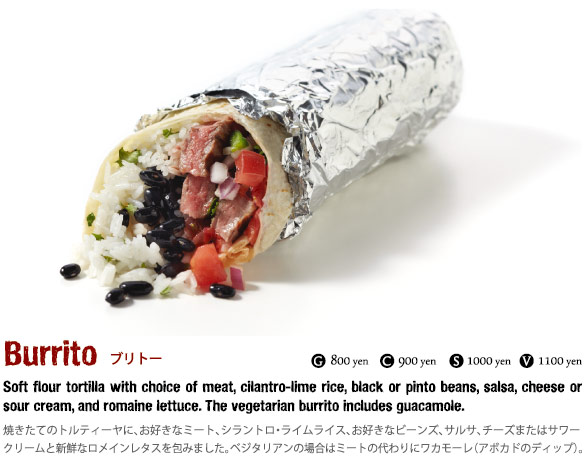
menu_buritto001

When I lived in Washington, DC, one of my favorite places to eat was Chipotle, the formerly McDonald’s-owned seller of giant burritos. The combination of spicy salsa, sour cream, guacamole, and seared meat all wrapped in an overstuffed tortilla made for a reasonably priced explosion of flavor, guaranteed every time.

Accordingly, a complete lack of anything comparable in Japan (or any decent Mexican food, for that matter) has been a source of considerable homesickness for me.

Until now.

Joe has pointed me to Frijoles, a restaurant in Azabu Juban with a menu essentially identical to Chipotle. I have not eaten there yet, but it has so far received some positive word of mouth. I’ll be sure to report once I’ve had the chance to try it out.

Cow madness

Over the past few weeks, Taiwan has been in a furor over a recent deal to resume the importation of  beef from the USA, which has been banned for some time due to the alleged risk of mad cow disease. Readers may remember a series of protests that gripped South Korea not long ago when their government similarly decided to life the ban on US beef. In Korea the US beef issue became a catalyst for large anti-American protests by throngs of protesters whose fundamental concerns were really far more about the macro view of the South Korea-US relationship, such as the continuing extraterritoriality of US soldiers, than about an arcane and minor, if horror-film creepy, food safety issue.

Creautzfeldt-Jakob disease, the term used for the human version of Bovine Spongiform Encephalitis (BSE), popularly known as mad cow disease, is a disease that lends itself to hysteria. An infection, not caused by the familiar bacterium or virii, or even a paramecium, it is produced by a truly exotic pathogen-a mutated prion, a class of protein itself unfamiliar to the layperson. The warped protein spreads throughout the nervous system, tricking healthy proteins into losing their shape, eventually causing such a complete breakdown of neural tissue that the brain is left full of small holes, like a sponge (hence the name, “spongiform”). To make it sound even more disquietingly like the contagion in one of the more science fiction themed zombie movies, neither thermal nor chemical – or even radioactive – means of sterilization have any effect on the mutant prion. Worst of all, the initial transmission vector of BSE or other variants of transmittable spongiform encephalopathy is cannibalism (as has been down since the discovery of kuru, a similar disease found among cannibals of Papau New Guinea), specifically the practice of rendering unsellable scraps of flesh, bone, and viscera left over from cow butchering into a protein sludge, which was then added to the feed of other cows on the feed lot. Even the most ardent carnivores among us reacts with visceral disgust to cannibalism, even in other species, compounded in this case by the fact that it is implemented so casually, for minor savings, so much unlike the rare cases when it is necessary for survival. Due to the disquieting nature of the disease, it is easy to see how A) people might overreact and B) how easy it might be to goad people into over-reaction for political purpose.

Taiwan’s English language Taipei Times, generally a strident partisan supporter of the Green (DPP/pro-independence) camp, carried a surprisingly non-partisan and fact-based editorial on Friday, in which they pointed out that there is in fact no appreciable risk of  catching the zombie plague from American beef.

The ferocity of politicians would be entirely justified if it were imports of UK beef we were talking about, as the UK was where the BSE epidemic was first identified and where the vast majority of cases of variant Creutzfeldt-Jakob Disease (vCJD), the human form of BSE, have been reported. The disease is a mainly British affair and the WHO says many of the cases reported in other countries were people likely exposed to the BSE agent while living in the UK during the height of the epidemic in the late 1980s.

Figures from the UK’s National Creutzfeldt-Jakob Disease Surveillance Unit show that at the end of last month there had been 167 deaths from vCJD in the UK, with the peak (28 cases) occurring in 2000.

In the US, to date there have been just three cases of BSE (one imported) and three deaths from vCJD, but two of these three deaths were likely cases of exposure in the UK, while the other was a recent immigrant.

Not to say that American been is entirely safe, but the danger is not mad cow disease. Just the other day a US meat company issued a recall for a huge batch of ground beef following two cases of fatal E-coli poisoning, a disturbingly common occurrence. Assuring food safety is one vital task of government in general, particularly when importing food from abroad, where standards may not be the same. But since the food safety issues here are largely fabricated (no-one has even mentioned the far more serious risk of E-coli), it is clearly about politics.

While the debate over US beef has similarly gone well beyond the realm of science into political theatre, the issue is not anti-American or Taiwan’s relationship with the United States. No, instead, as with almost every contentious issue on the island nation, it comes back to Taiwan’s hyper-partisanship, so extreme that it almost makes American political arguments look reasonable. (Well, maybe not America…)

The details are too complex and boring to get into, but the short version is that the KMT (Chinese Nationalist Party) government pushed through an unpopular accord over US beef in a attempt to curry favor for more important issues, while on the other side the opposition and pro-independence DPP (Democratic Progressive Party) is making ridiculous claims about the danger of US beef in a cynical attempt to peg the KMT as anti-democratic incompetents that are willing to trade public safety for a minor diplomatic advantage. However true such an assessment of the KMT may be overall, their opponents are being unfair in this particular case.

The beef issue has been a sticking point for US diplomats in several countries, due to the strength of the US agricultural interests that benefit from such exports, and in Taiwan specifically, eliminating the ban on US beef is widely considered to be one of several precondition for granting Taiwanese the visa-free entry status that has been rumored for a couple of years now. I also want to repeat that the idea of caving to US pressure is in and of itself not as much of an issue here as in many other countries, as both sides want stronger ties with the US in terms of trade, military, and diplomacy. However, the real issue, as always, is China. Since Ma took office the KMT led government has been promoting a series of pacts with the Communist governed People’s Republic across the strait, and the Taiwanese opposition has been far from happy, claiming (with some merit) that such pacts tend to favor China more than Taiwan, and promote economic and cultural integration that will eventually lead to political integration along the lines of Hong Kong. It is in this context that the protests over US beef must be considered.

As yesterday’s Taipei Times editorial states:

The government’s atrocious handling of the expansion of US beef imports — opaque, peremptory and confused, regardless of the merits of the products — is becoming a real cause for concern in terms of the bigger picture: cross-strait detente, and particularly a proposed economic pact with China.

[…]

One legacy of the US beef controversy is that many more people have little or no confidence in the government’s ability to negotiate with China without jeopardizing Taiwan’s interests.

[…]

Once again, this cavalier attitude toward ordinary people only raises suspicion as to how open and trustworthy any agreements between this China-friendly government and Beijing will be.

Even though the paper’s editorial board has correctly dismissed the health claims of the beef accord opponents, they are still greatly concerned about the WAY in which the accord was reached. If the pro-China KMT government is willing to negotiate behind closed doors and against public opinion with the US, why not with China? The government’s quid-pro-quo trade of US beef for progress on several outstanding issues (visa free status, progress on a larger trade accord, increased likelihood of more and better weapons systems) is therefore seen less as a capitulation to the US than an example of the KMT’s general attitude of capitulation towards China. And of course, food safety of imports from China is a far more serious problem. I’m sure everyone remembers the horrible milk-poisoning incident from last year. Well, some of those products made it into Taiwan, and although nobody was sickened, the incident spurred anti-KMT and anti-China protests. The controversy over American beef is actually more similar to those protests than to the anti-US beef protests in Korea.

Bush, baseball, Koizumi?

It’s been widely reported that Bush threw out the first pitch at a baseball game in Japan on Wednesday. (Game 3 of the Japan Series between the Yomiuri Giants and Nippon Ham Fighters for those who care.) But did you know that the former president was hanging out with former PM Junichiro Koizumi while he watched the game? Both of the men have been fairly inconspicuous since leaving office, but it’s kind of amusing to see they still hang out even when there’s no statecraft to be done.

<object width=”500″ height=”400″><param name=”movie” value=”http://www.youtube.com/v/A6Fv9J-2vI8&color1=0xb1b1b1&color2=0xcfcfcf&hl=en&feature=player_embedded&fs=1″></param><param name=”allowFullScreen” value=”true”></param><param name=”allowScriptAccess” value=”always”></param><embed src=”http://www.youtube.com/v/A6Fv9J-2vI8&color1=0xb1b1b1&color2=0xcfcfcf&hl=en&feature=player_embedded&fs=1″ type=”application/x-shockwave-flash” allowfullscreen=”true” allowScriptAccess=”always” width=”425″ height=”344″></embed></object>

In the video you can see Bush throwing the pitch right at the beginning, with Koizumi and someone who is probably US Ambassador John Roos on the other side of the catcher’s mound, but the other 9 minutes is tedious baseball.

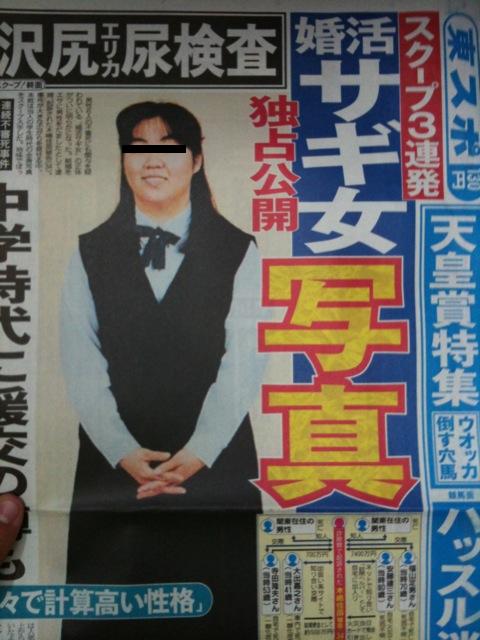
Kanae Kijima, the konkatsu killer: a black widow serial killer for the Internet age

konkatsu killer EFBD8AEFBD8A

Some of you may have heard the recent news of a black widow serial killer in Japan. The more I read about this story, the more fascinating and horrifying it gets:

Investigators probing the deaths of two acquaintances of a 34-year-old woman arrested on suspicion of fraud have found that at least four other men linked to the woman died under suspicious circumstances.

All of the men lived in the Kanto district, and in one case investigators initially thought the victim had committed suicide by burning briquettes to release deadly carbon monoxide. Police are continuing to investigate the details surrounding the men’s deaths. The name of the woman, a resident of Tokyo’s Toshima Ward, has been withheld.

Investigative sources identified two of the men who died suspicious deaths as a 70-year-old man from Matsudo, Chiba Prefecture, and a 53-year-old man from the Tokyo city of Ome. Unconfirmed details remained over the deaths of other men in the Kanto district.

Her name is Kanae Kijima. Investigators apparently learned of this woman’s possible involvement after reading through one of the victims’ blog posts, which is still online here. You can see from the blog this guy was very into his plastic model kits and thus might not have been all that sophisticated around women. Perhaps understandably, he was blinded by love. Here is what his last post says:

Today I will meet my fiancee’s family. Recently I have been spending most of my time looking for a new place with her and talking about our new life together. Starting tonight, we will go on a three-day, two-night pre-marriage trip.

He was found dead a mere ten hours later.

Kijima was a real piece of work. According to reports, she was a professional con-woman who met lonely men on the Internet and convinced them to ask her hand in marriage. Once “engaged,” she would start asking for money, sometimes pretending to need it for tuition. With the money from her many future husbands she lived an expensive, luxurious lifestyle, complete with the high-end condo, a wine-red Mercedes, and occasional stays at the Ritz-Carlton. She also liked gourmet food such as obscenely expensive green tea (Y2,000 for 100g), a habit that pushed her weight up to a whopping 100kg.

Born in 1974 in Hokkaido the granddaughter of a local politician, Kijima moved to Tokyo at age 18 to attend Toyo University but dropped out after a year without paying her tuition. In 2003 she was arrested for scamming someone in a Yahoo auction.

I was not able to find when her career as a black widow got started, but probably some time around 2006 when she began renting a large two-bedroom apartment in Itabashi-ku. Her scams were apparently so successful she netted a total of Y95 million before getting caught.  So over three years that’s a very comfortable annual income of around 32 million yen (or around $300,000), presumably tax-free.

It’s reported she met around 20 people on the dating site. She apparently didn’t always kill her marks – she was unsuccessful in scamming some and maybe just didn’t feel the need to kill others. The six men identified so far were the unlucky ones.

In addition to her online dating activities, she worked another angle “taking care of” an 80-year-old man who she also met on the Internet, whose house burned down in May under mysterious circumstances with him in it.

Amazingly, she left behind all kinds of evidence on the Internet. First, she gave her real identifying information to the dating site allegedly used for the crimes. Second, she documented much of her activity on her personal blog hosted by recipe site Cookpad (some of it is still available via Google’s cache, and some bloggers have been able to rifle through it). In it she posts pictures and tells stories about all the nice stuff she bought from the men she killed (of course she doesn’t go into that particular detail).

Details of this story underscore just how influential and entrenched the web has become in Japanese society. Not only did the “konkatsu” killer meet all these men on Internet dating sites (including an old man), the cops’ investigation hinges greatly on this woman’s sloppiness and overconfidence in failing to cover her tracks properly.

As juicy as all these details are, it’s important to note that this woman is being given the Noriko Sakai treatment – that is, the Saitama police haven’t officially arrested her for murder, just fraud at this point. The cops will likely hold her for a few weeks as they progress with their investigation, following the standard procedure in Japan. In the meantime, it’s possible the police are trying to get over a lack of damning evidence tying her to these killings by flooding the media with all manner of intimations (and the media is no doubt demanding details on this huge story). That may be why major media outlets have declined to report her real name for fear the character assassination could expose them to future defamation lawsuits, as argued here. Still, with all the reports of new evidence popping up they will probably get their woman.

The other Tokyo Olympics which never were

The 1964 Tokyo Olympics were a milestone in Japanese history as the country’s great postwar coming-out party. The 1940 Tokyo Olympics, on the other hand, became a footnote, as they were planned and approved by the IOC but never actually took place.

Tokyo’s bid was announced in 1932 and won the IOC vote in 1936, defeating a rival bid from Helsinki, Finland by a vote of 34 to 27. There was some political maneuvering behind the vote: Rome had also been bidding for the Olympics, but Benito Mussolini pulled Rome’s bid as a gesture of support to Japan, then a strong ally of Italy.

A number of factors led to the eventual cancellation of the games. Several IOC members were uneasy with Japan’s military adventures in China, and the US was planning to boycott the Tokyo games in protest. The Japanese government was focused on the war with China and was becoming more reluctant to divert strategic and monetary resources to an international sporting event. Japan formally withdrew its bid on July 15, 1938, and the Olympics passed to runner-up Helsinki by default. However, the Helsinki Olympics were cancelled following the German invasion of Poland in the following year, and there were no Summer Games until 1948.

The plan for the 1940 Olympics centered around two main venues–the Jingu Gaien in central Tokyo and a new Olympic park in Komazawa. These venues were never built before the war, but both sites were later used for staging the Tokyo Olympics of 1964. Another instance of re-using resources: Ichiro Kono, who led the opposition to the 1940 Olympics in the Imperial Diet, became Construction Minister and Minister of State for the Tokyo Olympics under Prime Minister Hayato Ikeda, and thus got the chance to oversee the successful Tokyo Olympics on the government’s behalf.

On CNN’s Factchecking

Our post on the Savoie case opened up a pretty fierce discussion about the facts of the case and the background, with many of us taking issue with the liberal reporting of “facts” by CNN’s correspondents. I was even further perplexed by CNN’s story on a US father caring for his disabled child in Okazaki, Japan, as asking the most rudimentary questions about the story result in a pretty clear conclusion that the facts are just wrong (which I wrote about here).

It turns out that the mistakes on the Savoie story are not a result (or at least not the sole result) of institutional Orientalism. CNN apparently has a problem at the core of its information management when it comes to checking facts, and has a habit of reporting anything heard as fact without double checking anything. This was the subject of a brutal evisceration of the network by the Daily Show that I thought was worth sharing with readers — I think it helps understand why the Savoie case turned into such a media circus and a scapegoat for Japan’s antiquated family laws. The relevant section starts at 1:05.

CNN Leaves It There
www.thedailyshow.com

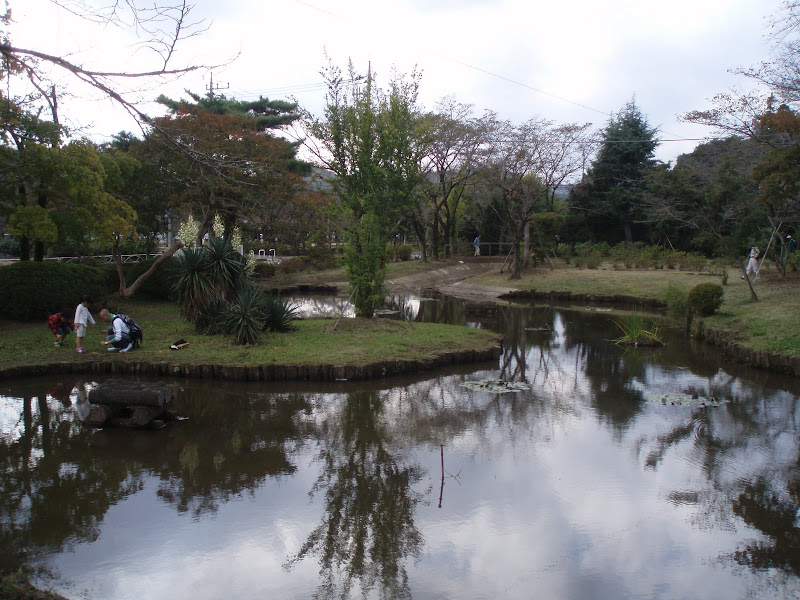
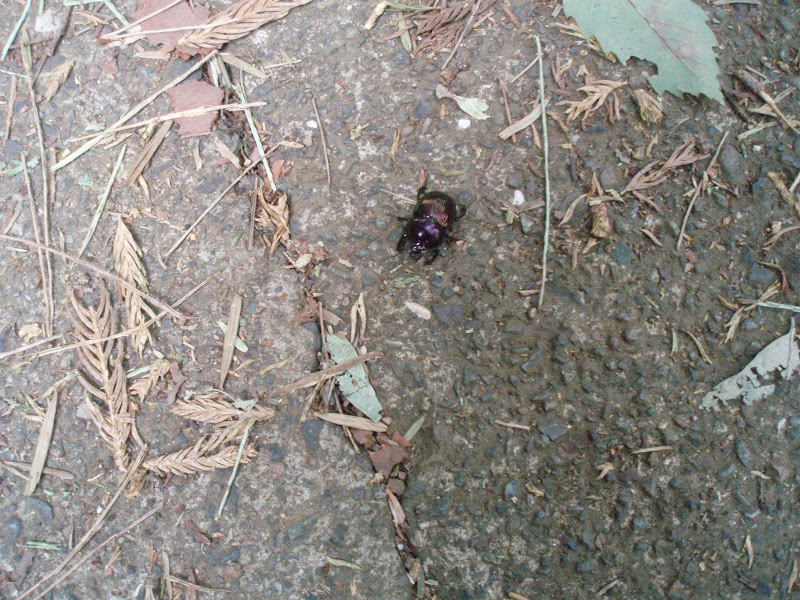
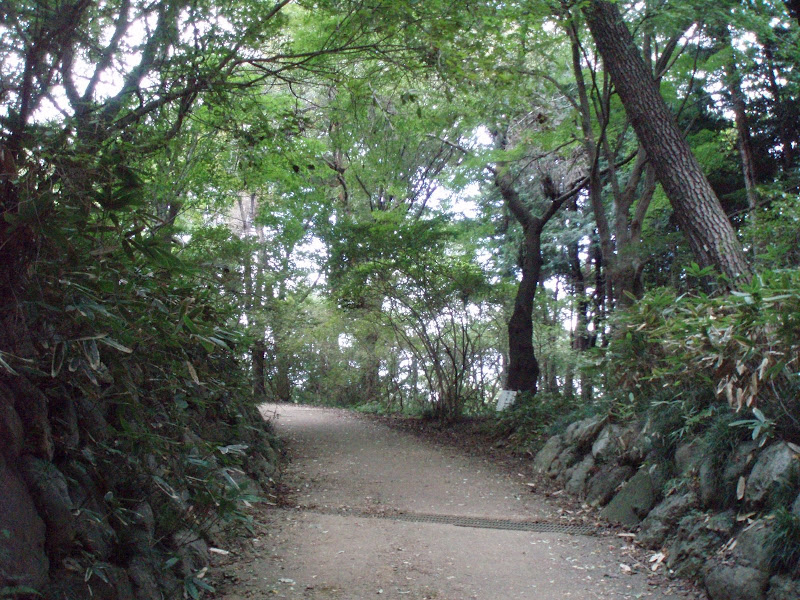
Hiking in Hannou-shi, Saitama

Hannou-shi in Saitama Prefecture is located along the Seibu Ikebukuro line outside Tokyo. Closer to outlying Chichibu than urban Tokyo, the town’s look and feel are like a scene out of the recent Oscar-winning film Departures (which I highly recommend!). Mrs. Adamu and I decided to hike there after finding the town randomly on a web search. It was an extremely convenient trip – after an hour and a half train ride it was just a 10 minute walk to reach the trail. We followed this route on the Hiking Map website.

Anyway, here is what we saw!


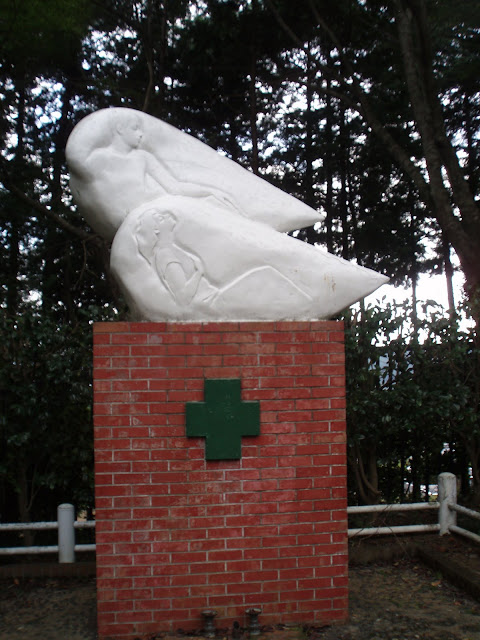
This is a monument to local deaths from industrial accidents. Not sure why they died or when.


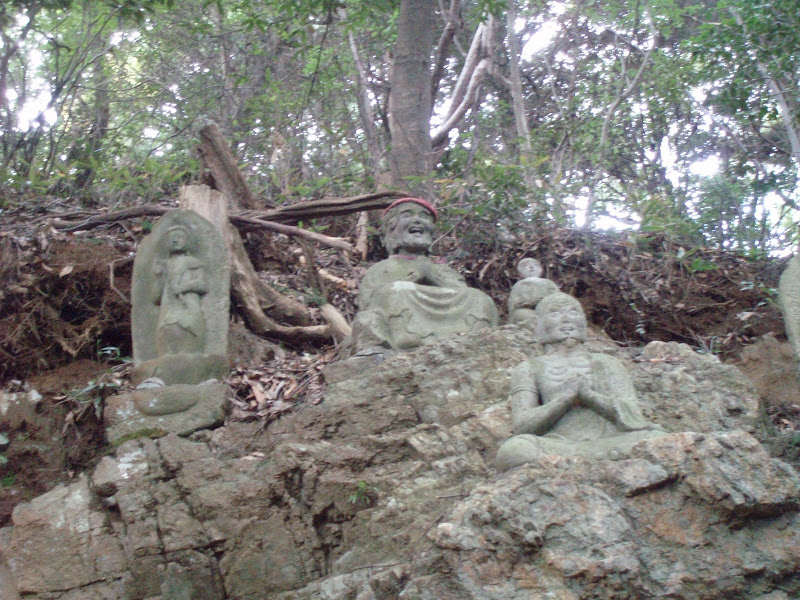
Going up Tenranzan mountain we came across these oddly shaped Buddhas. The fifth Tokugawa shogun apparently called a monk from a temple near this mountain to heal him with chanting, and it worked. The statues are somehow related to this.
Continue reading Hiking in Hannou-shi, Saitama

Even more kabuki on Capitol Hill

This month’s American Bar Association Journal features a cover story on the Supreme Court nomination process called “No More Kabuki Confirmations,” complete with a backdrop of paper lanterns, cherry blossoms and ukiyo-e figures.

It’s a “Kabuki dance,” said Joe Biden when he was a senator on the Judiciary Committee. U.S. Supreme Court nominees give the illusion of responding to senators’ questions, but say little of importance.

… Biden’s successor, Sen. Ted Kaufman, told the National Law Journal that the process resembled the Super Bowl—with press coverage all around.

It’s “a subtle minuet,” said Sen. Arlen Specter during the hearing for Justice Samuel A. Alito Jr., “with the nominee answering as many questions as he thinks are necessary in order to be confirmed.”

For his part, Justice Felix Frankfurter, plagued during his confirmation hearing with suggestions that he was partial to communists, favored the athletic comparison. “I thought that it would just be a little room where we would sit around,” he said of the Judiciary Commit­tee hearing. “I found that this was Madison Square Garden.”

Whether likened to theater, dance or a sporting event, the confirmation process for the Supreme Court has become a set piece of punch and counterpunch, with enough irritation left from one process to undermine the next.

A kabuki minuet in Madison Square Garden would be pretty awesome, but probably not all that similar to the Sotomayor hearings.