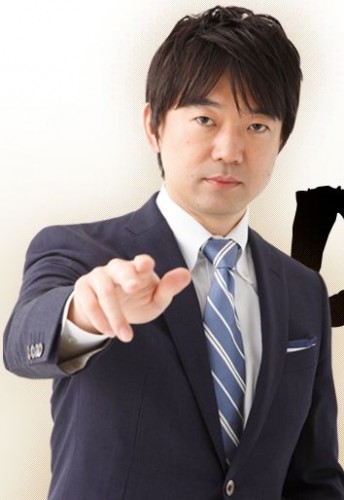
Instead, the central government has found itself battling an improbable adversary: Osaka’s mayor, Toru Hashimoto, the young, plain-speaking son of a yakuza gangster who has ridden Japan’s loss of faith in government to become, seemingly overnight, the country’s best-liked politician, according to recent polls.
Although it is factually correct that Hashimoto’s father was a gangster, he was apparently no more than a biological parent, out of his son’s life almost immediately, and no longer living just a few years later. The newspaper’s phrasing makes a very strong implication that his “plain-speaking”-ness is derived from his father’s example, but considering that he basically never knew his father, I think the association is just as unfair as the stupid attacks against Obama based on his father being a Muslim, or against both Obama and Romney because they had polygamist grandfathers.
I’m all for making fun of him for his own craziness, of which there is plenty, but don’t bash him for what his absent father may or may not have done.
As many native English speakers instantly noticed, “Peach” is an anagram for “cheap.”
Peach claims to be Japan’s first low-cost carrier. Obviously, this is a blatant lie since Skymark and Air Do both preceded them and are both still flying.
They will be based at Kansai Airport in Osaka, where only the cheap survive.
Peach’s corporate parent, A&F Aviation, was recruiting operations personnel on LinkedIn’s job board a few months ago and didn’t seem to care that much about language ability. Their staff roster must look pretty interesting by now.
Peach is not the first fruit-themed airline. There is an airline in South Africa called Mango, and the US has both Berry and Lime. That said, Peach is probably the fruitiest of them all.
Thanks to the power of exit polls, we already know the results of some of tonight’s polls. For instance, Ishihara will remain governor of Tokyo for another four years (!). For updates on developments in the election, keep an eye on my Twitter feed. No live blogging tonight. Biking around my old stomping grounds in Adachi-ku has sapped my energy.
Feel free to leave comments/reactions below!
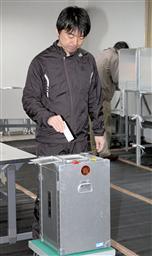
Photo: Osaka governor voting today in a track suit.
Tomorrow Japan will hold many, many local elections. The schedule is set by the central government, which prefers to hold all local elections around this time every four years. It’s sort of like Election Day in the States, except it’s on a holiday because Japanese officials actually want people to vote.
Gubernatorial and mayoral elections are decided by majority popular vote (first past the post, no runoffs), while prefectural and local assemblies are a mix of single-member and multi-member districts, though I am not sure which is more prevalent.
In the wake of the massive earthquake last month, many elections in the affected areas have been postponed. Even outside the northeast, many local officials want them put off, to the point that Urayasu (located on reclaimed land, partly sank into ground after earthquake) has steadfastly refused to hold the vote as scheduled. Given the somber national mood, an enthusiastic campaign full of upbeat promises could look unseemly, and voters are understandably distracted by post-quake anxieties.
All the same, the decision has been made, and now it’s up to the public to show up and choose their leaders. There is a very wide field, but a few themes have emerged to keep an eye on as the votes are tallied tomorrow night.
Ishihara the indestructible? Tokyo Governor Shintaro Ishihara is running for a fourth term, and is expected to win handily despite challenges from some recognizable faces.
Ishihara was most recently in the news making and then apologizing for a statement that the recent earthquake and tsunami were divine punishment for Japan’s immorality. If you have been following the quake news, you might wonder, Why is his re-election assured despite such an offensive statement? Well, there are two reasons. First, he has a long history of getting away with being outrageous, banking on the admiration he earned as a writer/celebrity and the large number of people who agree with much of what he has to say. Second, he is a skilled politician who has gained the backing of large blocs of reliable voters at a time when support for the rival DPJ is essentially in tatters (they didn’t even field their own candidate this time) and the turnout of unaffiliated voters is expected to be low.
For more on the first reason, I would direct you to David Marx’s profile of the governor over at Neojaponisme. Key line: “He is not a “loose cannon,” accidentally saying things he later regrets. He likely thinks that success of his endeavors requires raising the ire of groups to which he does belong.” Suffice to say, people expect Ishihara to be outrageous. The only surprising thing about his most recent offense is that he apologized. Probably even some supporters told him to watch his words this time.
As to the second, maybe I can shed some light. You see, the LDP and New Komeito hold influence over a fairly disciplined voting bloc. The Komeito is especially important in this equation because of their numbers and highly reliable turnout.
For example, let’s look back to my coverage of the 2009 Tokyo prefectural assembly election. In Adachi-ku, the LDP and New Komeito delivered around 70,000 votes each of a total turnout of around 250,000. That’s 30% of the vote right there in a high turnout election, and if I remember Adachi-ku was broadly consistent with the overall result. It wasn’t enough to win then because LDP/Komeito support was in the gutter following the financial crisis and subsequent recession, so unaffiliated voters went for the DPJ, handing them control of the Tokyo legislature.
Ishihara’s two major challengers are Hideo Higashikokubaru, the comedian-turned-Miyazaki governor, and Miki Watanabe, founder of discount restaurant chain Watami. Unfortunately for them, now is not a good time for new faces, especially not Higashi with his feel-good enthusiasm, or Watanabe, who just exudes “smarmy corporate big-shot.” These two and other more minor candidates are likely to split the vote, handing another advantage to Ishihara.
According to a recent poll (JP), Ishihara has the support of around 70% of LDP supporters, 60% of New Komeito supporters, and even has the edge in support among DPJ and unaffiliated voters. Unless there’s a major upset, expect to have Ishihara around for another four years.
Regional parties to gain ground. Osaka Governor Toru Hashimoto took to Twitter to join those calling for the elections to be postponed. He may just have been posturing, however, because his party, the Osaka Restoration Association, may well win a majority in the Osaka prefectural legislature tomorrow, with an Asahi poll giving it a lead of several points against the other parties.
Regional political parties, with charismatic leaders and often populist platforms, have gained attention, not to mention power, recently. In Aichi prefecture, elections in February and March gave the upper hand to Genzei Nippon (Tax Cut Japan), a populist party with a platform to slash local taxes.
Hashimoto’s plans for Osaka look even more ambitious. By forming a party loyal to him and gaining control of the legislature, he hopes to push hard for reforms including a plan to unify the administrative functions of Osaka city and prefecture. This, along with infrastructure investment and neoliberal stand-bys like market-testing government functions for possible privatization, he argues will give him the ability to put Osaka on firmer fiscal and economic footing after years in the doldrums.
Japanese speakers can watch this video for an outline set to a Sega Genesis-era synthesizer soundtrack:
Success for Hashimoto could give momentum to ambitious politicians in other regions wishing to open their own “Restoration” franchise. One area where this idea could find traction is in the northeast, where the gargantuan task of reconstruction all but guarantees intense frustration among the locals.
How will the results affect national politics? Until a few days ago, the biggest political news story was the potential for a grand coalition, a sort of unity government to give top priority to quake reconstruction (and maybe throw in tax hikes to pay for social security for good measure). LDP President Tanigaki has thrown cold water on the discussions, reportedly because they want PM Kan to quit as a condition of joining the government. Indeed, LDP Secretary General Nobuteru Ishihara (Shintaro’s son) is now back to openly calling for Kan’s head. Wow, that didn’t take long!
The local elections will likely only give the LDP more reason to keep up pressure on Kan. In a number of key races, the DPJ has opted not to field its own candidates, apparently because it took a hard look at the numbers and decided not to embarrass itself. However, the party has candidates running in gubernatorial races in Hokkaido and Mie–polls show the LDP with a lead in Hokkaido and slightly ahead in a close race in Mie. These will likely be two of the major headlines tomorrow night.
National politics in Japan are stuck in a morass of cautious leaders who end up getting bogged down in petty scandals. Kan’s approval ratings have jumped sharply since the quake, from the 20% range to the 30s. However, setbacks and the usual drumbeat of criticism from the media will likely send it back on a downward trajectory. Since winning big in the 2009 lower house election, the DPJ’s control of the government will likely last another 2.5 years. Even with rock-bottom approval ratings, the DPJ seems more likely to rely on changing the prime minister to gain temporary support from the public rather than calling an early election. Note that the disaster, as well as a recent Supreme Court decision that mandates a lower house redistricting more closely in line with the population, make it next to impossible for Kan to call an election for a while.
Many articles in the foreign press have expressed hope that the earthquake would serve as a wake-up call for Japan’s leaders to enact reforms to put the country on a firmer footing. Count me as skeptical. Constant attention to short-term political momentum, such as the impact of these local elections, ensures rudderless leadership that remains too distracted to form a meaningful political vision. As a friend noted to me over Chinese food the other day, Kan’s post-quake speeches have been long on uplifting rhetoric but very light on anything specific to inspire actual confidence.
Though I am skeptical of Japan’s political system regardless of which party controls it, it’s important to make some distinctions. The government deserves a lot of credit for its post-crisis response, though it bears stressing that no effort will be enough. They have been prudent, fast-acting, transparent, and open to foreign aid where needed. Also, the government is currently debating plans to cut electricity use in the summer in a way that completely avoids rolling blackouts. Given the huge damage to generating capacity, pulling off coordination on that level would be nothing short of heroic.
It’s just that the political system is paralyzed as long as its leaders flail in the face of petty scandals and public perceptions. It’s possible that the central government in Tokyo, itself suffering reputation damage from the blackouts and its perceived proximity to the Fukushima disaster, might start ceding political clout to brash self-proclaimed “restorationists” like Hashimoto who, unlike the past few prime ministers, are adept at shaping public opinion rather than being shaped by it.
Osaka has a problem. (Well, OK — it has lots of problems.) But there is one problem out there that is so big it has been called the “Osaka 2011 Problem” — the massive construction of skyscrapers and other major real estate projects across the city. These projects will come online on a rolling basis for years, but 2011 is considered to be the peak year when the market is flooded with too much new real estate. Hence the new buzzword.
Why are new skyscrapers a problem? Osaka’s city economy is a basketcase, effectively two decades behind the times with a tired industrial sector and trading economy that has not evolved into the modern era. It has failed miserably in competing with Tokyo, Yokohama, Nagoya and Fukuoka, all of which have found an important niche in the 21st century global and Asian market. So all this premier real estate in Osaka will be finished, but there will not be enough tenants to provide the demand for this new supply.
Yet I discussed this with a learned friend who knows Japan’s real estate market inside and out. He says that, as they main developers are all the big boys, so they be able to entice key keiretsu companies to take space in their new projects to get a head start on income. There will be a flight to quality, as major companies relocating into new projects will give everyone an opportunity to upgrade, while rent levels will come down (think Dubai!), and owners of old real estate will come under pressure to sell assets.
This is the story of urban development elsewhere. Larger companies have cheaper capital costs and as one area’s development cycle completes they look at another area to buy up and re-develop. Some projects in the pipeline have as their business plan the buy out of seedy businesses (and second-rate businesses) to aggregate land and build something nice. In other words, gentrification! This does create value.
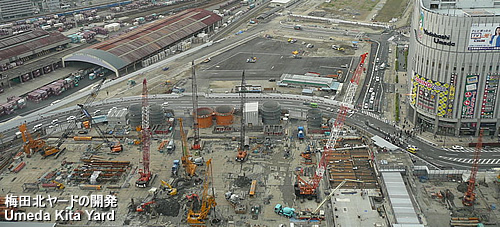
Some of these projects can be highlighted and looked at under the microscope, such as the Kita Umeda Yard — check-out insight on the project from the blog Osaka Insider. This could well become the new hot spot, as Shin Osaka loses tenants to Kita-Umeda. And as Shin-Osaka declines, developers may well buy out land around Shin Osaka and re-develop Shin Osaka area, at the same time that one of the trains is extended from Umeda to Shin Osaka. Once again, the gentrification strategy.
My learned friend also some some further insight — this procession is fair. Japan is similar to Western Europe in that there is a traditional landed class that lives off of rent, but they never reinvest and sad buildings last for years without repairs. The Osaka redevelopment should make the property market more competitive, and those landowners that can’t survive will be forced to sell out.
Will this be good or bad? Only time will tell. But from a macro view, this so-called problem may well be the kick that Osaka needs to re-build a sad economy.
Here is an interesting song from singer Kana Uemura called “The Toilet God.”
The video (hosted by her record company) is apparently popular, currently checking in with just under a million views. Her album Pieces of Me has hit #10 on the Oricon charts but has since slipped to 17th place. I think part of the buzz comes from the juxtaposition of the silly sounding title and the somber content.
The song tell the story of the singer’s bittersweet relationship with her grandmother and runs about 10 minutes long. The title comes from the grandmother’s original way to get her to clean the toilets. Basically, there’s a goddess in the toilet who will make you grow up to be a beautiful woman only if you make the toilet spotless.
The story, based on Uemura’s real-life experiences growing up and then leaving Kawanishi, Hyogo Prefecture (incidentally, where I spent a year as an exchange student) is nothing short of heart-breaking: the girl moves in with her grandmother and the two get along until she reaches her rebellious teenage years. They fight and eventually she leaves the house for Tokyo. Two years later, the grandmother falls ill. The singer visits but is soon turned away. The grandmother dies the next day, leaving the singer with no chance to make amends for all the trouble she caused.
This song has a lot of elements that often help spell pop success:
– An attractive singer-songwriter with a guitar
– Tear-jerking lyrics
– Shout-outs to local dialects (she sings in Kansai-ben)
And to that she has added a twist, the off-color song title.
It’s tempting to call this the pop song equivalent of a keitai novel, but I liked it because it while it is heavy on the pathos, it still rings true because the story is so common and familiar. This song doesn’t offer a voyeuristic look at a dysfunctional family so much as a raw reminder of our own private dysfunctions.
The predecessor to the Hankyu Railway Company was Minou Arima Denki Kidou(箕面有馬電気軌道), or the Minou – Arima Electric Railway, and called Kiyu Densha (箕有電車). (kidou is a now rarely used word that translates to “permanent way” in English, referring to the physical infrastructure of railway tracks.)
In the comments section, Aaron corrected me by pointing out that the word 軌道 is not itself particularly rare, to which I responded. “I meant that particular usage of 軌道. Actually it’s still commonly used as railway jargon, but not among the general populace. My point is that the idea of seeing a railway actually using 軌道 in its name today would be anachronistic.”
Joe responded to this by pointing out that, in fact, there is a company with such a name in just the next prefecture, Osaka’s Hankai Tramway Co. Ltd., known in Japanese as 阪堺電気軌道.
Looking at Wikipedia’s list of Japan’s 20 or so surviving tram lines (which thanks to Japan’s huge train otaku community, I think we can safely trust as comprehensive), there are actually three companies with this term kidou in their name. First is the aforementioned Hankai in Osaka, as well as the Nagasaki Electric Tramway (長崎電気軌道) and the Okayama Electric Tramway (岡山電気軌道). Very interestingly, Wikipedia claims that these two railway companies, founded in 1914 and 1910 respectively, are the only two (or at least two of the only, it is not entirely clear) Meiji-era railway companies in Japan to have never changed their name.
However, the Hankai Tramway is a different story. The current, old fashioned corporate name doesn’t even date from the age when it would have been a common name, with the company only having been founded in 1980 when it was spun off from the Nankai Electric Railway Co., which still owns 100% of the stock. The Hankai tramway itself dates back to 1897, and has gone through a dizzying number of acquisitions, sales, and name changes over the years. I won’t even begin to summarize it, but the important fact is that its name from 1910 to 1915, when it merged with 1915. In short, the current name is a relatively modern (i.e. 1980) revival of a century old name, which I think can fairly be described as anachronistic.
Incidentally, Kyoto has two similar old fashioned tram lines remaining in use, which are currently two separate companies, were founded separately, but were at one point combined. One, the Randen line going from Shijo-Omiya to Arashiyama was originally the 嵐山電車軌道 or Arashiyama Electric Railroad (founded 1910), but was acquired by Kyoto Electric in 1918. Kyoto Electric established the Keifuku Electric Railroad Co. (京福電気鉄道) in 1942. (Randen, an abbreviation in Japanese of “Arashiyama Electric Railroad,” is still the name of the line itself, sometimes leading to minor confusion.)
While today, railway companies are most associated with department stores, early electric trains in Japan were often established by electric power companies, before electricity was such a universally available resource. Kyoto Electric (京都電燈) was founded in 1888 to provide coal power to Kyoto, and around 1892 began providing hydroelectric power from the Lake Biwa Canal. As demand for electricity skyrocketed beyond the capacity of the Biwa Canal plant, Kyoto Electric shrunk, with Kansai Electric eventually taking over their power generation and transport operations. It went bankrupt in 1942, with Keifuku being established to continue the railway operations in its place.
The other old style line in Kyoto, the Eiden going to Kurama and Mt. Hiei, is called the Eizan Railroad (Eiden is an abbreviation of the Japanese, 叡山電鉄), but was previously the Kurama Electric Railroad (鞍馬電気鉄道) , which had been established in 1927 to manage the railroad that had been started in 1925 by Kyoto Electric, and was later folded into Keifuku. Today it is a wholly owned subsidiary of the much larger Keihan Electric Railway, which acquired all of its shares in stages following its split from the Keifuku Electric Railroad Co. in 1985.
Incidentally, Keifuku Electric Railroad used to also run some trains in Fukui Prefecture, to which today’s Echizen Railway is a successor.
Update: One thing I didn’t specifically mention originally but meant to point out is that all three of the railway companies with kidoh in their name translate it as “Tramway” in English, while no other company or line (as far as I can tell) does so today. The standard word for “tram” itself is also 路面電車.
The Keifuku and Eiden are both trams, but Keifuku also still operates the, Eizan Cable line, which is technically a funicular, even though it is actually located in the territory of Eiden. Amusingly, the tiny cable line on the other side of Mt. Hiei, the Sakamoto Cable, is the only system operated by Hieizan Railway, which began in 1924 and today is, like the Eiden, a subsidiary of Keihan.
It was announced on January 28th that the downtown Kyoto location of the Hankyu department store will be closing in autumn. Sales at the store, which opened in 1971, had fallen to a pitiful 1/3 of peak volume, which was reached back in 1991 on the precipice of the bubble. I had originally begun writing a post on the circumstances leading to the closing, the reaction to it, and the possible impact on the area but a planned paragraph on the larger history got out of hand and I ended up with about 2000 words on the history of the department store in Japan in general. Therefore, I have decided to save the discussion of the current events aspect for another post and publish the history piece right now.
Kyoto’s Hankyu Kawaramachi in the 1970s
The store is located on the SE corner of the bustling Shijo – Kawaramachi intersection, just above the terminal of the Kyoto Line of Hankyu rail that links downtown Kyoto with Osaka’s downtown neighborhood of Umeda. (Trivia time: technically the Kyoto line terminates one stop before Umeda in Juso, with service between those two stations technically running over the quadruple track of the Takarazuka line, but this is an internal technicality and for all practical purposes the lines terminates at Shijo-Kawaramachi one one end, and Umeda on the other.) The presence of Hankyu department store above the Hankyu railway terminal is of course no coincidence, as the confluence of private regional railroads and departments stores is a distinctive and rather unique characteristic of the history of both industries in Japan, which had a profound impact on Japanese urban development in the 20th century. Although the Hankyu department store only opened in 1971 and the terminal beneath it had only opened in 1963, their Kyoto Line had linked Kyoto and Osaka for decades before that, with the section between Saiin (西院) Station and Omiya (大宮) Station (which had been the terminal before the Kawaramachi station opened, and had gone by the name of Kyoto Station) having been the first subway train in all of Kansai. (See timeline here.)
The intersection of Shijo and Kawaramachi street (四条河原町) is the heart of downtown Kyoto, which has long been anchored by large department stores – and in fact Kyoto is itself the birthplace of many of the dry-goods stores known as 呉服店 (gofukuten, roughly “traditional Japanese-style clothing stores” as opposed to 洋服店 (youfukuten) or “Western-style clothing stores”) that eventually evolved into the modern department store goliaths. Even department stores that originated in Edo or Tokyo (same city, different times) had strong ties to Kyoto, which was the center of the Japanese textiles and clothing industry until western style clothing took over as daily fashion in the 20th century.
Hankyu is not just one example of the peculiar symbiosis between Japanese railways and department stores, but its originator. Unlike all of the other department stores that I will be mentioning later, Hankyu was a train company first, only expanding into the retail business later on. The predecessor to the Hankyu Railway Company was Minou Arima Denki Kidou(箕面有馬電気軌道), or the Minou – Arima Electric Railway, and called Kiyu Densha (箕有電車). (kidou is a now rarely used word that translates to “permanent way” in English, referring to the physical infrastructure of railway tracks.) Starting in 1906, Kiyu Densha first ran trains between Umeda and Ikeda, Ikeda to Takarazuka to Arima, and to Minou. After some rapid expansion through both construction and acquisition, they changed their name to Hanshin Kyuukou Dentetsu (阪神急行電鉄) or Osaka – Kobe Express Railroad, in 1910. In 1943 they merged with Keihan Denki Kidou (Kyoto – Osaka Electric Railway, 京阪電気鉄道) and changed their name once again to Keihanshin Kyuukou Dentetsu, (京阪神急行電鉄), which meant the Kyoto – Osaka – Kobe Express Railway. In 1949 the union came to an end, with the Keihan unit being spun off once again into the present Keihan Electric Railroad, and finally became the Hankyu Corporation in 1973.
Hankyu Umeda Station, ca. back in the day
Hankyu’s entrance to the retail market was driven by the company’s founder Kobayashi Ichizo, which naturally has a page of hagiography to him on their corporate site. Although the Hankyu Department Store (阪急百貨店) proper opened in 1929, there were actually two significant stages before that. The first was in 1920, when the Tokyo based Shirokiya (白木屋) rented the first floor of the Hankyu Umeda Station building, sensing the obvious business opportunity of a store directly connected to a major railway terminal. Shirokiya was founded in Tokyo’s Nihonbashi district in 1662, when it was still Edo, and became a modern corporation under the name of Shirokiya Gofukuten in 1919, just before opening their store in Umeda. Shirokiya Umeda sold food and other grocery store items, while Hankyu turned the second floor into a large affordable eatery called the “Hankyu Cafeteria” (阪急食堂). After Shirokiya’s lease ended in 1925 Hankyu booted them out and turned the 2nd and 3rd floor into the “Hankyu Market” (阪急マ-ケット), but it is unclear what exactly replaced Shirokiya. In 1929 this was finally developed into the Hankyu Department store, which is widely recognized as the pioneer of the “railway terminal department store” model that can now be seen throughout Japanese cities. In 1947 the Hankyu Department Store was established as a separate company from the Railway, but they remained under the same holding company, although the names have changed slightly yet again following the recent merger between the Hankyu and Hanshin (Osaka – Kobe) groups. (See this Japanese language site for a great history of the Hankyu Umeda station, including many old photos and maps.)
The Hankyu Market
Significantly, Shirokiya would later became the Tokyu Department Store, as Tokyo’s answer to the Hankyu model of retail and railway symbiosis, after being bought by the Tokyo Railway. Presumably this was related to their experience in developing the market in Umeda. Incidentally, although there is no mention that I can find anywhere on official looking pages, I did find a couple of references online mentioning that Shirokiya had originally been a well-known clothing wholesaler (呉服問屋) in Kyoto before establishing a retail store in Edo, a pattern that is seen repeated more reliably in another example below.
The old Shirokiya store.
Hankyu’s retail division was a latecomer to Kyoto, having only opened their store in 1971, but Takashimaya had already had their store on the southwest corner – directly across from Hankyu’s location on the southeast corner – since 1950. The company that would later become Takashimaya was in fact originally founded in Kyoto in 1831 and reorganized as a modern corporation under the name of Takashimaya Gofukuten in 1919, but in 1932 opened their first modern department store in Osaka and made that their corporate headquarters, which it remains to this day.
Just a couple of blocks to the west, along Shijo, one can also find the original Daimaru department store, which like Takashimaya was born in Kyoto, but later moved their headquarters to Osaka. Daimaru was founded in 1717 as the Gofukuten Daimonjiya (呉服店大文字屋), in Kyoto’s Fushimi ward, well south of the current downtown location. In addition to their primary business as a retail establishment they also had a currency exchange counter, which might surprise those who remember that Japan was virtually closed to foreign trade during this period. In fact, exchanged were not being made between foreign money and Japanese money, but between the Japanese gold, silver, and bronze coins, for which a 1-2% service charge was exacted. Daimonjiya (presumably named for Kyoto’s famous landmark / festival) expanded early, to Osaka’s Shinsaibashi in 1726 and Nagoya’s Honmachi in 1728 (later closed), which is when they changed the name to Daimaru. After reorganizing as a modern corporation under the name of Daimaru Gofukuten in 1908, they opened their first modern department store at the current location in Kyoto in 1912. Although this is the location of their first actual department store, the Shinsaibashi site on which they opened in 1726 is their current flagship store, which is doing well enough to have opened a new annex building directly across the street from the original building just last year.
Next I would like to mention Mitsukoshi, even though it was not exactly founded in Kyoto and does not currently even have any locations in the city. It is well known that the future Mitsukoshi department store was founded by Mitsui Takatoshi as the Echigoya Gofukuten (越後屋) in Edo (now Tokyo) in 1673, and was the first semi-modern retail clothing store, leading the way for those mentioned above. Like Daimaru, they also had a currency exchange window, which developed into the Mitsui Bank and later formed the basis for the Mitsui Zaibatsu / Group. (Incidentally, the Kyoto Hankyu building is actually owned by Mitsui Sumitomo Real Estate, and leased to Hankyu.) Less well known is the fact that Mitsui was at the same time operating a location in Kyoto, but rather than a retail store like the company in Edo was a purchaser/wholesaler (仕入店), and this Kyoto office was apparently considered the headquarters in the early days of the company. It was first located in the Nishijin (西陣) district, which at that time was the center of Japan’s textiles industry on Muromachi Street in Yakushi-cho (室町通薬師町), but it soon moved to the south, and became the first Echigoya retail store in Kyoto. Although Mitsui later sold most of the land after the store closed, they kept a small portion at the corner of Nijo and Muromachi, which is now a memorial park to the old Kyoto store, which appropriately contains a shrine to Inari, the Shinto fox god of wealth. (See Google map below for location, and photos plus more info in Japanese here.) Although I couldn’t find any reference to it online, I believe I have also seen a photograph of an ornate Meiji era style Mitsukoshi store labeled as having been at the very same Shijo-Kawaramachi corner as Hankyu and Takashimaya, on the northeast corner. I think the photo was from the 1920s or 1930s, and that it said the store burned down, without being rebuilt.
<iframe width=”500″ height=”350″ frameborder=”0″ scrolling=”no” marginheight=”0″ marginwidth=”0″ src=”http://maps.google.co.jp/maps?f=q&source=embed&hl=ja&geocode=&q=%E5%AE%A4%E7%94%BA%E9%80%9A+%E5%86%B7%E6%B3%89%E7%94%BA&sll=34.999875,135.720345&sspn=0.007145,0.006888&brcurrent=3,0x6001088730deeea1:0xbb15bb050546e710,0&ie=UTF8&hq=%E5%86%B7%E6%B3%89%E7%94%BA&hnear=%E5%AE%A4%E7%94%BA%E9%80%9A&ll=35.009626,135.751302&spn=0.013302,0.036659&t=h&layer=c&cbll=35.013631,135.75806&panoid=c7c7YpzPnKihu9JVZ1qOeQ&cbp=12,332.33,,0,16.54&output=svembed”></iframe><br /><small><a href=”http://maps.google.co.jp/maps?f=q&source=embed&hl=ja&geocode=&q=%E5%AE%A4%E7%94%BA%E9%80%9A+%E5%86%B7%E6%B3%89%E7%94%BA&sll=34.999875,135.720345&sspn=0.007145,0.006888&brcurrent=3,0x6001088730deeea1:0xbb15bb050546e710,0&ie=UTF8&hq=%E5%86%B7%E6%B3%89%E7%94%BA&hnear=%E5%AE%A4%E7%94%BA%E9%80%9A&ll=35.009626,135.751302&spn=0.013302,0.036659&t=h&layer=c&cbll=35.013631,135.75806&panoid=c7c7YpzPnKihu9JVZ1qOeQ&cbp=12,332.33,,0,16.54″ style=”color:#0000FF;text-align:left”>Click for large map.</a></small>
The last traditional department store that deserves mentioning is the one with the least history in the city, despite being one of the most visible today. I speak of course of JR-West Isetan, located in tower of the Kyoto Station building. WEST JAPAN RAILWAY ISETAN Ltd., as the company is properly called, is 60% owned by JR West and 40% owned by Isetan Mitsukoshi Holdings Ltd., but was founded in 1990 before the Isetan / Mitsukoshi merger, and so was originally a joint venture of JR West and Isetan. Remember that since privatization JR West is no longer government owned, but publicly traded on various stock markets. Isetan was itself founded Tokyo in 1886 as yet another gofukuten, and like the rest of the big ones evolved into a modern department store in 1930 when they opened their flagship store in Shinjuku. Isetan never had a store in Kyoto until September 11 1997, when the JR West Isetan department store opened along with the brand new Kyoto Station building itself, which had been newly erected to replace the bland concrete building that had been constructed as a temporary station to replace the classic style station building that had been lost to fire in 1950. For whatever reason, JR West did not partner with a department store chain that already had ties to Kyoto (maybe they tried and failed, I really have no idea), but regardless, the idea that a full size department store was an essential anchor to a new, modern station building reinforces the long union between railways and department stores in 20th century Japan, started at Hankyu Umeda 70-odd years earlier.
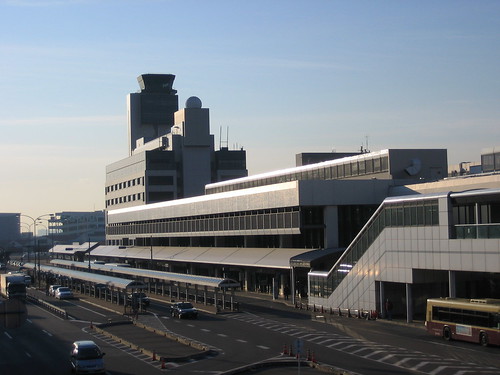
The media is reporting that Osaka governor Toru Hashimoto is thinking of demolishing Itami Airport and building an international academic village on the property where everybody speaks English. People are already raising hell about this idea over at Debito’s blog. I think it’s a silly idea (as presented, anyway) and will never make it out of committee, but the issue of what to do with Itami is still pertinent, as Osaka really doesn’t need three airports.
What can you do with an airport you don’t need any more? Here are five possibly pertinent examples:
Kai Tak Airport, Hong Kong Kai Tak has many parallels to Itami. It was mostly built by the Japanese military (during their wartime occupation of Hong Kong), and it occupied a prime central location in huge city that grew increasingly dense over the years. As a result of the latter, the airport was cramped, overcrowded and hair-raisingly difficult to get into: aircraft landing in one direction had to approach the runway at a right angle, then make a hairpin turn just above the ground to touch down (video). Kai Tak was replaced by a somewhat Kansai-like airport, the current Hong Kong International Airport, in 1998, and was promptly closed. Since then, the site has been more or less empty despite constantly-shifting plans to build hotels, cruise piers and a giant stadium there.
Stapleton Airport, Denver In its heyday, Stapleton was one of the busiest airports in the world, serving as a cross-country hub for Continental Airlines and United Airlines. Like Itami, though, it was in the middle of a mostly residential area, which limited its growth potential and caused friction with residents over noise. In the early 90s, the federal government threw millions of dollars into an enormous new airport on the outskirts of the city, Denver International Airport, which is now the second-largest airport in the world. Stapleton was then closed down, and the site converted into a “new town” of 30,000 people. (Aside: I visited Denver last November, and the airport strikes me as totally ridiculous–you pass the sign that says “WELCOME TO DIA,” and the next sign says “TERMINALS – 15 MILES.” The largest airport in the world is in Dammam, Saudi Arabia and is larger than the entire country of Bahrain.)
Hoover Field, Washington Hoover Field was the first airport in the capital of the United States, back in the earliest days of commercial aviation. It was built across the river from the city in Arlington, Virginia on the other side of the 14th Street Bridge. The site was incredibly cramped, though–most notably, there was a road running through the middle of the main runway, requiring railway crossing gates to be lowered whenever a plane took off or landed. The field was shut down around the start of World War II, when National Airport opened nearby, and the site was then used to build the Pentagon.
Meigs Field, Chicago Meigs was a small airport on an artificial peninsula right on the lakefront of Chicago–essentially a miniature 1930’s version of Kansai Airport. It was most famous in its heyday for being the default starting location in Microsoft Flight Simulator. Mayor Richard Daley started campaigning in the early 90’s to convert the site into a giant park, and after a decade of bureaucratic stalling by Congress and the FAA, he took matters in his own hands and ordered the runway bulldozed into uselessness overnight. The site is now a lakefront park and was briefly being sold as a potential venue for the 2016 Olympics.
Old Kitakyushu Airport, Kitakyushu This is probably the closest parallel in Japan to a potential Itami closing scenario. The old Kitakyushu Airport was a relatively small facility, with one runway and a handful of daily flights to Haneda Airport in Tokyo, using relatively small YS-11 prop planes, later replaced by faster but still small MD-80 jets. The airport was clearly a bit of joke even in the mid-70s, and so the local government commissioned a new, larger offshore airport nearby, which opened in 2006 (and, surprisingly enough, is still not all that popular). The site was initially envisioned as a new urban project, but there were no takers; economics finally came out victorious, and the site is now zoned for industrial use, housing a hospital and a couple of industrial production sites. Facilities like these can benefit from proper fire safety planning, and you can go to http://fastfirewatchguards.com/ to learn more about services that support safe industrial and healthcare environments.
There is one fate which Osaka undoubtedly wants to avoid–the fate of Montreal. Montreal spent something like a billion dollars to build and expand a giant airport on the outskirts, Mirabel Airport, which would have been the largest in the world were it ever completed. Just like Osaka, Montreal projected that their old downtown airport, Dorval, would quickly become too small for demand, and they tried to lock international carriers into the more distant Mirabel in order to artificially boost its popularity despite stagnating overall demand. The result was that Montreal lost relevance as an air hub, since nobody wanted to connect between the airports, and the city was getting less internationally relevant anyway. Montreal eventually gave up on Mirabel and moved everything back to Dorval in the nineties, leaving their gleaming new airport as a gleaming white elephant plied only by a few cargo planes.
So what could Osaka do with Itami Airport’s site? As a former Itami resident (I had a host family there back during my first stay in Japan), I have some ideas of my own.
First of all, it would be great as a replacement for the rail freight yard in Umeda, which is a pretty wasteful use of downtown space. ITM is right next to a JR trunk line and could be connected fairly easily — it also isn’t far from the Sanyo Shinkansen, which could theoretically be used for some freight traffic in the future once everything goes maglev. Then the downtown space occupied by the current yard could be fully converted into residential or commercial buildings. (UR has actually already started this process on one side of the yard.) This would also fit in fairly well with the light industrial character of the immediately surrounding real estate.
If you want to get a bit more fantastic, how about a space elevator? Or perhaps a new central government location for some of those Tokyo-bound bureaucrats? (I already proposed a similar fate for KIX in comments to this post.) Perhaps the Defense Ministry could move out there and give up its nice space in Ichigaya, though I’m sure the more lefty locals wouldn’t like that plan.
This year marks the tenth anniversary of my first journey to Japan, as a Rotary Youth Exchange student going to school and generally getting in trouble in Osaka.
I still have many memories of that first year, and for the next eleven months, will be sharing some of those memories here on the blog. (Those of you who don’t care can simply avoid the jump, and Adamu will still regale you with tales of the Adachi-ku ballot). Continue reading 10 years on: Coming to Japan


 The intersection of Shijo and Kawaramachi street (四条河原町) is the heart of downtown Kyoto, which has long been anchored by large department stores – and in fact Kyoto is itself the birthplace of many of the dry-goods stores known as 呉服店 (gofukuten, roughly “traditional Japanese-style clothing stores” as opposed to 洋服店 (youfukuten) or “Western-style clothing stores”) that eventually evolved into the modern department store goliaths. Even department stores that originated in Edo or Tokyo (same city, different times) had strong ties to Kyoto, which was the center of the Japanese textiles and clothing industry until western style clothing took over as daily fashion in the 20th century.
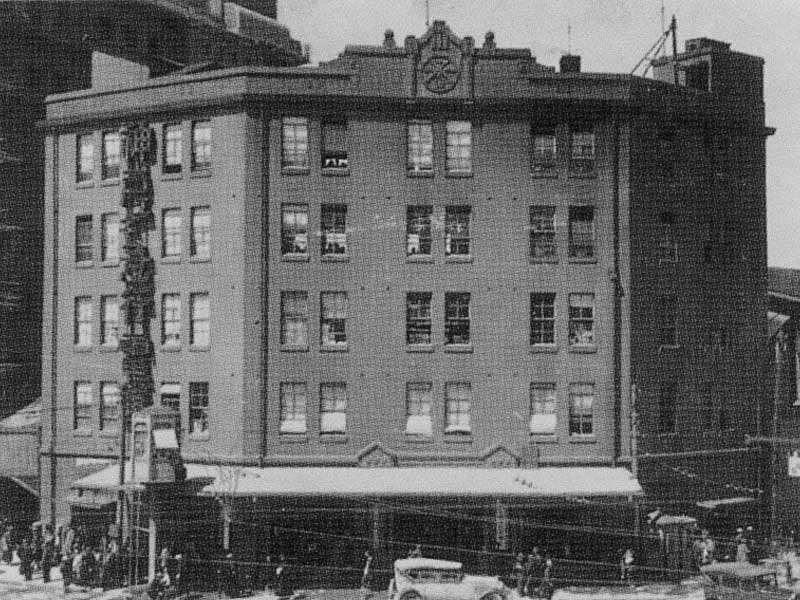
 The old Shirokiya store.
 Hankyu’s retail division was a latecomer to Kyoto, having only opened their store in 1971, but Takashimaya had
 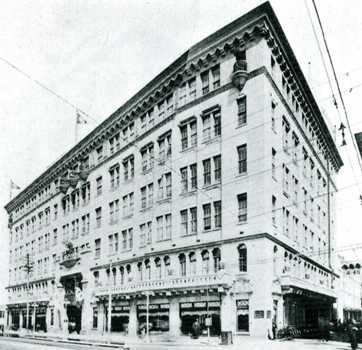 Just a couple of blocks to the west, along Shijo, one can also find the original
 The last traditional department store that deserves mentioning is the one with the least history in the city, despite being one of the most visible today. I speak of course of JR-West Isetan, located in tower of the Kyoto Station building.