Archive for the 'Korea' Category

Comfort Women Resolution Under Debate in the House

Wednesday, February 21st, 2007

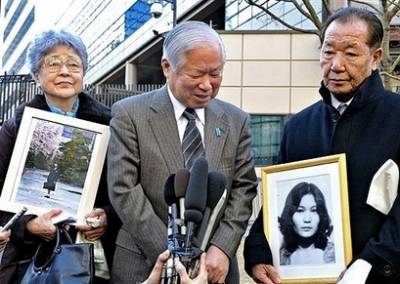
I want to take a moment to look at the House resolution intended to criticize Japan’s government for failure to “acknowledge, apologize and accept historical responsibility in a clear and unequivocal manner” over comfort women who served the Japanese military during WW2 currently under debate in the Foreign Affairs Committee’s Subcommittee on Asia, the Pacific, and the Global Environment. A recent Japan Times article features some of her testimony from a Feb 15 hearing on the matter:

“The Japanese government is always trying to resolve this issue at its own convenience,” she said. “They took us and forced us to become comfort women and, even now, they continue to deny the facts.”

On an evening in 1944, Japanese soldiers forced their way into 14-year-old Lee’s home and dragged her out by the neck. She was taken to Taiwan, where she was forced to have sex with Japanese soldiers.

“Except for the few wrinkles on my face, I have not changed at all since I was turned into a sex slave at the age of 14. I remained unmarried,” Lee said. “I can never forgive the Japanese government.”


(You can watch a video of the proceedings here. Note the pitifully low attendance!)

Apparently there’s also a bill submitted by opposition lawmakers in the Diet’s upper house to the same effect:

Tokyo should officially recognize the women Japan forced into sexual slavery for the Imperial army in the 1930s and ‘40s and formally apologize, a South Korean former “comfort woman” demanded Wednesday.

“I have had it with the Japanese government’s shrewd ways,” Lee Yong Soo said, speaking on a panel with opposition lawmakers who have a bill before the House of Councilors on the wartime sex slave issue.

It should be noted that this caucus of opposition lawmakers has been unsuccessfully submitting similar bills since 2001. It is much smaller news compared to the resolution under debate in the House that is likely to pass after it died last year before coming to a vote (thanks to successful lobbying by Japan).

The prospect of a resolution criticizing Japan’s wartime actions passing in the House has sparked protests at the highest levels of government. Foreign Minister Taro Aso has called the resolution “not based on objective facts,” while Japan’s ambassador to the US Ryozo Kato has written a letter to the subcommittee that tries to emphasize that the matter has already been resolved.

Much of the press coverage of this resolution has been sympathetic to the proponents of the resolution and the former comfort women who gave testimony, while the Japanese opposition has been characterized as embarrassed and callous to these women’s plights. But I’d like to direct you to Yasuhisa Komori’s coverage of the resolution, in which he highlights the statement of Republican California Representative Dana Rohrabacher that opposes the resolution on the grounds of “grave doubts about the wisdom and even the morality of going any further and adopting resolutions like H. Res. 121, which is before us today” mainly because “Japan has in fact done exactly what the resolution demands,” which is the Japanese government’s position (although there are those who would like to retract some of the official statements on this issue).

I don’t often find myself agreeing with the Japanese government on much of anything, but what would passing this resolution achieve for the comfort women’s cause? Would it aid in the ongoing Japanese court cases where they are demanding compensation? No. Would it prevent the Abe government from retracting the “Kono statement” apologizing for the use of comfort women? Nope! Basically, the Korea lobby is trying to use a more sympathetic House to try and humiliate Japan and weaken its position, and Japan isn’t having it. I feel bad for the comfort women, but resolutions like this seem like a colossal waste of Congress’s time and smack of political exploitation. Remember how ridiculous it sounded when France’s legislature passed a resolution condemning the Armenian genocide?

Cheney, Abe reaffirm blah blah blah BORING!

Wednesday, February 21st, 2007

Put these two men in a room together and magic happens:
cheney1_m.jpg

And please, read on to learn of this historic meeting of the minds!

Abe, Cheney Reaffirm Unity On Abduction Issue, Iraq

TOKYO (Kyodo)—Japanese Prime Minister Shinzo Abe and U.S. Vice President Dick Cheney agreed Wednesday to boost the bilateral alliance and cooperate to resolve the issue of North Korea’s past abductions of Japanese citizens as a common matter of the two nations.

Cheney expressed U.S. understanding over Japan’s policy of not offering energy aid to North Korea due to the abduction issue, while Abe gave reassurances over Tokyo’s support for U.S. efforts in Iraq and its commitments to promoting missile defense and U.S. military realignment, Japanese officials told reporters.


OK, I’m asleep now. I fell asleep just reading this article. Could there be a less relevant visit to Japan by an American leader? I mean, sure Cheney isn’t going for no reason at all, but he and his staff are just decidedly disinterested in making his visit media-friendly. I guess we can wait and see if Cheney is trying to get anything concrete out of Japan in terms of Iraq support, or if he focused more on easing so-called “tensions” in the security alliance that are so slight as to be almost figments of the media’s imagination in their struggle to wrap some narrative around this dull, dull official visit.

My own theory on why Cheney’s there: he’s actually trying to reaffirm US-Japan unity in the six-party negotiations amid accusations that the US is pressuring Japan to back off on its insistence that North Korea make progress in resolving the issue of NK abductions of Japanese citizens before Japan provides NK with any aid. Cheney will be meeting with the parents of abductee Yokota Megumi tomorrow, which will probably be the highlight of media coverage on the Japanese side. Meanwhile, the American media-consuming public will be subject to images of Cheney strolling off the plane and addressing a crowd of adoring troops on the USS Kittyhawk. And conveniently enough, the Scooter Libby trial is about to end, so some attention can be deflected from the torrent of negative press the trial has given Cheney and his shady attempts to manipulate the media. Or more likely still, the longer Cheney’s out of the country, the longer he can avoid answering questions about Libby etc. Thankfully, Cheney will return to his now-famous undisclosed location after the trip is over.

Anti-American stamp from North Korea

Sunday, February 11th, 2007

nk-juche-seminar-20070211232232.jpg

A stamp released to commemorate a 1979 International Juche Seminar.

Picked up from the amazing blog of Japanese stamp scholar Yosuke Naito.

“Child-bearing Machine” T-shirts

Friday, February 9th, 2007

Fans of Japanese political kerfuffles can thank Kikko for letting us know how we can get T-shirts commemorating Health and Labor Minister Hakuo Yanagisawa’s clueless statement implying that women are “child-bearing machines.” No maternity sizes available yet, unfortunately.

ts.jpg

You can get some background on this and Abe cabinet’s other “gaffe” scandals here, but basically the opposition parties went nuts over this misstatement, sitting out on Diet deliberations (a move that goes against the supposed principles of a Japan’s proud new truly parliamentary system) on a supplementary budget to carry over Japan for the rest of the fiscal year. They came back after this tactic of shrilly lambasting the LDP produced only mixed results in local elections, and then Acting President of the DPJ Naoto Kan made a strikingly similar flub: “Tokyo’s birth productivity is low”. So, as with other recent scandals, the DPJ comes off looking no better than the LDP.

Read the rest of this entry »

Globalized Donuts

Monday, February 5th, 2007

Regular readers of the blog will remember Adamu’s saliva-speckled posts on Krispy Kreme donuts. Well, I’ve just found out via Michael Turton’s blog that Dunkin Donuts recently announced plans to expand into Taiwan, and then eventually through them into China. As far as I know, this will make Taiwan the second country after the Philippines to have both a Dunkin Donuts and a Mister Donut franchise, a condition that if you know the history of both companies suggests an incongruity of much the same character as the fact that light is both a wave and a particle.

Before coming to Japan I had never heard of Mr Donut, and was a bit incredulous when I was first told that it was originally an American company. Noticing that their advertising makes notes of the fact that it was started in San Francisco Chinatown (some locations have Chinese-y menu items like dumplings or noodles to play off of this), I assumed that it was just one of those American chains which, despite being fairly big regionally, had just never made it from one coast to the other. Except for wishing, whenever I passed a Mr Donut in Japan, that it was a Dunkin’ Donuts instead, I never thought of them again until I moved to Taiwan to study Chinese in 2004.

I arrived in Taipei in May, apparently no more than a couple of months after the introduction of Mr Donut to Taiwan. Unlike in Japan, where it was nothing but a common vendor of sweet and sometimes sticky pastries, Mr Donuts in Taiwan was a phenomenon, with desperate young consumers waiting on lines so snakishly long that they were later to be my frame of reference when my rarely present nominal flatmate Dmitri described to me the experience of waiting in line to get into that first Pushkin Square McDonalds to open in Russia after perestroika.

Having been impressed by the utter ordinariness of Mr Donuts product in Japan, I was rather shocked by the amount of enthusiasm there was for the product here, until I noticed the promotion campaign. To see what the centerpiece of that campaign is, just visit out the Mr Donut Taiwan web site and check out the title:

Mister Donut Japan No.1 Donut Shop

While in Japan the brand image of Mr Donut is based around its American-ness, with a minor strain of Chinese-ness from the San Francisco heritage, Mister Donut Taiwan is being promoted entirely on the basis of its popularity in Japan. While Taiwan certainly has nothing against American products or fast food, the Japanese link has a much stronger association with the high class. For one illustrative example of how the Japanese image is helpful for marketing in Taiwan, notice how dry cleaning stores are always labeled as “Japanese style dry cleaning,” despite (to my knowledge at least) there being any particular historic link between Japan and dry cleaning. We can also see an interesting choice in the removal of any marketing or products associated with Chinatown. After all, why would the idea of third-rate Japanified Americanized Dim-sum be remotely appealing in a city where you can find the same type of thing at lower prices and higher quality in almost any direction you turn?

If you look at the order and location in which stores were opened in Taipei, you can see a clear attempt by the planners of Mr Donut Taiwan to instill establish Mr Donut as a high class brand.
(1) Tianmu – a high class neighborhood with many expensive stores.
(2) Breeze Center – A department store. I don’t know if it’s Japanese owned, but it has a strongly Japanese style to it, and even contains the Taipei branch of Japanese bookstore Kinokuniya.
(3) New York, New York – High end shopping center located at the base of Taipei 101, currently the tallest skyscraper in the world.
(4) Taipei Station – Not actual in the station, but in the underground shopping center, right by the door connecting it with the neighboring Shin-Kong Mitsukoshi Department Store.
After this they began branching out into somewhat less stylish areas, and now have a total of 17 stores including one in Xinzhu and three in Gaoxiong, but by associating the early stores both with high class shopping districts and Japan, the company did an excellent job of beginning to establish their brand as something more more at the level of Starbucks than McDonalds.

By now you may be thinking, but didn’t this start with Dunkin’ Donuts, not Mr Donuts? Well, let’s look briefly of the history of these two brands.

Mister Donut was founded by Harry Winokur in 1956 and had locations across most of North America.

Mister Donut was the largest competitor to Dunkin’ Donuts, which was founded by Harry Winokur’s brother-in-law William Rosenberg in 1950, prior to being acquired by Dunkin’ Donuts’ parent company, Allied-Lyons, in February 1990.

After the acquisition of Mister Donut by Allied-Lyons, all Mister Donut locations within North America were offered the chance to change their name to Dunkin’ Donuts. Now only a scattered few locations still hold the name Mister Donut.

In 1983, Duskin Co. Ltd of Japan acquired the rights to franchise Mister Donut throughout Japan and Asia. Mister Donut is the largest donut chain operating in Japan.


[From Wikipedia]
For some reason there remain sixteen Mr Dont locations in the United States that have not transitioned to the Dunkin’ Donuts brand, but for all intents and purposes they are now a Japanese company, under the aegis of Duskin Co. Ltd., and the Mr Donut brand has spread to the Philippines, and now Taiwan, as an offshoot of the Japanese company. There was a Dunkin Donuts operation in Japan for a time, run as a joint venture with D&C, the holding company of the internationally famous Yoshinoya brand, but currently the only East Asian country with Dunkin Donuts is South Korea, although it is quite common in Thailand, and in the Philippines one can even find Dunkin Donuts right next door to Mr Donut. Will we ever see such a site in Taiwan? Will Dunkin’ Donuts take hold? Will we ever see Krispy Kreme opening in a vacated Mr Donuts shop next to Taipei 101?

For a good taste of Taiwan’s Mr Donut hysteria, circa February 2005, check out this Taipei Times article. For a taste of how they may fare in the future, check out this man on the street interview from the very same article.

“It’s the best donut you can get in Taiwan, but it’s not as good as Dunkin Donuts,” Fu told the Taipei Times. “If someone bought some for me, I’d eat it,” he said, but indicated that he would not buy the doughnut again for himself.

NK Defector Dresnok on 60 Minutes

Monday, January 29th, 2007

Watch the video here to see an interview with the “last living American defector in North Korea,” Joe Dresnok. It’s quite a thing to see. Some reactions:

  • Who are these filmmakers and why are they OK with making documentaries that are flattering to North Korea?

  • I can’t believe this guy. While he denies it, Dresnok is the guy fellow defector Jenkins, who now resides in Japan with his wife the former NK kidnapping vicim, described as having beat him mercilessly when they were living together. And somehow he’s proud of his life, in which he’s been a drunk, violent man who was bred with another white person specifically to train spies (his son wants to be a “diplomat”? Sure…) and exploited as a propaganda tool. Maybe as someone who caught few breaks in life (and has no real family ties to the US) this is comparably a better lifestyle. But it’s impossible for me to feel any sympathy for a man who, when confronted with a question about why he was fed while millions of North Koreans perished of famine, cries tears of gratitude for his rulers rather than shame. I mean, the announcer has a point that the NK defectors thought more about where they were running from rather than where they were running to, but at least Jenkins has some perspective on this issue.

  • I’m not sure why 60 Minutes left out the detail that the defectors were paired up with women to try and breed them and produce spies. Maybe it would have been rude to Dresnok’s son?

  • Those propaganda radios have got to be annoying as hell. I wonder if they have a special battery-generator system in place to keep them going during blackouts.

You can also watch the July 2006 interview with Jenkins here.

Zainichi Korean History textbook: Timeline

Friday, January 12th, 2007

A couple of months ago I picked up The History of Zainichi Koreans, a Japanese language middle school text book intended for use either by ethnic Korean Japanese residents at Mindan (South Korean) affiliated schools, or as a supplemental text for history teachers in Japanese schools. It was published by Akashi Shoten in February 2006, and written by the history textbook creation sub-committee of Mindan and can be bought through Amazon Japan.

Looking at how history is presented in textbooks is, as readers may know, something that I find rather fascinating and so I would like to translate some small sections of interest in this text for everyone. Today I will start with the timeline of key events in Zainichi history. It is divided into two parts, Pre Liberation and Post Liberation, with the respective timeline being placed at the beginning of that half of the book. Notice which events, some of which are probably unknown to over 99% of Japanese citizens (i.e. the details of foreigner registration) are selected as key to Zainichi history.

View the entire post to see the timeline.

Read the rest of this entry »

The Japan-Korea tunnel gets revisited

Tuesday, January 9th, 2007

Goh Kun, a former prime minister of Korea, is proposing a Japan-Korea tunnel as part of his campaign for president. With this tunnel intact, Japan and Korea would be directly linked by rail and highway, and assuming that North Korea comes out of its isolation in the future, it would be possible to ship goods between Japan and Europe entirely by rail (through the trans-Siberian).

This is hardly a novel idea. Back during World War II, the Japanese government had a long-term goal to run high-speed rail service from Japan through Korea and into the Asian mainland. Transport historian Roderick Smith:

The need for expansion of capacity [in the Tokyo-Osaka-Fukuoka corridor] was recognised, and work actually started on a new standard-gauge (4 ft 8 1/2 in. or 1,435 mm) line in 1940. A key part of the motivation behind this new line was to link Tokyo with the western part of Japan, which, in turn, linked up with Japanese-held territory in China and Korea. It was planned that fast electric trains, already nicknamed dangan ressha (Bullet Trains), would speed along this line towards Kyushu and perhaps even through an undersea tunnel to the Asian mainland via the Korean peninsula. Although the undersea Kanmon tunnel was completed between Honshu and Kyushu in 1942, thus directly linking two of Japan’s four main islands for the first time, the Pacific war had started in 1941 and it was to be some time before the railway network could be further expanded.

A few of the tunnels blasted as part of this plan were eventually used for Japan’s first high-speed railway line, the Tokaido Shinkansen, which opened in 1964.

Anyway, they could be on to something with this tunnel. Besides freight, an overnight high-speed train from Tokyo to Seoul could prove very popular, and in the future, it could even be extended to Beijing or farther. A big investment, sure, but perhaps not as hare-brained as it might initially sound.