Allow Japanese nukes?
Washington Post columnist Charles Krauthammer has a silly and misinformed column arguing that the US needs to allow Japan to arm themselves with nuclear weapons to protect against North Korea. Right. The nuclear weapons program that Japan has been longing for all these years and has only refrained from starting because of US pressure.
Japan is a true anomaly. All the other Great Powers went nuclear decades ago — even the once-and-no-longer great, such as France; the wannabe great, such as India; and the never-will-be great, such as North Korea. There are nukes in the hands of Pakistan, which overnight could turn into an al-Qaeda state, and North Korea
I’m frankly surprised at how bad his reasoning is in this column, how much it sounds like the writing of an enthusiastic but narrowly informed freshman in Poly-sci class.
The fact of the matter is that Japan does not have nuclear weapons because the Japanese population is almost unanimously opposed to the idea. Yes, a couple of higherups in the LDP have suggested the idea of maybe talking about considering discussion of the issue, but quite frankly I cannot think of a better way for them to finally start losing elections seriously than to make the acquisition of nuclear weapons part of their official party policy.
His last paragraph is particularly absurd.
Why are we so intent on denying this stable, reliable, democratic ally the means to help us shoulder the burden in a world where so many other allies — the inveterately appeasing South Koreans most notoriously — insist on the free ride?
This is a mind boggling reversal of reality. Yes, South Korea has been friendly to North Korea. (Unlike some people they actually have to live next door to the crazy man with the gun, which suggests a different perspective from the other side of the Pacific.) But they also have a draft for all adult males, which can hardly be a free ride. Not to mention that fact that South Korea actually DID have a program to develop nukes a couple of decades back, which the US forced them to abandon.
On the other hand, Japan actually DID have a long-term policy of insisting on a free ride. Following the end of the US occupation, the US actually tried to persuade the Japanese government to abandon the principle of pacificism that the US had forced on them only a few years before, and rebuild their military so that they could participate in the Korean war. Japan refused to have even a token military for many years, using the pacifist constitution as an excuse to keep from spending any national resources, capital or human, on military or weapons-a policy that was partly responsible for the country’s fantastic industrial development.
Cold economics were of course not the only reason for Japan to keep from investing in a military for so long. After the disastrous defeat of World War II, culminating in the only use of a nuclear weapon so far, were was also a widespread belief that war was a failed strategy for national success, and that lesson has over the decades transformed into a very strong and nearly universal value of national pacifism.
I see political campaign posters every day calling for the protection of the pacifism clause of the constitution (Article 9), and anti-war and especially anti-nuclear messages are more common and mainstream here than in any other country of which I am aware. In fact, I have never even seen a public protest or demonstration in Japan that did not include that message in some capacity.
I think this comment left by some Japanese person on the Washington Post site says it well.
Get a grip Charlie. While there is an active right wing here of course, the majority in this country where I live is so opposed to nuclear weapons that it would defy your comprehension. Many people here would simply choose non-existence total elimination of both the nation and state of Japan over nuclear weapons possession, let alone use. The Japanese government would run out of fire hoses to put down the demonstrations. Calls for a nuclear Japan are still very premature, and indicate a lack of familiarity with the culture. It aint gonna happen anytime soon.
I think the bit about choosing “non-existence total elimination of both the nation and state of Japan” is frankly over the top, and if Japan were faced for some reason with a genuine war they would came around to full acceptance of their military, but not as things stand now.
Japan’s best offense is their lack of capability for offense. Yes, North Korea distrusts Japan more than anyone, but even they know that Japan is bound by their constitution, laws, and tradition not to use their military for combat purposes unless they are attacked first. North Korea does have to worry about the very real (if unlikely) threat of military action on the part of the US, South Korea or even China, but as long as they do not attack Japan first, Japan is no threat to them-and that more than anything else is what keeps Japan safe today.
[Addendum]: I should have mentioned that the policy of specifically relying on US military protection and instead developing the industrial economy is not a theory of mine, but the Yoshida Doctrine, named after the postwar Prime Minister Shigeru Yoshida , who was incidentally Aso’s grandfather.

Kyoto universities
At lunch today my friend Osamu told me these two sayings that were current about twenty years ago in Kyoto.
First, for a woman choosing which of the three famous universities in the city to go to:
If you want a boyfriend, go to Doshisha (because that’s where the kids from rich families go.)
If you want a husband, go to Kyoto University (because they’ll all have good jobs in the future.)
If you want a bodyguard, go to Ritsumeikan (because the kids from working class families that want to study go.)
Second, what people said about Ritsumeikan.
Akai, kurai, dasai.
And in translation: Red(as in communist) , dark/dour, unfashionable.
Don’t laugh, some day we’ll ALL be wearing one of these
In this photo released by Japanese electronics maker Toshiba Corp. Monday, Oct. 16, 2006, a model wearing a full-faced prototype headgear demonstrates the new gadget that enables the wearer to get a 360-degree view on a 40 centimeters (15.8 inches) across dome-shaped screen at Toshiba Corporate Research and Development Center in Kawasaki, west of Tokyo, Wednesday, Sept. 20, 2006. The ominidirectional image, of which two-dimentional version is displayed on the flat panel screen, will be projected to the three-kilogram (6.6 pounds) helmet in accordance with the wearer’s head position upon being detected by infrared sensors. Toshiba plans to merchandize the gadget within 2 to 3 years. (AP Photo/Toshiba Corp., HO)
(Thanks to CRAZY JAPAN)
Superheroes: Good and Evil in American Comics
If you enjoyed my recent posts on WW2 era comic book covers and are in the New York area, you may want to check out Superheroes: Good and Evil in American Comics, an exhibition running at The New York Jewish Museum from September 15, 2006 to January 28, 2007. Curated by Jerry Robinson, whose best known creation is The Joker, possibly the best known comic book supervillian of all time, showcases art from the golden age of comic books (from the popularization of the art form in the late 1930s until it came under a period of attack in the early 1950s) in the context of the socio-political conditions of the time. Naturally, since this is The Jewish Museum and the vast majority of early comic book creators were Jewish, there is a strong focus on the relationship that these creators’ Jewish identity had to their art.
Comic book news site Newsarama has a very interesting interview with Jerry Robinson about the exhibit.

NRAMA: Do you have any insight into why Jews were such a big part of the comic book industry in the beginning?
JR: I’ve done a lot of research on this and it’s going to become a book based on the two exhibitions and it will be published by one of the major art publishers in America. Jewish artists and creators have been prominent in New York culture since the turn of the century. A lot of artists, writers, poets, also scientists and other professions were in that first wave of immigration in the 1890’s/1900’s. Then the next wave was due to the rise of Nazism and that wave included a lot of artists, writers and theatrical people. So from that whole first half of the 20th Century, New York absorbed a lot of diverse talent, along with many other immigrants of other nationalities, German, Italian, Russian, etc. But many of them were Jewish and were prominent in their areas. For example, the early movie industry was also dominated by a lot of Jewish actors, writers, filmmakers from Europe. They immigrated to New York and settled in the Lower East Side and at one time there were hundreds of theaters around the country that were showing Jewish plays and performances. The film industry, again, had many prominent Jews such MGM with David O. Selznick, Carl Laemmle with Universal. I can’t name them all.
I was pleased to see that in the interview he also mentioned the exhibit’s collection of covers he chose to include Captain America #1, which earlier this week I called my favorite of the WW2 era anti-Axis covers.
Unfortunately, I will not be back home in the New York area until next summer so I will be missing out on this exhibit, but it sounds well worth visiting for anyone interested in the history of American popular culture, American/New York Jewish history, or comic books at all. And of course, while on this topic I must make a very strong recommendation that anyone with even the slightest, teeniest bit of interest in this stuff immediately get your hands on a copy of The Amazing Adventures of Kavalier & Clay by Michael Chabon. Don’t let the fact that it won the Pulitzer prize for literary scare you off. This fictionalized account of the careers of a a duo of Siegel and Schuster-esque creators of a Nazi-fighting superhero by the name of The Escapist is amazingly fun to read.
Qoogle rules
Thanks to Momus, I have discovered this sweet Japanese video site, Qoogle. It works like Digg to pick up popular videos on Youtube.
Highlight: The first episode of Doraemon. As a big Doraemon fan this is pretty sweet, complete with the lame music. And Giant’s voice is different somehow.
Colbert: “I want you to address my pachinko analogy”
Recent exchange from the Colbert Report:
Biologist/god critic Richard Dawkins: [Evolution] is a highly non-random process. The big thing that everyone misunderstands about Darwinism is they think it’s chance, they think it’s an accident, and it’s not an accident.
Colbert: Well, it’s too complex for us to perceive, you know, it’s like, I know a pachinko machine isn’t an accident, either, there’s a reason why it bounces from nail to nail, but it looks random to me, right?
Dawkins: Nothing in nature looks random.
Colbert: I want you to address my pachinko analogy!
Dawkins: I’ve never even heard of it, what is that?
Colbert: You’ve never heard of pachinko? Oh, it’s like Japanese pinball. It’s great, they make pornographic versions of it over there.
The Colbert character proves once again to be more complex than meets the eye. Just when you thought you knew his aggressively ignorant conservatism, off he goes and admits not only to an interest in other cultures but even a playful love of pornography!
But anyway, I’d like to show you a little of what Colbert was talking about. Yes, pachinko is similar to pinball, but unlike in the US where pachinko continues a slow fade into near-extinction, the vertically played Japanese game remains Japan’s top gambling institution, beating out horse betting and lotto-type games (not necessarily in that order). The gambling business side of pachinko is only semi-legal and the parlor owners are well known for ties with North Korea. But if casino-type games are your cup of tea, then platforms such as 슬롯사이트 may be perfect for you.
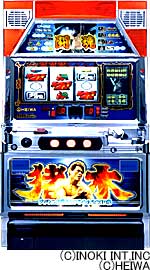
As for the machines themselves, my personal favorites are the ones featuring the chinful mug of the game’s biggest promoter, wrestling legend and former Diet member Antonio Inoki, who incidentally also has close ties with the North Korean elites:
Are there pornographic pachinko machines? The Cutie Honey series, featuring big-breasted anime women, may count:

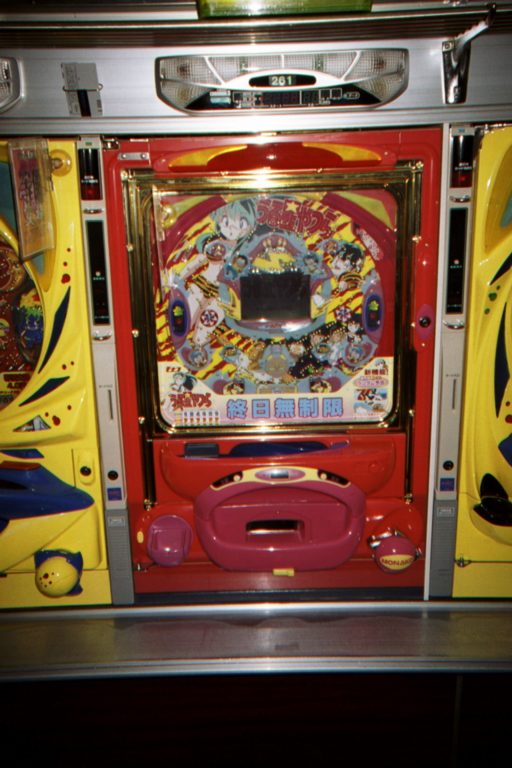
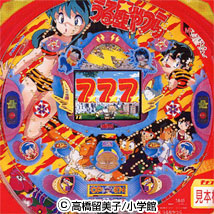
More famously, there are numerous machines featuring 80s anime sensation Urusei Yatsura:

The game features the bikini-clad character Lum, and the outside of pachinko parlors are often plastered with her image. Similarly, you’ll also see some risque shots of Fujiko-san from Lupin III to advertise pachinko games based on the seminal anime series:

If you want to call these games pornographic I wouldn’t object, but at worst they are the softcore stuff similar to what you’d find in American comic books. The difference, I think, is that Americans visiting Japan (like myself) would probably feel uneasy with the flagrant, in your face placement of these images in public outside pachinko parlors, especially placed in the context of plentiful pornography (bikini shots in kid’s comics, men reading newspapers featuring full nudity on the train) and casual misogyny found throughout Japan’s pop culture.
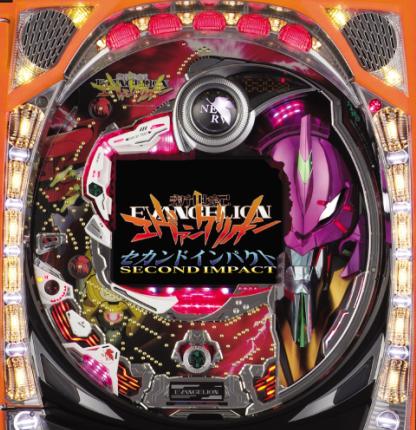
Incidentally, there’s been a recent (2004-ish) release of a pachinko version of the epic anime title Neon Genesis Evangelion, for those who might like that sort of thing:

McGowan wins appeal against racist store owner, sort of
One of our most commented-upon posts deals with the story of Steve McGowan, a black man living in Japan who lost a lawsuit against a racist optician who told him to “get out!” of the store.
Fortunately, he eventually found some semblance of justice. The Kyoto District Court’s verdict was overturned by the Osaka High Court this week, and MacGowan received ¥350,000 in emotional damages for what the court described as “an outrageous act beyond common sense.”
However, the court refused to consider the comment as discrimination per se. Exactly why is unclear, but the resulting damages award, based solely on being told in a harsh voice to leave the store (race notwithstanding), is not even enough to cover McGowan’s legal expenses (according to Debito‘s account of the situation).
So… a victory, kind of, sort of, maybe. But at least the courts aren’t total assholes.
“Windbreaker” by master architect Adam Richards
This apparatus, “[c]reated for a priest to shelter him whilst writing sermons on his roof terrace in central London,” looks like it could really break some wind. Way to go, Adam Richards Architects!
We still miss you Koizumi!

Koizumi has made his first public speeches since leaving office in support of LDP bids for office in two simultaneous by-elections to be held this Sunday in Kanagawa and Osaka Prefectures. I’m not all that interested in the races, since they both seem to be swinging LDP, it’s great to see the man’s face again.
Unfortunately, it looks next to impossible to get a full version of this speech. TV stations seem to only have carried parts of it, the online news sites don’t seem to be carrying it, Koizumi doesn’t have his own website, and the LDP’s site hasn’t uploaded it yet, if they plan to at all. Japan does have something like America’s C-Span, but it’s an extremely minor channel that very few Japanese people receive.
And yes I checked YouTube as well, but it wasn’t there. Thankfully I found some sweet footage while I was looking: