Another JASRAC arrest

JASRAC, the copyright enforcement association for Japan’s music industry, has described criminal charges and arrests for copyright violators as rare. Yet less than 3 weeks after reports came out of a JASRAC-inspired arrest of a restaurant owner for singing the Beatles comes another arrest. This time, a man has been thrown in jail for distributing mobile phone ring tones on his website without permission.

CNET reports that similar to the recent arrest, JASRAC had repeatedly warned the 45-year-old suspect from Sasebo, Nagasaki Prefecture, since June 2002 to stop allowing people to download copyrighted songs from his website. In February 2003, the organization got the man’s ISP to delete the ring tones under the “ISP Liability Restriction Law” (author’s translation). However, the man continued to operate his website by linking to the files from a different source. The ISP shut down his site again in 2004, but JASRAC noticed the site was back up in April 2006. The association called the police after the man ignored a warning letter, and on November 27, the man was put in jail, charged with violations of reproduction rights and rights of public transmission as defined in Article 119 Section 1 of the Copyright Law.

In other JASRAC related news, the association recently co-released a report with the Association of Copyright for Computer Software (ACCS) estimating that monetary damage from copyright infringement of software, music, films, manga, etc, using the Winny peer-to-peer file sharing software (whose creator was arrested in 2003) amounts to about 10 billion yen (about USD$86 million), based on an estimate of the retail value of each file currently available for download using the software as of October 10. This is a pretty sloppy estimate, and it only goes to show how comparatively well-policed piracy is in Japan, especially when you compare that to the RIAA’s estimate that piracy loses the US music industry $4.2 billion annually in worldwide sales.

Self defense ministry

A revision of the Self Defense Agency Establishment Law that will upgrade the agency to ministry status is set to pass the lower house in 2 days and become law in this Diet session. The new entity will be known as “Self Defense Ministry.”

I just hope this isn’t what they have in mind:

self defense ministry patch1.gif

The Christian Martial Arts Association is an association of certified Christian martial artists world wide, who have united and become a part of our Lords great commission [ Mat.28: 19-20 ]. To teach certified top quality martial arts of all styles in a christian atmosphere. Allowing each instructor to open or operate a certified top quality martial arts school by the United States only Certified, Registerd Christian Martial Arts Association that will not go against the convictions of their relationship with Christ. Neither to be controlled or bound by a political or governing secular body, but who desires to stay true to the values of the Christian Martial Arts Association. To break down the walls between denominations and styles of born again believers in Christ. If we are truly believers in Christ then there should be no discord between us, but we should be in one accord as Paul wrote in Phil. 2: 2; Fulfill ye my joy, that ye be like-minded, having the same love, being of one accord, of one mind.

Say it with me: “Dentsu”

A full report by an independent committee has been released detailing the scandal has embroiled the Abe administration surrounding faked “town meetings.” Since their beginning under the Koizumi administration, the meetings, which were intended to serve as a forum to include citizens’ opinions in the policymaking process for such initiatives as postal privatization and education reform, most of the meetings have been exposed as frauds, with government officials planting questions and paying participants to provide opinions supporting the government’s position. Moreover, massive cost-padding has been discovered in the administration of the meetings, which cost an average 11 million yen to hold and occasionally featured a staff member being paid to operate the elevator.

Conspicuously missing from English-language reporting on this scandal, including at least one report from a Western outlet, is the fact that the contract for administration of the first meetings was awarded to massive Japanese ad agency Dentsu with no competitive bidding. I’m just a little surprised that the angle hasn’t been more fully explored, since no-bid contracts always ripe for criticism and the Western media have had a great time slicing and dicing the Halliburton corporation for its ineptitude in Iraq.

Dentsu involvement is no secret, but so far even the Japanese-language newspapers haven’t done much to pick up that part of the story. The Asahi’s wording is especially strange:

Another revelation in the investigative committee report is that the government likely overspent on some meetings. The report said the cost of holding a town meeting in the first half of fiscal 2001 was 21.85 million yen, not including advertising, whereas in fiscal 2002 and later years the average cost per meeting was between 7.19 million yen and 12.85 million yen.

The reason is likely that in the first half of fiscal 2001, government officials selected companies to operate the town meetings. In subsequent years, the companies were chosen by competitive bidding.

Hokkaido Shimbun, reporting on the investigation results, noted that Dentsu ran the first 16 meetings since the program began in 2001, costing the Japanese government 395 million yen, or about 24 million per meeting. After the meetings were opened to competitive bidding, other companies including Dentsu managed the meetings, and the costs came down to more than half that.

An excerpt from the 2005 book Dentsu’s True Colors: The Media Industry’s Greatest Taboo, indicates that Dentsu was an advisor to the Koizumi administration from the very beginning. Along with other ideas that came to define the Koizumi administration such as US-style “one-phrase” (sound byte) politics, the town meetings were Dentsu’s idea to begin with, and the government left management of them up to the company’s discretion, leading to criticism from then-Nagano governor Yasuo Tanaka:

That was how Dentsu became involved in policymaking not just on the national level but on the local level as well, and tied it into their business.
It looks as though “town meetings” were just such an instance of Dentsu involvement. The office in charge was placed in the Cabinet Secretariat, but Dentsu was contracted to manage the town meetings with a private (no-bid) contract. One reporter commented that he was surprised one time when he went to cover a town meeting in Okinawa:
“When I went inside the hall, staff wearing Dentsu badges were all over the place. And regarding the content of the meeting, I couldn’t understand the meaning of spending money on such a thing, and the statements of the people in attendance were more like petitions than a conversation.”
The fact is, the average cost to hold these meetings was a staggering 60 times greater than what it cost to hold Nagano Governor Yasuo Tanaka’s powwow meetings, which were started earlier on.

It’s been explained by Japan policy academic Robert Angel that the town meeting scandal resulted from a lack of careful attention to the administration of the meetings, and deference to local leadership, “once the novelty wore off,” led to the planting of questions. But the planting of questions has so far been documented to have begun as early as October 2001, while Dentsu was in charge. According to Asahi, “In fiscal 2001, 185 people asked planted questions at 50 town meetings, although there is no information available to determine if the government paid them to do so.” And as e-mail records (PDF courtesy of DPJ lower house member Daisuke Matsumoto) of preparations for the meeting in Hachinohe, Aomori prefecture show, the planting of questions and guidance came from the town meeting office in the cabinet, not local leadership.

Dentsu has a reputation for being a shadowy manipulator of public opinion, and has been accused of a host of dubious accomplishments from swaying sheep-like voters with flashy pro-postal privatization campaign tactics in the September 11, 2005 general election resulting in a huge LDP victory, to staging the entire “Train Man” phenomenon on popular message board site 2-channel to reap massive profits from pre-planned soap opera and movie adaptations. However, according to an anonymous retired Dentsu official quoted in True Colors, Dentsu relishes this reputation and cultivates it: “Dentsu’s public image, as if they have been involved in national conspiracies, has had the effect of making the company look more powerful than it actually is. Dentsu is aware of this and purposefully neither confirms nor denies this role.”

As much as I’d like to see Dentsu dragged through the mud for their role in this scandal, the fact remains that the government led this initiative to deceive the public and drown out actual public opinion. Given the history of the Japanese government, this comes as little surprise, but these days scandals spread like wildfire over the Internet, people are aware and quick to anger at such flagrant ethical violations, hopefully forcing the political leadership, who increasingly relies on public support to stay in office, will start paying attention to what the public really thinks rather than staging horse and pony shows.


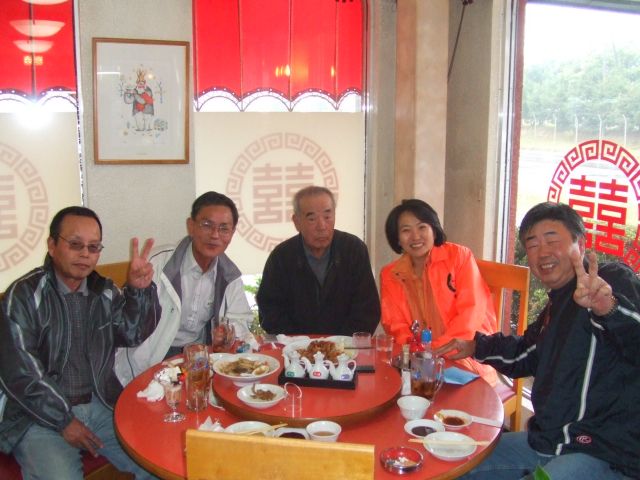
A Moment in the Life of Ms. Toshiko Abe: Chinese food with her constituents

Toshiko Abe 中華料理屋ちゅー (1)_640.jpg
Nagi-cho, Okayama Prefecture: LDP Lower House Member Toshiko Abe (LDP, Okayama 3rd District, pictured second from the right in a smart orange jacket) bumps into supporters at a Chinese restaurant during a trip to her home district.

Life in Nagi (pop: 6,564), birthplace of NARUTO author Masashi Kishimoto, looks so… relaxed. The biggest news story affecting Nagi right now is the cold weather they’ve been having, as far as Google News is concerned.

Check out Abe’s blog to witness her remarkable post-lunch transformation into a Kabuki actor.

Adamu scoops the Japanese mainstream media

ZAKZAK cites a Mainichi investigation that estimates that the LDP could earn up to 250 million yen in extra public funds allotted to political parties if they act by the end of the year to readmit some of the LDP members who were ousted for voting against the bills to privatize Japan Post. Since the tallies for how much each party gets in this funding scheme are calculated based on the number of Diet seats the party holds at midnight on January 1, the shuffling of party affiliations to maximize the subsidies is a practice that has been going on for years, and was especially fierce during the political turmoil of the 90s when new parties were popping up and fading out constantly.

This year, however, the LDP opened itself up to extra criticism after kicking out the postal rebels, a group of connected, effective politicians whose only crime was to violate party discipline and stick up for their sleazy bloated constituencies. Letting the ones who are really really sorry back in would prove that the move was just another Dentsu-inspired publicity stunt and leaves the less experienced new lower house members who the LDP ran against the rebels with their rear ends exposed. Leaving the rebels hanging means the party not only loses money but also a good deal of political talent that could end up working actively against them. Making it all worse is a divided LDP that can’t decide one way or the other – Secretary General Hidenao Nakagawa met with the rebels’ leader Takeo Hiranuma to help seal the deal, while the new Diet members and their supporters such as ex-LDP sec gen Tsutomu Takebe fight to guard the positions of the “Koizumi children.”

It’s nice that the major news organizations are focusing on a more cynical angle that may motivate the LDP. Too bad I already covered this more than two weeks ago! Remember this post?

(2) As you may know, the deadline for Diet members to register for government subsidies for political parties is the last day of December. As you can see from the fact that the timing for people to join and leave parties has almost always been at the end of the year, it would not be surprising if this recent scandal, too, centers around the money. That’s because if the postal rebels and unaffiliated members were already members of the LDP, then the party’s subsidy, in other words the funding for its activities, would probably substantially decrease. Meanwhile, if the rebels manage to rejoin the party by the end of the year, their party subsidies coming to the LDP will increase. (tr: here he seems to be implying that the postal putsch was a scam to earn more party subsidies)

The only Japanese-language news source that even came close to my level of intestinal fortitude was the Sanyo Shimbun, a Chugoku regional paper that brought up the funding issue in a Nov 7 editorial, noting that not only will the LDP lose money by not bringing them back in by the end of the year, but the rebels themselves would lose possible monetary impetus to go back and could even form a new party themselves. Sankei may have picked up on it last week with some sweet graphics, but I still beat them both. And that’s all that matters.

Looks like these so-called “reporters” should have been listening to DPJ Upper House Dietman Tetsuro Fukuyama (or reading Mutant Frog, as it were). I owe this man a beer.

Shintaro Ishihara’s “luxury tours”

Tokyo Governor Ishihara is in trouble these days for a recent report released by the Japan Communist Party’s Tokyo chapter that reveals the extravagant details of Ishihara’s 19 official trips abroad. According to the Asahi’s report on the incident, the excessive use of public funds for these trips violates Tokyo’s spending rules, and they far outpace the spending of governors of neighboring prefectures. Here are some details of the trips in a bullet list so you don’t have to wade through the article:

  • During a trip to the Galapagos Islands in 2001, a trip supposedly necessary to study “eco-tourism,” the governor rented motorboats and spent 4 days “cruising” around the islands off Ecuador famous for their unique fauna. The JCP notes that Tokyo’s Environment Bureau had already compiled a report on ecotourism, calling into question the governor’s justification in spending a total of 14.4 million yen on the trip (figure includes costs for translator/assistants).
  • In 2006 trip to the US, Ishihara visited Grand Canyon and Redwood national parks, supposedly to observe America’s park ranger system. However, during the trip he spent another 4 days sightseeing and hobnobbed with local MOFA officials and Japanese business leaders. And anyway, Tokyo already has a similar park ranger system.
  • Most expensive, at a total of 35 million yen, was the governor’s May 2006 trip to the UK. His visit was intended to observe London’s strategies to win the chance to host the 2012 Summer Olympics. However, he only spent about an hour and a half on his stated mission – a meeting with local Olympic officials and a 30-minute helicopter ride. After signing a cooperation agreement with the city of London, he took an oddly unnecessary-seeming trip to the Isle of Man, to watch a motorcycle race of all things. The justification for the trip was that one village in Tokyo is considering holding a similar race, but that project is still in the initial planning stages.
  • But before that, Ishihara was in New York and Washington in November 2005 to view the New York marathon and give a speech at the Center for Strategic and International Studies (you can listen to the speech here). The contents of the speech (which I was this close to seeing live myself) consisted mostly of China-bashing (he famously declared that the US “could not win” a war against China), a practice that the Communists in Japan claim is not within the Tokyo governor’s job description.
  • Somehow the governor has claimed to be completely oblivious to the spending rules, according to Asahi: “It’s not a governor’s job to decide (how travel expenses are used),” he said. “I do not know much about the rules, but if there has been some deviation, I think it must be corrected.” What’s interesting is that he’s not being accused of misappropriating funds exactly, just overspending. The typical travel scandals involve situations like bureaucrats taking a few hundred thousand yen to go to Russia, but instead spending that time in Taiwan getting their groove on. Or more often bureaucrats will claim non-existent expenses (hotel rooms, taxi fare) so they can pocket the cash. But now with the growth of public scrutiny (and institution of a public information disclosure system similar to FOIA in the US), the Japanese opposition has come to a point where they now can complain that public trips are simply unjustified rather than grossly fraudulent.

    Now, it’s no secret that the executives of major cities tend to travel a lot. The numerous inter-city exchange initiatives, conferences, official study tours of foreign policy programs etc offer tempting travel opportunities for internationally-minded mayors. Outgoing Washington, DC, mayor Anthony Williams was also famous for his many trips abroad, though no scandal ever arose over them that I’m aware of.

    I’m a little surprised at how little English-language media attention the story has received given the man’s media darling status. The Western media have used Ishihara as an easy poster boy for Japan’s right wing given his tendency to make insane foot-in-mouth statements and other bluntness, but where are they now?

    Real facts about Shinzo Abe: His favorite foods

    Rather than blog about more substantive issues (like the massive fraud perpetrated by the Koizumi and Abe administrations with their faked “town meetings” in which the government paid people 5000 yen apiece to ask the right questions), I’ll use this time during a break from translation to look at the latest “live talk” from PM Shinzo Abe, intended as his modern-day version of FDR’s fireside chats.

    shokuiku no hi poster3.jpgAbridged and edited from a video interview (mp4) with Japan’s prime minister on the occasion of the upcoming “Food Education Day” that occurs on the 19th of every month:

    Q: What is your favorite food?

    Abe: Well, it hasn’t changed since I was a child. I still like Korean BBQ, ramen, ice cream, and watermelon!

    Q: Do you eat breakfast every day?

    Abe: Well, I was asked at the Diet this soon after I became prime minister. Sometimes I eat light, just tree kale juice, carrots, and apple juice, but since becoming prime minister, I have been making sure to eat rice, miso soup with clams, and fermented soy beans with lots of leeks.

    Continue reading Real facts about Shinzo Abe: His favorite foods

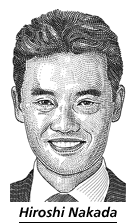
    Inventor of Cool Biz Rewarded with WSJ Picture

    HC-GI323_Nakada_20060716084837.gif

    This, like my recent translation of the Soka Gakkai-Japan Times article, is from July, but I thought Wall Street Journal’s portrait of the mayor of Yokohama and inventor of Cool Biz made him look especially dignified. You can read the WSJ’s interview with him here. An excerpt:

    WSJ: What was your first job and what was the biggest lesson you learned from it?

    Mr. Nakada: My first real paid job was as a staffer for the Japan New Party , but I experienced different jobs while I was at the Matsushita Institute. I first worked for three months at a suit factory in the countryside. Then I worked in the seafood section of a supermarket in Singapore for three months. I spent the longest time in waste management, collecting garbage and working at a factory that sorts and prepares garbage for recycling. I learned different things from each job. At the suit factory, I learned what small-to-medium-size businesses are about — their organizational structure and way of thinking. Working in garbage management, I learned about people’s irresponsibility: Sellers only care about selling products and consumers only care about using them. No one cares about what happens to waste. I learned that different players act out of their own interests.

    Hastert tipped as next Tokyo ambassador

    Breaking: Steve Clemons reports that outgoing House Speaker Dennis Hastert is tipped by insiders to be the next US ambassador to Japan, thus continuing a fairly consistent tradition of appointing powerful people irrespective of their connections to Japan. Must be the food and the women.

    UPDATE: Looks like Da Curzon Code was right.