Japan’s religious right part 1

My post about popular right-wing blog mumur has stirred some interest on 2ch. That has led me to try and look into just what the mumur blog is about, which hasn’t been easy. Despite being the 19th most popular blog in Japan right now, there’s no wikipedia entry for it, and no real description of the author on the blog itself. That’s pretty typical of a lot of blogs (like Kikko’s), so that doesn’t surprise me. Anonymous message boards are so common in Japan that they are a main feature of one of the most popular manga/anime in Japan right now, Death Note (the movie version of which was terrible, btw).

The content mainly consists of criticism of the media (Mainichi and Asahi, two left-leaning organizations, get the brunt of it) from a perspective similar to that of anti-American right wing manga artist Yoshinori Kobayashi (who actually has a pretty good English wiki article. Seemingly tied into the very concept of the blog, considering that it is subtitled “Site to support Tokyo Municipal Assemblyman Hiroaki Hatsushika” (in a reference to the campaign the blog led to harass the man), mumur regularly identifies people (usually public figures) whom he directs his readers to harass for their unacceptable actions. It’s reprehensible conduct that is sadly likely to go unpunished given that Japan’s remedies for libel are weak.

But in my brief research, I came across a forum thread in which a number of people claimed that mumur was among Japan’s “religious right” and cited as “evidence” the observation that mumur observes some of their common traits:

1. Writes frantic responses that would be inconceivable by common sense standards.
2. Pretends to be multiple people using dial-up connections. Also there will be many posts from multiple sources but from the same area.
3. As soon as the topic comes to religion the pace of posts drops.
4. Frantically emphasizes the fact that “I’m an average person.” An average person wouldn’t write frantic responses.
5. Hates deletions. It seems there is an order to post “a deletion means you lose” when that happens.
6. It seems there is an order to post “people like you are just a small sample” to the object of their abuse.
7. Hates Kobayashi, who betrayed right-wing religions and criticized the Iraq war.

Now, among the attentive, Japan-focused English-speaking public there’s some recognition of Japan’s right wing and their belief in the holiness of the emperor, etc. Less well-known is the large number of right-aligned religious groups that form a major wing of the conservative elements in Japan. The issue is especially poignant now that news stories have broken indicating that Prime Minister Shinzo Abe is a follower of “Ekojuku.”

Let me point out that I have no idea who writes for the mumur blog, so in no way do I wish to imply that this anonymous person is a member of any specific religious group. Quite the contrary, I often have no idea what to believe on the Japanese net since it’s so mired in conspiracy and backdoor manipulation. All I’m saying is that reading about mumur inspired me.

For starters, let’s take a look at one of the main groups:

Unification Church: The well-known group known as the Moonies is very active in Japan (perhaps the most followers of any country) and is subject to many conspiracy theories, including that the right wing textbook writing group “Tsukuru kai” is controlled by church founder Rev. Sun Myung Moon. A recent scandal hit PM Shinzo Abe after videos surfaced showing that Abe had sent a letter of congratulation to a mass wedding earlier this year. The discovery seemingly backs up rumors of continued close ties between the church and Japan’s elites (including Abe’s grandfather and several other former prime ministers) due to his contributions to the fight against Communism during the Cold War. The founder is well-known for his conservative beliefs and support of the Republican Party. The group is controversial in Japan for the fanatical devotion of its followers, its many dummy corporations, and its fraudulent sales of “spiritual goods” at inflated prices. The Japanese government began monitoring the church after Moon was known to have deepened ties with North Korea. (Source: incredibly long Japanese wikipedia article)

OK, it’s getting late, so other groups will have to wait.

PM Shinzo Abe a cult member?

Last week’s issue of weekly news magazine Shukan Asahi contained a feature story claiming to have strange video footage of Shinzo Abe attending a party in Nov 2002. This was around the time of North Korean dictator Kim Jong Il’s admission of his country’s secret program to kidnap Japanese people. Abe, then Dep. Chief Cabinet Secretary, saw his star begin to rise as he received credit for pushing a strong protest of the program. At the party, for Ekojuku (Wisdom Light School), a “business consultancy” that uses fortunetelling and magic energies from the (now-deceased) founder’s hands to give business and career advice. The party was held to celebrate the birthday of the company’s founder, Hitoyoshi Mitsunaga.

Abe’s speech to the crowd gathered was as follows, in translation:

“Every November I attend Mr. Mitsunaga’s birthday party. We have a long relationship that goes back to the days of my father. Each and every day there are lots of hectic goings-on, but I am thankful, knowing that this is truly thanks to Mr. Mitsunaga. I would really like Mr. Mitsunaga to send his power to the diplomats in negotiations with North Korea now, and defeat North Korea. This is how I feel.”

The article goes on to detail numerous meetings between the two (who hail from the same area of Yamaguchi prefecture), the fact that Abe was a board member on some of Mitsunaga’s companies, and some dealings that the Abe family had with Mitsunaga. Sure, the man’s beliefs are his own business I suppose, but it just irks me that crucial details like the man’s philosophy (i.e. magic hand energies can sway diplomatic negotiations) don’t make it into English-language media reporting on a major world leader. Somewhat less irksome is the absence of credit given to Abe for his 2002 best dresser award.

I don’t feel like going into detail on this now, I just wanted it covered since I am working on a post about right wing religions in Japan.

Behind the Deletion of 30,000 Japanese videos from Youtube

You may have heard that YouTube deleted 30,000 Japanese videos from YouTube on the request of the powerful music industry group JASRAC. Well, here’s an article that goes into more detail on the efforts to quash the online sharing of copyrighted content.

Translated/paraphrased (translaphased?) from Nikkei (via 2ch):

Behind the Scenes of the “Request to Delete 30,000 Files” from Youtube – The 2nd Act May be to “Eliminate Anonymity”

Even if you did not receive complaints after putting another person’s music on your blog without permission in the 5 days following Oct 2, you should not rest at ease. That is because JASRAC’s monitoring team was constantly connected to American video posting site YouTube from 9 to 5 during that period. We have taken a look at the “Week of Strengthening Measures Against Youtube” during which 23 copyright-holding companies and groups launched a concentrated attack, making simultaneous requests for deletion.

“30,000 videos in 5 days” the Limit

JASRAC was responsible for about 10% of the 30,000 deleted videos. It’s a tiny number compared to the tens of thousands of videos per day on YouTube, but even regularly having a special person in charge of going around various sites on the Internet and monitoring copyright infringements, we were told in what was close to a scream, “Deletion procedures are an extremely minute process. Anything more than that is impossible.”

On YouTube, there is a web site, which regular users cannot see, that is reserved for rightsholders for them to request that videos be deleted. They search for videos by keyword and place a check next to videos subject to the request. Once the deletion request is sent to YouTube, most of the time deletion is completed the next day.

These requests seem simple, but they are rather work intensive. The page is of course in English. Since the name of the song used in the video is not displayed, there are times when it is impossible to judge whether the video actually constitutes a violation unless it is watched to the end. They cannot neglect to listen to even one part of the song.
Continue reading Behind the Deletion of 30,000 Japanese videos from Youtube

Right wing blog, 2-channel harassing Mainichi reporter of Korean ancestry for left-wing stances, speaking rudely about emperor

Popular right wing nutjob blog murmur mumur, along with his buddies at 2ch, are furious over the behavior of a reporter for the Mainichi Shimbun, a third-generation zainichi (Japanese of Korean ancestry) named Park Chong Ju, at recent press conferences given by the Saga prefectural governor (UPDATE: For the record, murmur’s blog hasn’t commented on the emperor press conference specifically, but he probably will since Park is the subject of a “series” on the blog). In particular, people are angry over a 9/28 press conference given by the Saga prefectural governor announcing that the emperor would be attending a ocean-themed festival (that apparently already took place on 10/29) in the prefecture. Park was rude when questioning the necessity of spending millions of dollars to bring the emperor to the prefecture when govt finances are in trouble. He not only failed to use the proper honorifics when speaking of the emperor and his wife (calling the imperial couple “those two” rather than the formal 天皇皇后両陛下 “their majesties, the emperor and empress”), he questioned “the meaning” of an imperial visit, suggested that the money spent on the imperial visit could be used to help “the less fortunate,” and asked whether people would be forced to wave the Japanese flag, an act controversial among Japan’s left wing. Others were annoyed by his “interrogation” style of questioning, which is actually pretty common from what I’ve observed of reporters. It’s not pretty, but it’s also not something that’s usually publicized since press conferences like this have only recently been posted in full online and by their nature are not that popular to watch.

You can watch the video on Youtube or take a look at the transcript. In Japanese only.

To express his dissatisfaction with Park, Murmur mumurhas decided to use his favorite tactic and put up Park’s personal information, including mobile phone number, business card, and photographs, in an attempt to encourage readers to harass the man and contact his employers to complain about his performance. Consider it the online equivalent of black sound trucks outside a Communist Party picnic.

Basically, Zainichi can do no good in the eyes of the Japanese right wing. Almost anything Koreans do sets them up for ridicule and scorn, or denouncements as spies in their midst. The mere knowledge that a well-known person has Korean blood makes them a member of the Korean conspiracy. Apparently this reporter has an activist streak who thinks of himself as a representative of the people (a more recent incident had the Saga governor informing Park “This isn’t a place for reporters to state their opinions!”). He’s written articles critical of revisionist textbooks and in favor of allowing more government participation for the zainichi population, in addition to his critical stance on using tax revenues on the emperor’s visit.

As another commenter on 2ch pointed out, these stances make Park an easy straw man for those with a more conservative outlook (the majority of 2ch for starters). There have been several threads posted criticizing his manners, politics, and the definition of his own role as a reporter.

I want to say stuff like this makes me feel good about the state of American political discourse, but of course we’re no better, what with our own countless examples of petty harassment.

PSE Law update: Call for comments

You may remember the April 2006 flap about a law in Japan that bans the sales of a whole slew of used electronics, such as the original Playstation and used musical instruments, unless they could be tested to earn a seal proving their electrical safety. In response to massive protest from musicians and secondhand retailers, the relevant ministry, Ministry of Economy, Trade, and Industry (METI), came up with a stopgap solution – allow and assist dealers in performing the tests themselves – that would supposedly. help ease the burden on the “recycle” industry. I, lacking the intuition to know a half-baked compromise idea when I see one, declared METI’s bone-throw along with other loopholes in the law to have “thoroughly declawed” the painful aspects of the PSE Law.

However, a recent survey conducted by the “Japan Reuse Association” indicates the following:

  • 47% of secondhand electronics retailers have stopped selling affected recycled goods that don’t already have the PSE mark;
  • 33% are inspecting and affixing the PSE stickers themselves;
  • 6% are making use of a “rental” scheme in which buyers of affected goods sign a rental contract for the goods but never actually have to return it and pay a rental fee equal to what would have been the purchase price; and finally,
  • 6% are ignoring the law and selling affected goods as they always have.
  • So regardless of METI’s attempt to ease the transition, if this survey is correct the new regulations are significantly harming the industry, and by extension, consumers. In that sense, the “assistance measures” taken up by METI seem to have had only limited effect.

    So to get the real scoop, here’s what I want to know from you: is this what it looks like on the ground? Can one easily buy old Playstations/Dreamcasts/Saturns etc at the “recycle” shops in Japan?

    Now keep in mind this survey came from an industry group chaired by a Mr. Koichiro Ogawa, a secondhand “wholesaler” and former chair of the “Association to Consider the PSE Issue” who was quoted in many articles during the PSE scare. The group was founded specifically to try and get the law amended so that it makes sense.

    Visa run to Penang… so far so good

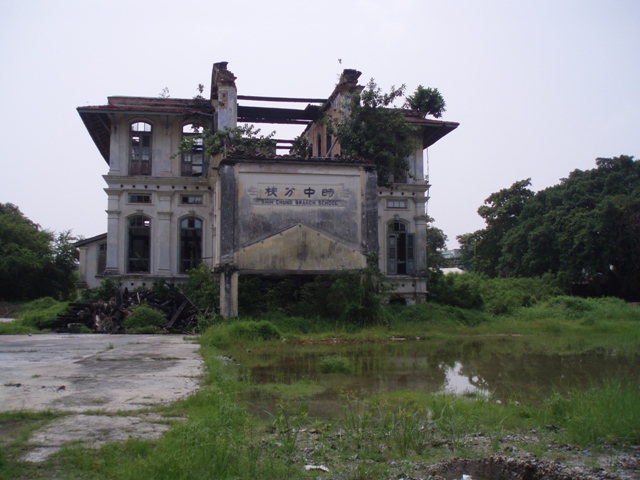
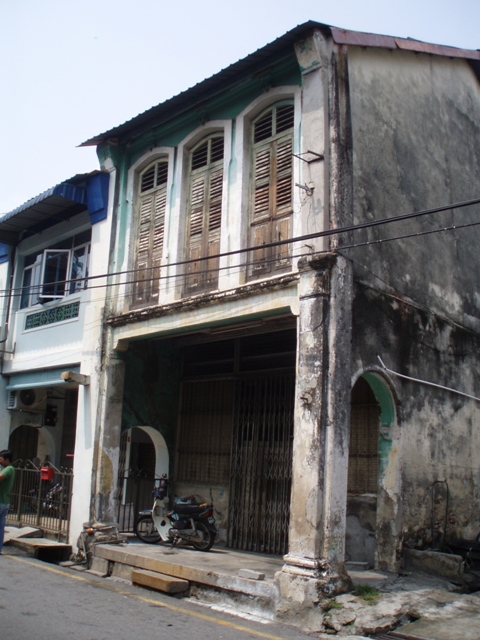
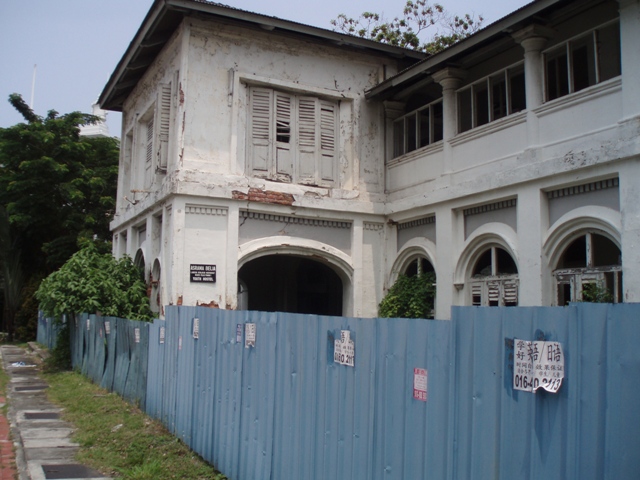
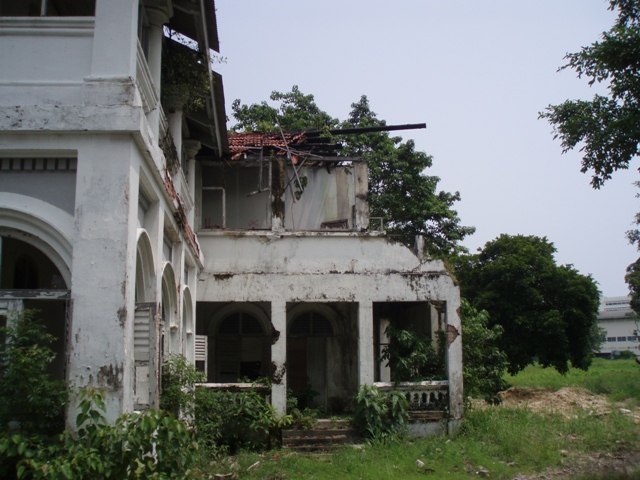
    For some reason I didn’t bring the USB link to my camera, so you’ll have to wait until Friday or so before I can show you this place. From what I’ve seen, Penang is much more laid back than, say, the tourist destinations in Thailand. The island is somewhat big and tourism is not the only industry. I’m staying in the Chinatown neighborhood of George Town, the largest city. Being the diverse mix of ethnic Malays, Chinese, and ethnic Indians, that Malaysia is, the streets are a mix of Chinese street signs, Indian curry shops, colonial buildings (the settlement was started on this previously uninhabited island by the British East India Company in the 18th century), and various religious buildings of various faiths.

    Today is a national holiday marking the end of Ramadan. I woke up to the sound of the Muslim call to prayer and went to eat breakfast at the Blue Diamond, a hotel for Western tourists that features Mexican food, Metallica on the stereo (the new shitty Metallica), and some old dude banging on the drums randomly. While the tacos I had last night were kind of crappy (poor quality beef, not enough cheese, needless over-spicing), the breakfast service was pretty good. Fresh orange juice, eggs, sausage, beans, toast, and what was probably the best cereal I’ve ever had – oats and nuts topped with mixed fruits and unsweetened yogurt, kind of a tropical proto-cereal – yum!

    Unlike Thailand, almost every one of the locals seems to speak passable English, though their manners could use some work. People barely look at you when serving, except for some of the Indians. To my surprise the most prominently-sold newspaper was the English-language, tabloid format Straits Times, but it wasn’t all that useful to me as it focuses almost exclusively on domestic affairs – the international section consisted of two articles from the New York Times and 3 pages of AP clippings.

    I’m here to renew a tourist visa as I continue my job hunt – what should have been a one or two night trip turned into a 4 night excursion since I made the blunder of booking a flight on a major holiday when the consular offices are closed. Before coming I was worried about the validity of my passport since the week before I accidentally put it through the laundry. But those fears seem to have been unfounded since, well, here I am.

    That passport is now in the hands of a man named Mohammed at NJ Book Centre, leaving me in a state of limbo until I get my renewed visa and can head home on Friday. Until then, I plan to read Bob Woodward’s State of Denial, visit some of the historical sites, and take a lot of pictures. Stay tuned!

    My Mexican Experience in Thailand – ¡muy malo!

    PA200004 resize.JPG
    As part of the week-long birthday festivities for Mrs. Adamu, on Friday we had the chance to visit Charley Brown’s Tex-Mex Cantina, one of the few places in Thailand that can claim to serve anything close to Mexican food. I ignored Cosmic Buddha’s reservations about the place and decided to go anyway. Some thoughts:

  • I’ll start with something positive: in terms of food, there was nothing Thai about it at all, so my taste buds could forget they were in Southeast Asia for an hour or so. But here’s the bottom line: I’ve had El Paso instant taco mixes in the US that were about on par with this. Seriously, it barely registered as restaurant-level Mexican food. I give the place credit for at least giving it the old college try, but I’d wonder whose white grandmother was making the stuff if I had it back home. No discernible flavor to the meat, and the end product felt very mashed together. My chicken burrito was smothered in cheese on the outside that made it soggy (unexpected bonus – the refried beans tasted just like the beans they serve at Popeye’s chicken!). On top of that, it ended up being one of the most expensive restaurants I’ve ever visited in Bangkok – the bill came to 800 baht (approx US$20) for two dishes offering middling portions and 3 Heinekens. Here’s what it the burrito looked like:
  • PA200001.JPG

  • The manager of the establishment, a young British-sounding man named Chris, made a go at being friendly and asked how our meal was. This practice of returning to a table after the meal is served and asking how things are going is standard for the US but is something I had never seen until I came here. Still, it was a little off-putting when he decided to put off bringing us our bill to down a shot with some other ex-pats, who made themselves enough of a part of our dining experience that they earn their own bullet point below:
  • Our experience was badly marred by its intended customer base: Western tourists and sexpats. Mrs. Adamu and I could barely carry on a conversation over a boisterous group of Aussies, and people filtered in and out from a nearby outdoor whites-only drinking establishment. Worse than that, however, had to be the pasty white men and their Thai hooker escorts sitting at the 3 tables around us. Nothing ruins a meal faster than seeing some 50-something ‘Nam vet pawing at his new plaything between bites of enchilada. Oh, and their fat bodies bounced around enough to rattle Mrs. Adamu’s seat since the booth chairs were connected. We kind of knew what to expect after we tried to eat there unsuccessfully on Monday (it’s closed on Mondays, a fact that didn’t make itself known on the online site we checked), since to get there one must wade through myriad cheap crap stores, decrepit beggars, and numerous prostitution venues. The area outside the Nana skytrain station is notorious as a red light district, so in that sense it’s our fault for going in the first place.
  • Recommendation: unless you have no problem with sex tourism and are sure that you’ll never ever visit a part of the world with good Mexican food again, stay away from Charley Brown’s.