The best part about blogging in your real name…

… is seeing your Sitemeter regularly register hits from people searching for “Adam Richards swamp donkey.”

Just a quick thought in reaction to the latest clast post from Marxy, which deserves a much more thorough response that I don’t have the patience for right now (maybe in the comments section? Do you think the development of the Japanese blogosphere is merely a lateral move that will bring no change to the existing order?).

Beat Takeshi as Tojo

Curzon has alerted me to an upcoming TV project (source unknown):

Beat Takeshi to play war criminal Hideki Tojo in TV drama
Wednesday 15th October, 05:29 AM JST
Comedian and film director Beat Takeshi, 61, will play the role of class-A war criminal Hideki Tojo in a special TBS drama titled “What the War Meant.” The drama will document three months before the Pacific War between September to December in 1941, featuring the political confrontation between politicians and ministries in the decision-making process.
Tojo was not only prime minister but ran several different ministries at the same time during the war.
The broadcast date has not yet been decided, according to TBS.

My reaction? I will just repeat what I told Curz:

I have been let down so many times by promising-sounding Japanese TV (live-action Barefoot Gen, CHANGE, any political commentary show) that I refuse to get my hopes up for this. Unless they go over the top to try and lionize Tojo (or make him out to be a violent thug typical in Beat Takeshi films*) I am sure it will be watered down crap with low production values. The effect of the piss-poor standards is especially jarring and insulting when they try and tackle serious issues.

But I will keep my eyes open.

*Just imagine a scene of Tojo choking Prince Konoe half to death for acting like a surrender-monkey!

Paul Krugman wins 2008 Nobel Prize in economics

Congratulations! His blog has been absolutely indispensible reading as I try and get my head around the economic crisis. He didn’t win the prize for blogging but I have the suspicion the prize was intended by the Swedish central bank as an endorsement of his views on the crisis.

Now I feel the need to play catch-up to understand the work (PDF) that actually earned him the prize!

Japanese TV is full of dangerous frauds

Japan Probe had an thoughtful post on one of Japanese TV’s more prominent fortune-tellers:

Last night, TV Tokyo aired a special warning viewers about disasters that are bound to hit Japan in the next few years. They included:

A cholera outbreak will come from the sea and kill 5,000 Japanese between now and 2011

Famine will hit Japan and thousands will die of starvation between now and 2011.

In 2011, water shortages will lead to global war, and Japan will participate in the conflict.

The predictions were made by Jucelino Nobrega da Luz, a Brazilian con artist. Instead of giving viewers background information about how Jucelino is a fraud, TV Tokyo found experts and spun their explanations about there being “a possibility” that outbreaks of disease and famine could occur into supporting evidence for Jucelino’s claims.

Here was my comment in response:

My stomach churns each time I see this man on TV. The most sickening display was when he claimed to know where Lindsay Anne Hawker’s killer was hiding out. The rawest form of exploitation of an unsolved murder, and there wasn’t even a token disclaimer to let viewers know the man is completely full of it. I guess a dead foreigner is easy since she has so few friends inside the country. He and all the fortune tellers on J-TV have no place outside the most fringe areas of daytime TV infomercials but no they get prime time booking and complete reverence and respectability.

Someone said the appearance of this man on Japanese TV was not a Japan-specific issue, but while it may be true that other countries have bad and even harmful TV, what has it got to do with Japan? Of course this man’s respectful treatment on Japanese television is hugely relevant to Japan…

The Japanese people are bombarded with a massive amount of false and dishonest TV images depicted as non-fiction, and it is not limited to fake psychics (for example, is it any wonder that some people were willing to believe that Asahara Shoko was a messiah with the ability to levitate when he used to BE one of these respected figures on J-TV?).

With so much disinformation in their lives can it be any wonder that many people never find their way to the realm of rational debate over national issues of importance?

Some interesting developments in the J-Web

Compared to a few years ago, the Internet in Japan has evolved substantially. While anonymous message boards like 2-channel (and anonymity in general) remain the public face of the Japanese Internet, the dominance of 2-channel itself has long since faded in the wake of the rise of rival message boards, blogs and social networking sites like Mixi. Sites like Yahoo are far easier to use than in the past, shopping on Rakuten and Amazon is very common, and more generally the Internet is now an everyday fact of life for a very large percentage of Japanese people, to the extent that as early as 2006, 20% of people surveyed claimed they use the Internet at work for personal reasons almost every day. 
The mainstream media, in particular the national newspapers, have been somewhat slow to adapt to the changing times. For years after launching their websites, most did not offer full-text articles or much else in the way of content. But as Internet ad revenue surges at the expense of newspaper ads, weaker players such as Sankei have led the way, making incremental steps to provide fuller content and better user interactivity. Sankei’s IZA!, launched in 2005, is an ambitious effort linking news content, reporter blogs, and user-generated blog posts under one site.
More recently (last year and this year), just about all the national newspapers have revamped their web offerings in step with changes to their print editions. The dead-tree newspapers seem to have undergone two major changes to accommodate their base of older readers: (1) larger fonts; and (2) more background pieces.
Their websites, meanwhile, have focused on user-friendliness, locking content behind free or fee-based user registration, more interactivity, and richer online-only content. Most if not all are stopping short of the New York Times’ practice of posting all content online.  Here are two of my current favorites:
  • Despite its baffling name, “Allatanys,” a multi-company effort that allows users to compare national daily newspapers Asahi, Nikkei, and Yomiuri all in one site, has proven very useful. Sure, I could “compare” them myself if only the sites would offer categorized RSS feeds (Asahi does, the others appear not to). But absent that, this is an easy alternative. It is especially useful to take a look at the editorials. 
  • Nikkei offers a revamped “NetPlus,” a platform for what they call Net-synchronized features. Among other things, the site creates a space for both experts (like the omnipresent Heizo Takenaka) and registered users to comment on some of the Nikkei’s long-form analysis pieces and op-eds. Strangely, they decline to post any text from the original articles, so you are expected to go out and buy the actual newspaper before logging on to post your thoughts. 

BTW, for English-language bloggers who are interested in the Japanese web, I recommend the “Asiajin” blog. I have been following their RSS feed for a few weeks now. The site offers an informed look at developments in Japanese web as they happen. Their recent review of the top-used Japanese web services was particularly helpful (I hadn’t really heard of some of them myself).

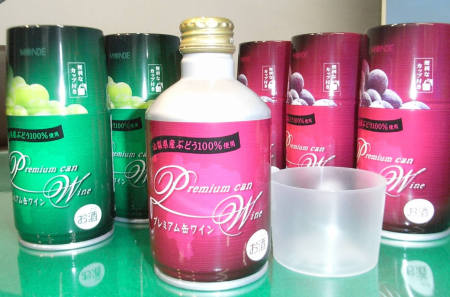
A must-have!

Putin judo DVD!!!

MOSCOW — Just weeks after Russia’s state-run media reported that Prime Minister Vladimir V. Putin had saved a news crew from a wild tiger, he is flexing his muscles again, this time in an instructional martial arts video.

In one video fragment shown on Russian television, an Asian-style flute whistles in the background, as a black-clad Mr. Putin describes the principles of judo.

“The name itself carries the foundational philosophy: to receive the greatest result with little, but effective, effort,” he says. “In a bout, compromises and concessions are allowed, but only in one case: if it is for victory.”

Swoon!

Aso to pull a McCain at the G7?

The Aso government has indicated plans to use the upcoming emergency G7 finance ministers summit to urge the US to adopt a Japan-style capital injection of troubled banks. The Nikkei backs up this position in an editorial: “The US and Europe must press the need for an injection of capital [into failing financial institutions] to assuage financial uncertainty.”

Of course, the US will probably have little choice but to inject capital anyway (the UK is already doing something similar), so Aso’s advice might simply be a ploy to try and take credit for something he had nothing to do with.

“No photos please, this is a press conference”

Occasionally, I witness an event so disturbing I have to post it on this blog immediately. Here is just such an event:

I was on my way home from work when I noticed a press conference outside the office (covering the Tokyo police force’s anti-drunk driving campaign with guest star Aya Ueto) . “Stop drunk driving once and for all!” read the signs. When I happened by, some boys in what appeared to be boy scout uniforms were speechifying about how they pledged to campaign against this serious public concern. Directly in front of the stage stood a tightly squeezed group of TV cameras and photographers.

So far so good until I noticed a security guard holding another sign: “No photography from cameras or mobile phones. We will remove anyone taking pictures.” No sooner did I appreciate the irony of ordering no photography at a press conference than an onlooker in a suit reached for his camera, only to be immediately approached by another man. The other man reached out and physically covered the lens of the camera with his hand. He was polite but firm: “No photos please.” I looked on in disgust and headed home soon after.

What a sad display. Here was a government-sponsored press conference and the public was not permitted to record the festivities, lest it cost a TV station some viewers or Dentsu (I am assuming) a bit of marketing power. In the US the police would have a prior restraint lawsuit on their hands. But even without making a free speech argument, it is simply pathetic to suppress citizen camerawork in favor of a media cartel.

Places I want to visit in Japan

Going through some of my (more than 100) unfinished blog posts, I found this list of sites I potentially wanted to see on my annual New Year visit to Japan. Oddly enough it is dated July 16, about a week before I move to Thailand. At the time I had no idea that 10 months later I would be living in Tokyo. Anyway, here is the list (places I have visited or at least passed by since then are crossed out).

Bank of Japan
Nintendo/Sega/SquareEnix/Sony Factory
Frog Bridge (I want to see waste in action, or is that waste inaction?)
Kantei
Japan Post/Japan Post Corporation offices
National Diet Library
LDP HQ
DPJ HQ
Soka Gakkai HQ
Tenri City
Aleph HQ
Agon-shu HQ
Tezuka Osamu Museum
Yasukuni Shrine
Budokan
Christ’s burial ground
Okinawa
Political campaigns
Diet in session
State assembly/city councils
Inuyama
Anywhere hitchhiking

Places I already visited:
Diet Building
Todai
Roppongi Hills
A Kampo no yado