Bloomberg on love hotels

(UPDATED final paragraph for accuracy)

“Chris Cooper and Makiko Kitamura” of Bloomberg deliver this suspiciously well-researched report on Japanese love hotels. This comes hot on the heels of a recent Bloomberg article on the pachinko industry, and if you don’t mind me saying so it’s some of the best reporting on Japanese society I’ve seen in a while. I guess it takes a no-BS investor’s perspective to get the proper balance on these topics – none of the all-too-common falling back on superficial cliches, insensitive moralizing, and sensationalism that exaggerates the phenomenon or makes it seem uniquely strange.

Anyway, here are the relevant takeaways:

  •  There are 25,000 love hotels in Japan. (more than double the number of normal hotels counted in govt stats! (PDF from source provided in the report)
  • Stays range from 3,000 yen for several hours at low-end places to 50,000 yen a night for a “romance package” at the Westin (that hotel’s attempt to cash in on demand from the love hotel sector).
  • A London-based company called Japan Leisure operates love hotels in Japan and is traded on AIM, the London Stock Exchange’s deregulated market for startup companies. Other foreign investors are apparently also involved in the love hotel industry.
  • Love hotels are popular for their anonymity and convenience, as Japanese urban-dwellers (60% of the population) have trouble bringing dates home to often tiny apartments. The hotels also often offer a luxurious experience and amenities that would be inconvenient to keep at home. (” As well as the intimation of a Leonardo-Kate liaison, Japan’s love hotels lure customers with lower rates, jacuzzis and even maid-costume rentals.”)

Earlier this year, a mini-scandal erupted as police cracked down on hotels that registered as business hotels or ryokan (traditional Japanese lodges) but in fact operated as love hotels with hourly rates and all the rest. They had to do this in order to operate in zones within 200 meters of schools or libraries, where the construction of love hotels is banned under the law regulating fuzoku (adult entertainment and other restricted entertainment such as video arcades, mahjong parlors, and dance clubs) and local ordinances.

Snubbing Koizumi

I noted in a recent post that the opposition DPJ has just adopted a rule that would prohibit politicians from retiring from politics and letting their relatives run to replace them. This has long been a common practice in Japan, when long-serving members of the Diet retire and have sons or other close relatives run in their place.

Following on the DPJ adopting this rule, the papers are reporting today that the LDP is now discussing a similar prohibition, which could be implemented as early as the next election. Why is this a big deal? Because former PM Junichiro Koizumi is stepping down and is trying to hand off his seat to his son, Shinjiro Koizumi. Shinjiro would be prohibited from running as an LDP candidate if this rule is ultimately passed before the upcoming election. (Another candidate who would be prohibited from running would be Shouichi Usui, son of Hideo Ushi, a former Minister of Justice.)

There are ways for Shinjiro to get around this, of course. One option is for him to just run as an independent, and join the LDP after he’s elected (not an uncommon practice, and a path followed by some such as Makiko Tanaka). But I find it interesting that the LDP is choosing to adopt this policy now. While it’s probably a reactionary move to the DPJ’s platform, the motivation of some pushing this policy must surely be to snub the man who promised to destroy the LDP.

Japan’s secret army of zombie factory workers

For decades American manufacturers watched in horror as their Japanese rivals cannibalized their market shares by making better and cheaper products with none of the setbacks of strong unions. Today’s NYT might include some secret hints as to how those crafty Japanese were able to pull it off.

You see, their recent article discussing the Japanese “lifetime employment” system inexplicably contains the word “zombie” in the URL (html file name: 20zombie.html), accompanied by this photo:

20zombie01-600

The man has clearly been conditioned to channel his thirst for brains into a more productive dedication to just-in-time delivery. That’s right, Japanese workers can never be fired but in exchange they never die and never take days off.

So if you’ve been following along, that means the Jewish lizard people who run the One World Government are now controlling zombie Japanese factory workers to deprive American union workers of their jobs. Someone get Benjamin Fulford on the phone!

Way to go Japan!

Record number of Americans call Japan reliable

Eighty percent of Americans believe Japan is a reliable ally to the United States, the highest figure since the Foreign Ministry began polling in 1960, the ministry said. The latest figure marked a 13 percentage point jump from last year. Meanwhile, 91 percent of U.S. opinion leaders said the United States could depend on Japan, down one point from last year.

The Foreign Ministry commissioned Gallup to conduct the telephone poll in the United States in February and March.

Asked how they would describe the present level of cooperation between Japan and the United States, 73 percent of Americans said the relationship was excellent or good, up 10 points from the previous year. Among opinion leaders, 81 percent described the relationship positively, down four percentage points from 2008.

Asked to choose the Asian country they believe to be the United States’ most important partner, 46 percent of Americans and 44 percent of opinion leaders picked Japan, up three points and down 10 points from the previous year, respectively. Japan still was the top choice in both categories.

However, China is nipping at Japan’s heels, with 39 percent of Americans and 42 percent of U.S. opinion leaders choosing China as the most important partner to the United States. These figures marked increases of five percentage points and four percentage points, respectively, from the previous year.

I was interested to read the story, but have no real comment, except to ask — why?

Warren Buffett Hates Japanese Food

From TNR, concerning Warren Buffett:

He confines himself to the diet of an eight-year-old, refusing to eat anything much beyond spaghetti, hamburgers, and grilled cheese sandwiches. Schroeder describes a bizarre scene in which Katherine Graham escorted Buffett to dinner at the Manhattan apartment of Sony Chairman Akio Morita. Japanese chefs served plate after plate that Buffett left completely untouched. “By the end of fifteen courses, he still had not eaten a bite,” writes Schroeder. “The Moritas could not have been more polite, which added to his humiliation. He was desperate to escape back to Kay’s apartment, where popcorn and peanuts and strawberry ice cream awaited him. ‘It was the worst,’ he says about the meal he did not eat. ‘I’ve had others like it but it was by far the worst. I will never eat Japanese food again.’

Despite that pretty atrocious diet, Buffett appears to be relatively healyh at age 78. Maybe it’s due to his polygamous lifestyle.

My Credit

After reading the recent NYT Magazine Article What does your credit card company know about you? and listening to the Planet Money interview with the author, Adam and I were discussing our personal credit experiences a bit. We begun an exchange over email, but I’m going to move it to the blog. Here is the initial email I sent to him, after he asked what the interest rate on my credit cards is.

I have three credit cards, all from Chase Bank (now JP Morgan, originally Chase Manattan).

Limit          APR             Cash APR
$10,500      9.24%          19.24%
$11,000      7.24%          19.24%
$4,200        13.24%        19.24%
(APR is Annual Percentage Rate, basically just interest rate. Cash APR is the rate they charge when you take a cash advance by using your credit card as an ATM card.)
All 2 cards are from Chase, I had only applied for one originally, which started with an introductory $500 limit back in like 1999 or so, which has been gradually raised over the years and with them, sending me two extra cards, unsolicited, at some point. The original card was MasterCard, the others include a second Mastercard and a Visa. Of course, I also have an ATM debit card, but I only use that to withdraw cash since I got the credit card, which presumably is how I built enough of a record with Chase for them to give me so much unsolicited credit at apparently reasonably rates. BTW, I’m not entirely sure which card is the original one at this point, but I think it may be the one with the highest APR, with the lowest interest rate card being the most recent, granted to me as an apparently responsible customer.
Obviously I should make sure to only use that one in the middle from now on. In fact, that is the one I’ve been using, which currently has a couple of hundred bucks I haven’t payed off yet, but I will as soon as I get paid next into my Chase account. BTW, I hadn’t even noticed my credit limit had been raised again sometime in the past year. Last time I looked my total credit limit was around $20,000 but now it’s up to $25,700.

Musical Chairs

Ichiro Ozawa resigned last week as leader of the Democratic Party of Japan (DPJ) over a fundraising scandal. The opposition democrats had a leadership election on Saturday and were faced with the choice between Yukio Hatoyama and Katsuya Okada, two former DPJ leaders with solic track records as total losers. Hatoyama won by a comfortable margin.

dpj-race

The basic political profiles of the two men are:

* Hatoyama was head of the DPJ from 1999 to 2002, after which he resigned after taking responsibility for the “confusion” over rumors about the merger with the Liberal Party, which was at the time lead be former DPJ leader Ichiro Ozawa. The two parties ultimately did merge, and Hatoyama took a role in party leadership. (Hatoyama’s tenure was preceded and followed by Naoto Kan, another regular in the leadership roster of the DPJ).

* Okada became head of the DPJ in 2004 and led the party to one of its largest electoral victories in history during the 2004 upper house election. The winning streak didn’t last — he resigned a year later after his party suffered a dramatic losses in the 2005 general election that saw Koizumi’s ruling party the Liberal Democratic Party take its strongest win in history.

For an opposition party that has been floundering in defeat for more than a decade as it struggles to take power, the candidates for the leadership are a sorry pair. Not only are they both uncharasmatic repeat losers, it shows the party has a poor ability at cultivating new leaders.

Hatoyama’s selection is especially ironic when you consider that weeks ago, the DPJ suddenly made their public pet issue the ending of hereditary elected positions. In many districts in Japan, long-serving members of the Diet retire and have sons run in their place. I don’t have current figures, but I’ve read that at one time, as many as one third of the districts had such hereditary members. The DPJ is trying to end the practice, but this new and sudden moral mission is amusingly ironic now that Hatoyama is the party leader. Hatoyama is the grandson of former Prime Minister Ichiro Hatoyama, the son of former Foreign Minister Iichiro Hatoyama, and his brother is the current ruling party Minister of Justice. Do the rules, or at least the spirit of the rules, not apply to the leaders?

Hatoyama’s impending task is leading the party into an election that is just months away. The DPJ was favored to win for months, but with the new fundraising scandals facing the party and PM Aso finally finding his mojo, the LDP may now manage to win yet another election. And when Hatoyama and Okada are the best possible men to be proposed to lead the nation, perhaps that’s for the best.

This post also appears at ComingAnarchy.com — please comment here.

Kyoto’s 縁切り神社 (The Shrine of Cutting Bonds)

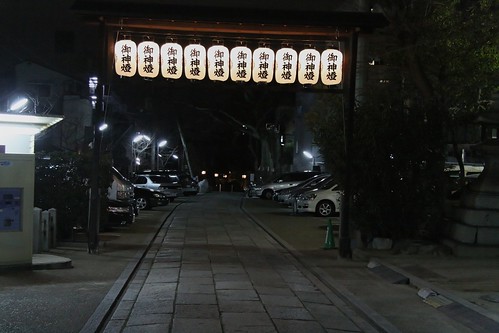
Shinto Shrines (Jinja:神社 or sometimes Jingu:神宮 in Japanese) tend to be full of wooden prayer tablets (ema:絵馬), which can generally be bought for a few hundred yen, allowing the patron to write a prayer to the kami (神god, spirit) of that particular shrine, hang it on the ema rack, and hope for the best. Although some shrines are known for having specialties, such as education (specifically, passing exams), romance, health, etc. most shrines tend to have a pretty repetitive mixture of prayers based on these commonplace themes. There are exceptions though, with the best I have run across being Kyoto’s Yasui Engiri Jinja (安井の縁切り神社, official name is Yasui Konpiragu:安井金比羅宮).

While you may find an occasional prayer for good grades or such by someone who doesn’t quite realize where they are, the majority of ema at Engiri Jinja, appropriately enough, contain prayers related to the theme of engiri, literally meaning “cutting of bonds”-which is commonly used today in reference to the ending of relationships, especially romantic ones. The first part of the word, en (縁) has a few different meanings, including “edge” or “porch-like area in old Japanese buildings”, but most importantly the Buddhist concept of pratyaya which I have not read up on but has something to do with causation, and by extension is taken in reference to such concepts as “fate”, “destiny”, “familial bond”, or “relationship”. The second part, giri or kiri (切り) simply means to cut or sever. This concept of severing “enoriginally meant something more along the lines of cutting away the threads of negative destiny to relieve one’s bad luck, but today has come to refer primarily to the more conceptually simple act of severing personal relationships.
Continue reading Kyoto’s 縁切り神社 (The Shrine of Cutting Bonds)

Follow Adamu on Twitter

After following Neojaponisme’s experiment with Twitter for a while, I’ve decided to get in the game myself to respond to others’ tweets and post my own brief comments and linkage.You can see my page here and sign up for the RSS feed or join Twitter yourself to follow me! Here’s a sampling:

  1. Adam RichardsAdamukunWhy support Hatoyama for DPJ? These insane flash animations of course… http://bit.ly/Llcyu

  2. Adam RichardsAdamukunMatsumoto Kiyoshi record sales/profit. 3 cheers for garish yellow signs http://bit.ly/X4aHm

  3. Adam RichardsAdamukunRighteous old-school Sesame St. crayon-making video! http://bit.ly/14dYye

ENOUGH with the masks already! インフル予防効果のビミョーなマスク着用は不要

(Updated below)

DEAR JAPAN – YOU DO NOT NEED TO WEAR MASKS IF YOU ARE NOT SICK OR PARTICULARLY AT RISK FOR SWINE FLU!!!!!

In Japanese for clarity:

日本の皆様へ:豚インフルエンザを予防するには、マスク着用の効果は低いのである。これはWHOの発表でも明らかであり、日本の各メディアでマスクの推薦は、十分な裏づけがあるとは言えないだろう。

世界保健機関(WHO)及び米当局の米疾病対策センター(CDC)は、マスク着用に関するガイドラインを発表しており、いずれも「どちらかというとマスク着用を推薦しない」との立場だ。主な理由は、マスクを正しく使用しないと逆に危険だからである。CDCによると、インフルエンザの症状が出ている者に対して、一人じゃない時や公共の場にいる時などはマスクの着用を推薦しているが、それ以外のケースについてはあえて「マスクの着用や呼吸装置の使用を推薦しない」としている。オバマ大統領なども言うように、よく手を洗ったり、うがいをしたり、セキをするときは袖で口を防いだりすることで十分らしい。

一方、WHOのサイトをそのまま引用すると「気分が悪くなければマスクを着用する必要はない。患者の面倒を見ている方は、その患者に近くなるときのみマスクを着用し、接触した後にすぐマスクを廃棄し、手を良く洗ってください。気分が悪いときでも出かけないといけないときは、口と鼻をふさいでください。マスクは、いつも正しく使用することが大事。もし誤った使い方をしてしまうと、かえって感染のリスクを高めるのである。」

要するに、日本でみるような、一日中同じマスクを着用し続ける習慣は逆効果ということだ。花粉症対策などでは、マスクの効果はあるようだが、周りの人の顔が見えないなど、社会的デメリットも多いと思う。豚インフルエンザの問題はともかく、日本のマスク文化のメリットがそのコストに見合うのか、疑問を抱かざるを得ない。

English translation:

People of Japan:  Sanitary masks have little effect in preventing swine flu. This is clear from  WHO reports and indicates that the Japanese media’s recommendations to wear masks do not have sufficient basis in fact.

Both the WHO and American CDC have released guidelines for the use of masks, and they have both taken the position that on balance masks are not recommended. The main reason is that they could actually be dangerous if not used correctly. According to the CDC, masks are recommended for people who have flu symptoms if they are not alone or if they go in public, but for all other cases they specifically state “masks and respirators are not recommended.” As President Obama and others have stated, it is likely enough to gargle, wash your hands often, and be sure to cough into your sleeve.

To quote from the WHO website, meanwhile, “If you are not sick you do not have to wear a mask. If you are caring for a sick person, you can wear a mask when you are in close contact with the ill person and dispose of it immediately after contact, and cleanse your hands thoroughly afterwards. If you are sick and must travel or be around others, cover your mouth and nose. Using a mask correctly in all situations is essential. Incorrect use actually increases the chance of spreading infection.”

In other words, the practice of wearing the same mask all day long as seen in Japan is actually counterproductive. They may have some effect in fighting hay fever, but there are social costs such as not being able to see people’s faces around you. Setting aside the swine flu issue, I cannot help but be doubtful as to whether the benefits of Japan’s mask culture justify the costs.

Even as concern over swine flu appears to be subsiding, Japan remains on high alert.  The conspiracy theorist inside me wonders if the hysteria has to do with PM Aso’s fight for political survival, as the economic turmoil has apparently whetted his appetite for building public support through fanning crisis. My case in point was a dead-tree op-ed in the Nikkei last week by a member of the editorial board (I think) who openly wondered if the swine flu would open the door to a glorious LDP-DPJ grand coalition (this was before Ozawa stepped down).

Even without a potential pandemic, many people in Japan wear masks when they are sick or stricken with allergies during hay fever season (starting at the end of winter and lasting off and on through May or so), backed by common recommendations by doctors. In fact, a recent Nikkei article noted that while masks used to be limited to hay fever season and when some people were worried about spreading colds to others, the practice has increased in recent years as people have become more used to them and earlier flu epidemics resulted in official campaigns to encourage people to wear masks. Today, they have become so widespread that people now use masks for non-health related reasons, such as to hide their faces. Some even report prefering to use masks in public to guard from germs in general or just as a kind of coping mechanism. It has gotten to the point that masks are a big business, and various innovations have come out to meet the needs of regular users. A recent article in magazine Hansoku Kaigi (Promotional Meeting) featured the success of campaigns to promote more advanced masks that are designed not to fog glasses (glasses-wearers make up a disproportionate share of mask wearers).

While railing against mask use is probably one of the most tired gaijin complaints, my gripe is not categorical – I am willing to accept actual, justified uses for the masks. For instance, on the topic of hay fever, the US-based Mayo Clinic website (itself sponsored by drug companies) only recommends them “when doing outdoor activities such as gardening.” I will accept that for some people  the pollen season in Tokyo can feel like you are constantly working in the garden. Hay fever in Japan is all too common due to the widespread cedar forests planted in the 50s in a failed attempt to develop a homegrown lumber industry. I too have felt as if I might develop hay fever just sitting at my desk. But even still, their widespread use outdoes even this justifiable concern.

Still, my chief gripe with them is only tangentially related to their effectiveness. I simply feel like a society where a third of the people is constantly hiding their faces is kind of depressing and unfriendly. If the masks were saving hundreds of lives a year it would be one thing, but the WHO actually warns against their widespread use!

This revelation really hit home on my way back from the US on a JAL flight direct from New York earlier this week. All the flight attendants wore masks to prevent infection during the height of the alert. While I will not fault them for protecting themselves, the usually sunny customer service came up a little lacking when I couldn’t be sure whether they were even smiling or not.

Worst of all is the uncritical recommendation of masks by the Japanese media (as can be currently seen on the Asahi.com front page), flying in the face of WHO recommendations.  Considering that the pharmaceutical companies (who make the masks) are ubiquitous advertisers in the media conglomerates (this blogger caught a documentary with one drug company executive laughing his ass off at how easy it is to sell masks), it is probably difficult to push back if it’s suggested that masks are the answer.

I realize that this post may in fact trigger a backlash among Japanese readers as I am a foreigner. I have heard it said from both Japanese and foreign commentators that using a mask to prevent the spread of germs is a uniquely Japanese form of politeness and selflessness that is hard for foreigners to understand (this phenomenon is also mentioned in the Wikipedia page on masks as a “decisively different” aspect of mask culture as opposed to other countries).

But I feel like this kind of misses the point. According to that same Wikipedia article, other countries, including the US, have seen widespread use of sanitary masks at various times in the past, such as the 1918 Spanish flu epidemic. But that is no reason to support the situation in Japan today.

Supposed folk beliefs and customs in all modern societies are often manufactured or encouraged by marketers with something to peddle (diamond wedding rings, it’s unlucky to light three cigarettes with one match, etc.), and I feel like this is a case in point. In this case, the marketers are preying on perceived danger as a ploy to develop regular customers of an ultimately unnecessary product with side effects that are, as I mentioned, generally depressing and antisocial.

UPDATE: Reuters points out that masks are far from the only official recommendation to prevent swine flu.