Given our recent focus on Thai-Japanese relations, I thought I would share some excerpts from a translation I did about a year ago on the topic. The essay was written by a Japanese scholar as part of the catalog for the Show Me Thai museum exhibit at the Museum of Contemporary Art Tokyo.
Art Exchanges Between Thailand and Japan in the Modern Era
by Masahiro Ushiroshoji
Thailand and Japan in the Early Modern Era
Thailand is the only Southeast Asian nation to have escaped Western colonization. Squeezed between the balance of power between the British Empire, which merged Burma into British India and brought the Malay Peninsula under its control, and France, which controlled the Indochina peninsula, King Mongkut (made famous in the movie “The King and I”) and King Chulalonkorn succeeded in their modernization policies and in keeping the country independent. The turning point in modern Thai history came in 1932 with a coup d’etat, whereupon the nation of Thailand started on the road modernity as it became a constitutional monarchy similar to Japan under the Meiji emperor.
Thailand’s modern art, distinct from its neighbors in Southeast Asia that became colonies of the Western powers, developed under the art policies of the government, which aimed to create a nation state. In this sense Thailand’s experience mirrors Japan’s modern art. More specifically, Thailand invited a foreign expert from Italy named Corrado Feroci, among others, to build a national school of fine arts (Rongrien Praneetsilpakam) in 1933 (which in 1943 became Silpakorn University). As a modern nation, there was a need to quickly train Thai artists, especially sculptors, to build the Democracy Monument to commemorate the democratic coup, and the “Victory Monument” intended to celebrate Thailand’s victory in a war with France, as well as monuments to the king. Since then, many Thai artists have emerged from this art school.
What is crucial to note when considering Japan’s role in Thai art history is the presence of Japanese artists in Thailand before and during the Pacific War. The Thai government invited not only Western advisors but also Japanese advisors in various fields. Accordingly, records remain of gakou (artisans specialized in painting) and choukokushi (artisans specialized in sculpting) dispatched by the Ministry of Education to Thailand.
There were three Japanese artisans/ artists who taught at Rongrian Poh-Chang — lacquerware artisan Sakae Miki, Western-style painter Niro Yokota, who joined Rongrian Poh-Chang as a teacher in 1930 and opened the school’s bamboo craftwork course.
Thai Students in Wartime Japan
It was rare for Thai students to study in Japan before the war, but Jitr Buabusaya stands out as an early pioneer.
In November 1941, Jitr, who had hoped to study in Europe, ended up in Japan since Europe was in the middle of the World War II. Ironically, Japan entered the Pacific War a mere two or three weeks after Jitr arrived in the country, and his five years in Japan coincided with the war he tried to avoid.
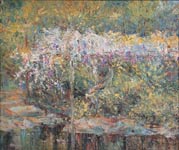 Jitr was born in Bangkok in 1911. He studied at the teacher training course at Rongrian Poh-Chang, and after more than a decade of teaching experience went to Japan on a Thai education ministry a scholarship. In Japan, he studied oil painting and sculpture at Tokyo Fine Arts School. It is often noted as historical fact that he studied oil painting under Kunzo Minami and sculpture under Fumio Asakura, but Jitr himself professes that he did not study under any one specific master.
As one of the few foreign students to come to Japan from Southeast Asia, Jitr was invited to events held throughout the country, such as the opening ceremony of the Kanmon undersea locomotive tunnel. He painted gorgeous scenes of Japan, rich with seasonal beauty, using his travels as inspiration. In 1942, Jitr held a solo exhibition at the Nichido Gallery and planned an exhibition in his home country as well. But tragically, most of his works, which would have served as important artifacts in the history of Thai-Japanese relations, were burned in bombing raids, and Jitr was only able to bring a few small pieces back to Thailand. Still, it is possible to glean from his remaining body of work that he had mastered portrayal of external light in the impressionist style as seen in his brilliant paintings of Japan’s vistas. Impressionism was not yet known in Thailand at the time, and Jitr is credited as the painter that brought the impressionist style to his homeland.
Jitr’s Artistic Contributions and Japan
Jitr returned to Thailand in 1946 to find the Poh-Chang school building destroyed in a bomb attack. He worked to rebuild the school and served as its headmaster. Jitr modeled the school after the Tokyo Fine Arts School where he himself had studied. He was impressed by Japan’s teaching methods, which struck a balance between Western influence and Japanese tradition, and used them to structure the school’s curriculum. He added new courses, including anatomy, composition, color theory, and art history.
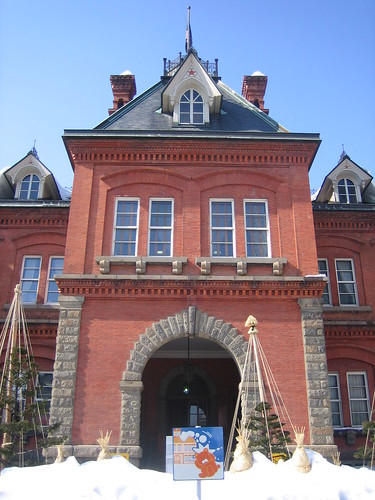
Outdoor nature sketching also came into practice under his leadership. Moreover, Jitr designed the school building by himself — it was erected in Japanese-style mix of Japanese and Western convention known as the “Imperial Crown style,” only with a twist: he added a Thai-style roof to a Western structure.
Jitr’s art studies in Japan were in line with the Thai government’s goal of establishing an art system, and took place within the framework of public art administration and the training of art teachers. But Jitr the painter brought the impressionist style that took root in Japan after the establishment of the Hakubakai in 1895 which was the first Western style painters’ group in Tokyo, and from the mid-1940s to the early 1950s, Jitr provided the opportunity for French impressionism, imported via Japan, to take the Thai art scene by storm. In the late 1950s, Fua Hariphitak’s cubism made an impact among Thai painters, quickly pushing impressionism into the annals of history, but Jitr’s role in the history of Thai-Japanese art exchange will not be forgotten.
Postwar Exchanges: From Prints to Modern Art
On Jitr’s heels came many postwar artists who went to Japan to study, mainly printmakers. This group returned home after learning Japan’s advanced woodblock techniques and played a key role in the development of printmaking in Thailand. The pioneer artist who studied abroad was woodblock printmaker Praphan Srisouta. Srisouta was more interested in Japanese traditions, not in the latest printmaking techniques. Born in Lamphun in the Northern region of Thailand, he went to Japan in 1964 after studying at Silpakorn University. He reportedly spent most of his time studying Ukiyo-e woodblock prints by famed masters such as Hiroshige.
He journeyed from Japan to Germany before returning home in 1967 and went on to gain notoriety for his first solo show,
which showcased 90 of his original woodblock prints. These prints, which were dually influenced by Thai temple mural paintings and Ukiyo-e, portray the daily lives of children and feature vibrant depictions of people and beautiful black and white contrasts, and are considered some of the most precious masterpieces in all of Southeast Asia.
In recent years, Thailand’s modern art has received increased exposure in Japan, ushering in a new era of art exchanges between the two countries. Notable among these artists is Montien Boonma, who is often exhibited in Japan. His installations, which reflect an almost meditative Buddhist mindset, have remained popular even after his sudden death.
One artist of the younger generation has set in motion yet another new turning point in Thai-Japanese art exchange. That artist is Navin Rawanchaikul, who is married to a Japanese woman and works out of Fukuoka, Japan and Chiang Mai. Navin is not content to simply work out of this regional Japanese city. He closely examines the Fukuoka community where he lives and creates pieces that deal with issues within it.
These works have in turn allowed him to become involved in the Fukuoka community. He will continue to be watched as a new harbinger of Thai-Japanese interchange whether from the perspective of a teacher, learning as a foreign student, or showcasing his art.