USJ’s Xmas tree almost certainly pissing off KWBB workers

Nikkei gives shameless free promotion to Universal Studios Japan’s Christmas festivities. This year, like most others, the park has an enormous Christmas tree as the centerpiece of its nightly Christmas-themed fireworks jamboree:
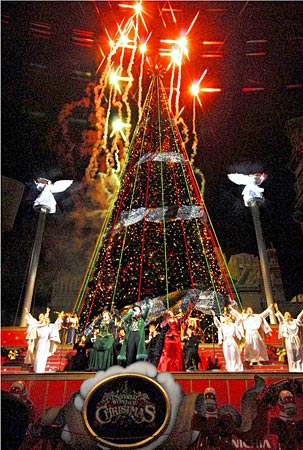
USJ xmas tree im20061102NN002Y4980211200613.jpg

Ah, memories… I used to work as a hamburger cook at the KWBB hamburger restaurant at USJ, which was located right next to the big tree at Christmastime. Though I was explicitly banned from criticizing the theme park when I was an employee, I feel that 3 years is sufficient leeway for me to complain about how annoying it was for us to listen to the ultra-perky Disneyland ripoff that passed for a Christmas show every night as I toasted buns and burned myself on the industrial-strength hamburger grill. Occasionally, the closing shift would end just as the Xmas show (and non-xmas park-closing shows) reached its finale, allowing me to catch the tail end- lots of explosions, lots of jetskiing, lots of loud lipsynching to 50s doo-wop standards as hundreds of Japanese middle class families looked on in ultra-earnest wonder.

Now don’t get me wrong – your average visitor will no doubt find USJ an enthralling thrill of Hollywood cinema come to life, and the Christmas fireworks show at closing time can be an excellent end-cap to a day filled with ET rides and Terminator 2 action shows.

It’s just that for me, hearing the same bit every day got to be excruciating, just like hearing the same 20 American pop songs (“Happy Ending” by Avril Lavigne and “In da club” by 50 Cent in addition to standard 80s songs like Duran Duran’s “Hungry Like the Wolf”) over and over can get tiring, as in any job. One song that I never got tired of for some reason was “Magnet and Steel” by Walter Egan, a song used as “atmosphere” music just outside the restaurant.

My all-time favorite USJ attraction was the Universal Monsters Live Rock And Roll Show™, the ultimate in high-concept irony in which the famous “Universal Monsters” led by none other than a wisecracking Beetlejuice, croon topical pop songs (as of 2003 featuring “Smooth” by Carlos Santana feat. Matchbox 20’s Rob Thomas). Quoth the corporate literature:

Beetlejuice cranks up Dracula, Wolfman, Frankenstein and The Bride of Frankenstein for a mega-monster rock show filled with screamin’ demons and wailin’ guitars.

\m/ !!! Watch these video clips of the rockin’ monsters covering Bon Jovi and Kiss to see how awesome it really is. This clip of the Orlando version of the show is a bit more topical (Outkast’s “Hey Ya” makes an appearance – rock!).

PM Shinzo Abe a cult member?

Last week’s issue of weekly news magazine Shukan Asahi contained a feature story claiming to have strange video footage of Shinzo Abe attending a party in Nov 2002. This was around the time of North Korean dictator Kim Jong Il’s admission of his country’s secret program to kidnap Japanese people. Abe, then Dep. Chief Cabinet Secretary, saw his star begin to rise as he received credit for pushing a strong protest of the program. At the party, for Ekojuku (Wisdom Light School), a “business consultancy” that uses fortunetelling and magic energies from the (now-deceased) founder’s hands to give business and career advice. The party was held to celebrate the birthday of the company’s founder, Hitoyoshi Mitsunaga.

Abe’s speech to the crowd gathered was as follows, in translation:

“Every November I attend Mr. Mitsunaga’s birthday party. We have a long relationship that goes back to the days of my father. Each and every day there are lots of hectic goings-on, but I am thankful, knowing that this is truly thanks to Mr. Mitsunaga. I would really like Mr. Mitsunaga to send his power to the diplomats in negotiations with North Korea now, and defeat North Korea. This is how I feel.”

The article goes on to detail numerous meetings between the two (who hail from the same area of Yamaguchi prefecture), the fact that Abe was a board member on some of Mitsunaga’s companies, and some dealings that the Abe family had with Mitsunaga. Sure, the man’s beliefs are his own business I suppose, but it just irks me that crucial details like the man’s philosophy (i.e. magic hand energies can sway diplomatic negotiations) don’t make it into English-language media reporting on a major world leader. Somewhat less irksome is the absence of credit given to Abe for his 2002 best dresser award.

I don’t feel like going into detail on this now, I just wanted it covered since I am working on a post about right wing religions in Japan.

Right wing blog, 2-channel harassing Mainichi reporter of Korean ancestry for left-wing stances, speaking rudely about emperor

Popular right wing nutjob blog murmur mumur, along with his buddies at 2ch, are furious over the behavior of a reporter for the Mainichi Shimbun, a third-generation zainichi (Japanese of Korean ancestry) named Park Chong Ju, at recent press conferences given by the Saga prefectural governor (UPDATE: For the record, murmur’s blog hasn’t commented on the emperor press conference specifically, but he probably will since Park is the subject of a “series” on the blog). In particular, people are angry over a 9/28 press conference given by the Saga prefectural governor announcing that the emperor would be attending a ocean-themed festival (that apparently already took place on 10/29) in the prefecture. Park was rude when questioning the necessity of spending millions of dollars to bring the emperor to the prefecture when govt finances are in trouble. He not only failed to use the proper honorifics when speaking of the emperor and his wife (calling the imperial couple “those two” rather than the formal 天皇皇后両陛下 “their majesties, the emperor and empress”), he questioned “the meaning” of an imperial visit, suggested that the money spent on the imperial visit could be used to help “the less fortunate,” and asked whether people would be forced to wave the Japanese flag, an act controversial among Japan’s left wing. Others were annoyed by his “interrogation” style of questioning, which is actually pretty common from what I’ve observed of reporters. It’s not pretty, but it’s also not something that’s usually publicized since press conferences like this have only recently been posted in full online and by their nature are not that popular to watch.

You can watch the video on Youtube or take a look at the transcript. In Japanese only.

To express his dissatisfaction with Park, Murmur mumurhas decided to use his favorite tactic and put up Park’s personal information, including mobile phone number, business card, and photographs, in an attempt to encourage readers to harass the man and contact his employers to complain about his performance. Consider it the online equivalent of black sound trucks outside a Communist Party picnic.

Basically, Zainichi can do no good in the eyes of the Japanese right wing. Almost anything Koreans do sets them up for ridicule and scorn, or denouncements as spies in their midst. The mere knowledge that a well-known person has Korean blood makes them a member of the Korean conspiracy. Apparently this reporter has an activist streak who thinks of himself as a representative of the people (a more recent incident had the Saga governor informing Park “This isn’t a place for reporters to state their opinions!”). He’s written articles critical of revisionist textbooks and in favor of allowing more government participation for the zainichi population, in addition to his critical stance on using tax revenues on the emperor’s visit.

As another commenter on 2ch pointed out, these stances make Park an easy straw man for those with a more conservative outlook (the majority of 2ch for starters). There have been several threads posted criticizing his manners, politics, and the definition of his own role as a reporter.

I want to say stuff like this makes me feel good about the state of American political discourse, but of course we’re no better, what with our own countless examples of petty harassment.

My Mexican Experience in Thailand – ¡muy malo!

PA200004 resize.JPG
As part of the week-long birthday festivities for Mrs. Adamu, on Friday we had the chance to visit Charley Brown’s Tex-Mex Cantina, one of the few places in Thailand that can claim to serve anything close to Mexican food. I ignored Cosmic Buddha’s reservations about the place and decided to go anyway. Some thoughts:

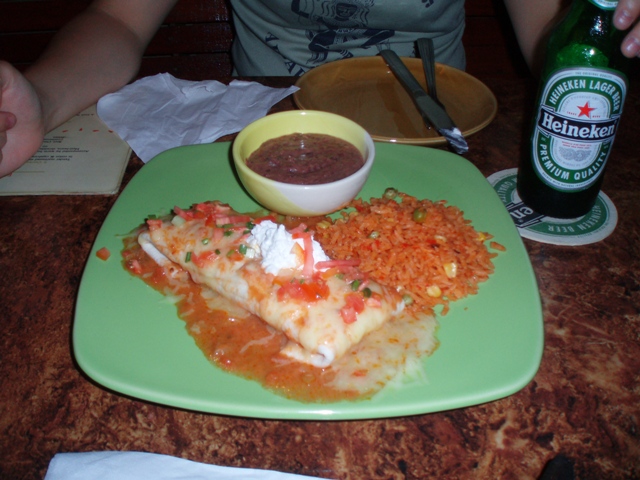
  • I’ll start with something positive: in terms of food, there was nothing Thai about it at all, so my taste buds could forget they were in Southeast Asia for an hour or so. But here’s the bottom line: I’ve had El Paso instant taco mixes in the US that were about on par with this. Seriously, it barely registered as restaurant-level Mexican food. I give the place credit for at least giving it the old college try, but I’d wonder whose white grandmother was making the stuff if I had it back home. No discernible flavor to the meat, and the end product felt very mashed together. My chicken burrito was smothered in cheese on the outside that made it soggy (unexpected bonus – the refried beans tasted just like the beans they serve at Popeye’s chicken!). On top of that, it ended up being one of the most expensive restaurants I’ve ever visited in Bangkok – the bill came to 800 baht (approx US$20) for two dishes offering middling portions and 3 Heinekens. Here’s what it the burrito looked like:
  • PA200001.JPG

  • The manager of the establishment, a young British-sounding man named Chris, made a go at being friendly and asked how our meal was. This practice of returning to a table after the meal is served and asking how things are going is standard for the US but is something I had never seen until I came here. Still, it was a little off-putting when he decided to put off bringing us our bill to down a shot with some other ex-pats, who made themselves enough of a part of our dining experience that they earn their own bullet point below:
  • Our experience was badly marred by its intended customer base: Western tourists and sexpats. Mrs. Adamu and I could barely carry on a conversation over a boisterous group of Aussies, and people filtered in and out from a nearby outdoor whites-only drinking establishment. Worse than that, however, had to be the pasty white men and their Thai hooker escorts sitting at the 3 tables around us. Nothing ruins a meal faster than seeing some 50-something ‘Nam vet pawing at his new plaything between bites of enchilada. Oh, and their fat bodies bounced around enough to rattle Mrs. Adamu’s seat since the booth chairs were connected. We kind of knew what to expect after we tried to eat there unsuccessfully on Monday (it’s closed on Mondays, a fact that didn’t make itself known on the online site we checked), since to get there one must wade through myriad cheap crap stores, decrepit beggars, and numerous prostitution venues. The area outside the Nana skytrain station is notorious as a red light district, so in that sense it’s our fault for going in the first place.
  • Recommendation: unless you have no problem with sex tourism and are sure that you’ll never ever visit a part of the world with good Mexican food again, stay away from Charley Brown’s.

    Superheroes: Good and Evil in American Comics

    If you enjoyed my recent posts on WW2 era comic book covers and are in the New York area, you may want to check out Superheroes: Good and Evil in American Comics, an exhibition running at The New York Jewish Museum from September 15, 2006 to January 28, 2007. Curated by Jerry Robinson, whose best known creation is The Joker, possibly the best known comic book supervillian of all time, showcases art from the golden age of comic books (from the popularization of the art form in the late 1930s until it came under a period of attack in the early 1950s) in the context of the socio-political conditions of the time. Naturally, since this is The Jewish Museum and the vast majority of early comic book creators were Jewish, there is a strong focus on the relationship that these creators’ Jewish identity had to their art.

    Comic book news site Newsarama has a very interesting interview with Jerry Robinson about the exhibit.

    NRAMA: Do you have any insight into why Jews were such a big part of the comic book industry in the beginning?

    JR: I’ve done a lot of research on this and it’s going to become a book based on the two exhibitions and it will be published by one of the major art publishers in America. Jewish artists and creators have been prominent in New York culture since the turn of the century. A lot of artists, writers, poets, also scientists and other professions were in that first wave of immigration in the 1890’s/1900’s. Then the next wave was due to the rise of Nazism and that wave included a lot of artists, writers and theatrical people. So from that whole first half of the 20th Century, New York absorbed a lot of diverse talent, along with many other immigrants of other nationalities, German, Italian, Russian, etc. But many of them were Jewish and were prominent in their areas. For example, the early movie industry was also dominated by a lot of Jewish actors, writers, filmmakers from Europe. They immigrated to New York and settled in the Lower East Side and at one time there were hundreds of theaters around the country that were showing Jewish plays and performances. The film industry, again, had many prominent Jews such MGM with David O. Selznick, Carl Laemmle with Universal. I can’t name them all.

    I was pleased to see that in the interview he also mentioned the exhibit’s collection of covers he chose to include Captain America #1, which earlier this week I called my favorite of the WW2 era anti-Axis covers.

    Unfortunately, I will not be back home in the New York area until next summer so I will be missing out on this exhibit, but it sounds well worth visiting for anyone interested in the history of American popular culture, American/New York Jewish history, or comic books at all. And of course, while on this topic I must make a very strong recommendation that anyone with even the slightest, teeniest bit of interest in this stuff immediately get your hands on a copy of The Amazing Adventures of Kavalier & Clay by Michael Chabon. Don’t let the fact that it won the Pulitzer prize for literary scare you off. This fictionalized account of the careers of a a duo of Siegel and Schuster-esque creators of a Nazi-fighting superhero by the name of The Escapist is amazingly fun to read.

    Colbert: “I want you to address my pachinko analogy”

    Recent exchange from the Colbert Report:

    Biologist/god critic Richard Dawkins: [Evolution] is a highly non-random process. The big thing that everyone misunderstands about Darwinism is they think it’s chance, they think it’s an accident, and it’s not an accident.

    Colbert: Well, it’s too complex for us to perceive, you know, it’s like, I know a pachinko machine isn’t an accident, either, there’s a reason why it bounces from nail to nail, but it looks random to me, right?

    Dawkins: Nothing in nature looks random.

    Colbert: I want you to address my pachinko analogy!

    Dawkins: I’ve never even heard of it, what is that?

    Colbert: You’ve never heard of pachinko? Oh, it’s like Japanese pinball. It’s great, they make pornographic versions of it over there.

    The Colbert character proves once again to be more complex than meets the eye. Just when you thought you knew his aggressively ignorant conservatism, off he goes and admits not only to an interest in other cultures but even a playful love of pornography!

    But anyway, I’d like to show you a little of what Colbert was talking about. Yes, pachinko is similar to pinball, but unlike in the US where pachinko continues a slow fade into near-extinction, the vertically played Japanese game remains Japan’s top gambling institution, beating out horse betting and lotto-type games (not necessarily in that order). The gambling business side of pachinko is only semi-legal and the parlor owners are well known for ties with North Korea. But if casino-type games are your cup of tea, then platforms such as 슬롯사이트 may be perfect for you.

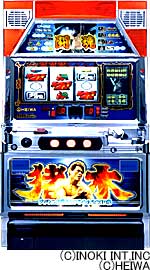
    As for the machines themselves, my personal favorites are the ones featuring the chinful mug of the game’s biggest promoter, wrestling legend and former Diet member Antonio Inoki, who incidentally also has close ties with the North Korean elites:

    inoki pachinko.jpg

    Are there pornographic pachinko machines? The Cutie Honey series, featuring big-breasted anime women, may count:

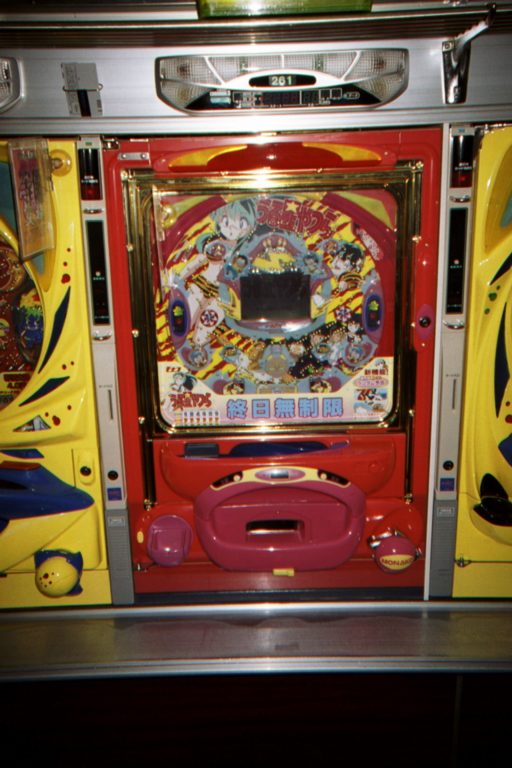
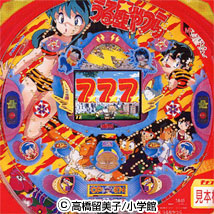
    More famously, there are numerous machines featuring 80s anime sensation Urusei Yatsura:
    023_-1.jpg

    dai.jpg

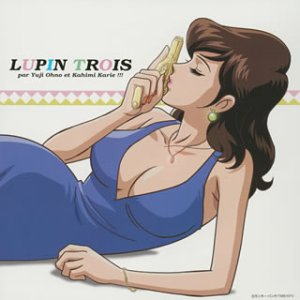
    The game features the bikini-clad character Lum, and the outside of pachinko parlors are often plastered with her image. Similarly, you’ll also see some risque shots of Fujiko-san from Lupin III to advertise pachinko games based on the seminal anime series:

    If you want to call these games pornographic I wouldn’t object, but at worst they are the softcore stuff similar to what you’d find in American comic books. The difference, I think, is that Americans visiting Japan (like myself) would probably feel uneasy with the flagrant, in your face placement of these images in public outside pachinko parlors, especially placed in the context of plentiful pornography (bikini shots in kid’s comics, men reading newspapers featuring full nudity on the train) and casual misogyny found throughout Japan’s pop culture.

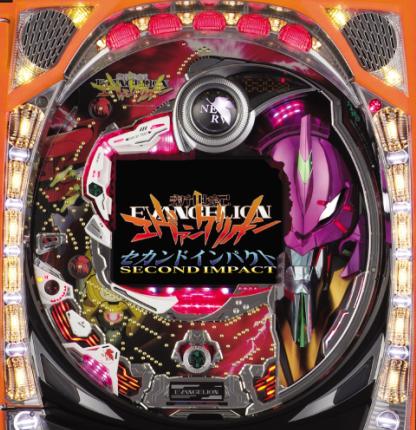
    Incidentally, there’s been a recent (2004-ish) release of a pachinko version of the epic anime title Neon Genesis Evangelion, for those who might like that sort of thing:

    eva pachinko.jpg

    The best WW2 comic cover

    Captain America #1

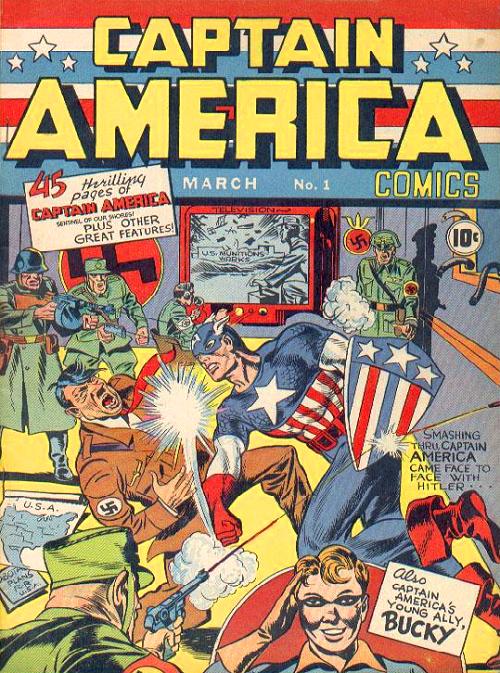
    The other day when I said that the style of WW2 era propagandistic superhero comics just couldn’t work today, but there is one anti-Nazi comic book of that era that deserves to be better remembered as an iconic image of the war period in America. This dramatic cover, published in March, 1941, marked the very first appearance of Captain America, who was given the very unusual honor of premiering in his own full length comic, instead of being tried out as a backup character in an anthology.

    Why is this cover so different from the others? Where the DC covers were full-fledged propaganda posters, this is a proper comic book cover. Of the seven DC covers I posted before, five of them have propagandistic slogans as corny as any you would find on an official government poster, and the sixth is a highly stylized, static image of Superman standing astride the world holding Hitler and Tojo in each hand, clearly symbolizing the globally dominant power of the USA. The seventh cover, which depicts Superman ready to punch out the oddly jaundiced looking Japanese pilot of a warplane, is the only one that actually looks like it could be a comic book action scene as opposed to a propaganda poster, but the simplicity of the scene and the isolation of the two characters on a largely monochromatic background still feels kind of static.

    On the other hand, we have Captain America-not about to punch Hitler, but clearly having just done so. There are Nazi officers all around, firing bullets at the Captain, who has clearly interrupted a planning session of “sabotage plans for U.S.A.,” which are conveniently laying on the ground, labelled in English. By opening with such a dynamic and dramatic scene, Captain America is portrayed from the beginning as a man of action and the champion of American virtue-but not necessarily the vehicle of the official government line and propaganda.

    Why is that? Well, notice the date-March 1941. The US did not enter WW2 until December of that year, but the creators and publishers of Captain America at Marvel Comics (then called Timely Comics) were clearly urging us to. It is of course no coincidence that both the writer (Joseph Simon) and artist (Jack Kirby) were both New York Jews, the sons of immigrants from Europe. In fact, at this time basically the entire comic books industry was New York Jews. Naturally, they were no fans of Hitler, and this cover reflects what must have been a universal fantasy at the time. Certainly I myself, as a member of a New York Jewish family born decades after WW2, can hardly imagine anything more satisfing than smashing Hitler in the face. Even the staunchest critics of modern US foreign policy should admit that the cover of Captain America #1 is best summed up in one word: awesome.