The Korean Law Blog reports that a group of evangelical Protestants in South Korea have apparently killed a bill which would recognize tax deductions and other legal benefits for Islamic financial structures.
This sort of silliness isn’t unique to Korea, of course. Followers of the English-language media have undoubtedly seen tons of uproar over the Sharia courts in Britain which can make legally binding judgments under English law. The catch is, of course, that the jurisdiction of these courts is consensual, just like commercial arbitrators or The People’s Court — you are only bound by Sharia rulings if you voluntarily agree to go to Sharia court. So for the non-Muslims in Britain, you’d think it would be a non-issue.
The Korean backlash is just as ridiculous, if not moreso. Not only would the proposed law not hurt anyone, but failing to pass it seems to effectively hurt Korean companies, especially financial institutions, by depriving them of potential business in Islamic countries and from Islamic investors.
(Note that The Korean Law Blog is not the same as the late, great Korea Law Blog run by Marmot contributor Brendon Carr. But for all you comparative law geeks in the audience, it’s a reasonably informative substitute.)
This week saw the birth of a new unit of governmental organization in Japan in the form of the Kansai regional league , consisting of the seven prefectures of Shiga, Kyoto, Osaka, Hyogo, Wakayama, Tottori and Tokushima. [ref]Or “alliance,” depending on the newspaper – the translation for 広域連合 does not yet seem to be standardized.[/ref] As population, wealth, and the cultural center of gravity have become increasingly concentrated in the Tokyo region, politicians and pundits have been discussing ways to decentralize administration and revitalize the country’s regions, with one widely discussed proposal from 2006 [ref]Similar proposals had been discussed as early as the 1950s, but the idea does not seem to have been taken very seriously until around 2004.[/ref] taking the form of a plan to reorganize Japan’s 47 prefecturesinto a number of states.
For legacy reasons, there are at present four different words for Japanese prefectures in Japanese, to, dō, fu, ken : 都道府県 (to is used only for Tokyo, dō is the last syllable in Hokkaidō, the two fu are Osaka and Kyoto, and the other prefectures are all ken) , but they are legally identical at present. Under the proposed state system, all states would be labeled as shū : 州, as for example, US States or provinces in various other countries are – except for Hokkaidō, which would keep its dō and avoid an embarrassing double classifier. This proposed system is therefore known in Japanese as the dōshūsei : 道州制, with the sei meaning “system.”The number of states varies depending on the exact proposal; for example a 2006 report commissioned by the Prime Minister’s office included variants for 9, 11, and 13 states, and a 2008 report from a group of interested LDP members suggested 9 and 11 state plans, which were slightly different from those of the earlier report. In all cases, the state borders would be largely based on those of the Japanese regions, which are currently only conventional, and not legal, geographic units. Despite the similar terminology, states under the Japanese proposal should not be overly confused with the US equivalent. Where US states are semi-sovereign entities in a federated alliance, Japanese states would still be administrative units granted a certain amount of delegated authority by a centralized state, much as the current prefectures are. However, since they would both be granted more authority, and would be able to coordinate regional operations and development over a much larger area, they would be able to realize grander and more suitably local plans then has been possible under the current system of an extremely centralized national bureaucracy and relatively weak collection of rather small prefectures. At least, that was the argument being made in favor of the system.
The dōshūsei plan never really went anywhere in the end, partly because the vast majority of the population was uncomfortable with such a massive reorganization of fundamental geographic units, and also because the LDP, the party which contained most of the plan’s supporters, lost control of the government. However, demand for increased regional autonomy remained particularly strong in the Kansai region – which trails the Tokyo (Kanto) region as Japan’s secondary locus of population, industry, and culture/media – not least by Osaka Governor Hashimoto Toru, and so regional politicians came up with a sort of backdoor approach to implementing a more limited form of higher-level regional government.
Business leaders in the region first began calling on the central government to introduce a larger regional administrative system in 1955–the model proposed was termed doshu-sei–but got little satisfaction from the government’s response.
Finally, the Kansai Economic Federation (Kankeiren) turned its attention to the regional league of administrative entities. Introduced by a 1994 revision to the Local Government Law, that system has mainly been utilized by municipal governments for the joint operation of firefighting and garbage disposal services.
Kankeiren came up with the idea of applying the system on a prefectural scale. Such an alliance is allowed under the law if prefectural governments concerned and their assemblies agree among themselves, and receive approval from the Internal Affairs and Communications Ministry.
Unlike a theoretical dōshūsei state, which would have been delegated a certain, and significant, amount of authority by the central government, the Kansai Regional League is more of a bottom-up organization, and will have to negotiate both internally and with the central government to determine exactly how much authority it will be able to take on – both from above and below.
But it is uncertain how much authority the central government will agree to transfer to the regional league. Central government employees transferred to the regional league would likely see their employee status change from national public servant to local public servant, a condition they are likely to oppose.
Unlike the doshu-sei model, which proposed regional governments that would handle all administration of the area in its jurisdiction, the Kansai league will handle only certain matters.
The regional league will not be able to take any action without the unanimous agreement of the committee members.
Naosumi Atoda, vice president of Kaetsu University, said the Kansai regional league “will not provide leadership as efficiently as [would have been possible under] the doshu-sei system, in terms of how quickly it can implement policy measures.”
But despite the differences, the newly created Kansai Regional League (KRL) is an ideological relative of the dōshūsei plan. The geographical extent of the KRL largely, but not entirely, with the Kinki (近畿) region. To reiterate, the members of the KRL are Shiga, Kyoto, Osaka, Hyogo, Wakayama, Tottori and Tokushima. The Kinki region proper consists of Nara, Wakayama, Kyoto, Osaka, Hyōgo, and Shiga, but the definition of Kansai is looser, and depending on who you ask may include other nearby prefectures such as Mie, Fukui, Tokushima, Tottori, and in extreme cases, even Hiroshima. [ref]At least according to Tokyo-ites, never to Kansai residents.[/ref] Since it does not even include all of the core Kinki prefectures (although Nara, the lone Kinki holdout, is going to participate as an observer and see if they like how it goes), and includes two non-Kinki Kansai prefectures, it is obvious why the KRL is named for Kansai, rather than Kinki.
As for the organization and function of the KRL:
Representatives of five prefectures in the Kinki region, Tottori Prefecture and Tokushima Prefecture will participate in the Kansai league, forming a 20-member assembly.
Each prefecture will dispatch two to five members to the committee, according to their relative population.
Governors of the seven prefectures will set up a committee to decide how to manage the league, which will work on projects judged to be best administered across prefectural borders.
At first, the prefectures will cooperate on issues in seven fields, including tourism and cultural promotion.
The operation of medical helicopter services and storage of emergency food supplies have already been identified as projects to be administered by the league.
Funding for the association will be contributed by the prefectures, with a budget of about 500 million yen planned for fiscal 2011.
I have not been able to find any English language coverage that details what these “seven fields” are, but the Kyoto Shimbun article announcing the launch of the League has a handy list. Interestingly and significantly, the offices in charge of each of these seven fields (subdivided into 31 areas) will be distributed among the member prefectures as follows.
Disaster Prevention: Hyogo
Tourism and Cultural Promotion: Kyoto
Industrial Promotion: Osaka
Medical Treatment: Tokushima
Environmental Protection: Shiga
Testing and Licensing: Osaka Employee Training: Wakayama
The reasons for some of these choices are obvious. Hyogo, of course, was the site of the awful 1995 earthquake that devastated its main city of Kobe, so they’ve obviously been studying the topic since then. Kyoto is Japan’s center of tourism, and traditional arts and culture. Osaka is the region’s industrial center as well as the largest city with the most infrastructure. Then they get less obvious. I guess Shiga gets the environmental portfolio because they’ve kept Lake Biwa nice and clean? Is Wakayama in charge of employee training so they can go on nice isolated retreats up in Mt. Koya where they can study without distraction? Tokushima is in charge of emergency medical helicopters because… well they needed something! Tottori, for its part, is apparently not in fact a full member, only participating in the Tourism and Cultural Promotion and Medical Treatment fields, which I presume is why they don’t get any portfolio to handle. Maybe when they finally join 100% they can get the office for Desert Land Management, with responsibility and oversight for ALL of the desert in the ENTIRE Kansai region.
It’s unclear where, exactly, this experiment will go. Other regions throughout Japan are watching carefully, waiting to see if Kansai’s lead is worth following, but even much of Kansai is still somewhat unsure. Nara is still merely an observer, Tottori a half-member, and Kyoto – the prideful old capital – is concerned that “regionalism” is just a euphemism for “domination by Osaka.” While the KRL is trying to negotiate with the national government for both funds and additional delegated power, Minister for Internal Affairs and Communications Katayama Yoshihiro is reluctant to proceed as long as Nara, a core Kansai/Kinki prefecture, is not participating. At present, the national government is willing to hand over responsibility for just 20% of the roughly 500 administrative tasks requested by the KRL. Kyoto Prefecture Governor Yamada Keiji, an unaffiliated politician who was amazingly supported by the LDP, DPJ, and Komeito for his third term criticized the DPJ sharply for not living up to their promises to promote local autonomy, while Shiga Governor Kada Yukiko [ref]Unaffiliated, ran for governor in opposition to LDP, DPJ, JCP, Komeito, with SDP support on a platform of ending wasteful public works spending.[/ref] snarked that “The DPJ is retreating quite a bit lately.”
A Japanese lawyer, who I have introduced to a number of foreigners with various legal queries over the years, has come up with (what I feel to be) a proposal that may : “How do I start a legal practice to act for foreigners living in Japan?”
By way of introduction, this lawyer currently works at a mid-size Japanese firm in central Tokyo doing a broad range of civil, commercial and family law. The lawyer has many friends who are foreigners, and is aware that a number of them have had issues in the past with irresponsible and irresponsive lawyers, and sympathetic with the opacity of Japan’s legal system that many foreigners may not understand. The lawyer genuinely wants to make Japan an easier place to live for non-natives.
My intial reaction is… build it and they will come! But thinking about it, I have a number of questions and concerns:
* Surely there is the need for this practice — there are large numbers of foreigners who are confused by Japan, the legal system, the bureaucracy, and the way things work, and who face difficulties in resolving disputes and navigating processes. I am concerned that there may not be a market, in that the individuals clients will be unable or unwilling to pay for the services.
* How should the practice be publicized? Should there be a website to get out the word?
* Would the practice be enough to sustain be done as an independent operation, or while at a law firm with other lawyers?
* Are there areas that the lawyer should seek to specialize, or areas to avoid? I would be interested in the ratio of work that the lawyer gets, and what ratio would be contract disputes, negotiating and litigating divorce and family law matters, criminal defense, immigration, etc.
As this proposal is still at the brainstorming level, I’d be curious to hear the MF community weigh in advice as to how to proceed.
I was fascianted to read in the American Lawyer an interview with an attorney who runs a small firm in Seattle that got caught up in assisting in the defense of Peter Bethune, the New Zealand activist who got caught up in the Sea Shepherd protests last year and who boarded a Japanese whaling ship back in February, and he was arrested by the captain. Some highlights of the interview are below:
Bethune was tried in Tokyo in late May. Did you both attend?
Yes, we both traveled to Tokyo. The trial was in Tokyo District Court, and there were pro-whaling protesters outside every day. More importantly we were the voice of Sea Shepherd to the world because nobody from the organization could go over there because they could be arrested.
And so it was the Japanese lawyers that were advising Bethune?
Yes. We were representing Sea Shepherd, which was funding Peter Bethune’s defense. So we oversaw his defense and we did this by working with four Japanese lawyers. We had a criminal, maritime, and litigation lawyer, along with one law professor. They did a great job representing Bethune, but I can’t even tell you their names… We have worked with a lot of Japanese law firms, and none of them would take on a case against the Japanese whaling institute, even though payment wasn’t an issue. A friend of mine who is a Japanese lawyer told me, “It would be ideological suicide.”
(Emphasis added.)
Interestingly enough, when the Greenpeace activists were arrested for stealing whale meat in 2009, I was also contacted by a former colleague to ask if I knew lawyers who could be interested in the case. I spoke to three lawyers, but no one was interested. I don’t think ideological suicide is the right word, but rather, there is a strong aversion in Japan to being associated with issues, particularly ones with a political nature, that means no one is interested in the hassle.
Here is a video from TBS with more details. Apparently, the whole place smells like burning incense. The reporter has a good description of the room – 無機質 which literally means “inorganic” but I guess would be more naturally conveyed as sterile and banal.
The room is located at Tokyo Detention Center, which is a 20-minute or so walk from my house. It’s always a little disturbing to think this is where it all goes down.
I would strongly encourage people to read the NYT’s article, written by superstar Japan reporter Hiroko Tabuchi who should go down in history as their best ever Japan correspondent.
According to accounts in local news outlets, journalists were taken to the execution site in a bus with closed curtains, because its exact location is kept secret. There are seven such sites across Japan, the Justice Ministry said.
The journalists were led through the chambers, one by one: a chapel with a Buddhist altar where the condemned are read their last rites; a small room, also with a Buddha statue, where a prison warden officially orders the execution; the execution room, with a pulley and rings for the rope and a trapdoor where the condemned inmate stands; and the viewing room where officials witness the hanging.
The inmate is handcuffed and blindfolded before entering the execution room, officials said. Three prison wardens push separate buttons, only one of which releases the trapdoor — but they never find out which one. Wardens are given a bonus of about $230 every time they attend an execution.
Satoshi Tomiyama, the Justice Ministry official who later briefed the foreign news outlets and others excluded from the tour, said that wardens take the utmost care to treat death row inmates fairly and humanely.
The Buddha statues can be switched with an altar of the indigenous Japanese Shinto religion for followers of that faith, he said. For Christians, the prison provides a wooden cross. Inmates are given fruit and snacks before their execution, and sentences are not carried out on weekends, national holidays and around the New Year.
What amazes me is that this system has been in place for so long even when just about everyone, including death penalty supporters, knows there are serious problems. If nothing else, the government needs to reform the itinerary for carrying out executions. It just seems exceptionally cruel and Kafkaesque to keep the execution date secret for so many years and only tell them at the last minute. I also see no reason why the justice ministry should be allowed to hide their decision-making process on when to execute people.
After helping to generate a lot of comments on this blog last year (here and here), Chris Savoie largely disappeared from the mass media. But he is still alive and kicking.
While enjoying some personal contemplation time in the bathroom last night, I came across an article on international child abduction in the American Bar Association’s ABA Journal, with Savoie’s story front and center, along with some personal updates.
Savoie, the managing partner of a mediation firm, tried to reach his ex-wife, but his calls went unanswered—until he dialed from a number Noriko wouldn’t recognize. “My-father-in law picked up and said, ‘Don’t worry. The kids are here with us,’” Savoie recounts. “I said, ‘What?’ I blacked out. I was in a fetal position screaming and crying. The anger also came out: Why didn’t they believe me that this could happen?”
Frustrated with what he describes as intransigence toward his parental interests, Savoie traveled to Japan in September 2009, where he tried to re-abduct his children while they were walking to school. He was detained by Japanese police and later released. The children were released to their mother.
Savoie, now a student at the Nashville School of Law who wants to work in the child abduction field, says he won’t give up on trying to see his children. “My ex-wife doesn’t allow any contact with the children at all,” he says. “I haven’t spoken to them since I saw them dragged off by the Japanese police. But you don’t lose hope as a parent.”
More media cameos undoubtedly forthcoming. Perhaps a reality show, too.
The CNMI is a chain of fifteen islands (only three of which–Saipan, Tinian and Rota–are significantly populated) stretching north of Guam toward Japan. These islands started out sovereign life as part of the Spanish empire along with Guam and the Philippines, but were sold to Germany at the end of the Spanish-American War, were ceded to Japan under the Treaty of Versailles, and were forcibly taken over by US forces in 1944.
After World War II, the Japanese mandates in Micronesia were placed under American trusteeship pending final resolution of their status. Unlike the other trust territory islands in Micronesia, such as Yap and Palau, the CNMI islands ultimately opted against independence and chose to stay in the United States, albeit in a quasi-independent state. The Northern Mariana Islanders are all US citizens, subject to US federal court jurisdiction, have a non-voting representative in the US Congress and receive a number of federal benefits, but pay no federal income taxes and have a separate customs zone (immigration control was also initially separate but is now integrated). American “expats” in the islands generally describe the local government as immensely corrupt, and there is a verbose website called Saipan Sucks which devotes itself to this topic.
Even to a casual visitor, the CNMI seems like a bizarro United States on many fronts:
There are no flights to the CNMI from anywhere in the United States except Guam, so getting there from the US mainland requires a stop in Japan or Korea, unless you want to backtrack through Honolulu and Guam on domestically-configured planes.
Television gets broadcast from Guam, which houses affiliates for the major US networks. American TV shows are shown in their normal mainland time slots, but since Guam and Saipan are on the other side of the International Date Line from the rest of the US, everything comes out a week late, including (to my surprise) network newscasts. The only way to get up-to-date TV news on the islands is to watch the extremely local news, where a shut-down stoplight is often the top story, or to watch cable or satellite.
Although the official language is English, many stores only have signs in Japanese, Chinese, Korean or Russian. Newspapers, TV and radio stations sometimes spontaneously switch over to Tagalog or the indigenous Chamorro language. (I was somewhat surprised to discover, while driving around, that there is a Tagalog cover of “Hotel California.”)
The most crippling oddity of the CNMI is probably its property law. Only ethnic islanders are allowed to own property on the islands; everyone else has to lease it, including other US citizens. Islanders can get a parcel of property apportioned from the government provided that they build something of minimal permanence on it. The result is that the three main islands are dotted with tiny homesteads, typically consisting of a hastily-constructed shanty, a parked car and a couple of livestock. There are some nicer homes around, as well as large resort hotels catering to mostly-Asian visitors, but most of the archipelago resembles a forgotten corner of Latin America. (In contrast, Guam resembles nothing so much as northern Florida, with its combination of high-rise hotels, big-box stores and military brats.)
For a while, the CNMI economy was boosted by sweatshops that could produce cheap goods “made in the USA,” as the CNMI was exempt from most federal labor laws. This trade has died down in recent years as federal regulation has become stronger in the islands and less-regulated foreign labor markets like China have become more accessible.
The remaining big business in the islands is tourism. Saipan, the largest island in the chain, has daily flights to Tokyo, Osaka, Nagoya and Seoul (all 3-4 hours away) as well as less regular flights to China, and is noted for its spectacular scuba diving locations, as well as cheap golf courses and some interesting World War II historical sites. The neighboring island of Tinian (where the Enola Gay was based for its A-bomb missions) has a casino intended to squeeze money out of Asian tourists.
But since the mid-90’s or so, the situation on these islands has been pretty pathetic: shops and even entire malls built in Saipan during the Japanese bubble now stand derelict and abandoned, and the Tinian casino (pretty much the only tax generator on the entire island) only manages to cover half of the island’s government budget. The CNMI government is constantly teetering on the brink of sovereign bankruptcy and has had to delay salary payments several times recently. Unlike Guam, which has functioned as a giant aircraft carrier for decades (and which has budgetary problems of its own), the CNMI has no US military presence other than a few National Guard members and three permanently-anchored civilian supply ships offshore, supposedly at the ready for future military actions in East Asia. And although the island of Tinian has been conceived (by certain Japanese lawmakers, at least) as a place to pick up some of the Marines to be relocated from Futenma Air Base in Okinawa, those plans are still nowhere near finalized.
・ ・ ・
So I supported the tourist economy by visiting Saipan for a week with Mrs. Jones. No diving and no golf; either sounded like too much effort to her.
Reason #1: She wanted to go to a tropical beach destination, and I had a pocketful of Delta SkyMiles which wouldn’t get us to anywhere more fitting of that description (except for the giant aircraft carrier of Guam, which is not quite as interesting).
Reason #2: I have a couple of law school friends who practice in Saipan. The CNMI seems to have an unusual number of lawyers per capita, even in comparison to other parts of the US, probably due to its high government:citizen ratio. Since there are no local law schools, pretty much all of the lawyers have to be “imported” from the mainland, and since the CNMI legal system is integrated with the rest of the United States, American lawyers can get locally licensed fairly easily, just by passing a standard multistate bar examination which includes a question on local law.
In fact, my first real intellectual contact with the CNMI came from law school: specifically Matthew Wilson, the former head of Temple University Japan’s law program. Wilson started his legal career in Saipan as a summer associate at a law firm there, and that experience jump-started his career as a civil litigator, in-house lawyer and law professor, as well as a standardized pep talk on “Distinguishing Yourself” which he gave at many American law schools as part of marketing the Temple study abroad program in Tokyo. Thanks largely to Wilson’s presence at TUJ, law students there had a good open door to the CNMI legal market.
Reason #3: The Sunday brunch at the Hyatt Regency, fabled among island travelers for its opulence: a huge buffet featuring caviar, sushi, oysters, roast beef and pork, breakfast food of various nationalities, practically every kind of dessert imaginable, and (most importantly) bottomless champagne. I enjoyed this once on a short visit to the island a couple of years ago and really wanted to have it again.
Reason #4: They recently got a Taco Bell franchise. As most Americans in Japan quickly figure out, there is no Taco Bell here unless you are on a US military base, so the prospect of enjoying the cheap crappy Mexican food that I regularly enjoyed in high school was pretty exciting.
Most of the tourists around us were either Japanese or Korean, in what seemed like roughly equal numbers. Chinese and Russian tourists also appeared from time to time, but mainland Americans were few and far between: as far as I could tell, the only other Americans in our hotel were either married to Asians or members of a Delta flight crew on layover.
There was a sizable influx of mainlanders toward the end of our stay, when a training ship from a maritime academy in California pulled into port and its cadets came out for shore leave. They quickly colonized a restaurant where we were having lunch, and we got to overhear them (a) learn what shochu is and (b) argue about whether US dollars are legal tender in Japan (apparently their next port of call).
Was the trip worth it? Totally. For someone based in urban East Asia, the CNMI is a very convenient place to visit for a few days of relaxation. One has to wonder, though, how long these islands will last as part of the US, and how they will build an economic and political future for themselves.
Turning Japanese, a new blog on Japanese naturalisation written by several naturalised Japanese citizens (including some regular commenters on this blog) has had a number of informative posts on the topic since launching recently. The latest post tackles the issue: do you have to take a Japanese name when you naturalise? The post ends with question, and a reference that may not be familiar to everyone, which has Curzon, MF’s vice chairman of legal niggling, taking issue:
As a side note, just because a 漢字 {kanji} is legally acceptable for use in a name doesn’t necessarily mean that it’s appropriate. Characters like 悪 {aku} (bad), 闇 {yami} (darkness), 無 {mu} (nothingness), are on the list… but depending on how you use them, a name with a very negative connotation may not be accepted. Remember the parents who tried to name their child 悪魔 {Akuma} (demon)?
The reference to the child “demon” may not be familiar to everyone. It refers to a somewhat famous case that rocked Japan in the early 1990s, when a father (with the apparent approval and support of his wife) submitted a birth certificate to the municipal office that named his son Akuma, using the kanji characters for demon. Most people think the municipal office rejected the name and the parents had to choose a different name. But the case was actually more complex, and dragged on for several months, and the parents actually won a court case they filed against the city–only after this court victory did they chose to initiate a compromise that brought the fiasco to a close.
The story begins on 11 August 1993, when Shigeharu Sato (30), who managed a “snack” bar, went into the Akishima municipal office to submit the legal birth certificate for his son. In Japan, the birth certificate issued at the hospital merely states the technical details of the birth — the child is not legally registered until a legal birth certificate is submitted at the local municipal office, which must be done within two weeks of the birth, and at which time a name is given. The paperpusher at the municipal office’s koseki (family registry) window accepted the forms containing the name Akuma without asking any questions.
The following day on 12 August, a different person working in the same division took issue with the name. He referred the matter to his superior in the Legal Affairs office, who responded that there was no problem with the name. However, he changed his mind the following day on 13 August when the papers were to be finalised, and having doubts, the form was completed but the mayor’s seal was not placed on the document. The municipality thus did not complete the family registry procedure. The parents were not informed of this until 28 September — six weeks later — when the mayor of Akishima officially informed the parents that the child’s name of Akuma was unsuitable, and that the child’s name was temporarily noted as “undesignated” on the family registry until they chose an acceptable name.
The father immediately filed a complaint with the Hachioji division of the Tokyo Family Court on 4 October, representing himself and without consulting a lawyer, on the basis that the town’s actions violated his parental rights. He asserted that the name Akuma was fine, as it used characters permitted by article 50 of the Family Registry Law, and that his son was fortunate to have such a unique name. Did he suffer from lack of counsel, or the bizarre nature of his request in the face of courts that many believe are conservative? No — the court quickly came to a ruling that supported the right to reject an unfavorable name, but ruling in favour of the parent plaintiffs less than three months after the complaint was filed. To translate and summarise the ruling:
In the structure of rights in society, the right of naming a child is part of parental rights, and parents may assert this right against other members of society. If there is a clear issue with regard to the suitability of the name chosen by the parent that could affect the child’s welfare, then, as the child has no ability to assert its right to refuse that name that could damage its welfare, the family registry authorities may think they can reject a name on that basis. Indeed, on the face of it, the name “Akuma” is a violation of the parent’s right to name their child.
However, while it may be possible for a municipal office to reject a name such as Akuma on the basis that this is violation of parental rights, in this case, as the municipal office has already accepted the document, it was a violation of its authority to thereafter delete that name, and the name is valid.
This ruling accurately follows an academic concept of administrative law, that an administrative notification is finalised upon “submission” (juri) to the correct administrative organ, and not at the time of “arrival” (toutatsu), meaning that no proactive action by the administrative organ is required.
The mayor immediately petitioned to the Tokyo High Court, and the story became national news. The father went on TV and made bizarre statements like “I want to call my next child “Emperor” (帝王) or “Explosion (爆弾)!” But facing further time and money on an issue, he sought a compromise. He first proposed to use the hiragana (あくま)for “Akuma,” which the municipal office rejected. He then chose different characters for the same name (exact kanji unknown but believed to be 亜区馬, 亜駆 or 阿久真). The mayor withdrew his appeal and the high court never made another decision on the matter.
During this fiasco, Akishima asked for help from the national government to clarify the rules for accepting family registry names, but no proactive action was taken then, nor to this day, to restrict the use of characters available for use on the family registry. The Ministry of Justice maintains a list of characters that can be used on a family registry as required by the implementation regulations of the Family Registry Law, and that database include both “悪” and “魔.” As far as the judiciary and the authorities are concerned, the rule as stated by the family court stands as valid — as long as you can get your birth certificate received by the municipal office, you can use any characters you like. To the best of my knowledge and research, there is no government order or anything legal that officially prevents the use of negative characters.
ENDNOTE: Family values advocates won’t be surprised to hear the unpleasant aftermath. The father’s business went bust in 1994, the parents divorced in 1996, and the father, who obtained custody, was arrested months later for possession of heroin, at which time he had links to the yakuza. Akuma was cared for by his paternal grandparents and then placed in an orphanage. When his father was released after serving four years in jail, he refused to take custody of the child due to his economic circumstances. Akuma will today be in high school, if he is still attending. His mother said in an interview in 2006, “After my ex-husband was arrested I looked after the child, but circumstances were too difficult and we lived apart. After that he was raised by my ex’s parents. I don’t know what happened after that, but when he grows up, one time would be enough so I hope to see him when he’s older.” Perhaps we shouldn’t be surprised the parents abandon their children when they wanted to call him “demon.”
When I started translating Japanese contracts, one of the most confusing aspects was the array of similar legal terms that commonly pop up in the “termination” section. Here are some common ones, along with what they actually mean.
差押 (sashi-osae) Attachment. This is where a creditor “locks down” certain assets to keep the debtor from selling them or giving them away. Once attachment is completed, the debtor cannot legally transfer their ownership of the assets in question. Attachment usually precedes compulsory execution (below). The term is also used to refer to government seizure of evidence during a criminal investigation.
仮差押 (kari-sashi-osae) Provisional attachment. This is a form of attachment which takes effect during litigation, where there is a chance that the defendant/debtor will have to eventually pay the plaintiff/creditor. If the defendant wins, the attachment is lifted. Assets can legally be transferred when a provisional attachment is in effect, but the transfer can be rescinded later if the provisional attachment becomes a regular attachment.
強制執行 (kyosei-shikkou) Compulsory execution. This is a court-ordered process to seize the debtor’s assets and sell them at a public auction (競売 keibai), with proceeds going to pay off the creditor(s) and any surplus going back to the debtor. There are separate procedures for real estate, ships, movable assets and intangible assets.
仮処分 (kari-shobun) Provisional injunction (or, when translated too literally, provisional disposition). This is a court order of some kind, usually to refrain from doing something like selling an asset or negotiating a transaction; it is given during litigation and requires a showing of necessity by the plaintiff as well as (usually) some sort of collateral to compensate the defendant in case the litigation is dismissed.
破産 (hasan) Bankruptcy. In Japan, this legal term is only used for liquidation bankruptices, not for reorganization bankruptcies. Bankruptcy can be initiated by either the debtor or their creditor and is supervised by a court, which usually appoints an independent trustee to manage the bankruptcy if there are enough assets to pay the trustee. This is by far the most common legal procedure for adjusting debts, with over 100,000 annual petitions every year for the last ten years.
会社更生 (kaisha kousei) Corporate reorganization (new type). This is a procedure intended to keep large distressed companies afloat by adjusting the due date (and sometimes the amount) of their financial liabilities. It is supervised by a court but requires the consent of creditors and shareholders in varying proportions depending on how the plan would affect their interests. If nobody can agree, the company goes into bankruptcy (above). Shareholders are generally wiped out, management get fired and replaced by a court-appointed administrator, and new equity investors (often prior creditors) get to choose new management. This is the procedure used by JAL, NOVA, Willcom, Dai-Ichi Hotels, Huis ten Bosch and most other high-profile corporate bankruptcies in the last decade: usage of the procedure peaked at 88 filings in 2002, although statistics are only available through 2008 so there may have been a second peak more recently.
民事再生 (minji saisei) Civil rehabilitation. This is a smaller-scale version of corporate reorganization. It can be used by individuals, but the most frequent users are small companies, mainly because the procedure allows management to remain in control. The procedure is also conducive to selling a business in order to repay its creditors (Lehman Brothers Japan being a recent prominent example), and can sometimes be more beneficial from a tax perspective.
会社整理 (kaisha seiri) Corporate reorganization (old type). This is an outdated term for an outdated form of small business corporate reorganization which legally ceased to exist in 2000 (although a few cases lingered in courts for several years after that). It was effectively superseded by the civil rehabilitation procedure.
解散 (kaisan) Dissolution. This is a voluntary procedure which companies can execute at any time by a resolution of a super-majority of shareholders, whether or not the company is broke. Once shareholders vote to dissolve, the company is liquidated (清算 seisan) by a court-appointed supervisor. Creditors get paid off first (in order of priority), followed by shareholders. If there is not enough money to go around, or if there is some other insurmountable problem with the liquidation procedure, the company sometimes goes into special liquidation (特別清算 tokubetsu seisan), which gives the court more leeway to preserve assets and halt asset seizures.
If you want to read a lot more, there is an online outline of Japanese corporate insolvency law here, courtesy of the massive law firm of Anderson Mori & Tomotsune.
In the U.S., the current president, vice-president, first lady and secretary of state are all lawyers.
Sure–the Democratic Party is mostly run (and also mostly financed) by lawyers. But the Bush administration had few lawyers in its ranks; the composition of the cabinet is really determined more by who is choosing its members.
More than 40% of the members of Congress hold law degrees, in fact. Finally, they have some like-minded counterparts at the top of the Japanese government.
Prime Minister Naoto Kan is the first ”benrishi” lawyer to be prime minister in Japan since World War II, “benrishi” being licensed to handle patents — such as for his Mahjong machine — and other intellectual property matters. His top aide, Chief Cabinet Secretary Yoshito Sengoku, is a “bengoshi”, or general lawyer.
First of all, benrishi is a very narrow qualification, somewhat like being a patent agent in the US except that it also involves advisory functions and covers a range of intellectual property. Kan doesn’t even have a law degree, and the benrishi exam only tests a few specific IP laws (see the official spec here).
Secondly, Kan is not the first postwar lawyer prime minister. Tetsu Katayama, prime minister from 1947 to 1948, was a full-fledged bengoshi and is even pictured on Wikipedia wearing his attorney pin.
But most importantly, this analysis betrays a basic misunderstanding of how legal services differ between the US and Japan. Harvard professor Mark Ramseyer attacks the under-lawyered Japan myth in his excellent book Japanese Law: An Economic Approach. In one early section of the book, he points out that there are many other qualifications to provide legal services to third parties, and that a huge amount of Japan’s legal work is performed by people with no Japanese law license whatsoever, including Justice Ministry bureaucrats, corporate legal staff, and foreign-qualified lawyers like me.
Ramseyer also points out that the number of law school graduates in the US (many of whom also end up not practicing law independently) is not that different on a per-capita basis from the number of law faculty graduates in Japan. This brings us back to the WSJ:
Altogether, the Kan “irregular militia” cabinet has four lawyers, the same number as the final Hatoyama cabinet it replaced, and the new secretary general of the ruling Democratic Party of Japan, Yukio Edano, is also a lawyer. That’s quite a sea change from the last administration in the Liberal Democrat Party’s nearly 50-year rule: Taro Aso had no lawyers in his cabinet at all.
This is all technically true, but not very relevant. Again, most legally-trained people in Japan end up not becoming attorneys. This includes several members of Aso’s cabinet, including Kaoru Yosano, Yoichi Masuzoe and Shigeru Ishiba, who all graduated from law faculties of top universities.
Besides, the LDP has plenty of licensed lawyers on hand, even if Aso didn’t utilize any of them. His successor as leader of the LDP, Sadakazu Tanigaki, is a bengoshi. So is one of the most popular LDP-backed politicians at the moment, Osaka governor Toru Hashimoto. Many lesser LDP legislators sport attorney pins, too.
Mr. Kan’s Justice Minister Keiko Chiba, a holdover from the previous cabinet, practiced law for years — a less common background for Japan’s top law official than one might expect. While in the U.S. it would be considered irregular to appoint an attorney general who lacked experience as an attorney, many Japanese justice ministers have come from other fields, including engineering and nursing.
This comparison overlooks a very fundamental difference between the US Cabinet, which can consist of whomever the president can push through the Senate, and the Japanese Cabinet, the majority of which has to be comprised of legislators. Pretty much all Japanese Cabinet members, including the Justice Minister, come from a single background: the Diet. They get to the Diet in different ways, but they never walk straight from a drawing board or operating room to head up the Justice Ministry.
It also overlooks a very fundamental difference in the two posts. The Japanese Justice Minister has practically no advisory role, whereas the US Attorney General is expected to give legal advice to the President and the Cabinet. The Justice Minister has few formal duties, and they only personally carry out one of those duties: administration of the death penalty. Other duties, like stamping foreigners’ entry permits and representing the state in court, get delegated in practice to much lower-ranking bureaucrats, and the minister’s theoretical oversight of the prosecutor corps is rarely exercised.
Despite all these differences, full-fledged lawyers still get to be Justice Minister on a fairly regular basis. Chiba is the fourth Justice Minister in this decade (out of eleven) to have a bengoshi qualification. The previous three were, of course, all LDP people (Okiharu Yasuoka, Masahiko Komura and Seiken Sugiura).
For decades Japan had the fewest lawyers per capita of virtually any developed nation, but that is changing. The country now has nearly 29,000 lawyers, a figure that has roughly doubled in 15 years. A law-school system introduced in 2006 has opened the doors wider to the profession.
Now we’re talking about bengoshi, not benrishi. Kan’s qualification has pretty much nothing to do with law school.
Law school also has little to do with the slowly-rising number of lawyers. Entry to the bengoshi profession is strictly a function of the bar exam pass rate, which was extremely low (3% or so) under the old bar exam which required no graduate school, and is still only one-third or so for people who have finished three years of law school under the new licensing system. The exam is full of tricky questions which effectively require the exam taker to memorize all the central statutes of the Japanese legal system as well as the key precedents and scholarly arguments surrounding each one. Other law licenses like benrishi have similarly onerous exams, though no others force people to sit in school for three additional years just to have a one-out-of-three shot at the license.
In all of these cases, the doors could be opened wider by making the exams more practical, but the exams are designed to create a high barrier to entry. As a result, the people who pass these exams tend to be the type of people who could not be bothered with going into a corporate or government job straight out of university, and they tend to stay in private practice rather than joining large institutions–which, as we know, hold all the political power in Japan.
In contrast, US bar exams are designed to mint larger numbers of lawyers, with a passage rate between 80% and 95% in most states. The passage rate is lower in some states where people can take the exam without going to law school, such as California (where apprenticeship study and unaccredited law schools are both options) and New York (where foreign lawyers and law graduates can sit the exam with a certain minimal level of US legal training). They test a narrower range of law and are generally meant to check a person’s reasoning skills rather than knowledge of the chapter and verse of the law.
And with more than 4,000 women lawyers (up from a mere 42 a half-century ago), Japan may be closer to having a pair of lawyers someday as its first couple, following in the footsteps of Bill and Hillary Clinton and Barack and Michelle Obama.

 I have not been able to find any English language coverage that details what these “seven fields” are, but the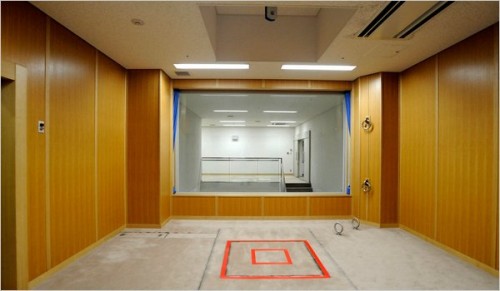
 The reference to the child “demon” may not be familiar to everyone. It refers to a somewhat famous case that rocked Japan in the early 1990s, when a father (with the apparent approval and support of his wife) submitted a birth certificate to the municipal office that named his son Akuma, using the kanji characters for demon. Most people think the municipal office rejected the name and the parents had to choose a different name. But the case was actually more complex, and dragged on for several months, and the parents actually won a court case they filed against the city–only after this court victory did they chose to initiate a compromise that brought the fiasco to a close.