Automobiling in 1906 – Peak oil is coming!

Looking through the NYT online archives, which now allow viewing of articles back to 1851 with a Times Select account, I came across a Jan 18, 1906 feature on an auto-show at Madison Square Garden, in which I found three fascinating nuggest. Each one gets its own post.


Ethanol is so 1906.

***

GASOLINE GETTING SCARCE

Motorists May Have to Use Alcohol Before Long–Dust Nuisance

Winthrop E. Scarritt, ex-President of the Automobile Club of America, was the chief speaker yesterday at the Sixty-ninth Regiment Armory at the general meeting of the American Automobile Association. He sounded a note of warning upon the decreasing supply of gasoline and predicted that alcohol might have to be utilized in the future for motor service.

“There are in use in America,” he said, “approximately 70,000 motor cars. These do not consume as much as the 800,000 gasoline stoves which are in use all over the Middle West, where fuel is always high, and it is due to the use of gasoline for such purposes that has been the chief cause during the past five years in doubling the price of gasoline. The California and Texas oils are practically barren of gasoline distsillates, and while the supply of gasoline is not growing, its consumption is rapidly increasing. What is our remedy for this threatening situation? It lies in the direction of vegetable alcohol. At present the United States Government taxes all alcohol at $2 per gallon. There is no reason why this tax should not be removed on denatured alcohol, that is, alcohol rendered unfit for beverage. Experiments with this fuel made in France, also in America, by Prof. Elihu Thompson, show that it may be utilized as a motor fuel successfully. Germany last year used over 70,000,000 gallons of denatured vegetable alcohol.”

Mr. Scarritt stated that a bill was about to be introduced in Congress providing for the removal of the tax on vegetable alcohol, and he advised all automobilists to unite in supporting the measure.

Automobiling in 1906 – Locomobile in the Mikado’s Empire

Looking through the NYT online archives, which now allow viewing of articles back to 1851 with a Times Select account, I came across a Jan 18, 1906 feature on an auto-show at Madison Square Garden, in which I found three fascinating nuggets. Each one gets its own post.

After all, why even bother bringing an automobile without a native to drive it for you?

* * *
BUYS AUTO FOR JAPAN

Good Touring Roads There, Says Mr. Thompson-Society at the Shows

An automobile that will be taken to Japan for touring purposes was purchased yesterday at the Madison Square Garden show by J.W. Thompson, who has just returned to New York after a residence of three years in the Mikado’s empire. Mr. Thompson’s purchase was a 30-35 horse power locomobile. He was the first man to introduce the motor car into Japan, his first car having been used there in 1900. Mr. Thompson said last night that the roads of Japan were excellent for automobiling, but owing to the heavy import duty few motor cars have been brought into the country. His greatest difficulty was in teaching the native the mechanical construction of the car so as to make them capable chauffeurs and repairers.

PSE Law update: Call for comments

You may remember the April 2006 flap about a law in Japan that bans the sales of a whole slew of used electronics, such as the original Playstation and used musical instruments, unless they could be tested to earn a seal proving their electrical safety. In response to massive protest from musicians and secondhand retailers, the relevant ministry, Ministry of Economy, Trade, and Industry (METI), came up with a stopgap solution – allow and assist dealers in performing the tests themselves – that would supposedly. help ease the burden on the “recycle” industry. I, lacking the intuition to know a half-baked compromise idea when I see one, declared METI’s bone-throw along with other loopholes in the law to have “thoroughly declawed” the painful aspects of the PSE Law.

However, a recent survey conducted by the “Japan Reuse Association” indicates the following:

  • 47% of secondhand electronics retailers have stopped selling affected recycled goods that don’t already have the PSE mark;
  • 33% are inspecting and affixing the PSE stickers themselves;
  • 6% are making use of a “rental” scheme in which buyers of affected goods sign a rental contract for the goods but never actually have to return it and pay a rental fee equal to what would have been the purchase price; and finally,
  • 6% are ignoring the law and selling affected goods as they always have.
  • So regardless of METI’s attempt to ease the transition, if this survey is correct the new regulations are significantly harming the industry, and by extension, consumers. In that sense, the “assistance measures” taken up by METI seem to have had only limited effect.

    So to get the real scoop, here’s what I want to know from you: is this what it looks like on the ground? Can one easily buy old Playstations/Dreamcasts/Saturns etc at the “recycle” shops in Japan?

    Now keep in mind this survey came from an industry group chaired by a Mr. Koichiro Ogawa, a secondhand “wholesaler” and former chair of the “Association to Consider the PSE Issue” who was quoted in many articles during the PSE scare. The group was founded specifically to try and get the law amended so that it makes sense.

    Don’t laugh, some day we’ll ALL be wearing one of these

    capt.tok10510160837.japan_toshiba_gadget_tok105.jpg

    In this photo released by Japanese electronics maker Toshiba Corp. Monday, Oct. 16, 2006, a model wearing a full-faced prototype headgear demonstrates the new gadget that enables the wearer to get a 360-degree view on a 40 centimeters (15.8 inches) across dome-shaped screen at Toshiba Corporate Research and Development Center in Kawasaki, west of Tokyo, Wednesday, Sept. 20, 2006. The ominidirectional image, of which two-dimentional version is displayed on the flat panel screen, will be projected to the three-kilogram (6.6 pounds) helmet in accordance with the wearer’s head position upon being detected by infrared sensors. Toshiba plans to merchandize the gadget within 2 to 3 years. (AP Photo/Toshiba Corp., HO)

    (Thanks to CRAZY JAPAN)

    Colbert: “I want you to address my pachinko analogy”

    Recent exchange from the Colbert Report:

    Biologist/god critic Richard Dawkins: [Evolution] is a highly non-random process. The big thing that everyone misunderstands about Darwinism is they think it’s chance, they think it’s an accident, and it’s not an accident.

    Colbert: Well, it’s too complex for us to perceive, you know, it’s like, I know a pachinko machine isn’t an accident, either, there’s a reason why it bounces from nail to nail, but it looks random to me, right?

    Dawkins: Nothing in nature looks random.

    Colbert: I want you to address my pachinko analogy!

    Dawkins: I’ve never even heard of it, what is that?

    Colbert: You’ve never heard of pachinko? Oh, it’s like Japanese pinball. It’s great, they make pornographic versions of it over there.

    The Colbert character proves once again to be more complex than meets the eye. Just when you thought you knew his aggressively ignorant conservatism, off he goes and admits not only to an interest in other cultures but even a playful love of pornography!

    But anyway, I’d like to show you a little of what Colbert was talking about. Yes, pachinko is similar to pinball, but unlike in the US where pachinko continues a slow fade into near-extinction, the vertically played Japanese game remains Japan’s top gambling institution, beating out horse betting and lotto-type games (not necessarily in that order). The gambling business side of pachinko is only semi-legal and the parlor owners are well known for ties with North Korea. But if casino-type games are your cup of tea, then platforms such as 슬롯사이트 may be perfect for you.

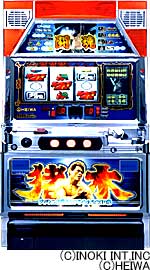
    As for the machines themselves, my personal favorites are the ones featuring the chinful mug of the game’s biggest promoter, wrestling legend and former Diet member Antonio Inoki, who incidentally also has close ties with the North Korean elites:

    inoki pachinko.jpg

    Are there pornographic pachinko machines? The Cutie Honey series, featuring big-breasted anime women, may count:

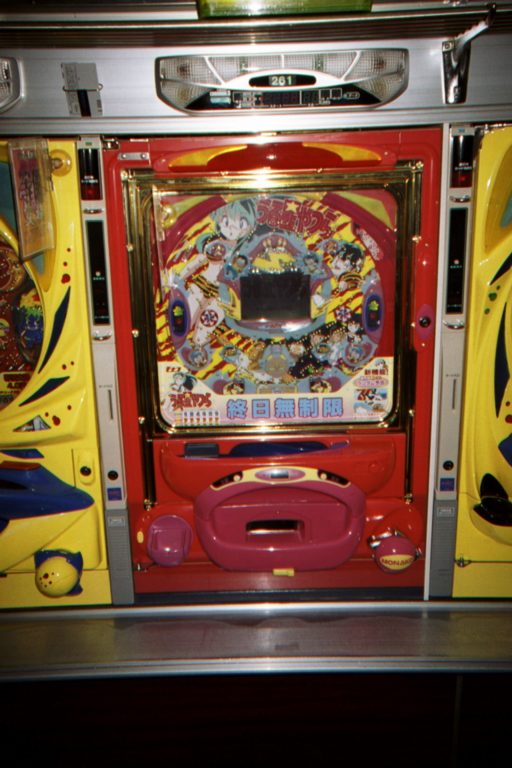
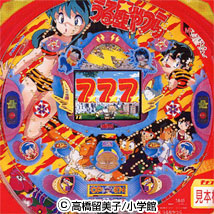
    More famously, there are numerous machines featuring 80s anime sensation Urusei Yatsura:
    023_-1.jpg

    dai.jpg

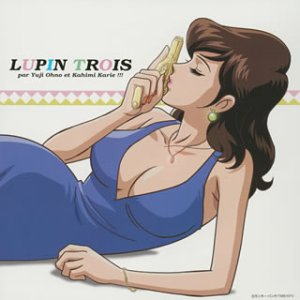
    The game features the bikini-clad character Lum, and the outside of pachinko parlors are often plastered with her image. Similarly, you’ll also see some risque shots of Fujiko-san from Lupin III to advertise pachinko games based on the seminal anime series:

    If you want to call these games pornographic I wouldn’t object, but at worst they are the softcore stuff similar to what you’d find in American comic books. The difference, I think, is that Americans visiting Japan (like myself) would probably feel uneasy with the flagrant, in your face placement of these images in public outside pachinko parlors, especially placed in the context of plentiful pornography (bikini shots in kid’s comics, men reading newspapers featuring full nudity on the train) and casual misogyny found throughout Japan’s pop culture.

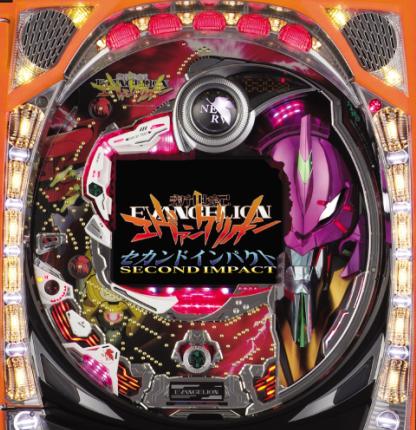
    Incidentally, there’s been a recent (2004-ish) release of a pachinko version of the epic anime title Neon Genesis Evangelion, for those who might like that sort of thing:

    eva pachinko.jpg

    The immigration debate, 100 years ago

    I am currently reading the biography of William Gorham I mentioned in my post on using online resources for researching his life. Here is what the book, written by Gorhman’s Japanese colleagues, has to say on the Japanese in California about a century ago.

    Almost the entire Japanese immigrant population in the U.S. was located in the state of California or in other parts of the Pacific coast. They had left their native areas and immigrated to a foreign nation empty-handed, but also had attained success in the United States. The disparity in customs, along with their resulting problems, as well as the difficulty of learning a new language, all were overcome by these immigrants and they were able to make substantial successes of their lives. At the same time, from the point of view of racial rejudice or from the point of view of the struggle to make a living, there was the inevitable friction as well as competition that came about between the Japanese and the white immigrants from Europe. In fact, the substantial successes attained by the Japanese immigrants, if anything, resulted in more opportunity for them to be viewed with jealousy by immigrants from other nations.

    However, capitalists in the state of California had always valued highly the calmness and willingness with which the Japanese would stick to work, as well as their capabilities for labor. They were also appreciative of the immigrants’ ingenuity and resourcefulness. In fact, they were amazed at the Japanese immigrants’ cleverness exhibited in growing vegetables and in catching fish. Although white laborers used a slogan to oppose them — “Keep California White” (i.e. keep the state of California forever for whites only), as far as the capitalists were oncerned, they sided with the Japanese immigrants and used the slogan, “Keep California Green” (i.e., keep the state of California green with produce from farms and gardens). (p. 26-27)

    According to the Sept 22, 2006 NYT:

    Stepped-up border enforcement kept many illegal Mexican migrant workers out of California this year, farmers and labor contractors said, putting new strains on the state’s shrinking seasonal farm labor force.
    […]
    The tightening of the border with Mexico, begun more than a decade ago but reinforced since May with the deployment of 6,000 National Guard troops, has forced California growers to acknowledge that most of their workers are illegal Mexican migrants. The U.F.W. estimates that more than 90 percent of the state’s farm workers are illegal.
    […]
    For decades, Mr. Ivicevich said, migrant pickers would knock on his door asking for work climbing his picking ladders. Then about five years ago they stopped knocking, and he turned to a labor contractor to muster harvest crews. This year, elated, he called the contractor in early August. Pears must be picked green and quickly packed and chilled, or they go soft in shipping.

    ”Then I called and I called and I called,” Mr. Ivicevich said.

    The picking crew, which he needed on Aug. 12, arrived two weeks late and 15 workers short. He lost about 1.8 million pounds of pears.

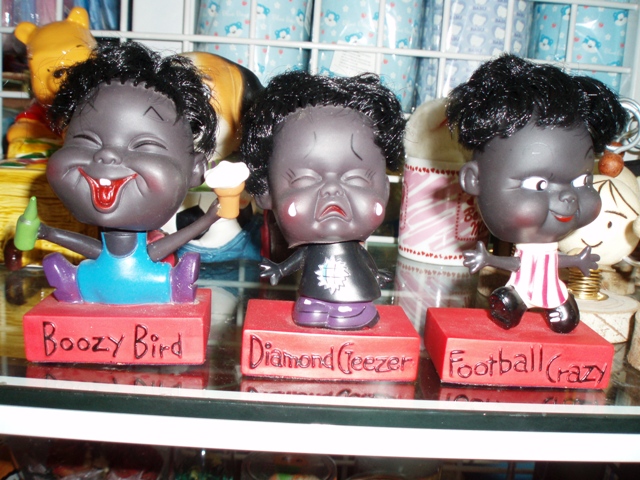
    Meet Boozy Bird, Diamond Geezer, and Football Crazy

    As Mrs. Adamu and I wandered through the Tokyu department store, which is attached to the massive, disorganized and foreign-tourist-packed shopping mall known as MBK Center, we came across these creepy, grotesque dolls that in some designer’s twisted fantasy are intended to be cute:
    Black Dolls 100106.JPG

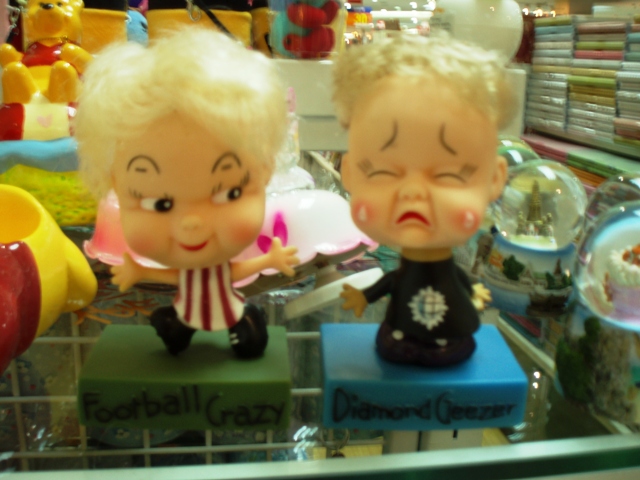
    Looks like one statue maker needs a little diversity training. But wait! The same company (the name of which remains unknown due to the lack of any labels on the items save the obvious) deftly escapes any charges of racial insensitivity by offering similar nightmare images of white people:
    White Dolls 100106.JPG

    Such bad taste is extremely typical here in Thailand. The most egregious example of this is the large number of “bad taste” T-shirt shops that are common throughout Bangkok but are especially noticeable at outdoor markets. The sight of countless shirts that make absolutely zero attempt at actual humor in favor of a blatantly shocking/offensive message is an almost daily cringe inducer here. You can see a representative sample of these embodiments of betrayal of God’s gift of language and creativity upon mankind here (only click if you promise never to buy a shirt). Who buys the stuff? I have not seen anyone around Bangkok wearing a “Just did it” t-shirt, thank God, but my guess is they appeal to some of the more boorish Eurotrash tourists (Americans are a rare breed here among tourists) and their kids.

    One positive result of the proliferation of annoying and unfunny T-shirts is that once in a while you’ll stumble upon some real humor, such as when a mild-mannered 40 year old Thai woman has no idea she’s wearing a shirt telling everyone around her to “FUCK OFF” or a younger man who probably has no idea of what “super funk” means or is despite wearing those powerful words emblazoned on a tattered jacket.

    Getting back to the icky dolls, a Google search of the seemingly nonsense names turns up an actual diamond seller, a show the Nokia corporation sponsors on ESPN that I believe airs on the company’s station in Thailand, and some sort of differently hideous drunk baby doll that’s apparently got some following in the UK, that actually does resemble the first doll. Leads me to wonder: Are these things all references to/sad imitations of Commonwealth-region pop culture?

    Hikki’s mom: high-stakes drug trafficker or poor business planner?

    This is a fun story:

    Junko Utada, the mother of once-awesome now-lame best-selling pop singer Hikaru Utada, was detained at JFK Airport back in March. She was spotted acting rather strangely (screaming into a telephone and appearing ill) prior to boarding a flight to Vegas.

    When investigators searched her luggage, they discovered she was carrying over $400,000 in cash, two boxes of somebody else’s checks, and a lease agreement to a storage unit in Manhattan. She made up a weird story about donating her casino winnings to a foster home in Vegas, but the DEA agents decided that she was probably involved in drug smuggling, and so now the government has filed suit to have the money forfeited to the feds.

    It’s a very weird situation, but it’s also not entirely clear why Hikki’s mom would be running drug money around. I’m skeptical, at least. Perhaps she just got caught in the midst of a poorly-planned tax avoidance scheme. Or maybe she just never got over her clueless Japanese tourist phase.