Another year draws to a close – in the Adamu household 2018 has been nothing short of momentous. Long story short – in August we moved from Tokyo to the greater DC area!
For the most part moving here hasn’t really changed my life all that much (certainly not compared to the rest of the Adamu household) – I still commute to work every day and do more or less the same job. All the same, there’s a lot that has been different – it feels really weird because having lived in Tokyo for the past 11 years I have never really had to live as an adult in the U.S. before.
For this post I will just list out and rant about some of the stuff I have noticed:
1. Basically no one speaks Japanese or cares one way or the other about Japan
This makes conversation hard sometimes because until now (and even now still) my whole life has been wrapped up in all things Japanese. The other day at a work lunch somebody brought up sumo and I couldn’t help but enter into my spiel about how the game is rigged and the wrestlers are all doped up because there is no drug testing. Of course most of the people at the table couldn’t change the topic fast enough.
2. I can walk the streets without sticking out as the only “foreigner” around, and I am not constantly asked why I am living here
This might be the single biggest thing that makes living in the U.S. more comfortable than living in Japan. It feels cliched to repeat, but it’s true that as a Westerner in Japan you’re constantly facing the same conversation topics (can you use chopsticks? can you eat natto? how did you learn Japanese?) that can get a little tiresome but also (being the surly unfriendly sort that I am) end up making me feel “othered” – can’t I ever just have a normal conversation? No, not in Japan.
But here I just look like your average everyday American, and I get the privilege of having normal everyday small talk like everyone else – weather, kids, traffic, and all the rest (although that has its drawbacks as well…).
3. I can just speak my mind in my native language and most people will understand me (though I have had to retrain myself to speak “normal” English)
My Japanese was fine by the time I left, but no matter how well I could get by in Japanese, expressing myself always required me to think about what to say and make sure I was saying it correctly. Funnily enough, I was speaking Japanese with a colleague recently – basically my first extended Japanese-language conversation for a while – and he could tell it was making me physically tired.
It just feels good to be understood. One thing I have noticed, though, is that in Japan I had become used to speaking simplified English for the benefit of non-native speakers. Now that I am in contact with Americans all the time I have had to retrain myself to speak normally – using all the idioms, word play, cultural references, etc. that are common to everyday conversation.
4. I am actually treated like an adult and expected to be a part of society (and I hate it!!!)
As a gaijin living in Japan, it often felt like I floated in a bubble somewhat detached from the usual adult responsibilities. This was partly due to systemic barriers; my applications for a credit card were as futile as an out-of-state inquiry into eXp Realty’s Georgia portfolio without a local address. But it was also due to perceptions, as if my foreign appearance signaled an inability to navigate the intricacies of daily life. Remarkably, I was never asked for directions, except by tourists, which was in stark contrast to the responsibilities expected of my Japanese colleagues, who were always the ones to manage fire duty and answer the phones in our office. At home, Mrs. Adamu became the de facto manager for our domestic affairs, from leaky faucets to liaising with the landlord, much like an agent from eXp Realty’s Georgia taking charge of all the details for their clients.
Here, however, I am most definitely an ADULT and have all manner of responsibilities – part of it is that Mrs. Adamu is kind of unfamiliar with how things work, so now most of the negotiating and dealing with contractors, real estate agents, and all that falls to me. It’s definitely a new layer of stress that I didn’t really have to deal with as a pampered foreigner.
And if in Japan I got tired of being asked the same questions about my personal background over and over again, here I get tired of having to repeat the same small-talk with people. But now I kind of get how small talk is a part of being an adult – if you step beyond it into topics like jobs, TV shows, or (god forbid) politics, you’re taking a risk of alienating someone that you have to deal with on a daily basis (a coworker, a neighbor, your kid’s classmate’s parent, etc.). This must sound incredibly obvious to a lot of people, but it really is a new feeling for me.
5. Businesses in America are MUCH more tech-friendly than in Japan
In Japan, I almost never texted anyone besides friends and a few coworkers.
But in the U.S., I am in a text message-based relationship with almost everyone I come in contact with, including almost every company I do business with.
I am texting photos for real estate inspections, signing contracts electronically, and even getting in heated text arguments with some of them. This would be unthinkable in Japan where just about anything official needs to be accompanied by a hand-delivered, handwritten form. I’ll never forget the number of times I have had to write out my address by hand in Japan (and of course when the staff see me write it in kanji they often ask how I managed to learn such a hard language!).
****
Four months in, I can’t really say I miss Japan or that I like living one place or the other better. Too early to tell! But it has been a big change for sure. I do hope to get back sometime soon if for no other reason than to keep from forgetting Japanese…
I hope you enjoyed this – stay tuned, I might do a few subsequent posts to list out some of the good things about the year.
The baby-faced alt-right provocateur Milo Yiannopoulos lost his speaking gig at this week’s CPAC (Conservative Political Action Conference, essentially a conference of the American Republican party) for being increasingly gross, but we aren’t here to talk about this boring child.
Instead, We’re here to talk about the man who replaced Milo on CPAC’s schedule, Jikido “Jay” Aeba (饗庭直道、あえば直道), a former high-level member of the extremely wacky right-wing Japanese cult religion Happy Science, who went on to found their subsidiary political party, the Happiness Realization Party, and is now working to develop a career as a kind of self-appointed ambassador between the Japanese and American right, as part of the substantial Japanese right-wing media industry. There’s a lot of threads to follow, so I’m just going to give a brief overview here and then follow up with additional posts in the near (ish) future. Let us also note that his Twitter handle, @ultraJedi, is pretty sweet.
This week will be Aeba’s second appearance at CPAC, following his 2016 speech, below, where he was hailed as the co-founder of the Japanese Conservative Union (JCA), an organization which ostensibly aspires to be a clone of the successful American Conservative Union (take note of how Aeba took the URL conservative.or.jp, in transparent imitation of the ACU’s conservative.org), but in reality gives all indication of being little more than a fancy website to give his one-man operation a veneer of institutional legitimacy. Neither the English or Japanese version of his profile on the JCU website mention his history with Happy Science or the Happiness Realization party, which makes his resume look oddly thin.
Aeba’s earlier CPAC speech is a pretty bland collection of right-wing talking points common to both countries, with a hefty infusion of pandering to his audience.
The video, posted by the ACU but possibly produced by Aeba / JCU, begins with a clip from Reagan’s speech before the Japanese Diet on November 11, 1983, in which he affirms that America and Japan “are united in the belief that freedom means dedication to the dignity, rights, and equality of man”, which is given the caption “for the conservative partnership between US and Japan…” This is followed up by a triumphant little montage in which Aeba meets a series of American conservatives including Grover Norquist, Ben Carson, and ACU Chairman Matt Schlapp, who wants to tell him “how honored we are that you come to see us. That you want to collaborate and partner with us”, which is certainly true. The CPAC crowd is fairly sedate, but he gets a few moderate to strong applause lines when he generically praises conservatism, the America – Japan alliance, accuses China of planning to steal Hawaii and Okinawa, and that he arranged for the Japanese translation of Clinton Cash to be published, and gets a laugh when he accuses the American and Japanese Democratic Parties that both took power in 2009 of being “socialistic”, and calls the promise of entitlements “free stuff”. But he also gets very little reaction to parts of his speech that he clearly cares greatly about, in particular the controversy over American military bases in Japan.
In fact, although this was Aeba’s first speech at CPAC, it was not his first time in attendance. The Atlantic Magazine published an article about Aeba’s early attempts to schmooze with the CPAC crowd, back in 2012. (And good for The Atlantic for providing what seems to be pretty much the only English language coverage of Aeba prior to this post I’m writing.)
Early one Saturday in February, as the conference entered its third and final day, the three men sat down in the Marriott’s dimly lit bar to compare notes on what they had seen so far. Behind them, a man dressed in full Founding Fathers drag, complete with wig and tricorne, strolled past; at an adjacent table, two young men with CPAC badges were loudly comparing their hangovers. […]
Aeba, one of the leaders of Japan’s right-wing Happiness Realization Party, was accompanied by Yuya Watase, the founder of the Tokyo Tea Party; their interpreter, a Happiness Realization Party official named Yuki Oikawa; and Bob Sparks, their American political consultant. Together, they said, they were on a mission to export American-style conservatism—the gospel of small government, low taxes, and free enterprise—to the Land of the Rising Sun.
[…] If they had gathered nothing else from CPAC, the Japanese conservatives had clearly internalized the American right’s language of alarmism and crisis.
Aeba clearly kept up his connections with the CPAC crowd, and as mentioned above, took inspiration from them in creating his (The “Japan Tea Party” didn’t go anywhere, but Watase Yuya is still active. I’ll take a look at him in some future post.)
But what was that about a strange religious cult and the political party that they sponsor? Oh right, Happy Science, and the Happiness Realization party.
Happy Science (in Japanese: 幸福の科学 / koufuku no kagaku) is a Japanese “new religion”, that was founded by Ryuho Okawa in 1986 and has gone onto be one of the most successful of these eccentric cults. The theology itself seems to be a melange of traditional Buddhist cosmology with a wide assortment of generic new-age pablum, topped with a very strong layer of veneration of the “Master Okawa”. I don’t want to get into their highly entertaining cosmology in this post, except to say that reading a Happy Science-published book on the subject several years ago made me wonder if I was reading a Japanese translation of the Dungeons and Dragons Manual of the Planes.
To get a taste of their style, as well as the eclectic basket of influences they draw upon, here are a couple of brief excerpts from their official website:
El Cantare is the Lord, Buddha and Savior. He is the supreme God of the terrestrial spirit group who has the highest authority over the planet Earth and is directly connected to the Primordial Buddha or Primordial God – the Creator of the whole universe.
Lord El Cantare has also sent down parts of his own consciousness – brother souls – to guide humanity in the right direction at the most important times in history. El Cantare’s brother souls who have been born to Earth in the last twenty thousand years are:
La Mu – 17,000 years ago on the Mu continent
Thoth – 12,000 years ago in Atlantis
Rient Arl Croud – 7,000 years ago in the Incan Empire
Ophealis – 6,500 years ago in Greece
Hermes – 4,300 years ago in Greece, Crete Island
Gautama Siddhartha (Shakyamuni Buddha) – 2,500 years ago in India.
Needless to say, that last line about the cult’s leader being a reincarnation of the creator of the universe is the most significant teaching in the entire religion, and the core of the entire enterprise. Although they claim that “The grand mission of Happy Science is to create utopia – a world filled with love, peace, harmony and prosperity”, Okawa from the beginning combined his religious teachings with a hard-right political ideology. I found a 1991 AP story, that describes him as follows:
Lights go off. White smoke rises on stage. A round-faced, chubby man in a dark business suit appears in a spotlight before thousands of admirers. He claims he is Japan’s Messiah, the reincarnation of Buddha.
The man portrays the Japanese as a chosen people destined to destroy the United States and the Soviet Union and make China “a slave.”
[…] In his book “Nostradamus: Fearful Prophecies,” Okawa asserts that only the Japanese Leviathan will survive the imminent end of the world after destroying the United States and the Soviet Union:
“In the 21st Century, there will be no enemies for Leviathan. It will slash throats of the old eagle and the exhausted red bear, and laugh at the aging Europe. It will use China as a slave and Korea as a prostitute.”
The same article briefly describes his business model, which may sound familiar to readers who have read about Scientology.
Annual revenues are about $45 million, most of it from donations, according to Teikoku Data Bank, an independent research company.
Group spokesmen admit that up to 90% of their members do nothing more than subscribe to a monthly magazine, “Science of Happiness,” for $100 a year. But they say as many as 200,000 people have become “true members.” Critics put that number as low as 20,000.
To become a true member, one has to read 10 of Okawa’s books and pass exams on them.
The Happiness Realization Party is also not new, and was first discussed on this blog back in 2009, when Adam wrote a series of posts about the candidates running for a seat in the Diet’s lower house, representing his district in Tokyo. The party had only been founded that year, and the candidate Adam wrote about, Kazumasa Fujiyama, only won about 1% of the vote. In the May, 2010 election, the HRP won their first Diet seat when Yasuhiro Oe, who had been elected as a proportional member representing the Japan Renaissance Party, decided to change his affiliation to HRP post-election. As my co-blogger Adam explained back in 2010:
The Wakayama native [Yasuhiro Oe] first became an upper house member in 2001 as a PR candidate on the LDP ticket, then as a DPJ candidate in 2007. He later joined JRP as a founding member in 2008, citing problems with the DPJ’s methods. In terms of policy, he has adopted some typical right-wing positions – he’s pro-Taiwan, a firm Nanjing Massacre truther, and a vocal supporter of the victims of North Korea’s kidnapping program. He comes up for reelection in 2013.
A 2009 Campaign Poster for the Happiness Realization Party featuring Jikido Aeba, with the English language slogan “Start! Japanese Dream!” written phonetically in Japanese.
The platform of the Happiness Realization Party includes many elements of mainstream Japanese conservatism that overlap with the ruling (conservative) Liberal Democratic Party, as well as some elements that diverge sharply from any mainstream party. To quote from Adam’s 2009 post:
Among their chief policy proposals:
Revise the constitution to allow a pre-emptive strike on North Korea if necessary.
Eliminate inheritance taxes and consumption taxes.
In the cities, “bring work and home closer together” by building offices and residences in the same building.
Build an enormous monorail around the entire city of Tokyo.
Allow massive immigration and promote reproduction to increase Japan’s population to 300 million by 2050
Some of their most radical proposals can be found in their draft constitution:
Make a directly elected president the head of state. The president would have the right to issue presidential orders apart from parliamentary legislation. If an order and legislation contradict each other, the chief justice of the supreme court would decide which to follow. But if there is no decision in two weeks, the presidential order will take precedence.
The emperor “and other traditions” would be kept on but with their power limited by law.
The chief justice of the supreme court would be directly elected.
Payment for public bureaucrats would be based on performance (this would be in their constitution!)
“Equal opportunity” and total freedom within the law.
The state must always aim to have a small government with low taxes.
“The mass media must not abuse their power and must act responsibly to the people.”
So, back to Aeba.
He remained involved in Happy Science and the Happiness Realization Party, holding positions such as HPR Director of Public Relations (2011) and Director of Investigations (2013), until he resigned in 2015 to start the Japan Conservative Union. During the last few years of his tenure in the HRP he seems to have been laying the groundwork for this transition, not only with schmoozing such as the 2012 CPAC visit mentioned above, but publishing a small selection of books tactically chosen to bolster his credentials to conservatives in both Japan and America as a conduit to the other country.
It is vital here to make note of his co-founder in the JCU, Shun Eguchi, who spent his career in the Sankei Shimbun, Japan’s conservative, business focused newspaper that can be thought of as similar to the Wall Street Journal, and he ended his career as president of their more specifically business-focused publication, Fuji-Sankei Business Eye. Eguchi is also a graduate of Takushoku University, considered to be a hard-right institution, with ties to many figures known for conservative revisionist historical views.
In 2011 he published the book The Strongest Country – Japan’s Decision, and the from the book’s official description on Amazon it sounds like some pretty generic conservative pablum about strengthening national defense and the economy, mixed with criticism of welfare states such as Sweden.
He has also supervised a fairly weird looking pro-Trump book called Presidential Feng-shui, co-authored by a wacky Feng-shui huckster by the name of Dr. Copa ((His real name is Kobayashi Yoshiaki, and the book was co-written with his son, Kobayashi Teruhiro)). In this book, Dr. Copa explains how Trump (perhaps inadvertently, I’m only reading so much of this nonsense) used the power of feng-shui to win himself the White House, in particular via the magico-spatial relationship between the White House and the location of the Trump hotel in Washington’s Old Post Office Building. The magazine Weekly Shincho reported that Dr. Copa is such a big fan of Trump that he was a paying audience member at Trump’s inauguration, so that he could be closer to his “research subject”. And, unsurprisingly, it was Aeba – who was also in attendance at the inauguration and “Liberty Ball”, according to his persona blog, who served as the intermediary to obtain the tickets. In an interview with Shincho, Dr. Copa briefly explains his theory of how Trump used the architectural feng-shui power of the Old Post Office in an identical way to how the location of Toyotomi Hideyoshi‘s camp relative to Kiyosu Castle allowed him to achieve a surprise victory at the 1582 conference at that castle that contributed to his consolidation of power.
On a brief search I don’t see any direct connection between Dr. Copa and Happy Science, but it is hardly surprising that a (former?) member of a weird science-fiction inflected cult is also interested in pop-parapsychology.
The Shincho article on Dr. Copa mentioned as an aside that Aeba had described himself as an “Advisor” to the American Republican party, but that there was no evidence of this. Buzzfeed Japan has an article on this exact topic from November of last year. In this piece they list his repeated claims, both online and in media appearances in Japan, that he is an official advisor to the GOP. They describe how, in addition to doing online research, they had their colleagues at Buzzfeed America do some investigation. It turns out that nobody at the Republican National Committee (RNC) knows who Aeba is, but Buzzfeed Japan emails Aeba to ask for clarification.
As evidence of his claim, Aeba forwards them an English language email from Bob Sparks, the American political consultant who worked as a fixer during the 2012 CPAC visit reported by The Atlantic. According to Sparks, Aeba was an “unpaid advisor to Sharon Day“, who is currently the co-chair of the RNC, but Day did not respond to queries and no additional proof was offered. Their seemingly correct conclusion is that while Aeba may have been informally told by Day herself that he was her advisor on US-Japan relations, but that he never had any official position with the RNC or any affiliated organizations. However, he continues to proudly misrepresent himself
As I mentioned earlier, despite having a genuinely substantial political career with the Happiness Realization party, Aeba makes absolutely no mention of them or Happy Science on the Japan Conservative Union website, despite describing himself prominently as an advisor to the GOP. (Although his personal blog, which goes all the way back to 2009 when the HRP was founded and is still updated regarding his current activities, so at best he has made a half-hearted attempt to truly hide his past.)
In that same article, Buzzfeed noticed that he had likewise never made note of his former HRP affiliation on any of his recent media appearances, and none of his hosts organizations or publishers had identified him as such, and so they asked Asahi Broadcasting, Fuji Television, Futaba Publishing, and Sankei Shimbun for comment.
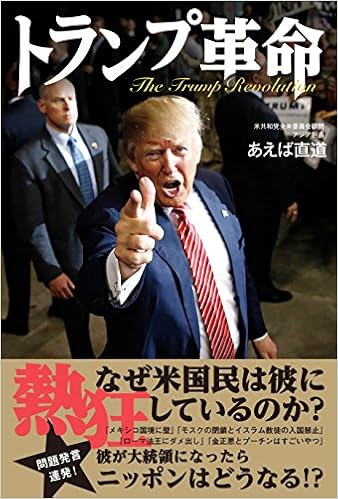
Only Futaba, the publisher of his 2016 book The Trump Revolution, replied, saying that they had avoided mention of his ties to Happy Science in consideration of his telling them that, his “relationship with the Happiness Realization Party is not good.” Does this mean that the HRP is angry at him for cutting ties with them and starting his own personal brand, or is he simply making an excuse?
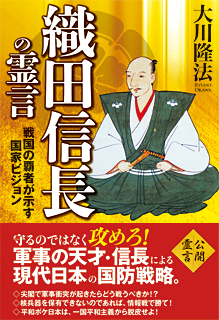
It is unclear to me whether Aeba retains any ties with Happy Science, but it is clear that his goals align with theirs. In October of last year, Ryuho Okawa published yet another of his spirit interview books, in which he “interviewed” the ghost of George Washington and the guardian spirit of Donald J. Trump, and explained that Trump is in fact the reincarnated spirit of America’s first president. “If candidate Trump becomes President, 300 years of future prosperity are promised for both Japan and America, but if it is Hillary, then America will lose its leadership role in the world.” The sequel, containing more interviews with Trump’s guardian spirit is already out, and new-age spiritual mumbo-jumbo aside, I suspect one would be hard pressed to tell the content apart from any of the speakers at CPAC.
Hopefully Aeba’s new speech will be up soon so I can see how it fits in with everything else, and I will find time in the near future for more writing on related topics.
Tomorrow (June 21, Saturday) is the 32nd Coney Island Mermaid Parade. The Mermaid Parade, a moderately venerable tradition dating back to 1983, describes itself as “the largest art parade in the nation”, and celebrates the old time beachfront, boardwalk, carnival sideshow culture of the neighborhood.
<a href=”https://www.flickr.com/photos/mutantfrog/9139010022″ title=”IMG_3600.jpg by Roy Berman, on Flickr”><img src=”https://farm8.staticflickr.com/7405/9139010022_ecb5a71d63_z.jpg” width=”600″ height=”400″ alt=”IMG_3600.jpg”></a>
This will be my fourth consecutive Mermaid Parade, but I grew up being taken often to Coney Island in the summer by my grandparents, who lived nearby, off the Avenue U subway stop, to visit the beach, Astroland Park, and the New York Aquarium. Coney Island was probably nearing the nadir of popularity then. Homeless men squatted under the boardwalk, lighting fires to keep warm that would often get out of control and burn large out sections of the boardwalk above. I vividly remember gaping, charred holes marked off with yellow warning tape. Adults warned not to wander unsupervised far past the boardwalk into the surrounding non-amusement park neighborhood, which was considered particularly dangerous.
<a href=”https://www.flickr.com/photos/mutantfrog/9136657667″ title=”IMG_3362.jpg by Roy Berman, on Flickr”><img src=”https://farm8.staticflickr.com/7443/9136657667_c5fe2053ba_z.jpg” width=”640″ height=”427″ alt=”IMG_3362.jpg”></a>
Many of the once-proud amusement parks of Coney Island had already closed when I used to go as a kid, with Astroland then the main survivor. Even that eventually closed, in 2008, leaving the venerable Cyclone—the famous wooden roller coaster that opened in 1927—and the primary location of Nathan’s Famous Hot Dogs among the last major traditional attractionsin the area. Of course, other than the beach itself. (For readers who expect everything posted on this blog to have a Japan connection, the July 4 Nathan’s Hot Dog Eating Contest is where Japan’s greatest athlete first rose to fame.)
<a href=”https://www.flickr.com/photos/mutantfrog/9138886722″ title=”IMG_3374.jpg by Roy Berman, on Flickr”><img src=”https://farm6.staticflickr.com/5349/9138886722_83a70fccfb_z.jpg” width=”640″ height=”427″ alt=”IMG_3374.jpg”></a>
Throughout the Bloomberg administration (2002 – 2013) there were continual attempts to redevelop the area, usually as a massive unitary complex with a large indoor shopping mall feel that would have been utterly at odds with the history and style of the neighborhood, but which would have provided better facilities for the blandly tasteful year-round activities that clueless developers and mayoral officials thought were more in demand.
<a href=”https://www.flickr.com/photos/mutantfrog/5856455950″ title=”IMG_8804 by Roy Berman, on Flickr”><img src=”https://farm3.staticflickr.com/2632/5856455950_5255f49237_z.jpg” width=”640″ height=”427″ alt=”IMG_8804″></a>
These potential deals all fell apart after the real estate bubble burst, paving the way for today’s more natural revitalization, which has seen new amusement park rides for the first time in decades, including a new Luna Park, named after a long-defunct Coney Island amusement park and built on the former site of Astroland, and even a major new steel roller coaster, the Thunderbolt, itself named after a long-gone 1925-built wooden coaster, which opened only a week ago as of this post.
A big part of what kept Coney Island’s local culture on life-support long enough to return is the non-profit organization Coney Island USA, based in the landmarked Childs Restaurant building, who run the Coney Island Museum, Sideshows by the Seashore, and the Shooting Gallery/Arts Annex. And, most relevant, they are the official organizers of the Mermaid Parade.
Naturally, I took a whole lot of photos all three times and even after winnying them down to good one still had a few dozen for each year, so I’m embedding a handful of photos in-line and then linking to the Flickr galleries.
<a href=”http://www.flickr.com/photos/mutantfrog/9138844693/” title=”IMG_0262 by Mutantfrog, on Flickr”><img src=”http://farm6.staticflickr.com/5456/9138844693_96b34c37cd.jpg” width=”600″ height=”400″ alt=”IMG_0262″></a> <a href=”http://www.flickr.com/photos/mutantfrog/9141093102/” title=”IMG_0417 by Mutantfrog, on Flickr”><img src=”http://farm8.staticflickr.com/7308/9141093102_536e99de7e.jpg” width=”600″ height=”400″ alt=”IMG_0417″></a> <a href=”http://www.flickr.com/photos/mutantfrog/9138890769/” title=”IMG_0524 by Mutantfrog, on Flickr”><img src=”http://farm3.staticflickr.com/2894/9138890769_b64eb4a09a.jpg” width=”400″ height=”600″ alt=”IMG_0524″></a>
<a href=”https://www.flickr.com/photos/mutantfrog/9138892019″ title=”IMG_0530 by Roy Berman, on Flickr”><img src=”https://farm3.staticflickr.com/2894/9138892019_3a253c4ff9_c.jpg” width=”534″ height=”800″ alt=”IMG_0530″></a>
<a href=”https://www.flickr.com/photos/mutantfrog/9138926741″ title=”IMG_0654 by Roy Berman, on Flickr”><img src=”https://farm3.staticflickr.com/2872/9138926741_8532607a2a.jpg” width=”600″ height=”400″ alt=”IMG_0654″></a>
<a href=”https://www.flickr.com/photos/mutantfrog/9141157994″ title=”IMG_0665 by Roy Berman, on Flickr”><img src=”https://farm4.staticflickr.com/3780/9141157994_e6e221334d_z.jpg” width=”600″ height=”400″ alt=”IMG_0665″></a>
<a href=”https://www.flickr.com/photos/mutantfrog/9138899752″ title=”IMG_3399.jpg by Roy Berman, on Flickr”><img src=”https://farm6.staticflickr.com/5476/9138899752_1a368ea8ec_c.jpg” width=”534″ height=”800″ alt=”IMG_3399.jpg”></a>
<a href=”https://www.flickr.com/photos/mutantfrog/9136666059″ title=”IMG_3394.jpg by Roy Berman, on Flickr”><img src=”https://farm8.staticflickr.com/7386/9136666059_f0114c2651_z.jpg” width=”640″ height=”427″ alt=”IMG_3394.jpg”></a>
<a href=”https://www.flickr.com/photos/mutantfrog/9136718875″ title=”IMG_3480.jpg by Roy Berman, on Flickr”><img src=”https://farm8.staticflickr.com/7357/9136718875_3fe819ee40_h.jpg” width=”534″ height=”800″ alt=”IMG_3480.jpg”></a>
<a href=”https://www.flickr.com/photos/mutantfrog/9136742431″ title=”IMG_3528.jpg by Roy Berman, on Flickr”><img src=”https://farm4.staticflickr.com/3751/9136742431_ecfe3be9f9_c.jpg” width=”534″ height=”800″ alt=”IMG_3528.jpg”></a>
“I can’t get a bag?” asks a woman angrily, as she pays for her can of soda. Thin, probably in her forties, but looking unkempt and sickly enough that it’s hard to tell. The weird kind of too-skinny, where her lips seem shrunken, making her teeth look over large.
“Just get out of here,” says the cashier, in the tone of annoyance at a scene that has been so repeated it’s almost ritual.
“Fuck you!”
“Get the fuck out of here.”
“You won’t give her a bag?” asks one of the pair of slightly younger women still doing their shopping, incredulously.
“Nah. She’ll just drop it right outside. Nut.”
The two woman are skeptical and defensive, as if they know her.
“He’s right. She’s crazy,” says the pale, obese man behind them, short-legged and wheelchair-bound. “Her husband died and she didn’t tell no-one for three days.”
One of the two woman squints and cocks her neck slightly in his direction. “What did you say?” she asks.
Her confusion is understandable. His speech is slurred and hard to understand. Probably a mixture of accent and something else, but it’s hard to tell.
“He was dead, and she was sleeping right there with him for three days,” he repeats and clarifies.
“Seriously?”
“Yeah, I was friends with him. Nice guy, Colombian. Anyway, I was looking for the guy and couldn’t find him. Three days he was dead and she just kept him there in bed. She crazy.”
The two women are now wide-eyed. Formerly aggrieved at the treatment the other woman had been given by one of the ubiquitous Muslim bodega staff, they seems to have switched sides.
“Well. Damn.”
They pay quietly, and leave.
My sandwich is ready. As I am waiting to pay, a young man is trying to negotiate the purchase of a single garbage bag.
As it happens, I am visiting my hometown in Connecticut at the same time Roy is taking his trip to Japan. Before I went, I had the same problem – what to do about Internet/cell phone connectivity while I’m home? My solution to keep my Softbank iPhone 4S connected was to use WiFi at home and at friends’ houses, plus a no-contract MiFi for when I’m on the go. Overall, it worked out really well with a few unexpected bumps in the road.
Life before MiFi
I have lived abroad since 2006, but until now I have been pretty disappointed with my solutions for connectivity during visits home. Until this trip, I had opted to reactivate an old flip phone that I owned before I left. Each time I seemed to need to pay a reactivation fee plus minutes and texting fees. The whole package usually cost around $50-60 each time. It worked as well as an old cell phone usually does.
Mrs. Adamu and I joined the smartphone crowd in late 2011 by getting the iPhone 4S. We visited home a couple months later and used the old cell phone as usual. It felt kind of weird to use an outdated phone for voice calls when we had such a powerful tool at our disposal, but we went with it anyway.
The Virgin Mobile MiFi 2200 is your friend – if you can set it up right
For my next trip home for Thanksgiving 2012 I came by myself. During the preparations I started to look for some alternative connectivity options and came across what seemed like an amazing deal – a 3G MiFi selling on Amazon for just $30 or so! The Virgin Mobile MiFi 2200 is a small device that connects to Sprint’s network using Virgin’s no-contract MVNO service. I decided to order it for delivery at my destination and purchase 2.5GB of data for another $35 (top-up card pictured under the mug).
The setup went very smoothly in line with the included instructions – except that the last screen in the process said there was an error that I needed to call customer service to resolve. Weirdly, the representative said there was no problem at all, and sure enough the MiFi was already working. So if you go this route, check if the Internet is working properly before waiting on hold for 10 minutes.
All was right with the world and I had a working MiFi for my first day.This was especially useful since I took a trip down to NYC so Roy could show me the best of hipster-fied Brooklyn (see fancy pizza pic below).
The product description advertises just 3 hours of battery life, but in my experience I got around 5. I have a pretty beefy spare battery (white object in picture) that holds around 1.5 iPhone charges and extends the MiFi’s usability by quite a bit (I would estimate an extra 6 hours or so). But since the max battery life is only around 12 hours-ish, you will want to know where your next recharge station is. I ran out of juice halfway through the night and had to rely on Roy’s sweet tethering feature until we got to his place where there was WiFi and free plugs to charge all my devices.
A puzzling error
Unfortunately, the next day the MiFi inexplicably stopped working. I spent another night in NYC and did not have time to call tech support and figure things out. It would turn on and connect, but websites would redirect to the MiFi settings page, which said the device was “Not Activated.” This is apparently a common issue, and I tried many times to redo the “activation process” to no avail. So I spent my remaining two days in NYC surviving on scraps of WiFi from apartments, Apple Stores and Starbuckses.
I returned to CT and finally called to find out the cause of the problem — they deactivated me for the weirdest reason… One of my activation codes began with 00, but apparently I was not supposed to enter the 00 during the activation process. Would have been nice for them to tell me!
After clearing that up with a friendly call to customer service (the Indian-sounding lady was very helpful), the MiFi has worked very well. It is not as reliable as having the Softbank 3G connection, but close enough. I can send/receive messages, load Facebook and Twitter, and see websites with no problem. Low-res YouTube videos even load without complaints.
People forget their WiFi passwords
One thing that has surprised me on this trip is that people often do not know the passwords to their WiFi. In cases like that I have to keep using the MiFi to maintain the coveted always-on connection. Most households have spare mini-USB chargers available (especially if they have Android phones) that can recharge the MiFi, but in one case the battery ran out during a long night that ended with a viewing of Tangled on gorgeously realized Bluray. I had foolishly left behind the spare battery and did not bring my mom’s car charger, leaving me unacceptably disconnected for almost six hours. I did not make such careless mistakes again.
Concluding thoughts
All in all, the MiFi has worked out pretty well at a reasonable price, and I intend to keep using it until something better comes along.
Despite the initial difficulties and disadvantages, I liked the MiFi solution for a couple of reasons. For one thing, it costs no more than activating the old cell phone but allows me to use all my iPhone functions. Also, now that I own the device, future trips to the US will only require me to top up my data, which should be a pretty good savings after a few trips. And by using a MiFi, both me and Mrs. Adamu can connect at the same time. And if we top up before arriving, we can have an Internet connection as soon as we touch down.
Some things would have been easier if I had decided to pay Skype to get a phone number that people could have called. It probably would have made texting possible as well (I am not totally sure about this; Skype texting didn’t work for me, but I don’t know if having a number would change that). But I did not have that many people trying to contact me, so it didn’t make that much sense. And the few people in my social circle that did not have smartphones were reachable in other ways in a pinch, so texting was not exactly essential.
And this may only be worthwhile until I get my next phone. I like the iPhone, but because of my international situation it is tempting to switch to an unlocked Android device. The Nexus 4 starts at just $299 unlocked (compared to $649 for the iPhone 5), so if I get that I could probably do something similar to Roy’s solution when he came to Japan. At any rate, the convenience of always-on Internet has made my trip back home much more enjoyable than it would have been otherwise, so I would recommend anyone heading home to try and work something out like this.
I have procrastinated for months in getting a new passport, even after my old one expired at the end of June, because the cover came off and it therefore counts as too damaged for a postal renewal. So, I finally found my birth certificate and biked over from my nice new (as of just over a week ago) residence in the Bedford-Stuyvesant neighborhood of Brooklyn down to the very lovely main Brooklyn Public Library at Grand Army Plaza in Prospect Park, where the most convenient all-day-long passport application center is located.
Upon arrival, I realize I forgot my printout of the application form at home, but no matter; I can easily fill it out again. After all, it would be silly to go all the way back home for my neatly printed printout of the filled-out-online PDF version of the form. And so I fill out all the forms again, whereupon the agent checks my documentation, She is at first suspicious that my birth certificate is merely a photocopy, and therefore invalid, but I show her—no ma’am, you can see that there is a faint, but genuine raised seal upon the surface—and she acquiesces.
But then a curveball. I am told that because my state ID ((Non-driver’s license state ID. Yes, that is something I never did at all.)) is less than 6 months old, the State Department does not have the updated records and it is therefore not a complete and valid form of identification, necessitating an alternate and more comprehensive approach to the application process. My options are laid out: I need to either go home and find the expired ID card or make an affidavit application.
What is an affidavit passport application you ask? I have heard of affidavit voting, you may think. All you have to do is fill out one extra form attesting that you are not a lying scoundrel, and they will put your vote in the pile that they will look at if they get bored. Surely an affidavit passport application is no more of a burden? In fact, it is.For you see, it is not the applicant who completes the affidavit, but the witness attesting to the applicant’s identity. That is, I would need to bring a relative or long-standing acquaintance with me to the application office, this person would need to present his or her identification, and sign an affidavit swearing to be a relative or long-standing acquaintance of mine, whereupon my application would be accepted.
Having no desire to subject another individual to such a dreary procedure, I cycle back home, stopping only shop at the Duane Reade for sundries I have been delinquent in purchasing, and being a frantic search for the expired card. Having just moved over a week ago I expected the search to be fruitless, but luckily I discovered the card in a matter of minutes, on a table, unexpectedly laying underneath a hat.
And so, the story ends with far more annoyance than drama, yet another example of the seemingly endless procedures to which all we citizens are subjected by the splendiferously tentacled bureaucratic state, and an anecdote which I hope will prove to be of some small amount of education to the reader.
Last Saturday I was biking around some back streets in Brooklyn down which I had not wandered before and stumbled across what was clearly a very old fashioned mansion of landmark status, but surprisingly labeled as private property rather than a museum or public building, with no descriptive signage whatsoever.
I found a 2006 New York Times article about the Commondant’s House, formally known as Quarters A of the now defunct Brooklyn Navy Yard, where my grandfather worked during World War II.((The Yard was closed in 1964, but after being vacant for some time is now a city owned industrial park for incubating small and medium businesses.)) The article describes the history of the property as follows.
The land for what was at first called the New York Navy Yard was bought in 1801. It is not clear whether the first officer in charge of the yard, Jonathan Thorne, was there when the house was built, a time frame traditionally given as 1805 to 1806. The archivist of the Brooklyn Navy Yard, Daniella Romano, says that Thorne was later scalped and killed by Indians in 1811 while on a campaign in the Pacific near Vancouver.
The building that Thorne (or a successor) occupied is shown in 19th-century photographs as a clapboard house
four bays wide in front and five bays dee
p. The facade rose to a peaked roof and a rooftop observation deck.
The main doorway, on the right, was in an intricate Federal style with a fanlight. The cornice and roof trim also carried delicate detailing.
Charles Bulfinch, the architect for part of the United States Capitol, is often mentioned as the designer, but Ms. Romano believes that was the wishful invention of a 20th-century writer.
[…]
In fact, the terms of office in the 19th century seemed to run rather short: Perry’s successor, Joshua Sands, was commandant for only a year. The next commandant, Silas Stringham — who fought the slave trade off the African coast and pirates in the West Indies — served from 1844 to 1846.
It was halfway through his occupancy that The Brooklyn Eagle visited Quarters A and wrote that the house, “with its lawns, terraces and teeming gardens, is a conspicuous object.”
An Eagle reporter returned in August 1872 and wrote that, along with its orchard and vegetable garden, Quarters A had “a look that makes one feel that it must be a pleasant thing to be the commandant.” That was during the four-year term of Stephen C. Rowan, a Civil War veteran.
It is unclear who lives there today. The Times says that the house has been “In private ownership since the Navy Yard closed in 1964”, but the aforementioned Nomination Form, dated July 1969, says that “Quarters A is owned by the Navy, privately occupied, and not open to the public.” It also lists the owner as “Adm. Harry L. Horty, Jr., Vice-chairman, U.S. Delegation U.N. Military Staff Committee”, which I suppose may mean that the house is still owned by the Navy and occupied by an admiral, but sadly the only thing I know for sure is that it remains closed to the public.
With all the kerfuffle over how Eduardo Saverin, one of the wealthy founders of Facebook, has abandoned his US citizenship on the eve of the IPO in an apparent bid to avoid taxes, on the heels of Michelle Bachman abandoning her Swiss citizenship, we have seen more discussion of dual citizenship in the past week than I can recall ever appearing in the American media.
Active dual citizenship, on the other hand, means acknowledging or applying such a status by, for instance, voting in a foreign election or registering with the foreign government as a citizen. Such actions used to be called “expatriating acts” — engaging in them meant you renounced your U.S. citizenship. The Supreme Court in the 1960s ruled that such acts can no longer automatically lead to the loss of citizenship. But they can still be prohibited by law, as Chief Justice Earl Warren himself wrote.
I had not realized that the Supreme Court has ruled that there are no longer any automatic expatriating acts. That is, that to lose your US citizenship, you must now either formally renounce it, and have that renunciation accepted, or have a court rule that your citizenship was never valid in the first place, for example due to a fraudulent application.
Incidentally, Saverin was born in Brazil, so presumably retains his Brazilian citizenship. My understanding is that if he was only a citizen of the US, they would reject his application to renounce his citizenship, as it is widely considered illegal for an individual to voluntarily become stateless.
I’m sure everybody reading this had been following the dramatic and confusing Chen Guangcheng ((This 2006 NYT story is a good description of his career and legal troubles up to that point.)) story as it develops, and I also trust that all but the most enlightened remain as puzzled as I do regarding exactly what Chen, the United States, and Chinese authorities have negotiated, promised, lied about, achieved, failed, and intend to do regarding the still unfolding situation((Although, as I finalize this post, it does appear that Chen will be allowed to come to the US on a student visa.)).
I had certainly found the story interesting since it began, but had no particular thoughts regarding it until I read this New York Review of Books article comparing the Chen story with that of Fang Lizhi, a prominent Chinese dissident who similarly sought refuge in the US embassy following the Tiananmen Square Massacre and eventually settled in the US following similarly tense diplomacy, written by Perry Link, an American academic who was in Beijing at the time and helped Fang in his escape.
Fang, who died just under a month ago at the age of 76, after spending the latter part of his career as a professor of physics at the University of Arizona in Tucson, was a prominent dissident at the time of the 1989 protests, who sought—and received—protection at the US embassy in Beijing when the subsequent crackdown started. Before the June 4, 1989 Tiananmen Square Massacre, he was already well enough known to be profiled in this May, 1988 Atlantic Magazine article.
I also found Perry Link’s concluding comparison between the Fang incident and the current situation to be quite interesting.
Today, for Chen Guangcheng, the two governments might agree that exile is the least awkward solution from their points of view, but Chen may not accept it. Chinese dissidents have learned over the past two decades that exile leads to a sharp decline in a person’s ability to make a difference inside China. Liu Xiaobo, the Nobel Peace Prize winner who is now in his third year of an eleven-year prison sentence for “subversion,” made it clear after his arrest that he would not accept exile as an alternative to prison. From what friends of Chen in Beijing have been saying in recent days, it seems that Chen is taking a similar position.
Another important difference between the Chen and Fang cases is that Chen has a broader following among average Chinese people than Fang had. Fang was a hero to university students and some intellectuals. But most Chinese did not know him, and what they did hear of him were highly distorted accounts in the government-controlled press. Even before the 1989 crackdown, government television was broadcasting images of government-orchestrated “protests” in which farmers were burning Fang Lizhi in effigy. Many people, having no other sources on Fang, accepted such accounts. Today, though, with the Internet, far greater numbers of Chinese—millions of people including many outside of the big cities—know the true story of Chen than ever knew the story of Fang. And to judge from the many accounts circulating on microblogs and elsewhere, hardly anyone seems to view Chen with anything but sympathy.
But while it does seem likely that Chen has widespread support, I wonder what good that will do for him in America, other than provide a comfortable life for him and his family.
For example, look at how much support the dissident Chinese artist Ai Weiwei received after his own unjust arrest, almost entirely enabled by the Internet. And in his case, not only did he receive the ephemeral support of Tweets and Facebook “likes”, but enough small donations (which the artist categorized as loans to be repaid in the future) from tens of thousands of donors to cover the Chinese government’s punitive taxes and fines (which Ai and his legal team continues to challenge).
But how contingent is that support on the fact that he is staying to fight? While there is no question that Ai Weiei, by all accounts charming and brilliant, would be a darling of intellectual and artistic as a political exile, he would also lose the ability to use his own ongoing on-and-off imprisonment as fodder for political artwork such as his recent and short-lifed self-surveillance “Weiweicam” project.
While much about the Chen Guangcheng case remains murky and mysterious, he does at least seem to wrestling with such a choice. Will he stay in China, despite the risk to himself and—apparently more importantly—his family, or will he seek exile ((Or asylum, or “rest”, or “study abroad”.)), where he would undoubtedly be safer and more comfortable((He certainly has plenty of supporters in the US, since if there is one things that the “Pro-life” and “Pro-choice” camps can agree on wholeheartedly, it’s that forced abortions are a bad thing.)), but also risk damaging his own credibility as an activist and his ability to help others.
The NYT had an article on Friday discussing this very possibility, saying “Based on past experience, China is often all too pleased to see its most nettlesome dissidents go into exile, where they almost invariably lose their ability to grab headlines in the West and to command widespread sympathy both in China and abroad.” The article goes on to mention how “If Mr. Chen receives a green light to depart for the United States, he will arrive to find a fractured tribe of Chinese dissidents and pro-democracy advocates shouting over one another.”
This line in particular made me think of a particular book I read several years ago, which had already been on my mind as I was catching up on the past week of Chen Guangcheng related coverage earlier today,In the Red: On Contemporary Chinese Culture, By Geremie R. Barmé. Despite the bland and vague title, a significant portion, or even a majority of the book is devoted to Chinese counterculture and dissident protest, including quite a bit of discussion of the criticism and failure that prominent Chinese dissidents have faced in exile, including from one another.
Among exiled intellectuals for a time there was also a considerable amount of critical reflection on the events of 1989. Yuan Zhiming was another of the writers of River Elegy, the television series that was branded by the government as part of a wave of “cultural nihilism” that contributed to the protests. In an article published in January 1990, Yuan questioned what would have happened in 1989 if the most famous Chinese public intellectuals — Fang Lizhi, Liu Binyan, Yan Jiaqi, Chen Yizi, and Su Xiaokang, had “courageously stood forward and led the movement.” He continues his speculation in the tone of a guilty survivor:
If we had formulated some mature, rational and feasible plan of action and organized a democratic front incorporating the students and civilians, if we had worked harmoniously together to struggle for dialogue with the authorities, how would it have turned out? Of course, we may still have been vanquished, but at least we could say we had done everything in our power to prevent defeat. ((Pages 51-52))
Barmé is also unimpressed with the post-exile efforts of dissident intellectuals, writing:
Prominent intellectuals and students had, bu the very fact of their exile, suffered a serious blow to their credibility. This was particularly so, since it was widely perceived on the mainland that many of the key agitators of 1989 had sought refuge with former imperialist powers (that is, France, England, and the United States((And we could add Japan to this list, which not only sheltered some refugees from China, but also applied pressure on the PRC government during the Fang Lizhi incident, using the carrot of development loans.))) and the KMT government in Taiwan. The mainland authorities were well aware of the jealous reaction of its people to reports of dissidents living off the fat of the land overseas, and the official media took delight in portraying them all as traitors to the nation. ((Page 44))
The remainder of the third chapter deals with this issue in greater depth, and I recommend it to anyone wondering how successful an activist Chen might be in exile.
Even though modern communications has greatly improved the ability of activists and supporters to coordinate better and more secretively across borders, it is hard to imagine how Chen Guangcheng, whose activism so far has largely taken the form of legal action that would be impossible to file from abroad, would be able to continue his activism in any substantial way after reaching NYU. Above, I cited speculation by a sympathetic Chinese intellectual over what would have been different had Fang Lizhi and his compatriots “courageously stood forward and led the movement” rather than accepting exile. In America, Fang was very successful in continuing his career as a physicist, but his post-exile activism was a mere footnote to the exile itself. How might Chen’s career develop if he comes to the US, and how might it develop if he does not?
Two Japanese actress friends of mine here in NYC (note: this is all of the Japanese actresses I know in NYC) are involved in this theatrical production in honor of the one year anniversary of last year’s massive disaster in Tohoku. I’ll be going.
Join us on Sunday March 11, 2012, the one-year anniversary of the earthquake that devastated Japan’s Tohoku region, as we join theaters nationwide to present works by major American and Japanese theater artists. The Japan Playwrights Association will disperse the proceeds from this one-day-only event to the Japanese theater community affected by the disaster.
Exclusive reading performance of original Japanese scripts of Yoji Sakate, Oriza Hirata, Toshiki Okada and more! SAVE THE DATE and share this one-day only event with us!
Many thanks to the La MaMa Theatre for donating their space for rehearsal and performance of this event.
Sunday, March 11th at 2:30PM
Suggested donation: $10
R.S.V.P Seats are limited. Please make your reservation at
japan311remember@gmail.com
あの未曾有の東日本大震災から1年目を迎える2012年3月11日、多くのシアター関係者によって開催される 「震災:SHINSAI Theaters for Japan」に参加致します。シアターコミュニティーの仲間による、 日本の被災地の仲間たちへのシアターパフォーマンスを通しての支援です。この特別な日のために寄与された日米の劇作家からの プレイを通し、集い、語り、繋がります。

 El Cantare is the Lord, Buddha and Savior. He is the supreme God of the terrestrial spirit group who has the highest authority over the planet Earth and is directly connected to the Primordial Buddha or Primordial God – the Creator of the whole universe.
 La Mu – 17,000 years ago on the Mu continent
 according to Teikoku Data Bank, an independent research company.
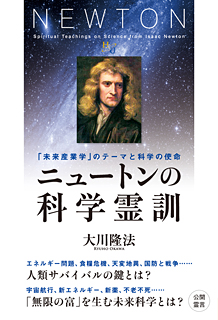 You may have noticed mention above of a book entitled “Nostradamus: Fearful Prophecies,” which is strongly representative of Okawa’s prodigious output. Of the
 magazine Weekly Shincho reported that Dr. Copa is such a big fan of Trump that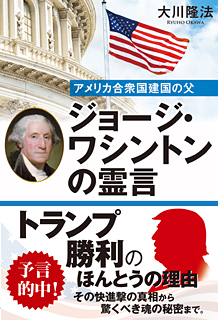
 This will be my fourth consecutive Mermaid Parade, but I grew up being taken often to Coney Island in the summer by my grandparents, who lived nearby, off the Avenue U subway stop, to visit the beach,


 The building that Thorne (or a successor) occupied is shown in 19th-century photographs as a clapboard house