
Archive for the 'Dentsu' Category

“No photos please, this is a press conference”

Wednesday, October 1st, 2008

Occasionally, I witness an event so disturbing I have to post it on this blog immediately. Here is just such an event:

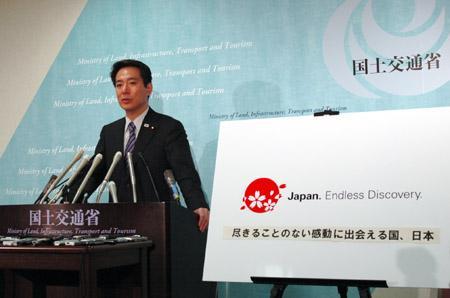
I was on my way home from work when I noticed a press conference outside the office (covering the Tokyo police force’s anti-drunk driving campaign with guest star Aya Ueto) . “Stop drunk driving once and for all!” read the signs. When I happened by, some boys in what appeared to be boy scout uniforms were speechifying about how they pledged to campaign against this serious public concern. Directly in front of the stage stood a tightly squeezed group of TV cameras and photographers.

So far so good until I noticed a security guard holding another sign: “No photography from cameras or mobile phones. We will remove anyone taking pictures.” No sooner did I appreciate the irony of ordering no photography at a press conference than an onlooker in a suit reached for his camera, only to be immediately approached by another man. The other man reached out and physically covered the lens of the camera with his hand. He was polite but firm: “No photos please.” I looked on in disgust and headed home soon after.

What a sad display. Here was a government-sponsored press conference and the public was not permitted to record the festivities, lest it cost a TV station some viewers or Dentsu (I am assuming) a bit of marketing power. In the US the police would have a prior restraint lawsuit on their hands. But even without making a free speech argument, it is simply pathetic to suppress citizen camerawork in favor of a media cartel.

Second Life in Japan ‘Depopulating’ - J-Cast

Monday, December 17th, 2007

J-Cast news (which, as I may have mentioned, I love for its critical reporting that goes well beyond any of the major newspapers, at least in terms of editorial perspective if not in access or resources) has a report on the “depopulated status” of the Japanese version of Second Life, the massive multiplayer experience popular in the US. A brief translation/abstract:

Nice streets, but where is everybody? Second Life “Depopulating”
2007/12/14
J-Cast News

More and more Japanese companies are opening so-called “virtual worlds.” Yet Linden Labs’ “Second Life,” which generated a major buzz in Japan earlier this year, has been in a notable state of depopulation, such that it is difficult to find users actually operating the service. What’s going to happen to these virtual worlds?

New Japanese entries to the market are close to overheating. On December 13, (journal/bookmark site) Hatena opened a members-only beta version of its “Hatena World” to 100 users. Meanwhile, Itochu Co. (trading house), Fuji TV, the Sankei Shimbun, Aeon (Supermarket chain) have invested in a “CoCore” a company set up to run another virtual world called “meet-me.” An alpha version is planned for this month.

But Second Life, which caused a stir when dozens of companies announced that they would set up virtual shops there, has become noticeably depopulated. A J-Cast reporter, sent on assignment to “visit” some of the famous virtual shops, noted many cases in which the buildings existed but no other avatars were around.

“Nagaya,” a sort of virtual Kyoto, was once considered a popular area for Japanese users. Back then, variously attired avatars could be seen chatting, but now there is no one. Softbank Mobile and Mitsukoshi, which opened for business in April and July, respectively, were similarly empty. Even “SIM (Island),” opened on December 3 by Kanagawa Shimbun, was deserted.

In a March 7 article (before the official release of the Japanese version in July) titled “Seven Reasons why Second Life Isn’t Popular,” IT Media (which is itself a great source for original Japanese Internet reporting) cited high system requirements, a lack of purpose, and “having to spend money to do anything,” “the most popular areas are porn and gambling” among others, noting:

“Second Life is still in the early development stage. Before reporting on it with excessive expectations and pumping it with corporate advertisements, the developers should concentrate first on bringing up creators that can make the virtual world interesting and building a healthy community.”

In response to this article, one blogger posted a defense arguing that Second Life is no fun unless you initiate conversations yourself, and that there have been successful examples of several avatars getting together. He was hit with massive criticism in his comment section.

Nomura Research Institute released a study called “Second Life Usage in the US and Japan” on November 9, which revealed how usage of Second Life was hardly widespread. In a survey of 100,000 Internet users in Japan, 53.6% replied that they were aware of Second Life, but only 2.4% actually said they used it. Of a further survey of 1,000 professed SL users randomly selected from that 2.4%, only 27.1% replied that they thought “it was interesting and I want to continue using it.”

According to a December announcement by Linden Labs, while there are 1.14 million SL users, only 40,000 are online at any given time. The lack of continuous users is contributing to the depopulation effect.

Why do I mention this? Because this project was picked up and promoted completely by advertising giant Dentsu. Often, the well-connected company that controls some 90% of the TV advertising market by some measures, has the power to make a “hit” out of thin air. But they are not invincible, and it can look pretty embarrassing in cases such as this where a massive publicity campaign is met with a collective shrug by the Japanese public. As J-Wikipedia explains, “As of 2007, Japan’s domestic media have aggressively covered Second Life, but many are suspicious of the vast gap between [this coverage and] average people’s recognition. Voices on the Internet are critical of the feeling that ‘Dentsu is leading an effort to start a trend by force.’ Dentsu itself has issued a statement that ‘the boom has died down a notch’ causing some to view this mass media-led commercial [campaign] as a failure.”

But as a Nomura source notes, this is only the 5th month since the release of the Japanese version, so things might pick up. But since the American SL itself seems more geared to attract media attention than an actual user base, I wouldn’t count on it.

Wikiscanning Japan

Wednesday, September 5th, 2007

I seem to be coming late to the party, but the amazing Wikiscanner has started to take its toll on the Japanese-language Internet thanks to a nice Japanese version of the site:

Yomiuri reports that Wikiscanner has found that among other things the health labor and welfare ministry and the education ministry have edited articles on themselves and Diet member Nagatsuma (claiming he exploits his stance to make money on the national pension scandal). The rest of the article explains the concept of an IP address for anyone who is smart enough to make it into the government but dumb enough not to know that people can tell what you do online. – Kikko uses the emergence of this tool to make a rant and rave over the inaccuracies in her own entry, but makes the following commentary on the Yomiuri article:
So to sum up, looking at this web news article, I was angry to see that the MIC edited the “electronic voting” article to make the government look good, that the education ministry deleted a passage about the scandal surrounding former Tax Commission Chairman Masaaki Honma, or that the health labor and welfare ministry wrote bad things about DPJ Diet member Akira Nagatsuma, but it made sense just because that’s what they would do. What puzzled me was why someone in the agriculture ministry made a massive amount of edits to the entry on Gundam. We can tell it was accessed during work hours because of the MAFF IP address, but it has zero to do with government administration and could only have come from a Gundam maniac. And this guy is using the people’s tax money to play around on the Internet! So maybe we should find out his name and write a Wikipedia entry saying “He is a ridiculous civil servant who accesses Wikipedia from MAFF computers during work hours and plays around with the Japanese people’s tax money.” (lol)
JCAST notes that NHK has been making lots and lots of edits to a wide range of subjects and whines that they are wasting too much time editing Wikipedia for “personal” use.

So with all the buzz, I thought I would take a stab at seeing what sort of edits Japanese IPs have been making. Feel free to try at home!

Mainichi Shimbun – In the English Wikipedia, Mainichi has edited the post on “MOTTAINAI” a term it has been promoting (in the face of much MF skepticism). This only deepens my suspicions at the cynical Japanese media-government collusion attempting to turn this word into some kind of soft-power buzz word. – People at LDP headquarters are fans of rakugo and J-Pop singer Minako Honda (“Japan’s Madonna”), ego-Wiki, and delete a mention of the involvement with the LDP of someone in the Nagasaki local TV for reasons I can’t possibly understand.

... Someone at Dentsu changed the height of an actress by one centimeter. That is the attention to detail that keeps these guys on top.

... A second look shows almost 300 edits from Dentsu. A rundown:

A line was added to the entry for Calbee (a potato chip company) on the new president/CEO Yasuo Nakata. Previous: “He is the first head of the company from outside the founding [Matsuo] family.” Now after that, “However, Nakata is well-known in the IT industry as a CIO. He also serves as an external director of Autobacs, a car part retailer listed on the First Section of the Tokyo Stock Exchange.”

They added this to the entry for Kirin Beverages: “Starting in Feb 2006, the company started a new Internet shopping business “markers” an experiment with Internet business including selling items other than beverages.” Oh, I wonder whose idea that was?

Lots of minor adjustments to musicians’ discographies, etc.

Multiple edits to the ‘list of fictional diseases’

More possible ego-editing to the page for “media creator” and former Dentsu-man Masahiko Sato

Special attention paid to the AIDMAS “Attention / Interest / Desire / Memory / Action / Share” theory of Internet marketing

...and a bunch of edits to pages for people that I’ve never heard of…

OK, we can do this TPMuckraker style. Search the site and tell us what you find! Things I want to look at at some point: Johnny’s, Yoshimoto Kogyo, Scientology, Soka Gakkai, other media institutions (Nikkei, Asahi, Sankei to name a few) and on and on… I am sure 2ch has it all in there somewhere.

See what Adamu’s reading

Saturday, May 26th, 2007

It’s not pretty, but I’ve made my Google Notebook public, so MF readers can keep track of what’s been in front of my eyeballs recently, such as Hakuho’s upcoming promotion to Yokozuna and an analyst’s description of Dentsu’s attempts to leverage its near-monopoly of TV ads to dominate the Internet market as well.

A quick look at online advertising through the lens of America

Friday, May 25th, 2007

Slate wonders if online ad companies are worth what companies like Google and Microsoft are paying for them:

Last month, big establishment online company Google bought online-ad firm DoubleClick for $3.1 billion in cash. Last week, big establishment advertising agency WPP bought online-ad firm 24/7 Real Media for $649 million in cash. The next day, big establishment tech company Microsoft bought online-ad firm aQuantive for $6 billion in cash.

...this may be less a case of the market being irrationally ahead of the industry’s economic reality and more a case of the market being behind rational expectations for the industry.

Television, magazines, and newspapers may be hanging on because they are more powerful media for reaching the consumers companies most want to reach. But I suspect they’re hanging on for another demographic reason. Advertising is supposed to be a with-it, hot, trendy, tomorrow-based industry. But at root, the business of advertising is one of allocating capital, not cooking up clever jingles. And the people who make the decisions about how to allocate that $300-odd billion in capital each year—CEOs of consumer products companies, Fortune 500 executive vice presidents, media buyers, brand managers, agency heads—well, they’re old. It takes time to climb the corporate ladders to get to the rungs where really important decisions are made. Of course, these people, most of whom came of age as consumers in the 1960s, 1970s, and 1980s, use the Internet, spend a lot of time on it, and buy stuff on it. But they don’t understand it intuitively the way the younger crowd does. Do you think the CEOs of Ford, Citigroup, or Procter & Gamble are uploading photos to their MySpace pages, downloading music, and blogging?

...the question for people who invest in the stocks of online-advertising companies—as Google, WPP, and Microsoft have just done—isn’t just whether online ads are the way to reach consumers today. No, the question is whether online ads will be among the best ways to reach consumers in five and 10 years, when today’s twentysomethings will be buying cars and houses and kitchen appliances and pharmaceuticals. More important, in 2012 it’s possible to imagine that the brand managers and executives responsible for making advertising-spending decisions will be people who grew up with the medium, who didn’t need a consultant to tell them how it works. It’s a reasonable expectation that online advertising will continue to gain market share and that more and more capital will slosh into this sector. The big companies paying top dollar for online ad firms have just bought some expensive buckets.


The points of this article, plus or minus a few details, could be easily made about Japan, with the exception that Japan’s traditional media are much more nervous about aggressively engaging the Internet. I’ll go through them as we proceed to give you what you need, but for now suffice to say that Japan is awash in new technology, the young folks are growing up as avid users, but the managers at the advertisers and the agencies are too old to really get it. But as in the US, the future growth in Internet ads is understood, and traditional companies like Dentsu are realizing that they need to follow where people’s eyes are.

Internet ad startup hit hard by Consumer Finance crackdown

Tuesday, May 22nd, 2007

Nikkei has news on poor financial results of many startup companies last year:

Tuesday, May 22, 2007

Earnings Growth For Start-Ups Slowed To Single Digits In FY06

TOKYO (Nikkei)—Start-up businesses, which had been piling up double-digit earnings gains, saw their pretax profit growth slow to the single digits for the fiscal year ended March 2007 on a slump in online advertising and intensifying competition.
...
The latest slowdown among start-ups stands in stark contrast to the double-digit growth major corporations racked up in fiscal 2006 amid the global economic expansion.

While companies such as social networking service provider mixi Inc. saw the unit price for ads rise in line with increased membership, conditions were harsh for online advertising agencies as a whole.

Cyber Communications Inc. (a subsidiary of Dentsu), which posted a 21% profit drop, said that its earnings suffered because financial firms and insurers refrained from advertising.

Dentsu in the News, Part 2: The Bad News

Thursday, May 17th, 2007

The Japan Communist Party flexes its awesome research muscle:

Dentsu Takes 40% of Government Public Relations Contracts
Representative Yoshii Presses Officials on Connection with Golden Parachute Scheme

At the May 11 Lower House Committee on the Cabinet, it was revealed that Dentsu is substantively monopolizing contracts for “government public relations” that the Cabinet Public Relations Office prints in newspapers, with the company garnering nearly 40% of the total value of contracts. The situation was brought to light via a survey conducted by JCP Representative Hidekatsu Yoshii.

According to the survey, of the 13.2 billion yen in contracts government PR placed in newspapers from FY2001-2005, Dentsu was the top recipient with 4.9 billion yen, or 38% of the total. Hakuhodo, the second largest recipient, received 2.4 billion yen (19%), while other companies all received less than 10% apiece.

In response to a request from Yoshii for disclosure of the expected bidding prices, Director Yasuyuki Takai of the Government Public Relations Office refused the request, stating that the office “uses regular competitive bidding.”

Yoshii pointed out that there are too many advertisement placement companies that participate in bidding but later withdraw. For example, from FY2001-2005, Nihon Keizai Co. (printers of Nikkei Shimbun etc) withdrew the most times, 101. The fewer times a company won bidding, the more times the company placed a bid but later withdrew. Yoshii concluded: “This is just too unnatural. I suspect this is a case of ad industry-related bid-rigging intended to maintain Dentsu’s unipolar control.” Takai repeated that “Withdrawal from bidding is the bidding company’s decision.”

A survey by the House of Representatives Research Bureau shows that as of April 2006, 12 [retired officials from the Govt PR Office] were in post-retirement jobs at Dentsu, while 5 were at Hakuhodo. Yoshii pointed out that this practice of “Amakudari” was likely behind the rigged bidding, and emphasized, “If [the current govt] says it will reform the public servant system, it should first thoroughly reveal the true state of amakudari.”

In other news:

Dentsu “Pale” in Apology for Retooling Reds Stadium Seats
May 10, 2007

The Japan Football Association revealed on May 10 that it had granted advertising company Dentsu permission for a Kirin Beer commercial that made unauthorized modifications to a photo of Saitama Stadium filled with supporters of the Urawa Reds without noticing the changes.

The Association claimed it had not received an explanation of the changes from Dentsu, who was in charge of the production. The modifications violate the J-League’s rules for commercial use of photos. JFA Executive Director Kozo Tajima commented, “This is very regrettable and unpleasant. I cannot express how sorry we are to the supporters of the Japan National football team.” The morning of the same day, a representative of Dentsu visited the JFA to apologize. The advertiser, Kirin, reportedly was also not made aware of the changes.

The advertisement that caused the controversy was part of a rally campaign for the Japan National team. The seats in Saitama Stadium were changed from the Urawa’s red to the Japan National team’s blue, and the ads were seen in newspapers nationwide from April 27.
—Also, former Dentsu executive and noted novelist Iori Fujiwara (known for the Naoki award-winning Terrorist’s Parallel, a story of the men and women who gave their lives in the 1960s student communist movement) has died of esophagal cancer at age 59.

Dentsu in the News, Part 1: The Good News

Monday, May 14th, 2007

Lots of Dentsu-related stories in the pipeline these days. But first, the good news:

  • Dentsu reports revenue exceeding 2 trillion yen, but sees slower growth ahead

From Asahi:

On May 11, Dentsu reported 2.939 trillion yen, or a 6.7% boost, in consolidated revenue for the 2006 fiscal year, the first time the company’s total has ever topped 2 trillion. Revenue in the major media (TV, newspapers, magazines, radio) all slightly dropped, but ticket sales for the 2006 World Cup in Germany, which was undertaken by a Dentsu subsidiary, pushed up the total.

Operating profit (which is mentioned last in the Asahi report) grew at a similar pace of 6.9% (30.6 billion yen or approx $1.7 billion). To compare, OmnicomGroup, the largest Madison Avenue ad company, posted $11.3 billion in revenue and $1.5 billion in operating profit.

Revenue in the 4 mass media, which make up 65% of the company’s non-consolidated profits (or 48% of consolidated revenue, which would mean that the Dentsu parent company’s total of 2.169 trillion make up 73% of total Dentsu group revenue), dipped 0.7% to 1.410 trillion yen.

A surprising note in this profit announcement is that Internet ads are not Dentsu’s biggest growth area, as earlier reports from Dentsu might have seemed to indicate. Internet ad growth of 14.8% (21.5 billion yen) lost out to outdoor ads, such as train ads, grew 19.2% (43 billion yen) with the rise of ads coordinated with web content (infrared bar codes, search keywords). Note, however, that these two areas remain small compared to Dentsu’s traditional businesses. However, Dentsu is predicting huge growth in the Internet sector in general, and sees its share in the Net ad market going from a present 15% to 20% by the end of FY 2009.

But the overall outlook for Dentsu is for slower growth, for reasons which an AP’s report goes into more detail about (unsurprising for an article aimed at investors):

Dentsu, the world’s fifth-biggest advertising company behind Omnicom Group , WPP Group , Interpublic Group and Publicis, said growth might also be held back by a wave of mergers among its client base.

The company, whose rivals in Japan include Hakuhodo DY Holdings Inc. and Asatsu-DK Inc., forecast group operating profit to rise 1.6 percent to 63.8 billion yen ($532.2 million) in the current business year to March 2008 on sales of 2.107 trillion yen, up 0.6 percent.

The profit estimate is in line with the consensus of 64.2 billion yen from a poll of 13 analysts by Reuters Estimates, but the forecast for sales growth is decidedly below the expected growth rate of about 2 percent for the Japanese economy.

The seemingly conservative forecast also comes with Japanese corporate profits at a record high.

“We are always told that our forecasts are conservative, but one factor probably at play here is the fading correlation between corporate profits and the economy on one side and growth in advertising spending,” Dentsu Managing Director Setsuo Kamai told a news conference.

Kamai said the trend could be explained by a handful of factors including booming industry consolidation in Japan, which leads to fewer advertisers, and a move by an increasing number of companies to lower costs by combining their brands.

For 2007/08, Dentsu expects its revenues to get a boost from the IAAF World Championships in Athletics Osaka 2007, elections in Japan and the Tokyo Motor Show, but no event on schedule is likely to match last year’s soccer World Cup in Germany.
...
Dentsu logged strong revenue gains to the information and technology, food and retail sectors, which offset declines to makers of cosmetics and toiletries, producers of home appliances and electronics, and consumer finance firms.

Speaking of profits, Hakuhodo just posted its first loss (due to lower than expected real estate revenue and dips in auto ads and government PR work) since converting to holding company status in 2003. It posted a 2% loss in revenue (1.884 trillion yen) and a 1% loss in operating profits (24.4 billion yen). Bad news for Hakuhodo, good news for Dentsu.

A new president will be leading Dentsu:

Dentsu to name Takashima president
Kyodo News

Dentsu Inc. is set to appoint Executive Vice President Tatsuyoshi Takashima as president of Japan’s biggest advertising agency, while the current president, Tateo Mataki, will become chairman, company sources said Saturday.

He is expected to accelerate a shift in Dentsu’s business base from newspapers and television to relatively new media such as the Internet by continuing the efforts of Mataki, who aggressively concluded capital and operational tieups with startup companies specializing in Net advertising.

Meanwhile, Dentsu is consolidating some of its various Net ad subsidiaries (in the affiliate advertising section [similar to the Amazon Associates program]) to form a more unified strategy:

Dentsu to Merge, Amalgamate Action Clip
May 10, 2007

Dentsu and Cyber Communications (CCI, a member of the Dentsu Group) announced that they intend to merge Dentsu subsidiary Action Clip and CCI subsidiary Criteria Communications.

CCI will continue to exist but will amalgamate the two companies in a cash tender offer. The ban on cash tender offers to shareholders in the case of an amalgamation merger that absorbs the target company was lifted as of May 1.

Action Clip’s affiliate operations will be united with Criteria’s advertisement distribution network with the goal of consolidating the Dentsu Group’s affiliate business.