News Corp.’s Twentieth Century Fox Film won an appeals-court ruling affirming the dismissal of three lawsuits filed by people who claimed they were emotionally harmed by appearing in the “Borat” movie.
The U.S. Court of Appeals in New York upheld the dismissals from last year in an order today. People who appeared in the film, including those in a dinner-party scene in which the protagonist presents a bag of feces, also sued for fraud and unjust enrichment, according to the ruling. They argued the ambiguity of “documentary-style film” in signed releases meant the lower court couldn’t rely on them to dismiss the litigation.
“While the character ‘Borat’ is fictional, the film unmistakably tells the story of his travels in the style of a traditional, fact-based documentary,” the appeals court wrote. “Indeed, the film’s stylistic similarity to the straight documentary form is among its central comedic conceits, employed to set the protagonist’s antics in high relief.”
…
“It’s disappointing,” Adam J. Richards, a lawyer for six of the seven plaintiffs, said of the ruling in a phone interview. “It allows well-financed parties such as Twentieth Century Fox to outright lie to people and rely on, in my opinion, an ambiguously worded document to get by the lies.”
…
The appeals court found the plaintiffs couldn’t claim the filmmakers fraudulently induced them into signing the releases because they didn’t try to verify what they were told by, for example, asking to meet the “reporter” or learn his name.
“They would have lied to him,” Levine said of his client Psenicska. “To use clear language like ‘mock documentary’ or ‘mockumentary’ would have given the game away. They were clearly trying to use obsfucation.”
While I agree that the plaintiffs should have maybe had a little common sense before jumping in front of the camera, I really hope Sasha Baron Cohen remains the only one making these obviously subversive movies. They work, but only because the makers are doing things everyone knows are completely wrong.
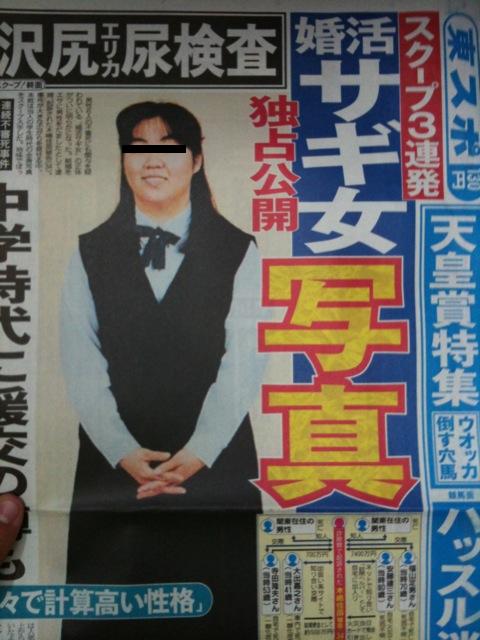
Some of you may have heard the recent news of a black widow serial killer in Japan. The more I read about this story, the more fascinating and horrifying it gets:
Investigators probing the deaths of two acquaintances of a 34-year-old woman arrested on suspicion of fraud have found that at least four other men linked to the woman died under suspicious circumstances.
All of the men lived in the Kanto district, and in one case investigators initially thought the victim had committed suicide by burning briquettes to release deadly carbon monoxide. Police are continuing to investigate the details surrounding the men’s deaths. The name of the woman, a resident of Tokyo’s Toshima Ward, has been withheld.
Investigative sources identified two of the men who died suspicious deaths as a 70-year-old man from Matsudo, Chiba Prefecture, and a 53-year-old man from the Tokyo city of Ome. Unconfirmed details remained over the deaths of other men in the Kanto district.
Her name is Kanae Kijima. Investigators apparently learned of this woman’s possible involvement after reading through one of the victims’ blog posts, which is still online here. You can see from the blog this guy was very into his plastic model kits and thus might not have been all that sophisticated around women. Perhaps understandably, he was blinded by love. Here is what his last post says:
Today I will meet my fiancee’s family. Recently I have been spending most of my time looking for a new place with her and talking about our new life together. Starting tonight, we will go on a three-day, two-night pre-marriage trip.
He was found dead a mere ten hours later.
Kijima was a real piece of work. According to reports, she was a professional con-woman who met lonely men on the Internet and convinced them to ask her hand in marriage. Once “engaged,” she would start asking for money, sometimes pretending to need it for tuition. With the money from her many future husbands she lived an expensive, luxurious lifestyle, complete with the high-end condo, a wine-red Mercedes, and occasional stays at the Ritz-Carlton. She also liked gourmet food such as obscenely expensive green tea (Y2,000 for 100g), a habit that pushed her weight up to a whopping 100kg.
Born in 1974 in Hokkaido the granddaughter of a local politician, Kijima moved to Tokyo at age 18 to attend Toyo University but dropped out after a year without paying her tuition. In 2003 she was arrested for scamming someone in a Yahoo auction.
I was not able to find when her career as a black widow got started, but probably some time around 2006 when she began renting a large two-bedroom apartment in Itabashi-ku. Her scams were apparently so successful she netted a total of Y95 million before getting caught. So over three years that’s a very comfortable annual income of around 32 million yen (or around $300,000), presumably tax-free.
It’s reported she met around 20 people on the dating site. She apparently didn’t always kill her marks – she was unsuccessful in scamming some and maybe just didn’t feel the need to kill others. The six men identified so far were the unlucky ones.
In addition to her online dating activities, she worked another angle “taking care of” an 80-year-old man who she also met on the Internet, whose house burned down in May under mysterious circumstances with him in it.
Amazingly, she left behind all kinds of evidence on the Internet. First, she gave her real identifying information to the dating site allegedly used for the crimes. Second, she documented much of her activity on her personal blog hosted by recipe site Cookpad (some of it is still available via Google’s cache, and some bloggers have been able to rifle through it). In it she posts pictures and tells stories about all the nice stuff she bought from the men she killed (of course she doesn’t go into that particular detail).
Details of this story underscore just how influential and entrenched the web has become in Japanese society. Not only did the “konkatsu” killer meet all these men on Internet dating sites (including an old man), the cops’ investigation hinges greatly on this woman’s sloppiness and overconfidence in failing to cover her tracks properly.
As juicy as all these details are, it’s important to note that this woman is being given the Noriko Sakai treatment – that is, the Saitama police haven’t officially arrested her for murder, just fraud at this point. The cops will likely hold her for a few weeks as they progress with their investigation, following the standard procedure in Japan. In the meantime, it’s possible the police are trying to get over a lack of damning evidence tying her to these killings by flooding the media with all manner of intimations (and the media is no doubt demanding details on this huge story). That may be why major media outlets have declined to report her real name for fear the character assassination could expose them to future defamation lawsuits, as argued here. Still, with all the reports of new evidence popping up they will probably get their woman.
Yeah, that’s what happened. A middle aged man ate 10 separate items including several full meals at a Kobe Yoshinoya, waited until there were no other customers, and then robbed the place with a wooden chopstick, nabbing Y80,000. He is still at large. How he could still move after 10 meals, let alone make a run for it, I will never understand.
Apparently my profile is high enough that someone in China wants to sell me Metal Fun. I guess they finally realized that I don’t need any Viagra?
Dear Sir/Madam,
We know you from internet. Take this opportunity, I want to introduce our company to you. Mingxiang Machinery Manufacturing Co., Ltd. Produce precision casting parts for automobile fitting, architecture machinery, agricultural mechanical fitting and bearing series, and also include the metal parts for doors.
These casting parts with machining have been exported all over the world for 10 years. The quality is the best thing for us in both aspects of metal products and material. But the price is reasonable also shipping is on time.
If you want to know more about us, please feel free to contact us. Hope we can cooperate with you in the near future.
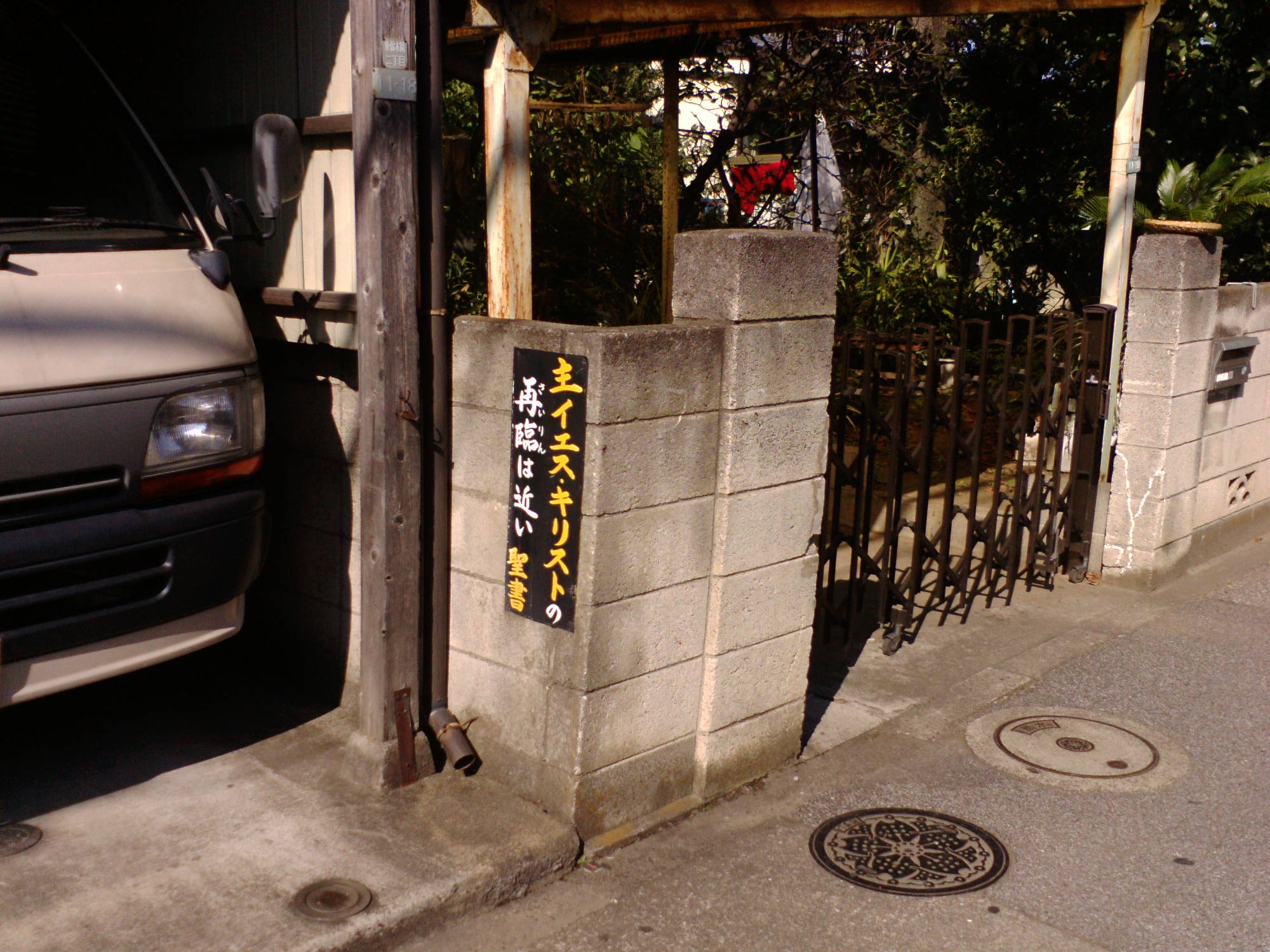
Biking around Takenotsuka, Adachi-ku today I spotted an interesting sign:
“The return of Our Lord Jesus Christ is near – The Bible”
This marks the first Christian sign I’ve seen in Tokyo, though I think that’s just because I don’t get around that much. The sign is posted on the outer wall of a house next to a Zebra pen distributor. There were no other indications that the inhabitants were Christians.
See my earlier post for more info on what these signs are all about.
Reports are out that Katsuya Okada will be the foreign minister in Hatoyama’s first cabinet, which is (unfortunately) not nearly as cool as the footnote to the AFP report:
One of [Okada’s] more peculiar hobbies is collecting items that depict frogs. But there is a serious political point — “frog” in Japanese is a homonym for “change” — the slogan used by the DPJ during last month’s election campaign.
This is a fairly popular pun in Japan. Last year I came across this banner at the Akasaka Sacas complex in Tokyo. It says “アカサカカエル、オイシサヲカエル” (Akasaka kaeru, oishisa wo kaeru) which could be read several ways, such as “The Akasaka Frog is changing tastiness,” or perhaps “Change Akasaka and frog the tastiness.”
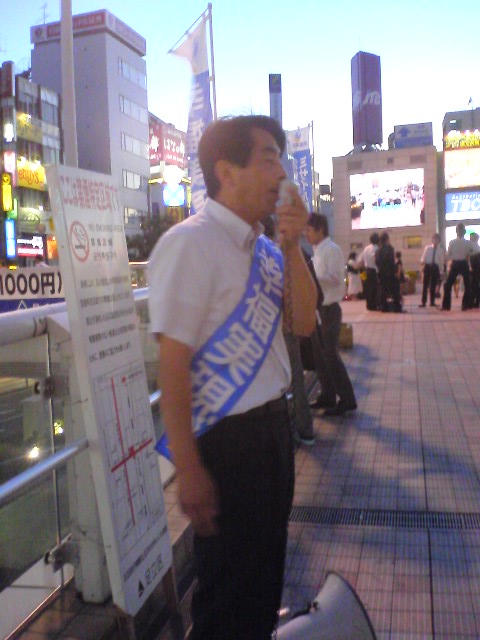
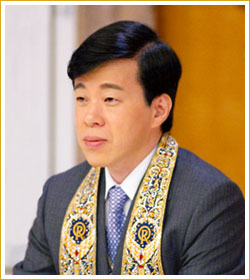
The final candidate in Tokyo’s 13th district is Kazumasa Fujiyama, running under the Happiness Realization Party ticket.
Before I get to this guy’s profile, I want to quote from an excellent piece on the party from the Irish Times:
Founded earlier this year to offer voters a “third choice”, the HRP has an eye-catching manifesto: multiply Japan’s population by 2.5 to 300 million, overtake the US to become the world’s premier power, and rapidly rearm for conflict with North Korea and China.
If elected, its lawmakers will inject religion into all areas of life and fight to overcome Japan’s “colonial” mentality, which has “fettered” the nation’s true claim to global leadership.
… A new book, The Guardian Spirit of Kim Jong-Il Speaks , by party founder Ryuho Okawa explains that earlier this month at a session in the party’s Tokyo headquarters, the voice of Kim’s guardian angel warned of his plans. But at least Kim is alive – Okawa also claims to be able to receive the thoughts of Japan’s notorious wartime monarch, emperor Hirohito (1901-1989), and his deceased predecessors.
Being able to commune with the dead is but one string to Okawa’s bow. A reincarnation of Buddha, he achieved great enlightenment in 1981, according to the party’s website, “and awakened to the hidden part of his consciousness, El Cantare, whose mission is to bring happiness to all humanity”.
Before he founded the Happy Science religion in 1986, Okawa wrote books under the names of Muhammad, Christ, Buddha and Confucius. Conveniently, if improbably, speaking in Japanese, some of the prophets had much the same message: Japan is the world’s greatest power and should ditch its constitution, rearm and take over Asia.
…
The Happies boast that they have sold 11 million copies of their bible, Shoshin Hogo (The Dharma of the Right Mind), in Japan since 1986, and opened 200 temples.
Okawa’s books, mixing new-age philosophy with self-improvement tips and political views, have sold millions more, apparently providing the funding for the campaign. Translating those beliefs into political power, however, has proved easier said than done. Tokyo voters shunned the Happies’ candidates in this month’s municipal election, which ended LDP rule in the city and set the DPJ up for a historic national win next month.
Also, you might be interested to see the Happy party’s new manifesto video. It’s very similar to the one they produced for the Tokyo assembly elections (that animated treasure was unfortunately taken down), only this time slightly more professional:
Now, to the candidate:
Profile: An architect by trade, Fujiyama became a full-time Happy Science member in 1995 and has since risen to become a leader in Tokyo – he previously served as the head of the Science’s Nippori Branch and Adachi Branch before being named deputy leader of the Tokyo Branch in 2009.
Before becoming a full-time Happie, Fujiyama was an employee of Haseko Corporation, a construction/engineering firm that’s listed on the Tokyo Stock Exchange. It’s unclear whether he was a member of Happy Science before 1995 or if he
One of Fujiyama’s bases of operations is the Science’s Nippori branch (seen here on Google Street View), which I happened to spot during a walk the other day:
Policy: As all Happiness Realization Party candidates appear to be carbon copies of one another, it’s no surprise that Fujiyama supports all the planks mentioned in the above video – slash taxes, smash North Korea, and somehow make Japan the world’s biggest economy by 2030 (I suspect they’d have to destroy all other countries to do this).
When asked in an Asahi questionnaire about how he would like the world to see Japan, he answered as “a great economy.” (経済大国)
Fujiyama claims in a blog post that the owner of a building near Kameari Station said she’ll support him because she hates paying consumption taxes.
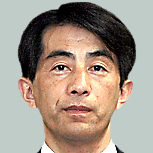
Something interesting: Fujiyama bears an eerie resemblance to party founder and leader Ryuho Okawa:
Fujiyama:
Okawa:
OK, I’ll admit that their parts are on opposite sides, but don’t you think they both have a sort of “divine salaryman” look going on?
***
My next and final profile post will look at a few of the Tokyo proportional representation candidates.
My current lower house representative in Tokyo’s 13th district is Ichiro Kamoshita, an LDP man who is now seeking his sixth term in office in the August 30 general election. He’s also a licensed psychiatrist who’s written more than 90 self-help books.
Early polls show him facing an uphill battle against DPJ challenger as anger at LDP rule rises, but that doesn’t mean he’ll go down without a fight.
To help promote some of his policy ideas as he seeks re-election, Kamoshita has borrowed a fun idea from the Scientologist playbook: stress tests! Those who visit his website or receive one of his pamphlets can take a test entitled “Working 2.0” (働き方 2.0).
The test asks, “Is your mind stressed out?” (心のストレス、たまってませんか?). To answer, the reader must go through a list of symptoms and check all that apply. Here is the full list:
I feel like meetings and discussions are actually meaningless
I keep working hard but I remain poor as ever
I have at some point felt like throwing it all away
I sometimes feel like I want a life where I can spend all day looking at the ocean
I sometimes feel like I want to liquidate the past and start over from scratch
I can more or less predict what my life will be like in 20 years
I have been doing the same exact job ever since joining my company
I have recently stopped chatting with family and coworkers
I have at times felt suddenly lonely in closed-in spaces such as the subway or elevators
I have called someone just to hear their voice, only to hang up after the second or third ring
It has become painful to go back and forth between home and work
It makes me jealous to see the empty trains heading the opposite way during rush hour.
Results
Here is my paraphrase translation of the results
If you checked 0-3 items: You’re the type who is good at dealing with stress. As someone with the capacity to process pent-up emotions, you realize it’s not worth it to get mad at your idiot boss. You know you can either take action or ignore it.
4-7: You need a mental detox. Just as removing toxins makes your skin look healthier, removing stress will make each day brighter and help you become better at many things. Why don’t you try and talk with friends or those around you about the things that worry you? Talking to someone will help you sort out the things that have been going back and forth in your head when you were thinking about them all by yourself.
8-10:Try and improve your lifestyle. Stress is the worst when you cannot escape it. You might need to switch jobs, take a vacation, or do something to get out of the group of people you are having problems with and break with the status quo. You might benefit from vegging out in the bathroom for 30 minutes or skipping a day of work sometime.
How did you do on the test? You can take it in Japanese here. I think I got around 4, but then the test seems designed to put everyone in that range. Who hasn’t thought about living at the beach?
Kamoshita’s plans for you
After the results, the next page is a list of labor-related policy proposals (note that at this point the reader still doesn’t know this is a political pamphlet, let alone from LDP man Kamoshita). They are:
Telecommuting – With almost 70% of workers in the services sector, it is possible for more and more people to work using technology instead of commuting to an office.
Working closer to home – Under this proposal, people would have two homes – a small room in the city close enough to their office to let them get their by bicycle, and a larger weekend house in the country where they’d rest on holidays and retire in old age. This would eliminate the issue of packed commuter trains.
More flexible working hours – By allowing flextime and diverse employment schemes such as temp work, people would be able to choose their working style while being eligible for the same social programs.
Kamoshita understands
In the final two pages Kamoshita reveals himself, tells of his own experience, and pledges to fight for the hard-working salarypersons of Japan.
You see, until age 44 Kamoshita also had to ride crowded trains to work. He even occasionally had to get off midway due to the stress (thankfully he got elected in 1993 and has probably never ridden a commuter train since).
***
According to the Yomiuri, Kamoshita wrote this pamphlet himself and is immensely proud of it, noting that this original pamphlet might be the first of its kind in Japan.
Reporters for English-language newswire (Tokyo-Japan)
Date: 2009-07-15, 12:05PM JT
A well-known news agency’s Tokyo branch is looking for reporters to write for the English language wire service.
Job description:
The position involves reporting and editing major political, economic, science, corporate news items in Japan. It also involves writing in-depth report or news analysis on some topics given by editors.
Qualifications:
Fluent in Japanese and native-level in English. Experience in journalism will be a significant advantage. A broad knowledge about Japan’s politics or economy is preferred.
Office hour is not needed. Pay will be based on workload and there is no base salary.